
You’ll feel an instant lift as endorphins and norepinephrine surge, sharpening focus and easing stress. Controlled box breathing while you dip calms the shock, activates your parasympathetic system, and steadies your heart rate, turning the plunge into a mindful reset. Start with 1‑2 minutes at 50‑59 °F, track your mood, cortisol, and energy afterward, and gradually extend the time as you get comfortable. Keep an eye on any dizziness, extreme shivering, or chest pain, and seek help if they appear. Continue to discover the step‑by‑step protocol and tracking tools that will deepen these mental benefits.
Cold‑Plunge Benefits for Mood & Stress

When you plunge into icy water, your body instantly releases endorphins and norepinephrine, lifting mood and sharpening alertness while easing tension, anger, and depression. Cold plunging triggers a rapid surge of endorphins that floods your brain, creating immediate mood improvements and a sense of euphoria.
The shock also activates the sympathetic nervous system, boosting blood flow to the cortex and delivering mental clarity. Regular sessions lower cortisol levels, dampening the stress response and reducing anxiety over time.
This hormonal shift supports emotional regulation, helping you stay calm under pressure. As you repeat the practice, you’ll notice stronger mental health benefits, steadier mood, and a resilient mindset that handles daily challenges with ease.
Cold‑Plunge Breathwork for Calm Immersion
If you combine controlled breathwork with a cold plunge, you’ll tame the shock response and settle into calm immersion. Slow, deep box breathing—inhale four seconds, hold four, exhale four, hold four—shifts you from fast, shallow breaths to diaphragmatic rhythm, which calms the nervous system and triggers the parasympathetic nervous system.
This shift lowers heart rate, steadies mental focus, and supports emotional regulation. By maintaining intentional breathwork before and during immersion, you create mindful awareness that buffers the cold shock response. Consistent practice builds stress resilience, allowing you to recover quickly from stressors and enjoy a steadier mood.
Over time, the nervous system reset you experience during each cold plunge enhances overall mental health and cultivates a meditative state.
Cold‑Plunge Protocol: Safe, Effective Steps

Starting with a brief 1–2‑minute dip in water around 50‑59 °F (10‑15 °C) lets you ease into the cold safely while your body adjusts.
Begin with a 1–2‑minute dip at 50‑59 °F to ease into the cold safely.
You’ll use a cold plunge tub for controlled slow exhalation, and beginning each session with light exercise boosts cardiovascular health.
Additionally, tracking your sessions with a simple temperature display can help you monitor progress and stay within safe exposure ranges as you gradually increase time.
Follow these steps for safe, effective cold water immersion:
Cold‑Plunge Progress Tracking: Mood, Cortisol, Energy
Tracking your mood, cortisol, and energy after each cold plunge lets you see tangible results and stay motivated. Record how vigor, alertness, and calmness rise while tension fades; note any pride or inspiration you feel. Additionally, many people find that keeping a digital log with data history helps visualize long-term improvements in mood stability and stress resilience.
Measure cortisol levels—research shows a 15‑minute cold water immersion at 10 °C can lower the stress hormone for up to three hours. Log energy spikes linked to norepinephrine and dopamine surges, which sharpen focus and boost motivation.
Use a simple journal or app to chart these data points weekly, watching trends in emotional regulation and stress resilience. Over time, consistent tracking reveals how cold water immersion enhances mental well‑being, supporting stronger mood stability and sustained energy.
Common Cold‑Plunge Issues & When to Get Help
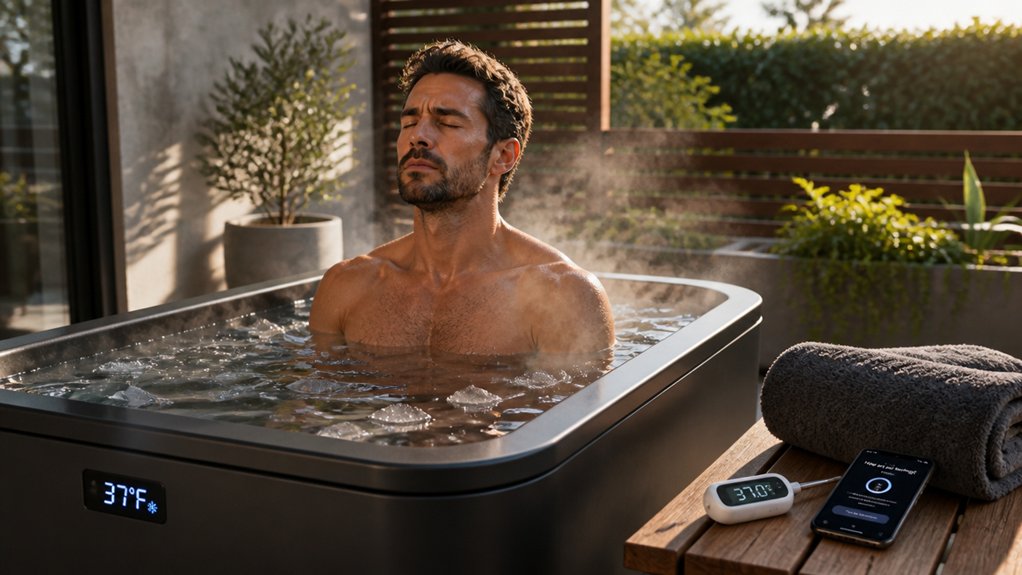
When you feel intense cold‑shock symptoms—uncontrollable gasping, dizziness, or shivering that won’t stop—you should exit the water immediately and seek medical advice. These red flags often signal that cold exposure is overwhelming your body and may herald deeper issues.
Exit water immediately if gasping, dizziness, or relentless shivering occur; seek medical attention promptly.
Pay attention to your pre‑existing health and any mood disturbances that linger after a session. If you notice numbness, pale skin, or extreme fatigue, hypothermia could be developing.
Below are the most common problems and when to call a healthcare professional:
- Uncontrollable gasping or dizziness (cold shock)
- Persistent shivering or chills beyond 10 minutes (excessive cold exposure)
- Chest pain, palpitations, or arrhythmia (cardiovascular concerns)
- Sudden anxiety, confusion, or depressive mood shifts (mental impact)
- Numbness, bluish skin, or severe fatigue (hypothermia)
Act promptly; intense physical activity in cold water demands vigilance. charging stations
Frequently Asked Questions
Can Cold Plunging Improve Sleep Quality?
Yes, cold plunging can boost your sleep quality. By dropping your core temperature, it triggers a natural drop in heart rate and cortisol, helping you relax faster and enjoy deeper, more restorative rest.
How Often Should I Cold Plunge for Optimal Mental Benefits?
You should cold plunge three to five times weekly, aiming for 2‑3 minute sessions at 50‑60 °F. Consistency fuels mood‑boosting neurotransmitters, sharpens focus, and reduces anxiety without overtaxing your nervous system.
Does Water Temperature Affect the Duration of Mood Improvement?
Yes, colder water typically shortens the boost, so you’ll feel the lift for a few minutes, while milder temperatures extend the effect to an hour or more, letting the calm linger.
Can I Combine Cold Plunging With Meditation Practices?
Yes, you can pair cold plunging with meditation; the shock heightens focus, so you’ll notice, breath, settle thoughts, and amplify calmness, making each session more restorative and mentally invigorating.
What Are the Long‑Term Cognitive Effects of Regular Cold Exposure?
You’ll notice sharper focus, improved memory retention, and reduced mental fatigue over time. Regular cold exposure boosts norepinephrine, strengthens neuroplasticity, and supports mood stability, helping you stay mentally resilient and alert.
In Summary
You’ve seen how cold plunges lift mood, slash stress, and boost energy. By mastering breathwork, following a safe protocol, and tracking your progress, you’ll turn each icy dip into a powerful habit. Keep an eye on any warning signs, and you’ll reap the full mental benefits while staying safe. Immerse yourself consistently, and let the cold sharpen your mind and resilience.