
A cold plunge before bed drops your core temperature, signaling your body to slip into deeper, more restorative sleep. It triggers vasoconstriction, which reduces inflammation and muscle soreness, and activates the parasympathetic nervous system, lowering stress and easing you into relaxation. Doing an ice bath 1‑2 hours before lights‑out lets the cortisol surge subside, helping you fall asleep faster. If you keep the water at 50‑60 °F for 2‑3 minutes and stay consistent, you’ll notice even better sleep quality and recovery.
Why Cold Plunges Improve Sleep Quality

When you step into a cold plunge, your core body temperature drops, signaling your brain that it’s time to wind down and trigger deeper, more restful sleep.
The sudden chill induces vasoconstriction, which eases inflammation and muscle soreness, paving the way for physical relaxation.
As the shock fades, cold water immersion activates the parasympathetic nervous system, lowering stress and smoothing sleep onset.
Doing a cold plunge before bed nudges your body into a cooler state, a cue that naturally improves sleep quality.
Timing matters: give yourself enough minutes for the temperature dip to settle, then let the relaxed, lower‑heat state carry you into restorative rest.
A more efficient recovery pattern can be achieved by incorporating consistent cold exposure into your evening routine, further supporting sleep quality and overall relaxation.
This combination of temperature control, reduced inflammation, and nervous‑system balance makes cold immersion a powerful sleep aid.
How to Time an Ice Bath 1‑2 Hours Before Bed for Best Results
If you schedule your ice bath 1-2 hours before lights-out, your body gets enough time to ride out the initial cortisol and norepinephrine surge, letting the core temperature drop and signal sleep readiness. Consistent timing helps retrain your circadian rhythm and aligns it with a calmer evening state, especially when pairing the session with a controlled ambient environment temperature drop. Aim for a 2-3 minute immersion at 50-60°F; this brief cold plunging session lowers the body’s core temperature without overstimulating stress hormone release. Track the timing each night, noting mood and sleep quality, then adjust the window until you hit the ideal spot where you feel relaxed but not sluggish. Consistency is key—make the ice bath before bed a routine, and your circadian rhythm will align, promoting deeper, more restorative sleep.
Cold Plunge Safety: Duration & Frequency for Better Sleep
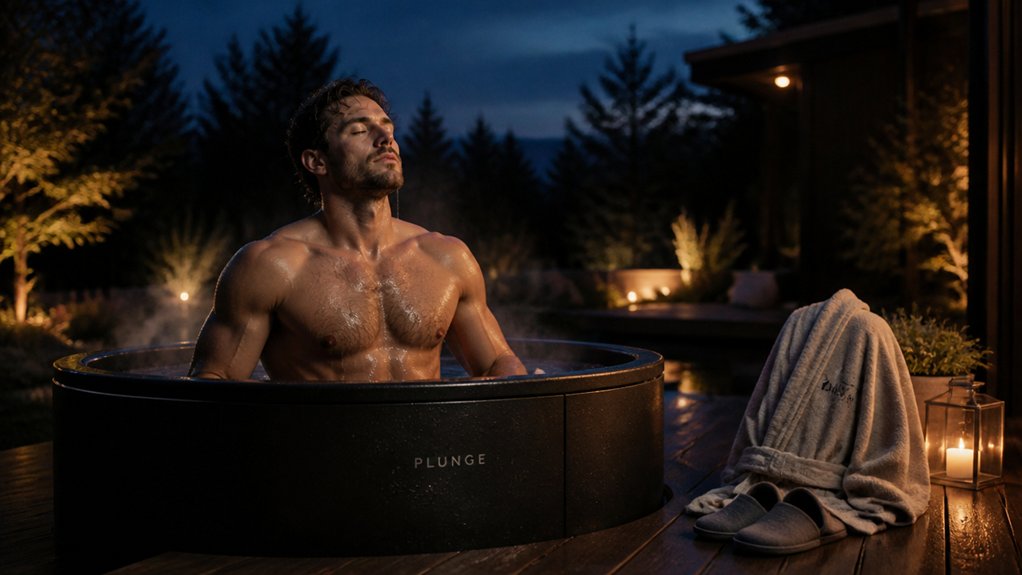
Wondering how long and how often you should plunge for sleep? You’ll want cold plunge sessions lasting 1‑5 minutes, starting at the lower end to gauge cold exposure tolerance. Additionally, consider using an extendable handle and supervising safety tips similar to how careful design choices in waterproof gear help protect users during wet use IPX7 waterproof and temperature management. Keep the water temperature between 50‑59°F (10‑15°C); anything below 40°F raises risk and can disrupt safe body temperature.
Aim for a cold plunge frequency of 1‑2 times per week at first, then bump up only if you feel comfortable.
Timing cold plunges at least 1‑2 hours before bedtime prevents the post‑plunge alertness surge, letting you drift into rest more easily.
After each cold-water immersion, dry off and warm up quickly to lock in the relaxation benefits and support better sleep.
Frequently Asked Questions
Does Cold Plunge Make You Sleep Better?
Yes, you’ll likely sleep better after a cold plunge if you do it 1‑2 hours before bed; it drops core temperature, activates parasympathetic relaxation, and can increase slow‑wave sleep over time.
What Is the 10 5 3 2 1 Rule for Sleep?
You follow the 10‑5‑3‑2‑1 rule by skipping caffeine ten hours before bed, stopping work five hours early, turning off TV three hours prior, finishing meals two hours ahead, and avoiding screens one hour before sleep.
Can Ice Baths Help With Lipedema?
You can try ice baths for lipedema; they may cut inflammation, ease swelling, and boost circulation, which can lessen pain and support lymphatic flow, but always check with your doctor first.
How Long Before Bed Should You Cold Plunge?
You should plunge about one to two hours before bedtime, keeping the immersion under three minutes at 50‑59°F. This timing lets the initial alertness fade, your core temperature drop, and your body relax for sleep.
In Summary
By ending your day with a cold plunge, you’ll lower core temperature, boost melatonin, and calm your nervous system—key ingredients for deeper, more restorative sleep. Timing it 1‑2 hours before bedtime lets your body shift smoothly into rest, while keeping sessions short and regular guarantees safety and consistency. Stick with this routine, and you’ll likely notice faster sleep onset, fewer awakenings, and overall better sleep quality.