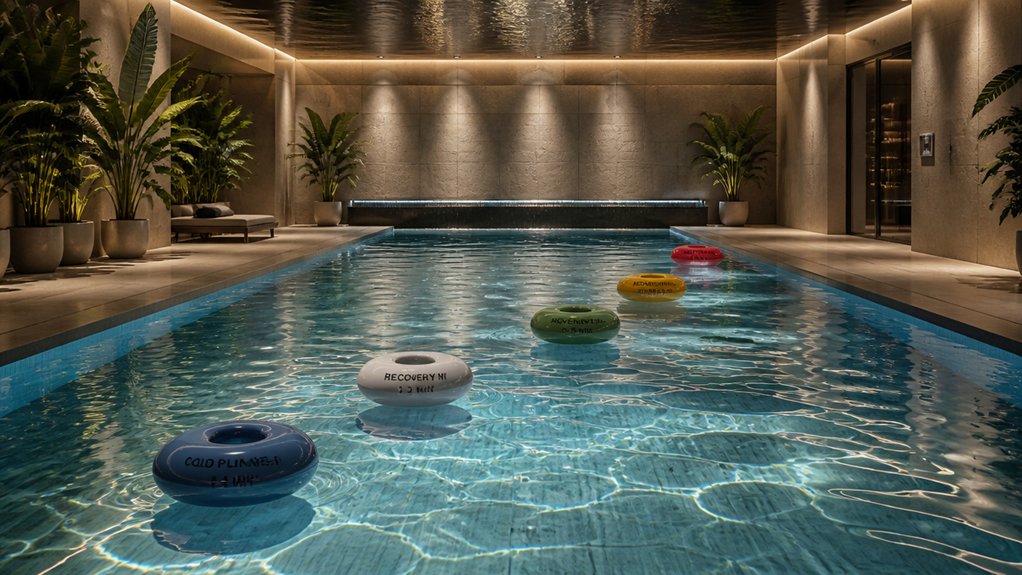

To boost your mitochondria through cold exposure, start with short cold showers or ice baths at around 50-60°F for 1-3 minutes, gradually increasing duration as you adapt. Consistency is key—aim for 3-4 sessions weekly. Combine cold with light and heat therapies, like sauna sessions, for better effects. Use proper safety measures, breathe control techniques, and track your progress. Keep going, and you’ll discover how cold exposure can release your cellular energy potential.
What Are Mitochondria and Why Do They Matter?

Have you ever wondered what powers your cells and keeps you energized? That’s the job of mitochondria, the cellular “powerhouses” responsible for about 90% of your ATP, or adenosine triphosphate, which fuels all biological processes. They generate energy through cellular respiration, extracting nutrients to produce essential energy supplies.
When mitochondrial function declines—known as mitochondrial dysfunction—you might experience decreased energy, increased oxidative stress, and a higher risk for age-related diseases like Alzheimer’s and diabetes. Improving mitochondrial health through mitochondrial biogenesis, the process of creating new mitochondria, can enhance cellular efficiency.
Maintaining healthy mitochondria is crucial for overall vitality, longevity, and preventing age-related decline, ensuring your cells stay active and well-energetic.
How Cold Exposure Boosts Mitochondrial Growth and Function
Cold exposure triggers your body to produce more mitochondria, boosting their number and improving your energy capacity. It also enhances mitochondrial efficiency by reducing harmful reactive oxygen species and supporting cellular repair processes.
Even brief cold showers can stimulate these cellular adaptations, leading to better metabolic health and increased resilience.
Stimulates Mitochondrial Biogenesis
When you expose your body to cold temperatures, you activate cellular stress responses that directly stimulate mitochondrial biogenesis—the process of creating new mitochondria. Cold exposure, like cold plunges, triggers this growth in muscle cells and brown adipose tissue.
As you experience shivering and brown fat activation, ATP demand rises, prompting mitochondria to adapt and increase in number. This process also enhances oxidative metabolism, making existing mitochondria more efficient. Cold therapy helps reduce reactive oxygen species (ROS), which can damage mitochondria, protecting your energy centers.
Even brief cold water sessions, such as ice baths or cold showers, can greatly boost mitochondrial biogenesis. These responses ultimately improve your body’s ability to produce energy, supporting better overall metabolic health.
Enhances Mitochondrial Efficiency
Exposing your body to cold temperatures directly boosts the efficiency of your existing mitochondria by enhancing key energy processes such as electron transport and reducing the production of reactive oxygen species (ROS).
Cold exposure improves mitochondrial health by optimizing electron transport chains, leading to better ATP generation. It also activates brown fat, which increases thermogenic capacity by uncoupling respiration, so energy is diverted to heat rather than ATP.
This process supports mitochondrial biogenesis, encouraging the growth of new mitochondria for increased metabolic capacity. As your mitochondria become more efficient, they better support energy production for cellular functions and systemic health.
Regular cold exposure, even through brief cold showers or plunges, sustains mitochondrial efficiency, enhancing overall metabolic function and resilience.
Activates Cellular Repair Processes
Building on how cold exposure enhances mitochondrial efficiency, it also activates essential repair processes within your cells. Cold therapy triggers hormesis, a beneficial stress response that prompts your mitochondria to repair and adapt. This activation increases sensor accuracy and stimulates cellular repair pathways, strengthening mitochondrial resilience and function. Cold exposure reduces reactive oxygen species (ROS), which otherwise cause oxidative damage, protecting mitochondria from harm and ensuring peak energy production. Additionally, cold-induced thermogenesis—via shivering or brown fat activation—demands more ATP, prompting mitochondrial biogenesis and repair to meet increased energy needs. Even a single cold plunge can stimulate these signaling pathways, encouraging mitochondrial growth and repair. Overall, cold therapy not only boosts mitochondrial capacity but also promotes cellular health through targeted repair mechanisms.
Practical Ways to Start Cold Water Therapy at Home or Outdoors
Getting started with cold water therapy at home or outdoors is straightforward with some simple adjustments. Begin by ending your hot shower with 30-90 seconds of cold water to stimulate mitochondrial biogenesis and boost your metabolic health. For more immersive cold exposure, create an ice bath at home using a filled bathtub with two bags of ice, aiming for water temperatures around 50-60°F for 5-10 minutes while monitoring your tolerance. You can also build a dedicated cold plunge by investing in a chest freezer, which provides convenient, regular cold therapy sessions. Outside, practice gradual adaptation by starting with brief cold water dips or swims, gradually increasing duration and intensity. Incorporating cold plunges regularly enhances water treatment and maintains water clarity, making your cold therapy safer and more effective. Consistency and patience are key to safely enhancing mitochondrial function and systemic energy.
How to Safely Build Your Cold Water Routine

To safely incorporate cold water exposure into your routine, it’s important to start gradually and listen to your body’s signals. Begin with short cold showers, finishing with 30 to 90 seconds of cold water, and gradually increase your time over days or weeks. Use home methods like cold plunge tubs or ice baths, keeping water around 50-60°F, but avoid sudden extreme cold to prevent cold shock and reduce cardiovascular risk. Build tolerance slowly to avoid uncontrolled cold shock responses and guarantee safety. Consistent cold exposure promotes mitochondrial biogenesis and boosts long-term health benefits. Selecting the right insulation and ensuring your tub’s durability are key for maintaining consistent temperatures and safe cold exposure sessions over time.
Best Practices for Duration and Frequency of Cold Plunges
Start with cold plunges lasting 1 to 3 minutes to ease into the practice, and gradually increase to 5 to 10 minutes as your body adapts.
Stick to water temperatures around 50-59°F (10-15°C) for maximum mitochondrial benefits without risking safety.
Aim for 3 to 4 sessions per week to see sustained improvements in mitochondrial health and metabolic function.
Choosing the right temperature range and duration helps optimize recovery and enhances overall effectiveness.
Optimal Cold Duration
Finding the right duration for cold exposure is essential to maximizing benefits while minimizing risks. The ideal cold duration varies from 30 seconds to 10 minutes, depending on your experience and tolerance.
Beginners should start with shorter sessions, around 30-90 seconds, to prevent cold shock and build tolerance gradually. As you adapt, you can extend exposure time, reaching around 5-10 minutes in water at 50-60°F, which effectively stimulates mitochondrial activity and mitochondrial biogenesis.
Longer sessions can boost energy and enhance health, but avoid excessive exposure to prevent complications like heart stress. Consistency is vital; maintaining proper cold durations guarantees you accurately trigger mitochondrial improvements without risking overstimulation or harm.
Tailoring your cold exposure duration maximizes mitochondrial function and overall wellbeing.
Recommended Cold Frequency
How often should you incorporate cold plunges to maximize mitochondrial benefits while maintaining safety? Generally, 3-4 sessions per week at safe cold temperatures effectively stimulate the production of new mitochondria.
Regular cold exposure acts as a therapy to enhance mitochondrial function, but the frequency must be gradually increased to avoid cold shock risks. Beginners should start with shorter durations, like 30-60 seconds, and build up over time.
Consistency is key: sustained cold exposure over weeks boosts mitochondrial efficiency and complements your regular exercise routine. Avoid prolonged or extreme cold exposures below 50-60°F without proper adaptation, as they can strain your heart. Incorporating proper water treatment solutions ensures your water remains clean and safe for regular use.
Combining Cold Therapy With Light and Heat for Better Results
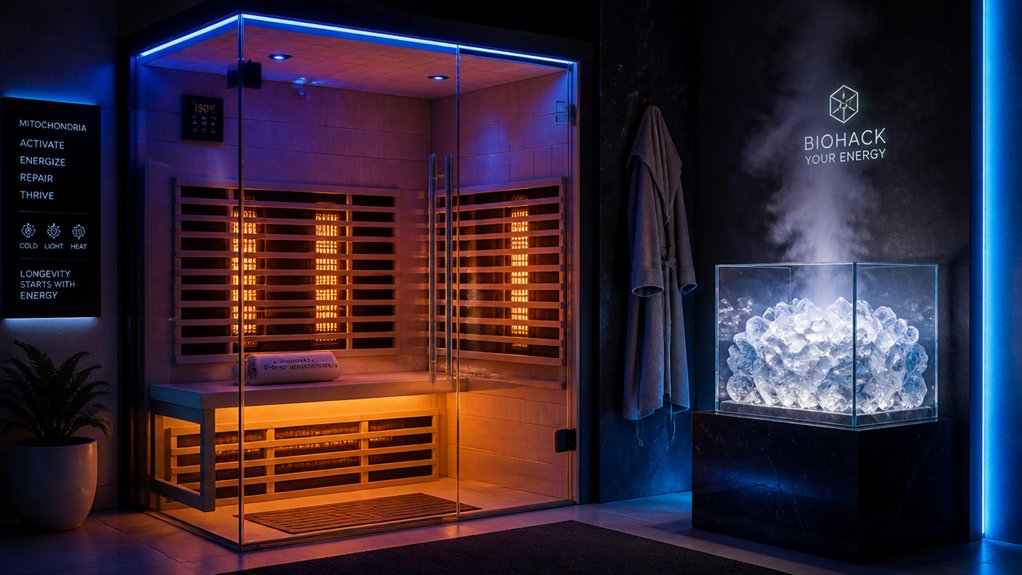
Combining cold therapy with light and heat treatments amplifies their individual benefits by targeting different cellular pathways, leading to more effective mitochondrial improvements. This synergy boosts mitochondrial cytochrome C oxidase activity, enhancing ATP production more than cold exposure alone.
Sequentially using cold therapy, followed by heat therapy like sauna bathing, promotes mitochondrial biogenesis and improves efficiency via oxidative phosphorylation. Additionally, cold exposure activates brown adipose tissue mitochondria, while heat and light therapies enhance mitochondrial function in muscles and tissues, supporting systemic energy metabolism. Incorporating multi-wavelength therapy devices can further optimize deep tissue healing and mitochondrial health.
To maximize results:
- Incorporate 30–90 seconds of cold showers or ice baths with red and near-infrared light sessions.
- Follow with 15–30 minutes of heat therapy to promote mitochondrial biogenesis.
- Regularly combine these therapies to stimulate hormetic stress responses, reduce inflammation, and improve mitochondrial function.
How to Track Your Progress and Stay Safe
Tracking your progress and ensuring safety are essential when incorporating cold therapy into your mitochondrial health routine. By monitoring key signs, you can gauge improvements like increased energy, reduced inflammation, and better physical performance. Keep a log of how your mitochondria respond by noting changes in fatigue, muscle soreness, and recovery time. Periodic blood glucose tests help track insulin sensitivity and metabolic health. To minimize risks, start with a gradual protocol—30-90 seconds of cold showers or 5-10 minute ice baths at 50-60°F. Always consult a healthcare professional if you have health issues, especially cardiovascular concerns. Use the table below to keep your progress organized: cold exposure tracking tools are designed to support safe and effective monitoring throughout your routine.
Common Cold Exposure Challenges and How to Overcome Them
Starting cold exposure gradually is essential to avoid overwhelming your body and triggering intense cold shock responses. Sudden cold exposure can cause involuntary gasping and rapid heartbeat, risking safety.
To overcome these challenges:
- Begin with short cold showers to build tolerance before progressing to colder water.
- Use controlled breathing techniques like Wim Hof’s method to calm your nervous system and reduce discomfort.
- Practice consistency; regular exposure over weeks promotes mitochondrial function, reducing the severity of the cold shock reflex.
- Consider using a timer to accurately track your session length and avoid overstaying in extreme cold conditions, especially when starting out. waterproof timers
Avoid extreme cold water temperatures initially, especially ice baths, to prevent health risks.
Incorporating Cold Water Therapy Into Your Overall Mitochondrial Health Plan
Incorporating cold water therapy into your overall mitochondrial health plan can be a powerful way to enhance cellular function and energy production. Cold water therapy stimulates mitochondrial biogenesis and improves mitochondrial efficiency by introducing hormetic stress, which prompts adaptive responses.
Cold water therapy boosts mitochondrial function and energy through hormetic stress and adaptive cellular responses.
Short cold plunges or finishing hot showers with 30–90 seconds of cold water can boost cellular energy and support metabolic rate. Combining cold immersion with heat therapy like sauna sessions creates a synergistic effect, further strengthening mitochondrial function.
Additionally, regular cold exposure increases brown adipose tissue activity, enhancing metabolism and insulin sensitivity. To maximize benefits, gradually adapt to cold water therapy, avoiding sudden extreme cold to prevent cold shock reflexes.
Use cold therapy alongside exercise, nutrition, and stress management for all-encompassing mitochondrial health.
Frequently Asked Questions
Can Cold Exposure Boost Mitochondria?
Yes, cold exposure boosts your mitochondria by promoting growth, improving efficiency, and activating brown fat. Even brief cold sessions stimulate mitochondrial adaptation, enhancing your energy production and overall metabolic health through increased mitochondrial activity and heat generation.
How Do You Jumpstart Your Mitochondria?
You can jumpstart your mitochondria by regularly taking brief cold showers or plunges for 30 to 90 seconds, gradually adapting to cold. This stimulates mitochondrial biogenesis, boosts energy efficiency, and improves metabolic health through activation of heat generation mechanisms.
What Does a 2 Minute Cold Shower Do?
A 2-minute cold shower triggers mitochondrial biogenesis, boosting their number and efficiency. It improves energy metabolism, increases insulin sensitivity, reduces reactive oxygen species, activates brown fat, and enhances overall energy levels and physical performance.
How to Clear Out Damaged Mitochondria?
You can clear out damaged mitochondria by regularly doing cold exposures, which stimulate autophagy and mitochondrial biogenesis. This process helps remove dysfunctional mitochondria, reduces oxidative stress, and promotes healthier, more efficient energy production in your cells.