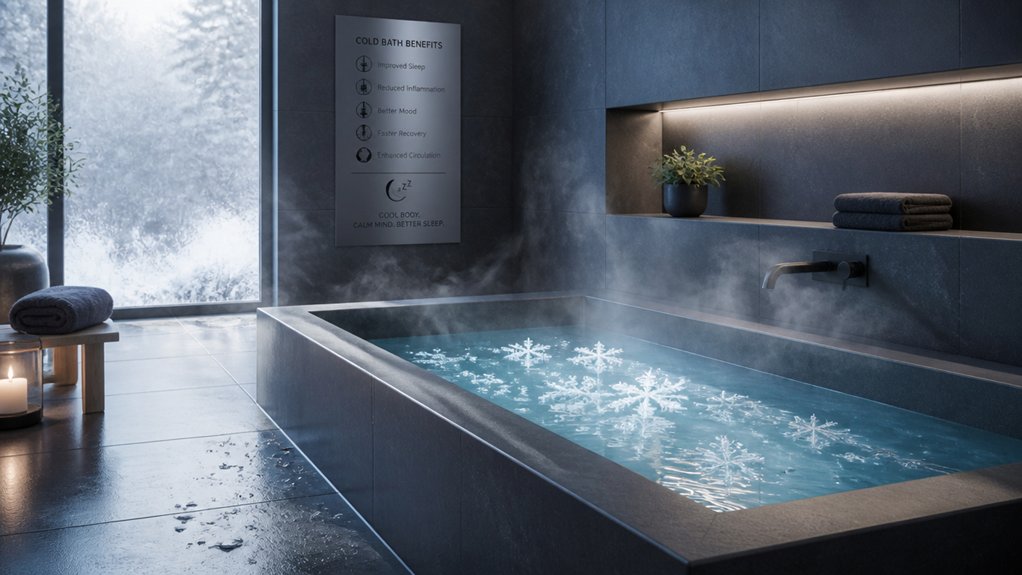
Ice baths lower your core body temperature, mimicking natural nighttime cooling, which promotes melatonin release and helps you sleep deeper. They activate your parasympathetic nervous system, encouraging relaxation and better heart rate variability. Cold exposure also reduces stress hormones like cortisol over time, supporting restorative sleep. Timing is key—you’ll get the best benefits if you take ice baths 1-2 hours before bed. Keep exploring to discover how to optimize your cold therapy for better sleep.
How Cold Water Lowers Your Body Temperature and Boosts Sleep
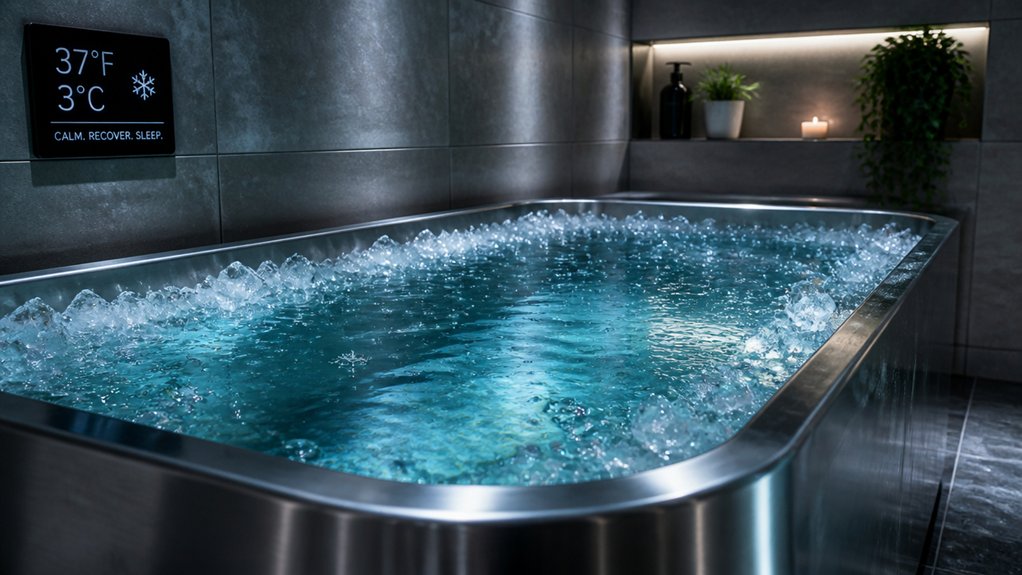
Taking an ice bath causes your body to lose heat through skin conduction and vasoconstriction, which lowers your core body temperature. Cold water immersion initiates a rapid cooling process, helping your core temperature decline naturally, similar to the body’s nighttime temperature drop. Infrared heat lamps can complement this process by providing gentle warmth afterward, supporting safe core rewarming. This decrease in body temperature triggers melatonin release, a hormone essential for regulating sleep-wake cycles and promoting sleepiness. As your body cools, it signals your brain that it’s time to wind down. Lowering your core body temperature also supports shifting into deep sleep stages, especially slow-wave sleep. Additionally, cold exposure activates the parasympathetic nervous system, calming your nervous system and increasing relaxation. Timing an ice bath 1-2 hours before bed optimizes these effects, preparing your body for restorative sleep.
Activating the Parasympathetic Nervous System With Ice Baths
Ice baths stimulate your vagus nerve, which boosts parasympathetic activity, helping you feel more relaxed and prepared for sleep. This activation rebalances your nervous system after stress or exercise, easing your body into a restorative state. Increased activity of the parasympathetic nervous system during cold exposure promotes relaxation and recovery. As a result, your heart rate variability improves, supporting deeper, more restful sleep.
Vagus Nerve Stimulation
Immersing yourself in cold water triggers stimulation of the vagus nerve, a key component of the parasympathetic nervous system responsible for promoting relaxation and recovery. This activation helps reduce stress by lowering cortisol levels and calming your nervous system. Incorporating temperature therapy features with rapid heating and cooling adjustments can further enhance the effectiveness of cold immersion. Cold immersion enhances parasympathetic activity, which improves sleep quality by supporting deeper slow-wave sleep and decreasing nighttime awakenings. The vagus nerve influences heart rate variability, a vital marker of your body’s ability to switch between stress and relaxation states. By stimulating this nerve, ice baths help facilitate the shift into restorative sleep stages. As a result, you’ll experience better relaxation, less stress, and more effective physical and mental recovery, all essential for restful sleep.
Enhanced Relaxation Response
Cold water immersion activates your body’s parasympathetic nervous system, emphasizing a deep state of relaxation after periods of sympathetic activation, such as exercise. Cold therapy triggers this response by stimulating the vagus nerve, which reactivates parasympathetic activity, promoting relaxation and calming your nervous system. Incorporating guided breathing devices designed for relaxation, such as those with visual cues and calming sounds, can further enhance this parasympathetic activation. This enhanced parasympathetic response helps reduce stress hormones like cortisol, improving sleep quality. Cold water immersion shortly before bed can support natural body cooling and relaxation processes, making it easier to fall asleep and stay asleep through the night. As you experience this relaxation response, your body shifts from stress to recovery, enabling your sleep muscles to enter deep, restorative sleep cycles. This connection between cold therapy and parasympathetic activation underscores ice baths’ potential to enhance your overall sleep experience.
Improved Heart Rate Variability
Activating the parasympathetic nervous system through ice baths can lead to notable improvements in heart rate variability (HRV), a key indicator of your body’s ability to recover and maintain balance. Cold-water immersion stimulates the vagus nerve, enhancing parasympathetic activity that calms your heart rate and nervous system.
This reactivation counters exercise-induced sympathetic dominance, helping you achieve more restful sleep. Studies on endurance runners show that ice baths increase slow-wave deep sleep and reduce nighttime awakenings, both linked to better HRV.
As your heart rate variability improves, your body can recover faster and regulate autonomic functions more effectively. Consistently using ice baths can reduce HRV disruptions, supporting improved sleep quality and longer, more restorative sleep periods. Incorporating advanced cooling systems that operate quietly and efficiently can further enhance your recovery experience.
How Cold Water Changes Your Stress Hormones for Better Rest
Cold water immersion activates your vagus nerve, boosting relaxation by increasing parasympathetic activity.
While it initially raises stress hormones like cortisol, repeated sessions lower these levels over time, helping you handle stress better. This hormonal shift supports deeper, more restorative sleep with fewer awakenings. Incorporating measurement parameters like SpO2 and pulse rate can help monitor your recovery progress effectively.
Cold Water Stimulates Vagus Nerve
When you immerse yourself in cold water, it triggers a response that directly influences your nervous system. The cold, from ice baths or plunges, activates your vagus nerve, which promotes relaxation and boosts sleep quality.
This stimulation enhances your parasympathetic nervous system, helping you unwind and prepare for rest. It also lowers stress hormones like cortisol, supporting a calmer, more restful state. Cold water immersion can increase slow-wave or deep sleep, essential for physical restoration and immune health.
Additionally, vagus nerve activation from cold exposure reduces heart rate variability, shifting your nervous system toward parasympathetic dominance. The calming effect of this stimulation makes it easier to fall asleep and stay asleep longer, highlighting the powerful benefits of ice baths for improving sleep and relaxation.
Hormonal Balance Enhances Relaxation
Immersing in ice baths doesn’t just stimulate the nervous system; it also profoundly influences your hormonal balance, which plays a vital role in relaxation and sleep. Cold-water immersion activates the parasympathetic nervous system, encouraging your body to relax and calm down after stress. This reduces cortisol, a key stress hormone that can disrupt sleep.
Studies show that just 15 minutes at around 10°C can lower cortisol levels for hours, supporting better sleep quality. Cold exposure also triggers endorphin release, helping you feel less stressed and more at ease.
Reduced Stress Hormone Levels
Exposing your body to cold water triggers a series of physiological responses that ultimately lower your stress hormones, especially cortisol. Cold water immersion for 15 minutes at around 10°C can reduce cortisol levels for up to three hours, promoting relaxation and better sleep quality. Repeated cold exposure over weeks further diminishes the stress response, helping manage long-term stress. Ice baths stimulate the vagus nerve, boosting parasympathetic activity that counters cortisol-driven stress. Initially, cold exposure may increase alertness, but it leads to a calming effect afterward. This decrease in cortisol reduces your body’s stress load, which can mean fewer nighttime awakenings and deeper sleep. The use of advanced light therapy devices during recovery sessions can further enhance relaxation by promoting deeper tissue healing and reducing inflammation.
The Impact of Ice Baths on Sleep Cycles and Deep Restorative Sleep
Ice baths greatly influence sleep cycles by promoting deeper, more restorative sleep during the early night hours. An ice bath before bed, especially when timed 1-2 hours prior, allows your body temperature to normalize, encouraging slow-wave sleep—crucial for physical and mental restoration. Cold water immersion enhances parasympathetic nervous system activation, calming your body and reducing nighttime awakenings, leading to more continuous sleep. The decreased core temperature from the ice bath triggers natural melatonin release, helping you fall asleep faster and stay in deep sleep phases longer. Studies with endurance athletes show that ice baths stabilize heart rate variability, indicating a more restful sleep cycle. Incorporating a reliable cold plunge thermometer can optimize timing and temperature for maximum sleep benefits. Overall, incorporating cold water immersion can greatly improve the quality of your deep restorative sleep.
When and How to Time Your Ice Baths for Optimal Sleep Benefits
Ever wondered the best time to take an ice bath for sleep improvement? The key is timing your cold plunges 1-2 hours before bed. Here’s how to get it right:
Timing your ice bath 1-2 hours before bed can enhance sleep quality—experiment to find what works best for you.
- Take short, full-body cold exposure sessions lasting about 2 minutes at water temperatures of 10-15°C—enough to lower your core temperature without stress.
- Avoid immediately jumping in before bed, as this can raise cortisol and norepinephrine levels, making it harder to fall asleep.
- Experiment with the timing while tracking your mood, energy, and sleep quality in a journal to find what works best for you.
Long-Term Effects of Cold Water Exposure on Sleep and Mood
Long-term cold water exposure can lead to notable improvements in sleep quality and mood by gradually enhancing your body’s relaxation responses and stress resilience. Regular cold plunging increases deep slow-wave sleep and reduces nighttime awakenings, supporting better long-term sleep patterns.
It also stimulates the vagus nerve, boosting parasympathetic activity, which promotes relaxation and helps lower stress levels. These effects contribute to mental health benefits, including improved mood and resilience to stress. Consistent cold water immersion has been linked to a 29% reduction in sickness absence and a better quality of life, indicating sustained physical and mental health gains.
Over weeks, lowered cortisol levels further support stable sleep and mood regulation. While immediate effects are clear, ongoing research continues to explore the enduring benefits of cold exposure on sleep and mood.
Frequently Asked Questions
How Do Ice Baths Affect Sleep?
Ice baths improve your sleep by increasing deep sleep phases, reducing awakenings, and lowering your core temperature. They stimulate relaxation via the vagus nerve, promote melatonin release, and help your body naturally shift into restful, restorative sleep.
Can Ice Baths Help With Lipedema?
Yes, ice baths can help with lipedema by reducing inflammation, decreasing fluid buildup, supporting lymphatic function, and alleviating pain. However, consult a healthcare professional first, as clinical evidence specifically for lipedema remains limited.
Can You Cold Plunge if You Have Raynaud’s?
If you have Raynaud’s, avoid cold plunges, as they can worsen symptoms or trigger attacks. Always consult your healthcare provider first, try mild exposure with water above 15°C, and never immerse fully without professional guidance.
Does Cold Water Lower Cortisol?
Yes, cold water lowers cortisol levels. When you immerse yourself in cold water, your body responds by reducing cortisol, improving stress resilience and overall recovery, especially with repeated sessions, which can lead to lasting hormonal balance and better stress management.