
Cold plunges trigger a hormonal surge that lowers cortisol, spikes norepinephrine and dopamine, and balances estrogen‑progesterone, giving you steadier mood, sharper focus, and boosted energy. The cold activates brown fat, improving insulin sensitivity and metabolic health while reducing inflammation. Tailor duration to your cycle: short bursts (30‑60 s) during menstruation and luteal,, longer (2‑3 min) in follicular and ovulation phases for maximum benefit. Warm‑up, breathwork, and safe exit cues keep you in control, and tracking mood and cycle data will fine‑tune your routine.
Define Cold Plunge and Trigger Hormonal Stress for Women

When you step into a cold plunge—briefly immersing yourself in water at 10‑15 °C (50‑59 °F)—your sympathetic nervous system fires up, creating an acute hormonal stress response. This cold exposure spikes cortisol levels and adrenaline, mobilizing energy while prompting hormone production that supports hormonal balance.
The surge activates neuroendocrine pathways, releasing endorphins, norepinephrine, and dopamine, which sharpen focus and lift mood. Because your menstrual cycle modulates estrogen and progesterone, timing the plunge can fine‑tune cortisol’s impact on progesterone balance, enhancing overall hormone regulation.
Regular, controlled Cold Plunge Benefits harness this physiological cascade, offering a practical tool to stabilize hormone production without chronic stress.
Cold Plunge for Women: Boost Energy, Focus, and Mood
If you step into a cold plunge for just a minute or two, adrenaline can surge by up to 500 % and dopamine by 250 %, giving you an instant boost in energy, focus, and mood.
Cold water immersion triggers endorphins and catecholamines, sharpening mental clarity and lifting spirits. For women, a brief 1‑3‑minute cold plunge therapy activates the sympathetic nervous system while calming cortisol, helping balance hormonal swings.
Cold water immersion sparks endorphins and catecholamines, sharpening clarity, lifting spirits, and balancing women’s hormonal swings.
The surge of brain‑derived neurotrophic factors enhances focus and resilience, making daily tasks feel easier. You’ll notice steadier energy levels, sharper concentration, and a brighter mood without relying on caffeine or sugary snacks.
Consistent, short sessions keep the hormonal benefits flowing, supporting overall wellbeing. Universal compatibility with stands
Tailor Plunge Duration to Each Menstrual Phase
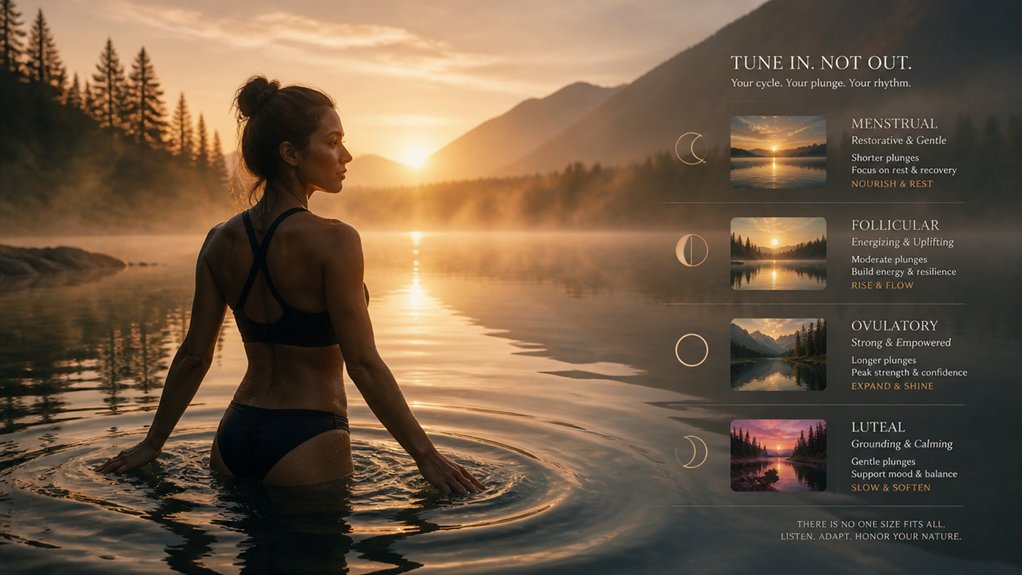
You’ll want to match your plunge timing to each cycle phase, because hormone shifts change how your body reacts to the cold.
Adjust the duration—shorter in the menstrual and luteal phases, longer in the follicular and ovulation phases—to stay within the ideal window. By fine‑tuning the temperature sensitivity for each phase, you can maximize benefits while keeping stress low. Research indicates that 4000mAh battery-powered devices provide longer runtime for extended sessions battery life considerations.
Cycle‑Phase Timing
Because your body’s hormone levels shift throughout the month, tailoring cold‑plunge duration to each menstrual phase maximizes benefits and cuts side effects.
In the menstrual phase, keep cold plunges to about one minute; this eases cramps and inflammation without spiking stress hormones like cortisol.
During the follicular phase, you can extend sessions to two or three minutes because rising estrogen raises temperature tolerance and supports hormonal health.
At ovulation, stick to one‑to‑three minutes to boost mental sharpness and libido while estrogen peaks.
In the luteal phase, shorten plunges to thirty‑ninety seconds, as higher progesterone makes you more temperature‑sensitive.
Aligning timing with each phase helps balance hormones, reduces mood swings, and curbs fatigue.
Optimal Duration Length
Tailoring your cold‑plunge duration to each menstrual phase lets you reap the most benefit while keeping stress low.
During the menstrual phase, aim for about 1 minute to ease aches and bloating without aggravating cramps.
In the follicular phase, the ideal duration length expands to 2–3 minutes as rising estrogen boosts energy and tolerance to temperature shifts.
The ovulation phase supports 1–3 minutes, leveraging peak estrogen for mental clarity, libido, and reduced inflammation.
In the luteal phase, shorten sessions to 30–90 seconds to counteract progesterone‑driven fatigue and mood swings.
Adjusted Temperature Sensitivity
When your cycle shifts, your body’s temperature sensitivity changes, so you’ll want to match both the plunge length and the water’s chill to each phase.
In the menstrual phase, heightened temperature sensitivity means you should keep cold immersion short—about one minute at a modest water temperature—to avoid worsening menstrual cramps.
As estrogen rises in the follicular phase, you can tolerate cooler water (10‑15 °C) and stay in for two to three minutes, boosting circulation without strain.
Ovulation keeps estrogen high, so a one‑to‑three‑minute plunge feels comfortable and sharpens focus.
During the luteal phase, progesterone lifts core heat, so limit immersion to 30‑90 seconds at a slightly warmer temperature to prevent fatigue and mood swings.
Adjusting temperature sensitivity each month keeps your hormone balance on track. Temperature sensitivity
Recommended Plunge Times for Every Phase of Your Cycle

Ever wondered how to match your cold‑plunge routine to each stage of your menstrual cycle?
In the menstrual phase (days 1‑5), keep your exposure to cold short—about one minute—to ease cramps without aggravating inflammation.
As you enter the follicular phase (days 6‑14), estrogen rises, so you can handle a colder plunge for 2‑3 minutes, boosting energy and hormone balance.
During ovulation (days 15‑17), aim for 1‑3 minute plunges, leveraging peak estrogen for mental clarity and comfort.
In the luteal phase (days 18‑28), shorten sessions to 30‑90 seconds to prevent worsening PMS while still gaining anti‑inflammatory benefits.
To further support consistent benefits, select goggles that minimize glare and preserve color accuracy during extended screen time UV400 protection and ensure comfortable, lightweight frames for long sessions.
Cold Plunges for Inflammation Relief & Estrogen Recovery
You’ll notice that a brief cold plunge narrows your blood vessels, cutting vascular flow and easing inflammation. This reduction triggers estrogen‑mediated anti‑inflammatory pathways, helping your hormones stay balanced. Bluetooth connectivity
Reduce Vascular Flow Reduction
Cold plunges trigger rapid vessel constriction, temporarily throttling blood flow to calm inflammation and swelling tied to estrogen swings.
When you step into 10‑15 °C water for 1‑3 minutes, your blood vessels tighten, cutting vascular flow just enough to dampen inflammatory signals. This brief pause protects tissue, lets hormone signaling reset, and eases menstrual or luteal phase discomfort. The process is supported by a solid stability of the body’s clamp-on and under-desk organizational systems that help keep you oriented during recovery, as edge fence design helps prevent items from sliding off during movement.
You’ll notice less bloating and pain as estrogen metabolism clears more efficiently. Pair the plunge with a short warm‑up beforehand to avoid over‑constriction, then let the body naturally restore circulation afterward.
Estrogen‑Mediated Anti‑Inflammation
When estrogen rises in the follicular phase, your body’s natural anti‑inflammatory pathways become more receptive to the benefits of a brief cold plunge, so a 2‑3‑minute dip in 10‑15 °C water can sharply constrict vessels, cut tissue swelling, and amplify estrogen‑driven vascular repair. The cold shock triggers vasoconstriction, which reduces inflammation and limits swelling, while the subsequent rebound vasodilation boosts vascular function. Because estrogen already promotes anti‑inflammatory effects, cold plunging works synergistically, enhancing hormone balance and speeding tissue repair. Regular sessions also lower cortisol, a stress hormone that can sabotage estrogen activity. By keeping inflammation in check, you protect menstrual health, improve immune regulation, and support smoother follicular phase progressions. 8–18
Recovery Timing Optimization
Estrogen’s surge in the follicular phase already primes your body for anti‑inflammatory action, and timing a brief 2‑3‑minute cold plunge during days 6‑14 maximizes that effect.
You’ll hit the sweet spot of vasoconstriction, then a rapid rebound of blood flow that clears inflammation and eases hormonal stress. Keep the immersion under three minutes to protect estrogen balance without overloading the system.
Pair the plunge with a short heat session before entry; the contrast sharpens vascular response and speeds tissue repair.
Skip long cold exposure in the luteal phase, when progesterone raises core temperature and makes you more sensitive to cold, which could disrupt recovery timing. This disciplined schedule lets you harness cold plunges for ideal estrogen recovery and overall hormonal harmony.
Cold Plunge for Women: Catecholamines That Calm Cortisol
If you step into an icy plunge, your body instantly fires up the sympathetic nervous system, releasing a flood of catecholamines—norepinephrine can by up to 500 % and dopamine by about 250 %—that sharpen focus, lift mood, and help keep cortisol in check.
For women, cold plunges trigger a rapid catecholamine surge that tempers stress and steadies hormonal balance. The heightened dopamine acts as a natural mood stabilizer, softening cortisol‑driven swings that often accompany menstrual cycles or menopause.
Simultaneously, the nervous system receives a signal to dial back cortisol production, reducing chronic stress and supporting endocrine health. Regular exposure trains your body to adapt, so each session reinforces resilience, keeps cortisol under control, and promotes overall hormonal equilibrium.
Improve Insulin Sensitivity and Metabolic Health With Cold Exposure
You’ll notice your cells pulling glucose more efficiently after a quick dip in 10‑15 °C water, because the cold spikes brown‑fat activity and ramps up thermogenesis.
The surge in adrenaline also helps clear sugar from your bloodstream, while inflammatory markers drop, supporting better insulin sensitivity.
Pairing these plunges with a balanced diet and regular exercise can amplify those metabolic gains.
Boost Glucose Uptake
When you step into a 10‑15 °C plunge, brown‑fat cells fire up, pulling glucose from the bloodstream and sharpening insulin sensitivity. This cold plunge immersion triggers brown fat to boost glucose uptake, delivering sugar straight to muscles and liver.
You’ll notice improved circulation, which helps nutrients reach cells faster, supporting metabolic health. Women’s hormonal fluctuations matter—planning sessions during the follicular phase maximizes insulin sensitivity gains.
Each session spikes norepinephrine and adrenaline, raising energy expenditure and further enhancing glucose handling. Over weeks, regular exposure reduces systemic inflammation, lowering diabetes risk and stabilizing blood sugar.
Keep sessions short, consistent, and timed to your cycle for the best metabolic payoff.
Activate Brown Fat
Because cold water at 10‑15 °C instantly awakens brown‑fat cells, you’ll boost insulin sensitivity and rev up your metabolism.
When you plunge, mitochondrial biogenesis spikes, turning brown fat into a calorie‑burning furnace that sharpens glucose regulation and supports metabolic health.
Regular cold water therapy keeps this furnace firing, enhancing hormonal balance and cytokine regulation without extra effort.
For women, timing dips to align with the menstrual cycle can amplify the response, as hormonal fluctuations affect how readily brown fat activates.
Aim for 2–3 sessions a week, 5–10 minutes each, and notice steadier energy, better insulin sensitivity, and a more resilient metabolic profile.
Reduce Inflammatory Markers
Cold water’s impact on brown‑fat activation naturally leads to a broader anti‑inflammatory response. When you plunge, vessels constrict, then dilate, boosting blood flow and flushing out inflammatory cytokines. This surge supports hormonal balance, lowers cortisol levels, and drives catecholamine release, which together sharpen insulin sensitivity and curb systemic inflammation.
Regular sessions keep metabolic health on track, making it easier to maintain weight and energy.
- Constrict‑then‑dilate vessels improve circulation and reduce inflammation.
- Catecholamine release spikes glucose uptake, enhancing insulin sensitivity.
- Balanced cortisol levels protect hormonal balance and lessen stress‑linked inflammation.
- Mitochondrial biogenesis from cold exposure upgrades cellular efficiency.
- Consistent plunges lower systemic inflammation markers, supporting overall metabolic health.
Warm‑Up & Breathwork Before Your First Plunge
Start with a brief heat session—like a warm shower or a quick sauna—to raise your core temperature and boost cold‑plunge tolerance, then shift into slow, deep breaths such as the Wim Hof method. This warm‑up primes your body, easing the shock and nudging the parasympathetic nervous system into gear.
As you inhale, you’ll feel cortisol and adrenaline settle, laying groundwork for balanced hormone regulation. Keep the breathwork steady for 30‑60 seconds; the rhythmic flow sharpens mental clarity and steadies your nervous system. By the time you hit the water, endorphins are already primed, ready to surge and amplify the mood‑lifting benefits of the plunge.
The combined warm‑up and breathwork make the experience smoother and more effective.
Spotting Over‑Stimulation: When to Get Out of the Cold
If you notice intense shivering, numbness, dizziness, or an urge you can’t control, step out of the plunge immediately—these signs of over‑stimulation can throw your hormone balance off.
Intense shivering, numbness, dizziness, or an uncontrollable urge signal over‑stimulation—exit the plunge immediately.
A brief, mindful exit protects cortisol levels, avoids a chaotic sympathetic response, and keeps progesterone regulation steady.
Watch for lingering PMS symptoms, fatigue, or cramping after cold immersion; they often signal that the session exceeded your body’s tolerance. Adjust duration, temperature, or timing, and if you’re on hormone therapy or have heart concerns, always check with a healthcare provider before resuming.
- Stop the moment you feel uncontrollable shivering.
- Exit if numbness spreads beyond fingertips.
- Leave when dizziness or light‑headedness appears.
- Pause if mood swings or heightened PMS symptoms follow.
- Consult a healthcare provider if you notice persistent cortisol spikes.
Track Cycle, Mood, and Hormone Metrics to Refine Your Routine
When you’ve learned to recognize over‑stimulation, the next step is to align your cold‑plunge schedule with your menstrual cycle, mood, and hormone trends. Start by tracking menstrual cycle phases in a journal or app; during menstruation and luteal weeks keep cold plunge exposure brief (30‑60 seconds), then extend to 2‑3 minutes in follicular and ovulation phases when estrogen peaks.
Pair each session with mood changes notes to spot energy lifts or reduced PMS symptoms. Log hormone tracking data—estrogen, progesterone, cortisol fluctuations—to fine‑tune timing and intensity. If cramps, fatigue, or mood swings spike, dial back exposure.
Finally, monitor sleep quality alongside stress levels; improvements there confirm your routine supports hormonal balance.
Frequently Asked Questions
Are Cold Plunges Good for Hormones?
Yes, cold plunges can help your hormones. They spike cortisol and adrenaline, boost dopamine, improve insulin sensitivity, and modulate progesterone, especially when you keep sessions moderate and align them with your menstrual cycle phases.
What Hormone Is Released During a Cold Plunge?
You release adrenaline, norepinephrine, dopamine, cortisol, and endorphins during a cold plunge, with dopamine boosting mood and focus, while cortisol and endorphins help regulate stress, pain, and overall hormonal balance.
Is a 2 Minute Cold Plunge Good for You?
Yes, a two‑minute cold plunge works for you, boosting dopamine, norepinephrine, and cortisol while supporting estrogen during the follicular phase, improving mood, circulation, and hormonal balance without overstressing your system.
How Can I Fix My Hormonal Balance Naturally?
You can restore hormonal balance naturally by regular cold plunges, especially during your follicular phase, pairing them with heat therapy, mindful breathing, balanced nutrition, sleep hygiene, and stress‑reduction practices.
In Summary
By syncing your cold‑plunge routine with your menstrual phases, you’ll boost energy, sharpen focus, lift mood, and keep inflammation in check. Adjust duration and timing to match each cycle stage, and pair the plunge with a warm‑up and mindful breathing. Monitor your mood, cycle, and hormone metrics, and pull out when you feel overstimulated. Consistent, personalized cold exposure can fine‑tune hormone balance and support overall metabolic health.



Leave a Reply