Water immersion aids muscle recovery through temperature, pressure, and buoyancy. Cold water triggers vasoconstriction, reducing inflammation and easing pain, while decreasing nerve activity. Hot water increases blood flow, helping nutrients reach muscles and waste exit faster, which boosts strength and repair. Hydrostatic pressure pushes excess fluids away, lowering swelling, and buoyancy decreases strain on muscles. To understand how to use these methods safely and effectively, keep exploring the details below.
How Water Temperature Affects Muscle Recovery
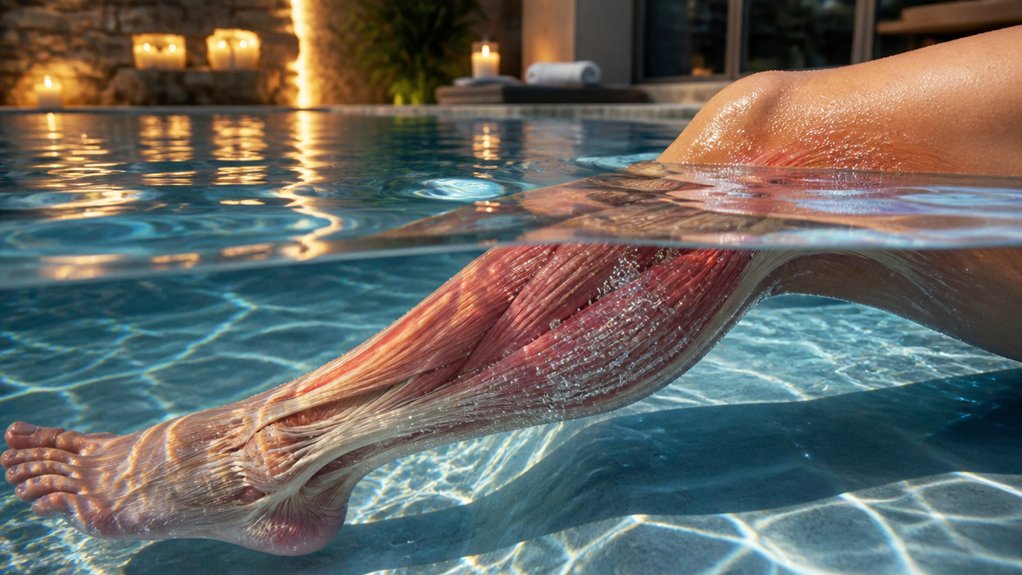
How does water temperature influence muscle recovery? When you choose cold water immersion, typically at or below 59°F (15°C), it helps reduce muscle soreness by causing vasoconstriction, which decreases blood flow to inflamed areas. This lowers inflammation, swelling, and perceived soreness after workouts.
Cold water also slows nerve conduction, providing an analgesic effect that eases muscle pain, especially during the days after exercise. Conversely, hot water immersion increases blood flow, speeding up healing and enhancing muscle power.
However, cold water immersion primarily targets soreness and inflammation, making it ideal for reducing immediate muscle fatigue. The water temperature you select should align with your recovery goals—cold for soreness relief, hot for boosting circulation. Proper chiller selection ensures consistent plunge temperatures, optimizing recovery and comfort.
How Hydrostatic Pressure and Buoyancy Reduce Swelling
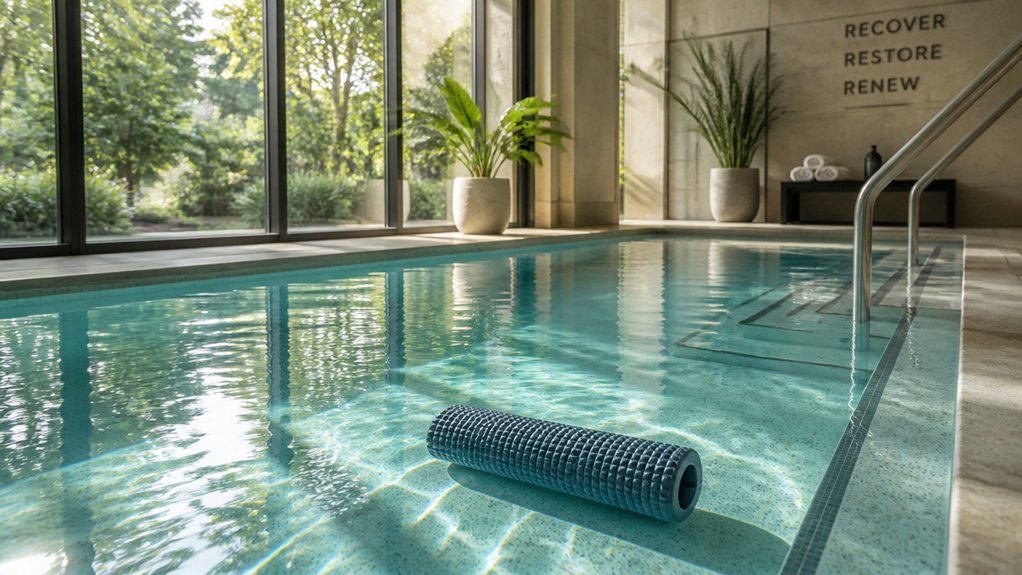
When you immerse yourself in water, the hydrostatic pressure exerted on your body plays a crucial role in reducing swelling. This pressure is uniform across your tissues, helping push excess fluids from the interstitial spaces back into your circulatory system. As a result, swelling and edema decrease, especially after intense exercise or injury. The foam roller support used in pre- and post-immersion routines can further enhance muscle relaxation and recovery. Water immersion’s buoyancy also lessens the gravitational load on your limbs, which improves venous return and lymphatic drainage. The deeper you go, the greater the hydrostatic pressure, enhancing fluid displacement and aiding recovery.
These combined effects help reduce tissue inflammation and muscle swelling. By improving fluid movement, water immersion accelerates the healing process, promotes circulation, and alleviates the physical stress on your muscles, making recovery more efficient.
Why Cold Water Immersion Reduces Inflammation and Nerve Conduction

Cold water immersion triggers vasoconstriction, which helps narrow blood vessels in the affected muscles. This reduces blood flow, decreasing inflammation and swelling after exercise. Additionally, cold exposure slows nerve conduction velocity, providing an analgesic effect that lessens pain perception and nerve sensitization. By lowering the activation of thermal nerves, cold water immersion decreases the recruitment of inflammatory cells like white blood cells, limiting tissue inflammation. The table below illustrates how cold water immersion influences your body’s response: Measurement parameters, ensuring accurate assessment of oxygen levels during recovery.
| Effect | Process | Result |
|---|---|---|
| Vasoconstriction | Narrowing of blood vessels | Reduced inflammation |
| Slowed nerve conduction | Decreased signal transmission | Less pain and nerve sensitization |
| Reduced blood permeability | Less fluid leakage into tissues | Prevents oedema |
| Hydrostatic pressure | Enhances venous return | Less swelling and inflammation |
How Hot Water Improves Blood Flow and Muscle Power
Hot water immersion at around 104°F stimulates increased blood flow to your muscles after exercise, delivering essential nutrients and oxygen needed for recovery. This boost in circulation helps clear metabolic waste products, speeding up muscle repair. Using infrared heat therapy can penetrate deeper tissues, enhancing the benefits of hot water immersion for muscle recovery.
Improved blood flow from hot water immersion supports better recovery of muscle power, enabling you to regain strength more quickly. Studies show that immersing in hot water can enhance jump height and muscle output better than cold water, especially after high-intensity training.
The heat promotes the repair and functional recovery of muscle fibers, which is vital for rapid force development. Additionally, sustained blood flow during hot water immersion helps you maintain muscle power during repeated exercise bouts, making it a valuable recovery tool for athletes pushing their limits.
Should You Use Cold or Hot Water Immersion? When and How to Do It Safely
Deciding whether to choose cold or hot water immersion depends on your specific recovery needs and goals. Use cold water immersion (50-59°F) to reduce inflammation, swelling, and muscle soreness after exercise. It causes vasoconstriction and slows nerve conduction, which helps with muscle recovery, but avoid overuse, as it may blunt muscle power and strength gains if done chronically. Incorporating magnesium-based recovery creams after cold immersion can enhance muscle relaxation and reduce soreness, supporting your recovery process.
Start with short sessions of 30 seconds to 1 minute, gradually increasing to 5-10 minutes, and always avoid icy waters with strong currents.
Use hot water immersion (around 104°F) to promote blood flow and support muscle power recovery, especially if you’re planning back-to-back sessions.
People with cardiovascular risk factors should consult a healthcare professional before beginning either method to guarantee safety.
Frequently Asked Questions
How Long Should Water Immersion Sessions Last for Optimal Recovery?
You should aim for water immersion sessions lasting 10 to 15 minutes for ideal recovery. This duration helps reduce inflammation and muscle soreness without causing discomfort or jeopardizing safety, ensuring effective recovery without overdoing it.
Are There Any Risks Associated With Extended Water Immersion?
Extended water immersion can pose risks like skin maceration, hypothermia, and increased cardiovascular strain. You should limit sessions, monitor your body’s response, and consult a healthcare professional to prevent potential adverse effects during prolonged immersion.
Can Water Immersion Help Prevent Delayed Onset Muscle Soreness?
Yes, water immersion can help prevent delayed onset muscle soreness by reducing inflammation, improving circulation, and relaxing muscles. You can experience quicker recovery, less soreness, and enhanced performance, making it a beneficial part of your post-workout routine.
Is Water Immersion Suitable for All Types of Muscle Injuries?
Water immersion isn’t suitable for all muscle injuries, especially open wounds or infections. You should consult a healthcare professional first, but generally, gentle immersion can promote circulation and reduce pain in certain muscle strains and soreness.
How Often Should Athletes Incorporate Water Immersion Into Their Recovery Routine?
You should incorporate water immersion into your recovery routine 2-3 times per week, especially after intense training. Listen to your body’s response, gradually increase frequency, and consult a professional to tailor the regimen to your needs.