
When you’re exposed to cold, your sympathetic nervous system fires instantly, releasing norepinephrine that latches onto β‑adrenergic receptors on brown‑fat cells. This spikes cAMP, activates PKA, and triggers lipolysis, flooding mitochondria with fatty acids. UCP1 then uncouples oxidative phosphorylation, letting protons leak and turn chemical energy into heat, so you stay warm without shivering. Keep going and you’ll discover the exact cold‑exposure tricks that maximize this thermogenic boost.
How Cold Triggers the Sympathetic Nervous System for Brown‑Fat Activation
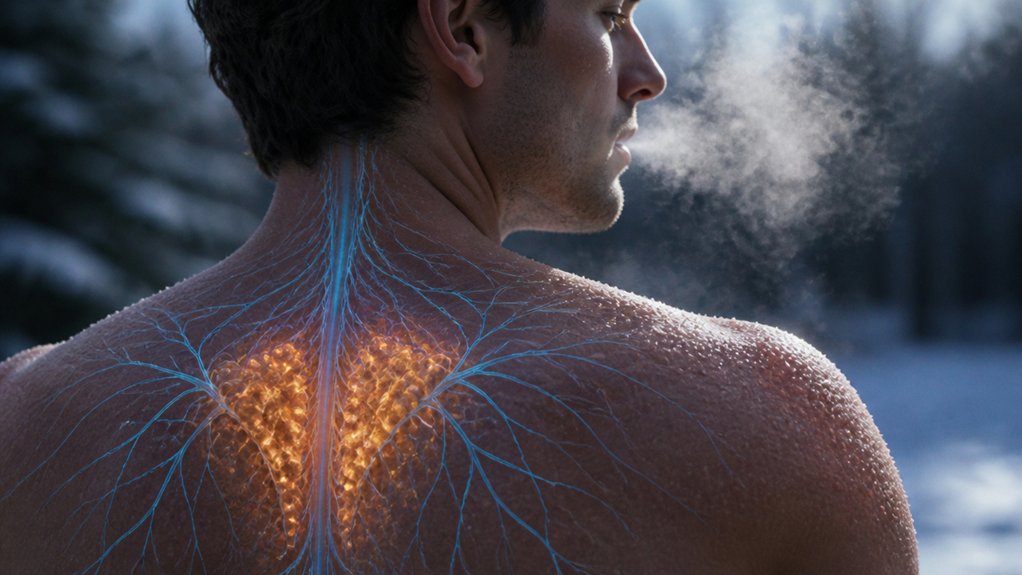
When you’re exposed to cold, your body instantly fires up the sympathetic nervous system, releasing adrenaline that jumps straight to brown‑fat cells. That surge triggers brown fat activation and non‑shivering thermogenesis, letting you generate heat without shivering. Adrenaline binding to brown fat receptors accelerates fatty acid oxidation inside mitochondria, driving heat production to raise and stabilize core temperature. Cold exposure also expands brown‑fat volume, so more cells join the effort. The sympathetic nervous system coordinates this response faster than muscle shivering, so you stay warm efficiently. By channeling energy into thermogenesis, your body conserves fuel while keeping you comfortable. ThermoPro TP50
What Happens Inside Brown‑Fat Cells When Norepinephrine Binds?
If cold hits your skin, norepinephrine rushes to brown‑fat cells and triggers a rapid cascade: it binds β‑adrenergic receptors, spikes cAMP, and activates protein kinase A, which then drives lipolysis and turns on thermogenic genes. You’ll see triglycerides split into fatty acids and glycerol, and those fatty acids rush into mitochondria where uncoupling protein 1 readies the heat‑making machinery. The surge of cyclic AMP keeps the signal alive, while the β‑adrenergic receptors keep the loop turning, boosting thermogenic gene expression and calorie burning.
| Step | Molecule | Effect |
|---|---|---|
| 1 | norepinephrine | activates brown fat cell receptors |
| 2 | cyclic AMP | amplifies the signal |
| 3 | protein kinase A | triggers lipolysis |
| 4 | fatty acids | fuel uncoupling protein 1 in mitochondria |
How UCP1 Drives Brown‑Fat Activation and Generates Heat

Norepinephrine’s binding to β‑adrenergic receptors floods brown‑fat cells with cAMP, which in turn activates protein kinase A and drives lipolysis; the released fatty acids then power UCP1, the uncoupling protein embedded in the inner mitochondrial membrane.
Norepinephrine triggers cAMP, activating PKA, driving lipolysis, and powering UCP1‑mediated heat production in brown‑fat cells.
UCP1 lets protons slip back across the inner mitochondrial membrane of brown adipose tissue, bypassing ATP synthase. This uncoupling turns oxidative phosphorylation into heat, so every molecule of fatty acid or glucose you oxidize becomes a burst of non‑shivering thermogenesis.
The iron‑rich mitochondria in brown fat handle the rapid proton flux, boosting energy expenditure and overall heat production during cold exposure. You’ll feel calorie burn rise as UCP1 fuels the furnace inside your cells.
- UCP1 creates a proton leak that converts metabolic fuel directly into heat.
- Brown fat’s dense mitochondria supply the capacity for swift, large‑scale thermogenesis.
- Cold exposure triggers adrenaline, which accelerates UCP1 activation and non‑shivering heat.
- The process raises whole‑body energy expenditure, aiding weight management.
- Heat production occurs before shivering, preserving core temperature efficiently.
Cold‑Exposure Techniques That Specifically Boost Brown‑Fat Activation
Although you might think cold is just uncomfortable, brief, controlled exposure—like a 30‑second to 1‑minute cold shower or a short plunge in 4–15 °C water—actually sparks non‑shivering thermogenesis and awakens brown‑fat cells.
You’ll start with a cold shower at a water temperature around 14 °C, staying just long enough to feel a sting but not shivering.
Progress to a short immersion in 4‑15 °C water 2‑3 times weekly, personalizing cooling intensity as you adapt.
Pair each session with light physical activity; the added muscle work releases irisin, which further boosts activating brown fat and converts white fat to thermogenic beige cells.
Monitor your response, avoid rapid warming afterward, and keep the routine consistent to let brown fat burn calories efficiently.
Additionally, implementing a consistent external power approach to maintain stable device-supported cooling can mirror how consistent cooling supports brown-fat activation over time. external power
Frequently Asked Questions
Does Being Cold Increase Brown Fat?
Yes, when you feel cold your body releases adrenaline, which triggers brown‑fat cells to burn calories for heat, boosting both their activity and, over time, their overall volume.
How Long Do You Need to Be in Cold Water to Activate Brown Fat?
You need to stay in cold water for at least 5‑10 minutes, ideally up to 30 minutes, at around 14 °C (58 °F). Begin with shorter bouts and gradually increase to avoid shivering.
What Activates Brown Fat the Most?
You get the biggest boost when you expose yourself to moderate cold—around 14 °C to 4 °C—for short periods, especially in the morning, because the chill triggers adrenaline and ramps up brown‑fat thermogenesis.
Do Leaner People Have More Brown Fat?
You have more brown fat if you’re lean; studies show lean adults possess larger, more active brown‑fat deposits, especially around the neck, shoulders, and upper chest, enhancing calorie burning.
In Summary
You now see how a chilly environment sparks the sympathetic nervous system, flooding brown‑fat cells with norepinephrine. That messenger flips on UCP1, uncoupling mitochondria so they burn fuel instead of storing it, producing heat. By deliberately exposing yourself to cold—think ice‑water dips, cool showers, or brief outdoor brisk walks—you can repeatedly activate this pathway, boosting thermogenesis and supporting metabolic health.