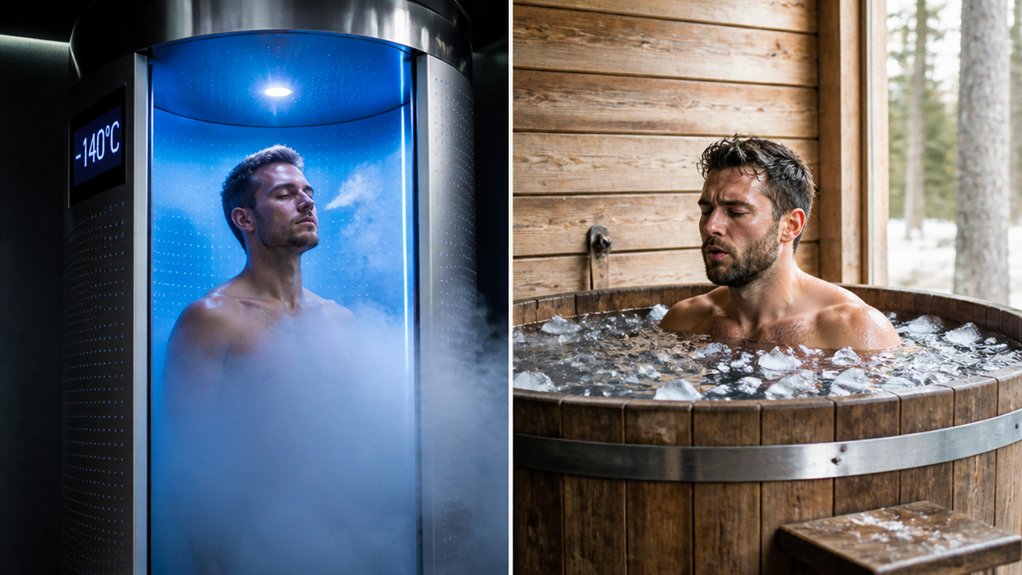
You’ll find that cryotherapy blasts ultra‑cold air at –100 °C to –140 °C for 2‑4 minutes, causing rapid vasoconstriction then a rebound vasodilation that flushes waste and eases pain, while ice baths submerge you in 10‑15 °C water for 5‑15 minutes, slowing metabolism, reducing lactic acid, and compressing tissue via hydrostatic pressure. Both trigger endorphin release and improve microcirculation, but cryotherapy is quicker and more intense, whereas ice baths are cheaper and easier to set up at home. If you keep going, you’ll discover how to match each method to your goals and stay safe.
Cellular Effects of Cryotherapy and Ice Baths

When you step into a cryotherapy chamber, the ultra‑cold air triggers rapid vasoconstriction followed by a rebound vasodilation, which boosts oxygen delivery and speeds waste removal at the cellular level. You feel the cold shock response fire up noradrenaline and beta‑endorphins, dampening inflammation and sharpening pain tolerance.
Cryotherapy’s -100 °C to -140 °C air provokes a systemic stress signal that quickly up‑regulates anti‑inflammatory proteins, clearing metabolic waste and priming muscle recovery. In contrast, ice baths and cold water immersion sit at 10–15 °C, slowing metabolic activity, reducing lactic acid buildup, and compressing tissue via hydrostatic pressure to improve microcirculation.
Both methods shrink vessels during vasoconstriction, then swell them during vasodilation, delivering fresh oxygen and nutrients while flushing out waste, ultimately easing soreness and supporting recovery. Vascular responses help explain why convection and perfusion shifts accompany these cooling modalities.
How Do Cryotherapy and Ice Baths Differ in Temperature, Duration, and Delivery?
Ever wondered how the two cold‑therapy methods stack up? You’ll find Cryotherapy uses ultra‑cold air in controlled chambers, dropping temperature to freezing temperatures between –100 °C and –140 °C for a brief duration of 2‑4 minutes.
Ice baths, or cold plunges, rely on immersion in cold water at 10 °C‑15 °C, and you stay in for 5‑15 minutes of sustained cold water exposure. The delivery differs: Cryotherapy’s nitrogen‑cooled or refrigerated air blasts the skin without wetness, while ice baths submerge you, letting water conduct heat away directly.
Because Cryotherapy’s session is short and equipment‑heavy, you need a facility; ice baths can be set up at home with a tub and ice, giving you flexible timing and a tactile, all‑body chill.
A key consideration is the duration of exposure in relation to energy use and recovery windows, which can influence how you plan sessions and rest days. Customized protocols and safety guidelines are essential for both methods to maximize benefits and minimize risks.
Cryotherapy and Ice Bath Benefits for Athletic Recovery and Daily Wellness

After comparing the temperature, duration, and delivery methods, it’s clear that both cryotherapy and ice baths can be powerful tools for recovery and everyday health.
You’ll notice rapid inflammation reduction as vasoconstriction followed by vasodilation flushes metabolic waste, easing muscle soreness and speeding recovery. Cryotherapy’s ultra‑cold burst triggers strong endorphin release, while cold baths’ longer immersion slows metabolism and desensitizes nerves, boosting mental well‑being and sleep.
- Inflammation control – vasoconstriction → vasodilation clears waste.
- Pain relief – endorphin release and nerve desensitization cut muscle soreness.
- Performance lift – improved circulation and reduced fatigue enhance athletic recovery and daily wellness.
Cryotherapy and Ice Bath Safety Guidelines and Contra‑indications
If you’re stepping into a cryotherapy chamber or sinking into a cold‑water tub, safety must come first. Begin with a healthcare professional’s clearance if you have heart disease, hypertension, or circulatory issues. Use protective clothing in cryotherapy to prevent frostbite, and keep cold‑bath water between 10–15 °C. Limit initial immersions to 1‑3 minutes, then increase duration as you achieve gradual acclimation. Monitor core temperature and watch for cold shock or cardiovascular stress; stop if you feel dizzy, shivering, or notice a sudden blood‑pressure rise. Warm up immediately afterward with light movement and a warm drink. For enhanced confidence in long‑term battery lifecycle and safety, consider reliable charging options that emphasize protection features and clear status indicators eco-friendly design.
| Risk | Mitigation |
|---|---|
| Frostbite (cryotherapy) | Wear insulated suit, limit exposure |
| Hypothermia (cold baths) | Keep sessions ≤3 min, stay above freezing |
| Cold shock | Start with milder temperatures, breathe calmly |
| Cardiovascular stress | Check blood pressure, consult professional |
Which Cold‑Therapy Fits Your Lifestyle and Goals?
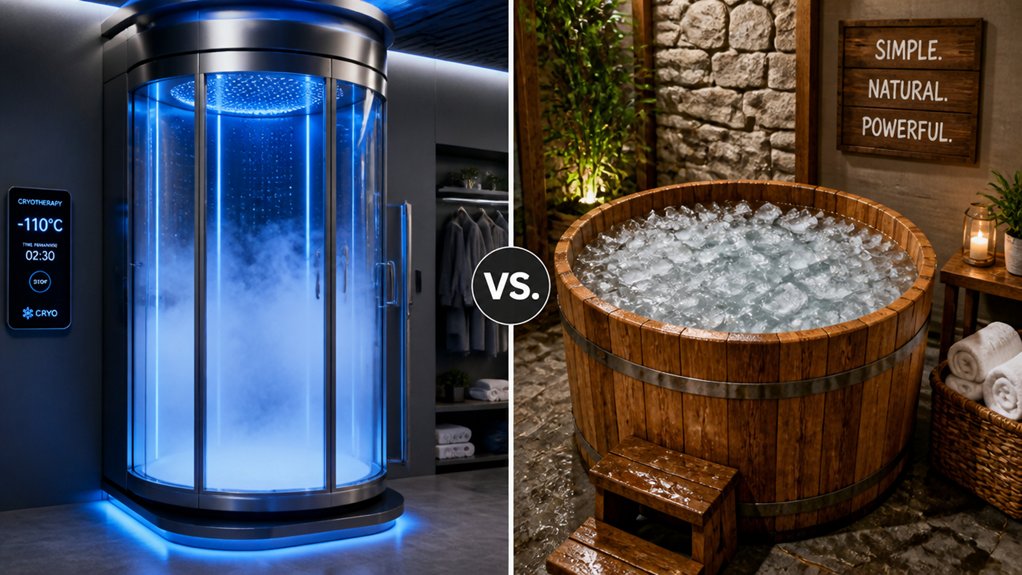
Which cold‑therapy method aligns best with your lifestyle and goals? If you value affordability, gradual acclimation, and easy at‑home integration, cold plunge benefits—2–10 minutes in 10‑15°C water—support muscle recovery and inflammation reduction while letting you control exposure time. For those seeking rapid, intense cooling, elite athletes often choose cryotherapy sessions: 2–4 minutes at -100°C to -140°C dry air, delivering swift body‑temperature drops and mental‑health boosts under professional supervision. Your decision hinges on budget, convenience, and desired outcomes. external power
Frequently Asked Questions
Is Cold Plunge or Cryotherapy Better for You?
You’ll benefit more from cold plunges if you’re a beginner, prefer at‑home use, and want gradual acclimation; choose cryotherapy if you need rapid, intense relief and have professional supervision.
Is Cryotherapy Scientifically Proven?
No, you can’t say cryotherapy’s benefits are scientifically proven; most studies are small, inconsistent, and preliminary, showing modest inflammation reduction but lacking large‑scale, conclusive evidence.
How Cold Is Joe Rogan’s Ice Bath?
You’ll find Rogan’s ice bath sits around 10 °C to 15 °C (50 °F‑59 °F), kept steady by plenty of ice, and he stays in it roughly five to ten minutes per session.
Does Lebron James Use Cryotherapy?
You’ve heard LeBron’s recovery routine includes cryotherapy; he regularly steps into whole‑body chambers around –200°F for a few minutes, using it alongside ice baths, compression, and stretching to cut inflammation and speed up muscle repair.
In Summary
Pick the method that matches your goals, schedule, and comfort level. Cryotherapy delivers intense, short‑burst cooling with minimal prep, while ice baths offer a slower, more affordable soak you can do at home. Both can boost recovery, reduce inflammation, and improve wellness—provided you follow safety guidelines and respect any contraindications. Experiment, listen to your body, and stick with the cold‑therapy that fits seamlessly into your routine.