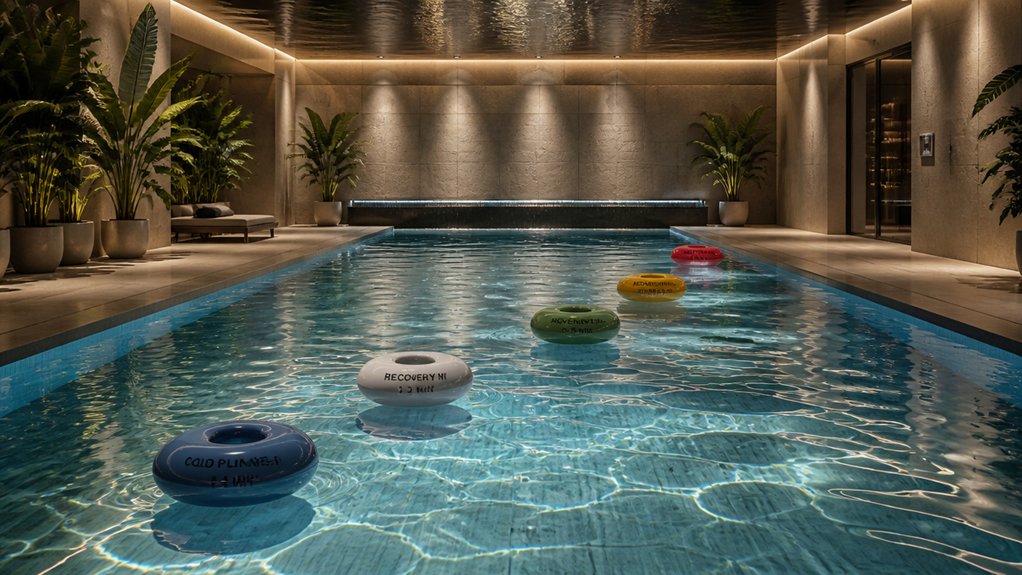

Immersing in cold water triggers your body’s stress response, activating the sympathetic nervous system and releasing hormones like norepinephrine and adrenaline. These hormones boost white blood cell production, enhance immune cell activity, and stimulate cellular protective proteins known as cold shock proteins. This process reduces inflammation, improves immune resilience, and supports recovery. Regular cold exposure gradually trains your system to respond more effectively. Keep exploring to uncover how to maximize these immune benefits through cold therapy.
What Is the Cold Shock Response and How Does It Work?

What exactly happens to your body when you suddenly plunge into cold water? You trigger the cold shock response, an immediate reaction that causes blood vessel constriction and a sharp rise in heart rate to preserve core warmth.
This activates your sympathetic nervous system, releasing stress hormones like adrenaline and norepinephrine—levels of norepinephrine can spike by 200-300%. These hormones promote thermogenesis and help modulate your immune response.
As norepinephrine increases, it suppresses pro-inflammatory cytokines, reducing excessive inflammation. You’ll also experience rapid breathing and a surge of cortisol and noradrenaline, which work together to regulate immune function.
This swift stress response not only prevents cold damage but also initiates hormesis, strengthening your immune system for future challenges. Breathing exercises can further enhance your body’s resilience and recovery during cold exposure.
How Cold Water Exposure Triggers Immune Activation at the Cellular Level
When your body is exposed to cold water, it initiates a complex cellular response that activates multiple components of your immune system. Cold water immersion techniques trigger the cold shock response, leading to rapid skin cooling and vasoconstriction. This causes acute inflammation marked by increased cytokines and immune cell mobilization, including white blood cells.
The exposure stimulates the sympathetic nervous system, releasing norepinephrine, which enhances immune cell activity and suppresses inflammatory cytokines. Repeated cold immersion also stimulates production and activation of immune cells like Natural Killer (NK) cells and cytotoxic T-lymphocytes, boosting both innate and adaptive immunity.
Additionally, this mild stress promotes hormesis, strengthening cellular antioxidant defenses, such as glutathione, and improving immune cell function, ultimately supporting your body’s ability to defend against pathogens. Incorporating adaptogens alongside cold immersion can further enhance stress resilience and immune response.
The Role of Stress Hormones in Boosting Your Defenses
Cold water immersion activates your sympathetic nervous system, prompting the release of stress hormones like norepinephrine and adrenaline. During exposure, these hormones can increase by 200-300%, quickly influencing your body.
Norepinephrine constricts blood vessels and suppresses inflammatory cytokines, reducing inflammation and supporting immune regulation. Meanwhile, adrenaline boosts anti-inflammatory mediators and dampens proinflammatory cytokine responses during infections.
These stress hormones also activate thermogenesis and increase heart rate, helping mobilize immune cells and improve lymphatic drainage. The neuroendocrine response from cold water immersion, combined with breathing and meditation, can help modulate your immune system.
Fundamentally, stress hormones generated during cold exposure don’t just prepare your body for stress—they actively enhance your defenses against pathogens. Additionally, pairing cold plunge therapy with percussion massagers can further accelerate recovery and inflammation reduction, optimizing immune support.
How Cold Plunges Increase White Blood Cell Production
When you expose yourself to cold water, your body triggers a cold shock response that activates your sympathetic nervous system, releasing adrenaline and norepinephrine. This process boosts white blood cell production and activity, enhancing your immune defenses. Additionally, consistent cold plunges can stimulate thermometer accuracy, helping to regulate body temperature more effectively and support immune function. Regular cold plunges can also create hormetic stress that promotes immune cell growth and overall resilience.
Cold Shock and Immune Activation
Immersion in cold water triggers the “cold shock response,” rapidly activating your sympathetic nervous system. This response releases norepinephrine and adrenaline, which stimulate white blood cell production and boost immune cell activity.
As part of this process, circulating Natural Killer (NK) cells and T-lymphocytes increase, helping your body to combat infections and tumors more effectively. The acute stress from cold plunges also elevates inflammatory markers and cytokines, priming your immune defense.
Repeated cold exposure through consistent immersion enhances immune efficiency by improving metabolic rate and promoting lymphatic drainage. Cold Plunge Water Treatment formulas help maintain water hygiene, supporting sustained immune activation. Over time, this leads to greater white blood cell circulation and immune surveillance.
Studies show that after several weeks of cold plunges, levels of immune markers such as IL-6 and lymphocytes rise, indicating sustained immune activation.
Hormetic Stress and Cell Growth
Engaging in controlled cold exposure triggers hormetic stress, which prompts your cells to adapt and become more resilient. Cold immersion activates signaling pathways that promote the proliferation and activation of immune cells, including white blood cells like NK cells and cytotoxic T-lymphocytes.
This hormetic stress stimulates the sympathetic nervous system to release norepinephrine, boosting white blood cell production and helping modulate inflammation. Repeated cold plunges over weeks increase circulating white blood cells, enhancing their ability to fight pathogens.
Additionally, hormesis from cold exposure raises your metabolic rate and heat shock proteins, supporting immune cell growth, repair processes, and greater resilience to infections. Sensor accuracy under cold stress is crucial for obtaining reliable physiological data, further enhancing immune monitoring. Overall, cold immersion stimulates cellular adaptation, strengthening your immune system’s efficiency.
How Cold Water Stimulates Cold Shock Proteins and Their Benefits

When you immerse yourself in cold water, your body activates cold shock proteins (CSPs), which help your cells recover by preventing protein misfolding and maintaining function during stress. These proteins boost your cellular stress response and enhance recovery mechanisms, especially in immune cells. As CSP levels increase with repeated exposure, your immune resilience improves, supporting better overall health. Incorporating controlled cold immersion can also optimize the cooling process and amplify the benefits on your immune system.
Cold Shock Protein Activation
Cold water exposure activates cold shock proteins (CSPs), such as RBM3, which play a crucial role in protecting your cells from cold-induced damage and maintaining their function.
When you immerse yourself in cold water, CSPs respond by stabilizing RNA and proteins during cold stress, supporting cellular repair and reducing inflammation. This process enhances your immune system’s response, making immune cells more resilient and better equipped to handle stress.
Repeated cold water immersion sustains high CSP levels, promoting long-term immune regulation and lowering baseline inflammation.
As a biological stress response, CSP activation through cold exposure triggers hormesis, boosting your body’s defenses and helping you adapt more effectively to harsh conditions. Materials and Insulation in cold plunge tubs help maintain optimal water temperatures, which is essential for consistent CSP activation.
Cellular Stress Response Boost
Plunging into cold water triggers a cellular stress response that activates cold shock proteins, such as RBM3, which work quickly to protect your cells from damage. These proteins promote cellular repair, safeguard neurons and immune cells against oxidative stress, and bolster immune function. By stimulating the cellular stress response, cold exposure enhances pathways that increase white blood cell production and waste clearance. This process also helps modulate inflammation, maintaining a balance of cytokines for reduced systemic inflammation over time. Through hormesis, this mild stress strengthens cellular resilience, making your immune system more efficient at defending against pathogens. The table below highlights key effects of cold shock proteins:
| Effect | Benefit |
|---|---|
| Oxidative Stress | Protection of immune cells against damage |
| Inflammation Balance | Reduced systemic inflammation |
| Cellular Resilience | Improved response to environmental stressors |
Enhanced Recovery Mechanisms
Immersing yourself in cold water activates cold shock proteins (CSPs), which play a crucial role in accelerating tissue recovery and reducing inflammation. CSPs stimulate cellular repair processes and boost immune cell function, supporting faster healing.
Cold water immersion triggers the production of heat shock proteins that protect immune cells from stress-induced damage, ensuring they stay effective. Additionally, CSP activation promotes enhanced lymphatic drainage, aiding in the removal of metabolic waste and pathogens.
This process improves immune system efficiency, allowing your body to respond more effectively to immune challenges. Repeated cold exposure elevates CSP levels, creating an adaptive response that enhances cellular resilience.
As a result, your body recovers faster from physical stress and immune threats, supporting long-term health and resilience.
Boosting Antioxidant Defenses Through Cold Exposure
Exposure to cold water triggers a hormetic response that actively enhances your body’s antioxidant defenses. When you engage in cold water immersion, your body initially experiences oxidative stress, but this prompts an adaptive process called hormesis, boosting cellular defenses.
Over time, your system increases levels of reduced glutathione, an essential molecule that helps detoxify and neutralize free radicals. This process improves your antioxidant capacity, making your immune system more resilient against oxidative damage.
Regular cold plunging has been shown to elevate antioxidant markers in the blood, reinforcing your body’s ability to fight inflammation and oxidative stress. By repeatedly activating these protective pathways, cold exposure strengthens your cellular defenses, supporting overall immune function and resilience against environmental stressors.
Enhancing Detoxification and Lymphatic Drainage With Cold Water
Cold water stimulates your sympathetic nervous system, which directly activates lymphatic vessel contractions, enhancing lymphatic drainage. Through cold water immersion, you support your immune system by promoting the removal of metabolic waste, microbes, and toxins.
The cold shock response leads to increased norepinephrine release, boosting lymphatic function by improving vessel contraction and circulation of immune cells, aiding detoxification. This improved lymphatic drainage during and after cold immersion helps clear inflammatory cytokines and cellular debris, reducing systemic inflammation.
Repeated cold exposure conditions your lymphatic system to work more efficiently over time, enhancing detoxification and immune surveillance. Additionally, cold stress activates the hypothalamic–pituitary–adrenal axis, supporting lymphatic fluid movement and further promoting immune modulation and the removal of harmful substances from tissues.
The Power of Hormesis: Building Long-Term Immune Resilience
Harnessing the principles of hormesis, you can strengthen your immune system by intentionally subjecting your body to controlled, moderate cold stress. Cold immersion stimulates adaptive pathways, increasing white blood cell activity and promoting inflammation reduction. This mild oxidative stress triggers antioxidant defenses like glutathione and superoxide dismutase, protecting immune cells. Over about six weeks of cold plunges, hormesis boosts your immune resilience, lowering baseline inflammation and reducing spikes during stress. Cold immersion not only enhances immune function but also supports longevity by improving metabolic rate and stress hormone regulation. This cumulative effect builds long-term immunity, making your body more resilient against disease.
| Cold immersion | Mild oxidative stress | Boosts immune resilience |
|---|---|---|
| White blood cells | Inflammation reduction | Longevity support |
| Adaptive pathways | Antioxidant defenses | Stress hormone modulation |
Controlling Inflammation and Maintaining Immune Balance With Cold Therapy
Building on the immune-boosting effects of hormesis, controlled cold therapy can help regulate inflammation and maintain immune balance. When you engage in cold immersion, your body initially responds by releasing cytokines and white blood cells, creating an acute immune defense.
Cold therapy activates immune responses, helping regulate inflammation and promote long-term immune balance through adaptive processes.
Repeated cold exposure encourages physiological adaptation, lowering baseline inflammation and reducing inflammation spikes, which supports immune balance. Elevated norepinephrine during cold therapy suppresses proinflammatory cytokines, preventing excessive inflammation.
Additionally, hormesis activates anti-inflammatory pathways and heat/cold shock proteins, helping your immune system stay in check. Enhanced antioxidant defenses, like increased glutathione, lower oxidative stress, further aiding inflammation control.
Altogether, cold immersion modulates inflammatory responses and sustains immune system equilibrium through these dynamic, adaptive processes.
What Science Says About Regular Cold Water Immersion and Immunity
Scientific studies show that regular cold water immersion triggers immune activation by increasing white blood cells and reducing inflammation.
This process promotes hormesis, a stress response that boosts immune cell efficiency and overall resilience. Over time, consistent cold exposure can lead to fewer sick days and improved immune function.
Immune Activation Through Cold Stress
Regular cold water immersion activates your body’s cold shock response, stimulating the sympathetic nervous system and prompting the release of norepinephrine and adrenaline. This response triggers an immune boost by increasing white blood cell counts, such as Natural Killer (NK) cells and T-lymphocytes, which enhance pathogen defense.
Cold immersion also modulates cytokine production, initially raising inflammatory signals but reducing baseline inflammation over time, helping your immune system adapt. Additionally, norepinephrine released during cold shock response improves immune cell efficiency and resilience.
Repeated cold stress not only promotes immediate immune activity but sets the stage for long-term immune resilience, which clinical studies associate with fewer sick days and respiratory infections. This evidence shows cold immersion actively stimulates your immune system through cold stress.
Hormesis and System Resilience
Engaging in regular cold water immersion triggers hormesis, a process where mild stress activates your body’s resilience pathways, boosting immune function over time.
This stress from cold exposure prompts your sympathetic nervous system to release norepinephrine, which modulates immune responses by reducing inflammation and increasing white blood cell activity. With consistent cold water sessions, your body adapts, lowering baseline inflammation and strengthening defenses, evident in higher levels of Natural Killer cells, T-lymphocytes, and interleukin-6.
Cold-induced hormesis also enhances antioxidant defenses like glutathione, improving cellular protection against oxidative stress. Over weeks, this hormetic stress increases your immune system’s resilience, leading to a more robust immune response and fewer sicknesses, demonstrating how regular cold water immersion can promote systemic health improvements.
Tips to Maximize the Immune-Boosting Effects of Cold Water Therapy
To maximize the immune-boosting benefits of cold water therapy, it’s important to follow a consistent routine, ideally taking 2–3 immersions per week at temperatures between 50°F and 59°F (10°C–15°C).
During each session, aim for 2–5 minutes to activate hormesis and stimulate white blood cell production, which enhances your immune system. Maintaining consistency over at least six weeks promotes immune adaptation by lowering baseline inflammation and increasing natural killer (NK) cells and lymphocyte counts.
Incorporate controlled breathing techniques to help manage your physiological response, support relaxation, and amplify benefits.
After each immersion, gradually warm up using movement or warm drinks to support recovery and stabilize your cardiovascular system.
Monitoring your responses and adjusting accordingly guarantees safe, effective boosts to your immune health.
Practical Strategies to Incorporate Cold Water Immersion Into Your Wellness Routine
Wondering how to effectively integrate cold water immersion into your wellness routine? Start with short cold water immersion sessions lasting 2–5 minutes at temperatures between 50°F and 59°F (10°C–15°C). This safe therapy stimulates your immune system without overtaxing your body.
Begin with 2–5 minute cold water dips at 50–59°F to safely boost your immune system.
Aim for consistent cold plunges three times per week for at least six weeks to promote hormesis and boost immune resilience.
Use purpose-built cold plunge setups, like the Ice Barrel, to maintain precise temperatures and make sessions easier.
Pay close attention to your body’s signals—stop immediately if you experience dizziness, numbness, or chest pain—and warm up gradually afterward.
Always consult your healthcare provider before beginning cold immersion, especially if you have cardiovascular issues, high blood pressure, diabetes, or are pregnant.
Frequently Asked Questions
Does Cold Water Immersion Improve the Immune System?
Yes, cold water immersion improves your immune system by activating your sympathetic nervous system, increasing white blood cell activity, reducing inflammation, and promoting immune resilience through hormesis and consistent exposure, which leads to fewer illnesses and stronger defenses.
What Stimulates the Immune Response?
Your immune response is stimulated by cold water immersion through activation of the sympathetic nervous system, release of stress hormones, production of inflammatory markers, and increased activity of immune cells like NK cells and T-lymphocytes.
Does Being Cold Stimulate the Immune Response?
Yes, being cold stimulates your immune response by activating stress pathways, increasing white blood cells, and boosting immune activity. Regular cold exposure enhances your body’s ability to fight pathogens, reduces inflammation, and improves immune resilience through hormesis.
What Are the Benefits of Cold Immersion?
Cold immersion boosts your immune system by increasing white blood cells, enhancing immune markers, and reducing inflammation. It improves lymphatic drainage, accelerates recovery, and strengthens your body’s defenses, helping you stay healthier, recover faster, and build resilience over time.