
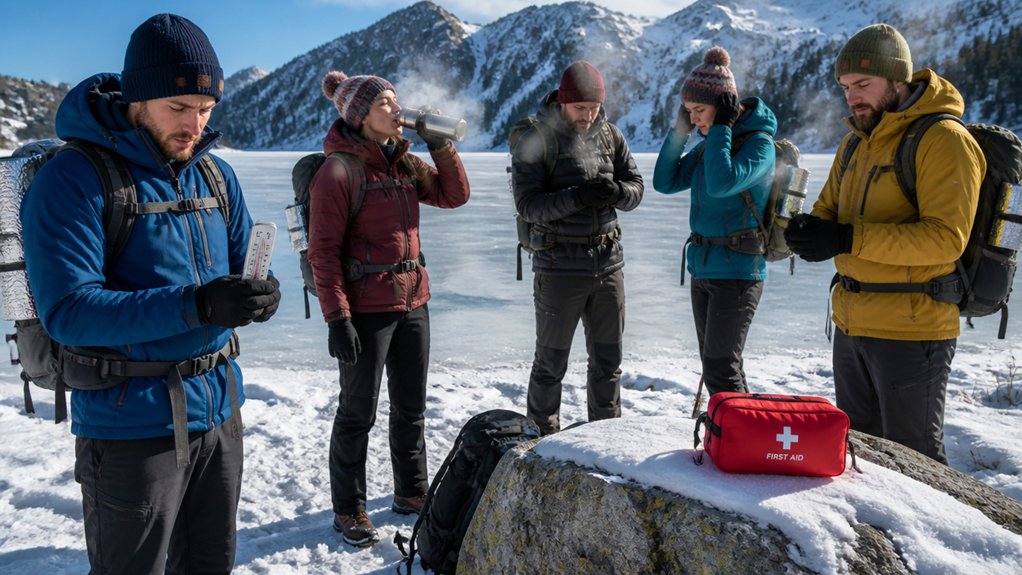
Wear three layers—moisture‑wicking base, insulating middle, wind‑proof outer shell—to keep sweat off your skin and trap heat. Keep your core dry and warm; change out of wet clothes at each break and sip a sweet, warm drink. Schedule regular warm‑up breaks in a heated shelter, swapping partners every 30‑60 minutes to watch for shivering, numbness, or confusion. If early hypothermia signs appear, move to warmth, remove wet layers, and apply warm packs. Continuing will reveal deeper details.
Choose a Layered Clothing System for Cold Exposure Safety

When you head into cold conditions, start with a moisture‑wicking base layer of wool, silk, or synthetics that keeps skin dry, then add an insulating middle layer of fleece or synthetic material to retain heat even if it gets damp, and finish with a wind‑proof, waterproof outer shell that still breathes.
You’ll want three layers of loose‑fitting clothing, each serving a purpose. The inner moisture‑wicking layer pulls sweat away, preventing chill. The middle insulating layer—wool or synthetic—traps body heat, even when wet. The outer waterproof, windproof shell shields you from gusts while allowing ventilation.
Skip tight garments; they restrict circulation and steal warmth from your hands and feet. Pack extra socks, gloves, hats, and jackets to adjust layers as activity and weather shift anti-slip base.
Keep Your Core Warm and Dry for Cold Exposure Safety
If you keep your core dry and insulated, you’ll stay warm and avoid the rapid heat loss that leads to hypothermia. Start with a moisture‑wicking inner layer that pulls sweat away from skin, then add an insulating middle layer that traps heat.
Finish with windproof and waterproof outer layers that block chill while letting moisture escape. Keep clothing dry by checking for damp spots; if anything gets wet, remove wet clothing immediately and replace with dry garments. This prevents the core from dropping temperature.
Don’t forget to protect your head with a snug hat, because heat loss through the scalp can undermine all your layering. By treating each layer as a barrier, you maintain core warmth and stay safe.
Schedule Warm‑Up Breaks Safely for Cold Exposure Safety
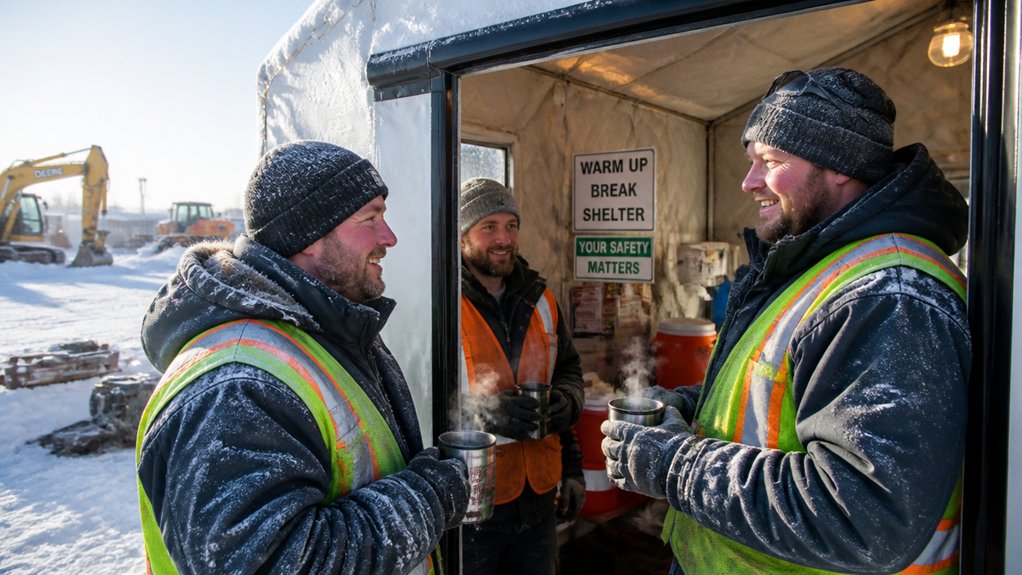
Because cold stress can creep in quickly, you should schedule frequent warm‑up breaks in heated shelters to keep your core temperature stable. Plan breaks according to workload intensity and the temperature and wind chill, so you stay ahead of hypothermia risk.
During each pause, remove wet clothing and slip into dry garments, then sip warm sweetened fluids to boost core body temperature. Use a buddy system to watch each other and catch early signs of cold stress.
- Set break intervals based on activity level and environmental severity.
- Verify shelters are heated enough to raise ambient temperature.
- Provide a supply of warm sweetened fluids for hydration and heat.
- Require workers to change out of wet clothing into dry garments.
- Assign buddies to monitor each other and report any concerning symptoms.
Spot Early Cold‑Stress Signs and What to Do If You Can’t Warm Up
After you’ve taken a warm‑up break, stay alert for the first signs of cold stress: uncontrollable shivering, numb extremities, sudden fatigue, confusion, or clumsy coordination. If you notice any of these early signs, move to a warm environment, strip off wet layers, and sip warm sweetened liquids. For numbness or loss of coordination, apply warm packs to the armpits, chest, and groin—never rub extremities. If symptoms persist or worsen, call emergency services and seek medical help immediately. Beveled edges help reduce trip hazards on some mats, especially when repositioning during breaks.
| Symptom | Immediate Action | When to Call Help |
|---|---|---|
| Uncontrollable shivering | Warm environment, remove wet clothing | If shivering continues >10 min |
| Numbness | Warm packs on core areas | If numbness spreads |
| Fatigue | Rest, sip warm sweetened liquids | If fatigue deepens |
| Confusion | Move to warmth, monitor mental state | If confusion escalates |
| Coordination loss | Warm packs, avoid rapid rewarming | If coordination fails to improve |
Implement OSHA‑Compliant Buddy Checks for Cold Exposure Safety
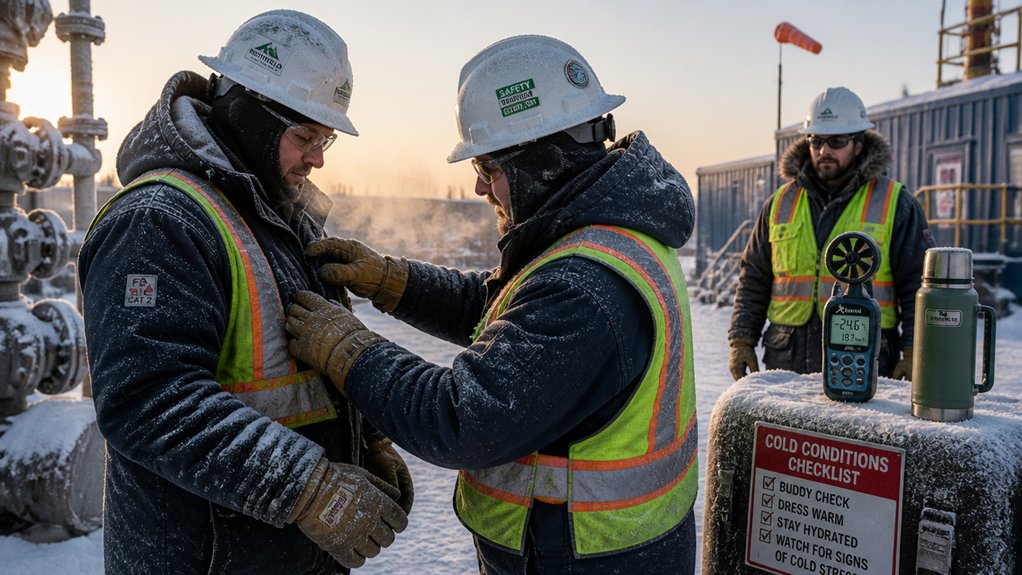
Implementing OSHA‑compliant buddy checks means you’ll regularly monitor each other for early cold‑stress signs—such as uncontrollable shivering, confusion, numbness, pale or waxy skin, and coordination or speech changes—so you can intervene before hypothermia, frostbite, or trench foot develop. Rotating partners every 30‑60 minutes helps maintain alertness and reduces fatigue, especially in wind or sub‑zero temps. Use a simple checklist to capture shivering, confusion, numbness, skin color, and speech changes, and document each observation with runtime considerations in mind to ensure timely reporting to a supervisor. Document each observation and report any abnormality to a supervisor right away. Conduct brief refresher training monthly so workers stay sharp on symptom recognition. Align the protocol with OSHA guidelines to guarantee compliance and reduce liability.
Frequently Asked Questions
What Are the 5 P’s for Cold Weather?
You follow the 5 P’s: Proper clothing, Protection, Prevention, Position, and Preparation—layer up, guard extremities, limit exposure, shield from wind, and plan ahead.
What Are the 4 P’s of Winter Safety?
You follow the four P’s: Proper Planning, Protective Clothing, Preventive Measures, and Prompt Response—each guarantees you stay safe, warm, and ready to act when winter hazards arise.
What Are the 7 Safety Tips?
You should wear three loose layers, cover extremities, stay dry, take regular warming breaks, drink warm fluids, avoid alcohol, and use a buddy system to watch for cold‑stress signs.
Can Cold Weather Trigger AFIB?
Yes, cold weather can trigger AFib by constricting vessels, raising blood pressure, and stimulating your sympathetic nervous system, which can increase heart rate and disrupt electrical conduction, especially if you’re already vulnerable.
In Summary
By layering smartly, keeping your core dry, scheduling regular warm‑up breaks, watching for early stress signs, and doing OSHA‑compliant buddy checks, you’ll stay safe and comfortable in the cold. Follow these habits, and you’ll minimize risk while enjoying the benefits of cold exposure.