When you ice an injury, your HPA axis fires up, spiking cortisol within 5‑10 minutes and boosting norepinephrine, which sharpens focus and shifts estrogen/testosterone balance. Short, 10‑15‑minute sessions every 40‑60 minutes trigger catecholamine surges, raise epinephrine, and release endorphins for pain relief while cortisol and norepinephrine suppress inflammatory cytokines. Keep a thin barrier on the skin, watch for overstimulation, and adjust frequency for age or thyroid health; the next steps will show you how to fine‑tune these protocols for ideal metabolic recovery.
Why Icing Affects Hormone Balance

When you apply ice, you instantly trigger the body’s stress response by activating the hypothalamic‑pituitary‑adrenal (HPA) axis, which ramps up cortisol secretion and reshapes overall hormone balance. This surge in cortisol nudges other endocrine pathways, so you notice shifts in alertness, metabolism, and stress resilience.
Cold exposure also spikes norepinephrine, sharpening focus and subtly tweaking estrogen and testosterone ratios. Repeated sessions prompt your thyroid to adapt, conserving heat while modulating metabolic rate.
The sympathetic surge influences oxytocin indirectly, balancing stress and relaxation cues. Finally, icing alters sex hormone‑binding globulin (SHBG), changing how much free testosterone or estrogen circulates, which can affect hormone dosing and overall health.
How Cortisol Levels React to Icing Protocols
Although ice exposure triggers an acute stress response, it promptly raises cortisol levels within minutes as the adrenal glands kick into gear. You’ll notice the surge fuels glucose release, curbs inflammation, and sustains energy while you endure the cold.
Over repeated sessions, your hypothalamic‑pituitary‑adrenal (HPA) axis may adapt, dampening the spike and creating a more tempered response. Tracking these fluctuations lets you fine‑tune duration, temperature, and frequency to balance therapeutic benefits with metabolic stability.
- Immediate rise – cortisol spikes within 5‑10 minutes of ice contact.
- Energy mobilization – heightened cortisol boosts blood glucose for rapid fuel.
- Adaptive blunting – consistent exposure can attenuate the cortisol surge over weeks.
Boosting Catecholamines With Controlled Ice Baths
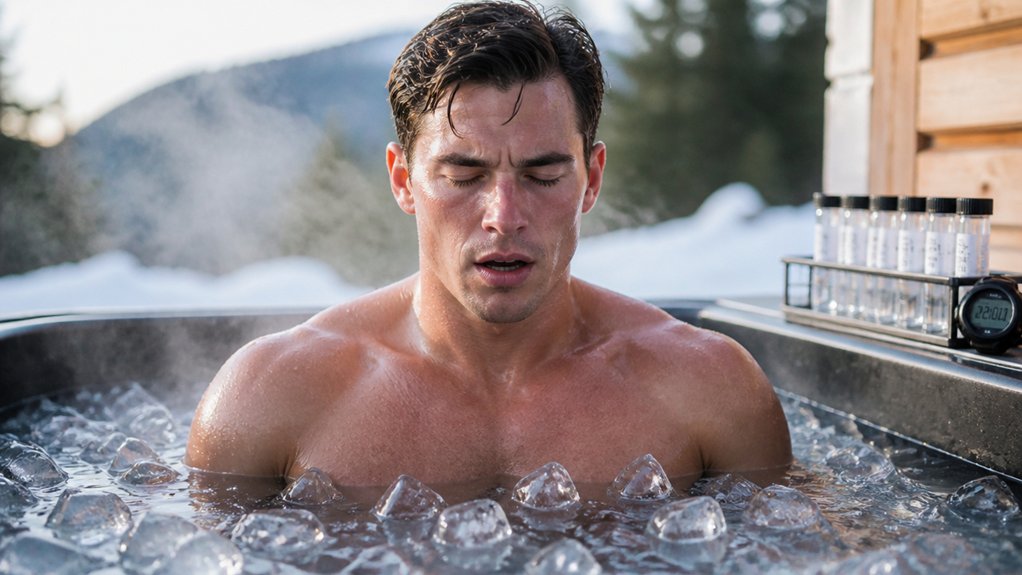
When you step into a 12 °C bath for ten minutes, your sympathetic nervous system fires up, sending a sharp norepinephrine surge through your bloodstream.
At the same time, the cold stimulus pushes epinephrine levels higher, boosting metabolism and alertness. Pairing the immersion with deliberate breathing amplifies these effects while keeping stress in check.
Cold Exposure Triggers Norepinephrine Surge
If you step into a controlled ice bath, your sympathetic nervous system fires up, flooding your bloodstream with norepinephrine within minutes. The surge sharpens alertness, boosts focus, and lifts mood while kicking metabolic rate into higher gear. You’ll notice faster fat oxidation, a natural anti‑inflammatory effect, and quicker recovery thanks to reduced cytokine levels. Regular sessions condition your neuroendocrine system, making each norepinephrine response more efficient and resilient.
- Immediate impact – plasma norepinephrine rises up to tenfold in the first few minutes.
- Metabolic boost – heightened catecholamine activity accelerates calorie burn and lipolysis.
- Recovery aid – anti‑inflammatory signaling promotes tissue repair and hormonal balance. Lifespan and durability
Ice Baths Elevate Epinephrine Levels
A cold plunge can surge your epinephrine by up to 200 % within minutes, kicking the sympathetic nervous system into high gear. When you immerse yourself in 10‑15 °C water for 2‑5 minutes, the adrenal glands release a sharp catecholamine burst that spikes metabolism and fat oxidation.
This surge lifts alertness, dampens inflammation, and primes recovery pathways. Repeating the protocol trains your body to generate the response more efficiently, so each session yields a steadier, quicker epinephrine lift.
Adjust duration and temperature to match your adaptation level—longer, colder dips produce larger spikes, while shorter exposures maintain a milder yet consistent boost. Harness this controlled stress to improve performance, resilience, and metabolic health.
Anti‑Inflammatory Hormone Changes From Cold Exposure
Cold exposure from icing protocols ramps up anti‑inflammatory hormones—norepinephrine spikes, cortisol surges, and endorphins are released—all of which curb inflammation and pain.
Cold exposure triggers norepinephrine, cortisol, and endorphins, collectively reducing inflammation and pain.
You’ll notice a rapid drop in pro‑inflammatory cytokines like TNF‑α and IL‑6, while IL‑10 rises, creating a balanced immune environment. This hormonal cocktail also tempers swelling, accelerates tissue repair, and eases discomfort during recovery. By timing sessions strategically, you can harness these effects without overloading stress pathways.
1. Norepinephrine: vasoconstriction, reduced edema, pain dampening.
2. Cortisol: glucocorticoid action, immune modulation, cytokine suppression.
3. Endorphins: endogenous analgesia, anti‑inflammatory signaling.
Optimizing Metabolic Hormones for Faster Recovery
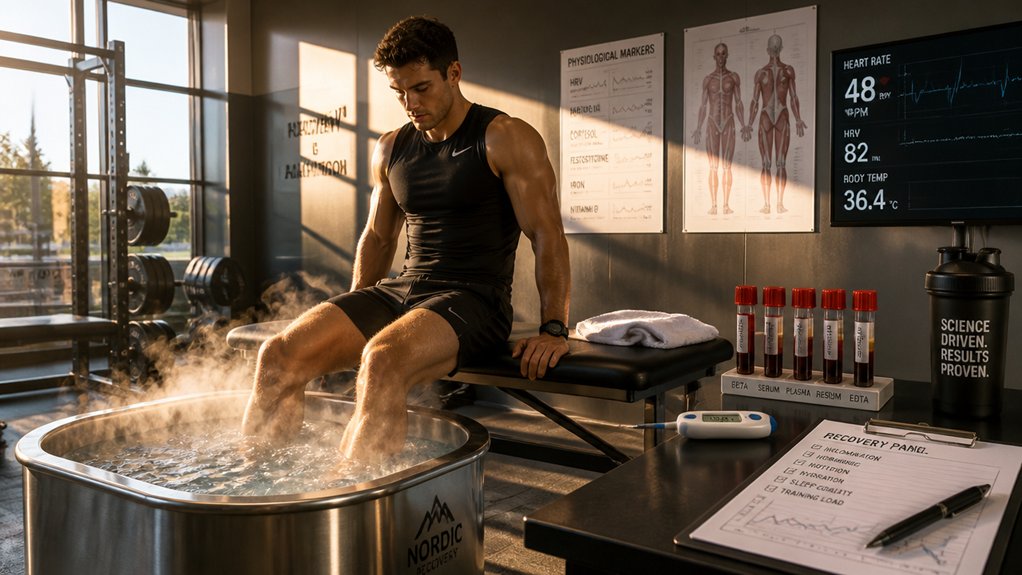
When you apply icing, the surge of norepinephrine not only curbs inflammation but also revs metabolism, while the accompanying rise in insulin sensitivity, adiponectin, and thyroid activity creates a hormonal environment that accelerates tissue repair and restores energy balance. Short, repeated ice sessions—5‑10 minutes each—throughout the first 48 hours post‑injury help sustain this metabolic boost. Pair icing with a low‑glycemic snack to exploit heightened insulin sensitivity, ensuring glucose is shunted into repairing cells rather than stored fat. Monitor cortisol by limiting stressors; excessive cortisol can blunt the benefits. Finally, support thyroid function with adequate iodine and selenium, which amplifies the metabolic boost and speeds recovery. Regular monitoring of environmental conditions with a compact hygrometer can help you maintain optimal recovery conditions thermometer/h Hygrometer setup.
Designing Safe, Evidence‑Based Icing Parameters
If you want to modulate hormones safely, keep each ice application to 10‑15 minutes and wait at least 40‑60 minutes before the next session. Use a thin cloth or towel as a barrier to prevent frostbite and monitor how you feel; a sudden rise in cortisol could signal overstimulation.
Apply ice 10‑15 minutes, wait 40‑60 minutes, use a barrier, and monitor physiological cues.
Track heart‑rate variability and note any discomfort, adjusting duration if the body reacts strongly. Personalize the protocol: older skin may need shorter exposure, while sensitive thyroid conditions warrant extra caution.
4. Be mindful of battery life and device safety when using any powered equipment to assist with temperature therapies, as recommended by safety guidelines. cautious use
Integrating Icing Into Personalized BHRT Treatment Plans
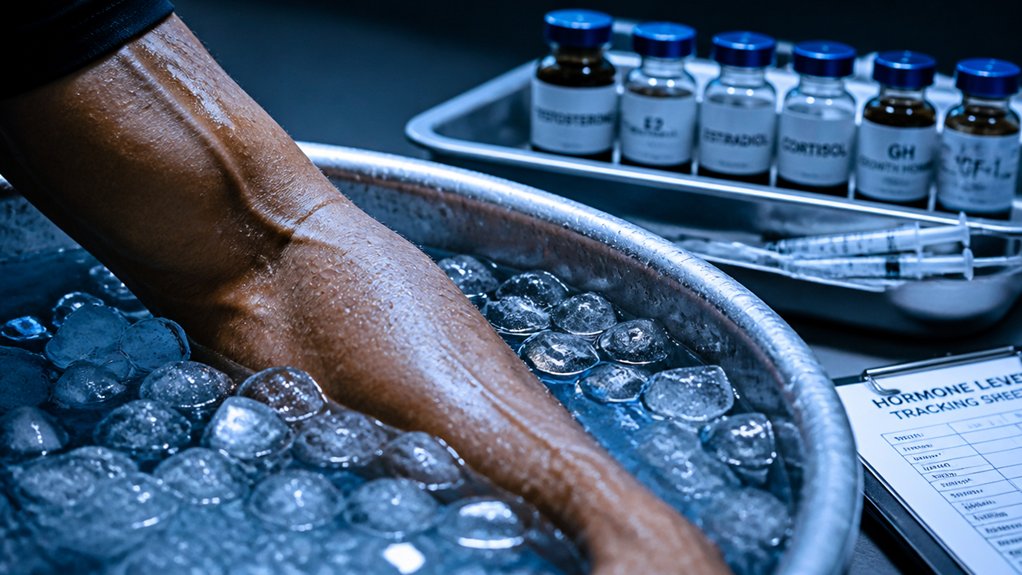
Integrating icing into your personalized BHRT plan can reduce localized inflammation and hormonal stress, supporting tissue repair after injections and enhancing overall hormone balance.
After each hormone injection, apply a cold pack for 10‑15 minutes, ensuring the skin temperature stays above 5 °C to avoid frostbite. Tailor the timing to your hormonal profile: if you’re sensitive to estrogen fluctuations, ice within 30 minutes; for testosterone protocols, wait up to an hour.
Use a thin barrier cloth to protect nerves and limit sessions to three times daily during the first 48 hours. Educate yourself on safe techniques—monitor skin color, avoid prolonged pressure, and stop if pain or numbness occurs.
Consistent, personalized icing will modulate vascular response, improve adipokine signaling, and accelerate recovery without compromising hormone signaling. Anti-static
Frequently Asked Questions
What Are the Ideal Hormone Levels for HRT MTF?
You should aim for estradiol 100‑200 pg/mL and total testosterone below 40‑50 ng/dL, keeping estradiol under 200 pg/mL to reduce clot risk, and adjust every few months.
Can MTHFR Cause Hormonal Imbalance?
Yes, MTHFR mutations can disrupt methylation, raise homocysteine, and alter estrogen, serotonin, and dopamine pathways, leading you to imbalances you may experience as fatigue, mood swings, or thyroid issues.
Does Coconut Oil Balance Hormones?
You’ll find coconut oil may modestly support metabolism and reduce inflammation, which can help hormonal balance, but evidence isn’t strong enough to claim it directly balances hormones on its own.
Can Low Estrogen Cause Cold Intolerance?
Yes, low estrogen can make you cold‑intolerant. It narrows blood vessels, dampens hypothalamic thermoregulation, and reduces brown‑fat heat production, so you feel colder and struggle to maintain core temperature.
In Summary
By now you’ve seen how ice can shift cortisol, catecholamines, and anti‑inflammatory hormones, and how tailoring temperature, duration, and frequency lets you fine‑tune metabolic recovery. Apply evidence‑based protocols safely, monitor your response, and weave the cold exposure into your BHRT plan for ideal balance and faster healing.