
You should tailor acclimation for seniors because their bodies respond differently to high altitude, increasing health risks. Aging reduces ventilatory capacity, slows red blood cell production, and weakens cardiovascular and thermoregulatory functions. Pushing too fast can cause altitude sickness, heart strain, or even severe complications. Taking it slow helps prevent these issues and supports safer adaptation. If you want to learn more about how to keep seniors safe at altitude, keep exploring essential strategies and precautions.
Why Seniors Need Special Attention When Going to Altitude
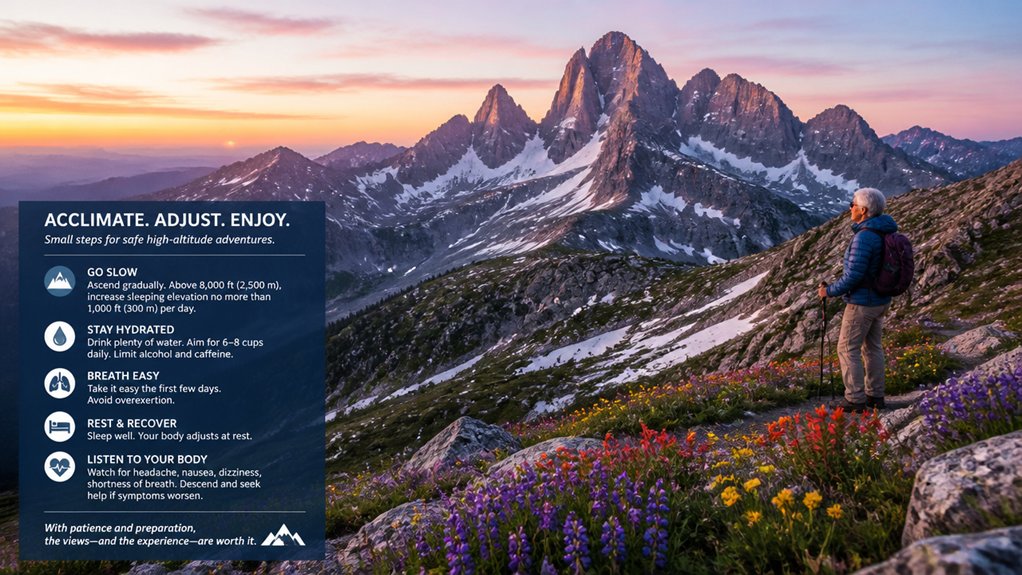
Seniors need special attention when traveling to high altitudes because their bodies respond differently to hypoxia. Their reduced ventilatory capacity and diminished hypoxic ventilatory drive hinder efficient adaptation, making acclimatization more challenging.
Seniors face unique challenges at high altitudes due to reduced ventilatory capacity and hypoxic response.
Additionally, age-related changes in cardiovascular performance increase the risk of myocardial ischemia during altitude exposure, especially with a high prevalence of coronary artery disease.
Seniors typically experience a slower acclimatization process, often taking 2–4 weeks to adjust compared to younger individuals. This extended period necessitates careful monitoring, gradual activity increases, and tailored management of hydration and medications.
Recognizing these physiological differences helps guarantee safety, reducing altitude-related health risks and supporting better adaptation during high-altitude travel. Incorporating blood oxygen monitoring can further enhance safety by providing real-time data on oxygen saturation levels during these acclimation processes.
How Aging Changes the Body’s Response to High Elevation
How does aging alter the body’s ability to respond to high elevation? Aging causes physiological changes that slow down acclimation, making it harder for seniors to adapt to lower oxygen levels.
Your ventilatory capacity decreases, and the hypoxic ventilatory drive weakens, delaying oxygen intake adjustments. These adjustments, such as increased red blood cell production, occur more slowly—often taking 2–4 weeks instead of a few days.
Cardiovascular changes, including reduced cardiac reserve and higher risks of coronary artery disease, further complicate acclimation. You may also experience decreased skin blood flow and sweat gland output, limiting thermoregulation.
- Slower physiological adjustments delay oxygen delivery
- Cardiovascular risks increase during altitude changes
- Thermoregulatory responses become less effective
- Ice bath recovery can help mitigate some effects of aging by reducing inflammation and promoting circulation during recovery periods
Risks of Going to Altitude Without Preparation for Seniors
Traveling to high altitude without proper preparation poses significant health risks for older adults because their bodies adapt more slowly to reduced oxygen levels. Without gradual acclimatization, you risk altitude sickness, which can cause headaches, nausea, and fatigue.
Your physiological response to low oxygen is delayed, increasing vulnerability to hypoxemia-related symptoms. For seniors with preexisting conditions, particularly cardiac issues, altitude exposure can provoke cardiac complications such as myocardial ischemia, even at lower workload levels. Decreased arterial oxygen tension and oxyhemoglobin saturation worsen these risks.
Additionally, reduced thirst sensation can lead to dehydration, impairing thermoregulation and cardiovascular function. Inadequate preparation leaves you vulnerable to serious altitude illnesses like high altitude pulmonary edema or cerebral edema due to diminished physiological resilience, making proper adaptogen blends essential for safety.
Physiological Changes Elderly People Experience at Altitude
As you ascend to higher altitudes, your body undergoes several physiological changes that can affect how you respond to reduced oxygen levels.
Elderly adults experience decreased ventilatory capacity and a reduced hypoxic ventilatory drive, making efficient breathing harder during acclimatization. Cardiovascular changes, such as increased pulmonary artery pressure and sympathetic activation, raise the risk of cardiac complications.
Their slower red blood cell production and enzyme adjustments delay full adaptation, often requiring 2–4 weeks. Additionally, age-related reductions in skin blood flow and sweat gland function impair thermoregulation, increasing stress from heat and altitude. Understanding altitude acclimation is crucial to support elderly adults during this process.
To support elderly adults during acclimatization, be aware of how these changes influence their response:
- Impaired oxygen intake
- Delayed physiological adjustments
- Increased cardiac risk
Why Taking It Slow Matters for Older Travelers

As you age, your body can’t adapt as quickly to altitude changes, making it essential to proceed slowly. Rushing your ascent increases the risk of sickness and puts extra strain on your heart. Incorporating regular water treatment and maintenance routines can further support your body’s adjustment process. Taking your time helps your body adjust safely and reduces potential health complications.
Reduced Physiological Resilience
Due to natural age-related declines in respiratory and cardiovascular function, seniors are less able to adapt quickly to the low oxygen levels encountered at higher altitudes. This reduced physiological resilience makes rapid altitude changes risky.
Your senior acclimatization process needs to be slower, allowing your body more time to adjust. Your diminished cardiovascular reserve limits your ability to handle increased stress from hypoxia, so gradual exposure is essential.
Remember:
- Slower physiological adjustments, such as red blood cell production, are vital for safety.
- Your body’s enzyme activity takes longer to adapt.
- Maintaining fluid balance and thermoregulation requires careful pacing.
- Using advanced insulation materials can help maintain optimal body temperature and reduce stress during acclimatization.
Taking it slow helps prevent overstress on your cardiovascular system and guarantees safer adaptation to altitude changes.
Increased Risk of Sickness
Because aging affects your body’s ability to adapt quickly, seniors face a higher risk of altitude sickness if they ascend too quickly. Reduced ventilatory capacity, efficiency, and hypoxic ventilatory drive impair acclimatization, making it harder to adjust to lower oxygen levels.
Elderly individuals, especially those with coronary artery disease, are also more prone to altitude-induced myocardial ischemia, particularly during rapid ascent without proper acclimatization. This risk can limit physical activity and increase discomfort.
Aging-related issues like impaired thermoregulation and hydration further heighten vulnerability to altitude sickness symptoms, which can worsen without slow, careful acclimatization. For seniors, taking more time—often 2–4 weeks—to adjust helps reduce these dangers and guarantees a safer, healthier experience at altitude. Incorporating individualized acclimation strategies can further optimize safety and comfort during these adaptations.
Importance of Gradual Progress
Taking it slow during acclimation is essential for older travelers because their bodies don’t adjust as quickly to altitude changes. A gradual progress in activity during the first week helps your body adapt safely, reducing cardiovascular stress.
Since older adults have diminished ventilatory capacity and hypoxic ventilatory drive, a slow acclimatization process prevents the worsening of preexisting cardiac and pulmonary conditions. Pushing too hard too soon can trigger myocardial ischemia at lower work rates, risking health complications.
To guarantee safe adaptation, start with light indoor tasks and gradually increase activity to short walks by week two. Remember, a careful, incremental approach aligns with the body’s reduced blood flow and sweating responses, helping you stay healthy and comfortable at altitude. For additional safety and monitoring, using recovery tracking apps can help manage your health during acclimation.
How to Adjust Physical Activity During Altitude Transition
When adjusting to altitude, it’s essential to start with lighter activities and gradually increase intensity as your body acclimates. During initial days, limit physical exertion to aid acclimatization and prevent excessive strain on your heart.
Because oxygen saturation drops and cardiac workload increases at altitude, avoid pushing yourself too hard too soon. Begin with gentle indoor tasks, then progress to short walks and light chores by week two, and aim to return to normal activities after three weeks.
Monitor for signs like fatigue, breathlessness, chest discomfort, or confusion, and rest whenever needed. Incorporating frequent rest, staying hydrated, and listening to your body helps guarantee safe adjustment—enhancing your physical performance while minimizing risks during altitude adaptation.
Managing Preexisting Conditions in Seniors at High Altitude
Managing preexisting health conditions is essential for seniors heading to high altitudes. Conditions like preexisting coronary artery disease (CAD) increase the risk of altitude-induced myocardial ischemia due to reduced oxygen and increased cardiac stress.
Seniors often experience diminished ventilatory capacity, affecting hypoxic ventilatory drive and pulmonary efficiency, which hampers acclimatization. Elevated pulmonary artery pressure and sympathetic activation can worsen hypertension, heart failure, or arrhythmias at higher elevations.
To reduce these risks, it’s important to follow tailored acclimatization protocols that include gradual ascent, activity limitation, and diligent monitoring.
- Focus on controlling cardiovascular and respiratory health before ascent
- Regularly check oxygen saturation and symptoms
- Coordinate with your healthcare provider for medication adjustments and risk management
How Hydration and Nutrition Support Elderly Acclimatization
To support your acclimatization, staying properly hydrated is essential, especially since aging reduces your thirst response and increases fluid loss.
Focus on drinking 2–3 liters daily and watching your urine color to guarantee adequate hydration. Additionally, eating small, nutrient-dense meals helps maintain energy and oxygen transport necessary for adjusting to altitude.
Hydration Strategies for Seniors
Proper hydration is essential for seniors acclimating to high altitudes or hot environments because age-related changes impair their ability to maintain fluid balance. Reduced thirst sensation and increased renal water loss make dehydration more likely, impairing heat tolerance and acclimatization.
To counter this, you should aim for 2-3 liters of fluid daily, monitoring urine color and timing your drinks. Warm broths and soups are excellent choices, boosting both hydration and caloric intake during adjustment.
Key tips include:
- Regularly check urine color to gauge hydration status
- Consume small, frequent fluids rather than large amounts at once
- Focus on electrolyte-rich beverages to support fluid balance and acclimatization
Maintaining proper hydration is crucial for effective acclimatization, as dehydration and hypertonicity impair sweat, vascular responses, and overall heat tolerance.
Nutritional Support During Acclimation
When seniors acclimate to high altitudes or hot environments, supporting their hydration with proper nutrition becomes increasingly important. Altitude-induced dehydration occurs as increased respiratory and perspiration losses dry out the body, so ensuring adequate hydration—about 2-3 liters daily—is essential.
Warm broths and soups help with hydration while providing essential nutrients. Nutrient-dense, smaller frequent meals rich in iron and vitamin B-complex support oxygen transport and counteract altitude-related appetite suppression.
Because seniors often experience decreased thirst sensation, scheduled fluid intake prevents hyperosmolar hypohydration that impairs thermoregulation. Additionally, foods rich in antioxidants like nuts, eggs, and fish help combat oxidative stress.
Proper nutrition not only maintains hydration but also promotes cellular recovery and overall resilience during acclimation.
Recognizing and Responding to Altitude Sickness in Seniors
Recognizing altitude sickness in seniors requires careful attention to subtle changes in their health. Pay close attention to symptoms such as headaches, dizziness, and fatigue, which can indicate altitude sickness or mask other issues.
Seniors with preexisting cardiovascular conditions are at higher risk for severe altitude illness, so monitoring is crucial. Use these key strategies:
- Regularly check blood oxygen levels to identify drops below 85%, signaling urgent concern
- Observe for symptoms like severe shortness of breath, chest pain, confusion, or inability to walk
- Track hydration, activity levels, and sleep quality to detect early signs of altitude sickness
Understanding these signs and responding promptly guarantees safe acclimatization and reduces complications linked to altitude sickness in seniors.
Medical Tips to Prepare Older Adults for High Elevations
Preparing older adults for high elevations involves proactive medical strategies to minimize health risks.
Since altitude can cause hypoxemia, it’s essential to allow gradual acclimatization over 2-4 weeks, especially for those over 75 or with cardiovascular issues. Pre-acclimatization techniques, like simulated altitude training and intermittent hypoxic breathing, can boost oxygen saturation and lessen altitude sickness symptoms.
Gradual acclimatization over 2-4 weeks helps older adults, especially with cardiovascular issues, prevent altitude sickness and hypoxemia.
Regularly monitoring blood oxygen saturation with pulse oximeters helps detect early signs of hypoxemia. Ensuring hydration with 2-3 liters of water daily counters fluid loss caused by dry high-altitude air.
Medications for heart disease or hypertension may require adjustment due to changes in pharmacokinetics at altitude. Limiting physical activity during initial days allows the body to adjust, reducing risks of myocardial ischemia and altitude-related illnesses.
Practical Strategies for a Personalized Altitude Acclimation Plan
Designing a personalized altitude acclimation plan for seniors involves carefully tailoring activities and pacing to their unique health profiles and physiological responses. Since seniors require a slower, phased approach over 2–4 weeks, starting with light indoor tasks during the first week helps reduce cardiovascular strain.
Gradual activity increases, like short walks by week two, are essential to support adaptation. Emphasize regular health monitoring through pulse oximetry, blood pressure checks, and symptom assessments to catch early signs of altitude-related issues.
Hydration protocols should be personalized, with reminders for steady fluid intake of 2–3 liters daily, addressing diminished thirst sensations. Incorporate nutrient-dense small meals rich in iron and B vitamins to support oxygen transport and energy during acclimation.
- Tailor fluid intake to combat dehydration risks
- Schedule consistent health assessments
- Gradually increase activity levels
How Support and Education Keep Seniors Safe at Altitude
Support and education play a critical role in keeping seniors safe at altitude by empowering them and caregivers with the knowledge needed to recognize early warning signs and manage risks effectively.
Since seniors have a slow ventilatory capacity and impaired hypoxic ventilatory drive, understanding the importance of a gradual ascent is essential. Monitoring with pulse oximetry helps detect drops in oxygen saturation early, preventing severe altitude sickness.
Educating caregivers on hydration, nutrition, and sleep strategies addresses decreased thirst and appetite while supporting thermoregulation. Training caregivers to differentiate normal symptoms from emergencies and manage medications enhances safety.
Providing structured acclimatization timelines with rest days allows cardiovascular and respiratory adaptation, reducing ischemic and hypoxic risks during the initial 2-4 week adjustment period.
Support and education, consequently, are crucial tools for safe altitude acclimation in seniors.
Frequently Asked Questions
What Should a 70 Year Old Be Doing Every Day at Home?
You should do light indoor activities gradually, stay well-hydrated, eat small nutrient-rich meals, monitor your health signs daily, maintain a sleep routine, and avoid screens to support safe altitude acclimation at home.
Are Older People More Prone to Altitude Sickness?
Yes, older people are more prone to altitude sickness because their reduced ventilatory and cardiovascular capacity makes it harder for their bodies to adapt quickly to altitude. They often experience symptoms more severely and need longer acclimatization periods.
What Is the Most Difficult Thing for Elderly People to Deal With?
The most difficult thing for you as an elderly person is coping with arterial hypoxemia, which worsens preexisting conditions. Your reduced ventilatory capacity, dehydration risks, and thermoregulatory issues make acclimation slower and more challenging than for younger people.
Why Do Elderly People Have Trouble With Thermoregulation?
You find it hard to regulate temperature because aging reduces your skin blood flow, sweat production, and respiratory efficiency. These changes weaken your body’s ability to dissipate heat, making it more difficult to stay comfortable and safe during temperature extremes.