To safely acclimate to ice baths for fat loss, start with short sessions of 30-60 seconds in water around 10°C (50°F) and gradually increase your time by 15-30 seconds each session. Use diaphragmatic breathing to control the cold shock response, keep your hands above water, and always have a buddy nearby for safety. Gradually lowering the temperature and consistently practicing two to three times weekly helps build tolerance. Keep exploring for more tips to maximize your benefits safely.
Why Cold Exposure Is a Powerful Tool for Fat Loss
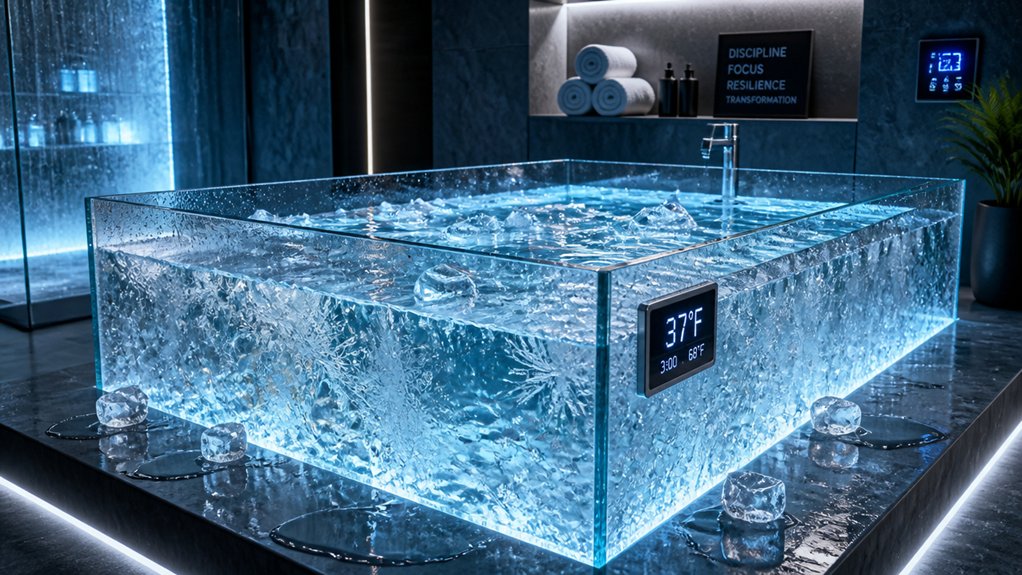
Cold exposure is a highly effective tool for fat loss because it activates brown adipose tissue (BAT), which boosts calorie burn through thermogenesis. Taking ice baths triggers the release of irisin hormone, converting white fat into brown fat, increasing your fat-burning capacity. Incorporating adaptogens, like Rhodiola and Ashwagandha, can further support your body’s resilience and stress responses during cold exposure. Full-spectrum blends support natural compounds that enhance overall adaptation and recovery processes. Post-immersion, your body works to recover temperature, leading to additional calorie expenditure and higher metabolism. Regular cold exposure also boosts adiponectin levels, improving insulin sensitivity and overall metabolic health. When your body responds to cold, it reduces cortisol levels, decreasing stress-related fat gain and emotional eating. By engaging in cold exposure, like ice baths, you tap into a process that directly supports fat loss, enhances fat metabolism, and optimizes your energy use—all vital for transforming body composition.
How to Safely Start Cold Exposure Practices
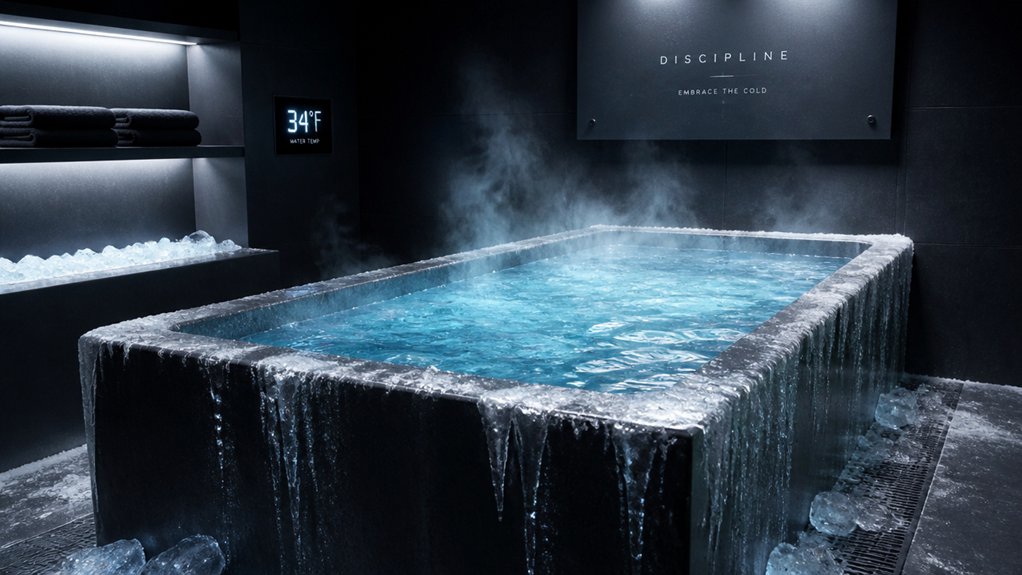
Starting cold exposure safely involves easing into the practice gradually to allow your body to acclimate without shock or discomfort. Begin with short durations of 30-60 seconds in water around 10°C (50°F) or higher, gradually increasing time and lowering water temperature as your tolerance improves. Incorporate breathing exercises such as diaphragmatic breathing to help control your breathing pattern and reduce the cold shock response. Use diaphragmatic breathing techniques during cold immersion to activate your parasympathetic nervous system and reduce the shock response. Start with partial body immersion or cold showers before progressing to full ice baths. Always have a safety buddy present during initial cold plunge sessions and never isolate yourself during cold therapy. Avoid hot showers or saunas immediately after exposure; instead, let your body warm naturally to maximize metabolic and hormonal benefits while minimizing risks.
Building Tolerance: Gradually Coldening Your Routine
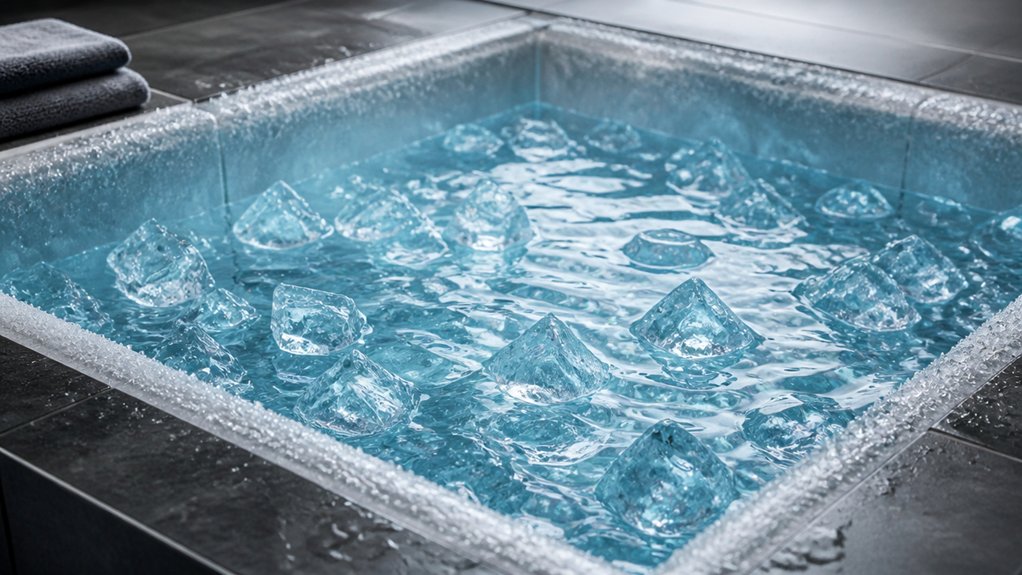
Start by taking warm showers to ease your body into cold exposure, gradually lowering the temperature over time. Increase the duration of your cold sessions slowly, giving your body a chance to adapt without shock. This steady approach helps build your cold tolerance safely while maximizing fat-burning benefits. Incorporating pH-balanced cleansing agents into your post-cold plunge routine can also support your skin’s recovery and maintain its natural barrier during this adaptation process.
Start With Warm Showers
Introducing cold exposure gradually is key to building tolerance without risking shock or discomfort. Begin by starting with cold water during your warm showers, then gradually lower the water temperature each session. Aim for 10-30 seconds of cool water at around 65°F (18°C), then slowly decrease the temperature toward 50–59°F (10–15°C). Incorporate diaphragmatic deep breathing to activate your parasympathetic nervous system, helping to calm your body and ease cold shock. Consistent practice enhances cold tolerance and mental resilience, preparing you for more intense cold exposure like ice baths. Regular cold showers 2-3 times weekly build your capacity to withstand colder temperatures and maximize fat loss benefits. Using a waterproof timer can also help track and gradually extend your cold exposure sessions with precision.
Increase Duration Gradually
As you become more accustomed to cold exposure, gradually increasing your immersion duration helps build resilience safely. Start with 60-second immersions in ice baths at around 10°C (50°F), and slowly increase the duration by 15-30 seconds every few sessions. Incorporating adjustable temperature control options ensures consistent and safe improvements as you progress. This gradual increase enhances cold tolerance without overloading your cardiovascular or nervous system. Aiming to extend to 2-3 minutes solidifies the fat-burning effects, especially through brown adipose tissue activation and metabolic hormone release. Maintaining consistent sessions—2-3 times weekly—is key to adaptation. Use diaphragmatic breathing and keep your hands above water to engage cold-sensitive nerves and parasympathetic activation. Avoid immediate post-bath warming; instead, let natural shivering and slow warming promote longer exposure benefits for ideal fat loss.
Using Breathing and Head Submersion to Boost Effectiveness
By practicing diaphragmatic breathing while submerging your head, you can better control your body’s cold shock response and extend your exposure time. Head immersion triggers the mammalian dive reflex, improving circulation and boosting fat-burning hormones. Keeping your hands above water while head submerged enhances cold tolerance and further activates your metabolism. Additionally, using devices with temperature therapy features can help you regulate cold exposure more precisely for optimal results.
Diaphragmatic Breathing Techniques
Harnessing diaphragmatic breathing during ice baths can greatly enhance their effectiveness by deepening relaxation and boosting physiological responses.
When you focus on deep belly breaths, you activate the mammalian dive reflex, helping to engage your parasympathetic nervous system and improve cold water immersion tolerance. Submerging your head underwater while practicing breathing techniques stimulates the vagus nerve, increasing heart rate variability and stress resilience.
Additionally, controlled slow breaths help reduce the cold shock response, making longer cold exposure more manageable—crucial for fat-burning benefits. Proper sensor accuracy under cold stress ensures that your physiological data remains reliable during these practices, allowing you to track improvements accurately.
To maximize benefits:
- Practice diaphragmatic breathing to maintain oxygenation.
- Submerge your head during breath exercises to stimulate the vagus nerve.
- Use slow, controlled breaths to promote noradrenaline release and optimize fat oxidation during cold water immersion.
Head Submersion Benefits
Immersing your head in cold water during an ice bath amplifies the benefits by activating the mammalian dive reflex, which triggers the parasympathetic nervous system to promote relaxation and hormesis. Head submersion causes a rapid increase in noradrenaline levels at around 4°C, boosting cold tolerance and mental clarity.
This reflex also enhances vagus nerve activity when combined with deep diaphragmatic breathing, improving heart rate variability and stress resilience. Keeping your hands above water engages cold-sensitive nerves, preventing overstimulation and allowing longer immersion.
This method maximizes brown adipose tissue (BAT) activation and metabolic fat-burning benefits. Incorporating head submersion with controlled breathing increases overall cold-water immersion effectiveness, making your ice baths safer and more efficient for fat loss and mental sharpness. Waterproof floating thermometers can help precisely monitor water temperature to optimize your immersion sessions.
How to Monitor Your Progress and Stay Safe
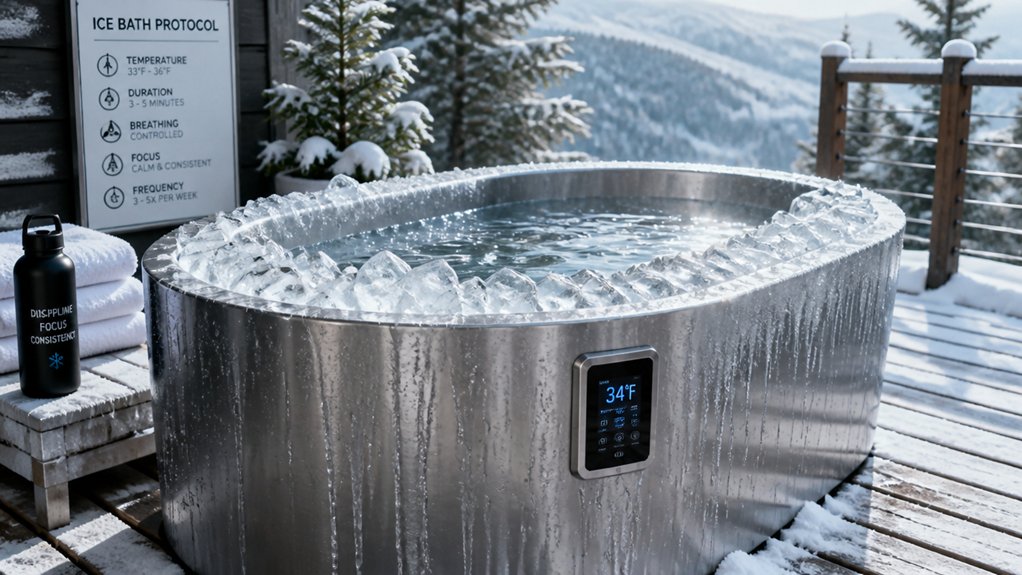
Monitoring your progress and staying safe during ice baths is essential to maximize benefits and prevent risks. To do this effectively:
- Track the water temperature, duration, and post-bath warming practices to optimize fat metabolism and monitor blood flow response. Gradually increase taking ice baths from 60 seconds to 2-3 minutes, noting comfort and shivering to avoid overstress.
- Watch for physical signs like dizziness, numbness, excessive fatigue, or heart rate changes to prevent hypothermia. Always have a buddy present during your initial sessions to assist if needed.
- Record your mood and mental state before and after each bath, as neurochemical responses like dopamine boosts can indicate beneficial effects and help gauge your tolerance over time.
Best Ways to Warm Up and Recover After Cold Sessions
After completing an ice bath, it’s important to warm up gradually rather than jumping straight into hot showers or saunas, which can hinder natural recovery. Start by thoroughly drying off and putting on warm layers like a poncho. Light stretching or brief sun exposure helps boost core body temperature naturally. Consuming a warm drink with healthy fats, protein, and iron supports metabolic recovery and replenishes energy stores. Allow shivering to occur, as it promotes continued calorie burning through thermogenesis. Creating a warm, comfortable environment prevents heat loss and sustains brown adipose tissue (BAT) activation, enhancing fat burning and hormone release.
| Warming Methods | Benefits |
|---|---|
| Warm layers | Maintain steady core temperature, boost adiponectin & irisin |
| Warm drinks | Support metabolic recovery, promote thermogenesis |
| Light activity | Sustain calorie burning and brown adipose tissue activation |
Troubleshooting Common Cold Therapy Challenges
Addressing common challenges during cold therapy is essential to ensuring safe and effective acclimation. You might experience cold shock, hyperventilation, or numbness, but these can be managed.
Managing cold shock and numbness ensures safe, effective cold therapy adaptation.
- Gradually increase your exposure: start with 60 seconds in ice baths below 10°C to build tolerance without overwhelming your system or triggering excessive cold shock.
- Practice diaphragmatic breathing and submerge your head to activate the mammalian dive reflex, aiding parasympathetic calming and reducing discomfort.
- Keep your hands above water during sessions to improve cold tolerance, decrease cold-induced nerve discomfort, and boost benefits like burning calories and reduced inflammation.
Always monitor for signs of dizziness or numbness, and avoid rapid rewarming after cold plunges to maintain safety and optimize fat loss benefits.
Frequently Asked Questions
How to Ice Bath for Fat Loss?
You can ice bath for fat loss by starting with water below 15.5°C, immersing up to your chest, gradually increasing duration, using diaphragmatic breathing, and scheduling sessions on non-training mornings twice or thrice weekly for best results.
Can You Cold Plunge if You Have Raynaud’s?
If you have Raynaud’s, you shouldn’t cold plunge without your doctor’s approval. Cold exposure can trigger severe symptoms, so it’s safer to explore mild cold therapy options and avoid full immersions unless cleared by a healthcare professional.
How Long Should I Cold Plunge for Fat Loss?
You should start with 1-2 minutes at temperatures below 10°C, gradually increasing to 2-3 minutes. Aim for total weekly sessions of 5-10 minutes, split into short, manageable plunges that support fat burning without overdoing it.
Do Ice Baths Get Rid of Visceral Fat?
Ice baths can help reduce visceral fat by boosting metabolic rate and activating brown adipose tissue, but they won’t eliminate it alone. Combine cold exposure with diet and exercise for the best results in targeting visceral fat effectively.