For ideal circulation, aim for cold plunges 3-4 times a week, especially on rest days or after workouts spaced several hours apart. Beginners should start with 2-3 sessions at warmer temperatures and gradually increase frequency and coldness over time. Consistent short sessions of 2-5 minutes at 50-59°F help improve blood flow, vessel flexibility, and vascular health. To achieve long-term benefits, you’ll want to tailor your routine as you progress—more insights await if you continue exploring.
What Are the Benefits of Regular Cold Plunges for Circulation?
Have you ever wondered how regular cold plunges can improve circulation? When you take a Cold Plunge at 50-59°F (10-15°C) a few times weekly, it triggers vasoconstriction, narrowing your blood vessels. This response boosts blood flow when your body warms up afterward, promoting better circulation.
Cold immersion also enhances vessel flexibility and supports microcirculation, especially in your extremities. It stimulates the autonomic nervous system, increasing heart rate variability, which benefits cardiovascular regulation.
Over time, regular Cold Plunges improve endothelial function, reduce inflammation, and encourage angiogenesis—growth of new blood vessels. These changes help your body transport oxygen and nutrients efficiently while clearing metabolic waste, ultimately supporting long-term vascular health and peak circulation patterns. Proper chiller selection ensures consistent water temperatures, enhancing the overall benefits of your immersion routine.
How Cold Water Immersion Boosts Blood Flow and Vascular Health
Cold water immersion causes your blood vessels to constrict and then relax, improving blood flow and making your arteries more flexible.
Regular plunges at 50-59°F for a few minutes boost your endothelial function and strengthen antioxidant defenses. Applying cold immersion a couple of times weekly can lead to steady improvements in circulation and vascular health.
Enhances Vascular Flexibility
Immersing yourself in cold water at temperatures between 50-59°F for a few minutes several times a week can greatly boost your vascular flexibility. Cold plunge sessions trigger blood vessel constriction followed by dilation, which enhances circulation efficiency. Using energy-efficient chillers ensures consistent and optimal cooling performance, making regular immersion more practical and sustainable. Regular cold water immersion stimulates your autonomic nervous system, increasing norepinephrine levels that help regulate vascular tone. Over time, repeated cold exposure promotes vascular adaptations like improved vasospastic tolerance, strengthening your blood vessels’ resilience. Studies show that consistent cold plunges raise arterial blood flow and velocity, supporting better endothelial function. To maximize these benefits, multiple shorter sessions totaling at least 11 minutes weekly are more effective than sporadic, longer immersions. This schedule encourages lasting improvements in vascular flexibility and circulatory health.
Stimulates Blood Circulation
When you expose your body to cold water at 50-59°F, it triggers a series of responses that enhance blood circulation and vascular health. A cold plunge causes vasoconstriction, which redirects blood flow to essential organs. Then, reactive vasodilation occurs, improving blood vessel function and increasing overall circulation. Cold water immersion can also activate sensor accuracy in heart-rate monitors, ensuring precise data during these sessions. Regular sessions, ideally 2-4 times per week for 3–10 minutes, stimulate the circulatory system, promoting better vascular tone and capillary density. Cold water immersion also prompts norepinephrine release, boosting peripheral blood flow and helping reduce vascular inflammation. Incorporating cold plunges at this frequency can support healthier circulation, enhance oxygen delivery to tissues, and strengthen cardiovascular resilience. Consistent practice helps your body adapt, ensuring sustained blood flow benefits over time.
Promotes Endothelial Function
Regular cold water immersion at 50-59°F enhances endothelial function by promoting vasodilation and increasing nitric oxide bioavailability. Cold plunging, when done 3-4 times weekly for 3-10 minutes, strengthens your blood vessels and improves circulation. The frequency of cold plays a crucial role—regular cold plunging keeps your arteries more elastic and responsive.
Cold exposure activates your sympathetic nervous system, boosting norepinephrine levels that support better blood flow regulation. Consistent immersion also improves antioxidant protection, reducing oxidative stress in your blood vessels and supporting long-term vascular health.
Multiple shorter sessions each week produce more significant endothelial benefits than fewer longer ones because they provide ongoing vascular stimulation. Combined with other methods like low-frequency vibration, regular cold plunging optimizes your circulation and overall vascular health.
How Often Should You Cold Plunge for Optimal Circulatory Benefits?
How often you should cold plunge to maximize circulatory benefits depends on your experience level and goals. For best results, aim for 3 to 4 sessions per week, each lasting between 3 to 10 minutes at water temperatures of 50-59°F (10-15°C).
Aim for 3-4 cold plunges weekly, 3-10 minutes at 50-59°F, to boost circulation and vascular health.
Consistent exposure totaling at least 11 minutes weekly helps trigger significant physiological changes that enhance blood flow and vascular function. Utilizing properly insulated and durable tubs with weatherproof coatings can help maintain consistent water temperatures for effective sessions.
If you’re new to cold plunging, start with 2-3 sessions at higher temperatures (60-65°F) for 1-2 minutes, gradually increasing duration and lowering water temperature over 4-8 weeks.
For experienced users, daily short sessions (2-5 minutes at 55-60°F) can maintain benefits, but it’s important to monitor recovery and avoid overdoing it, especially during fatigue.
Safe Cold Plunge Practices for Beginners
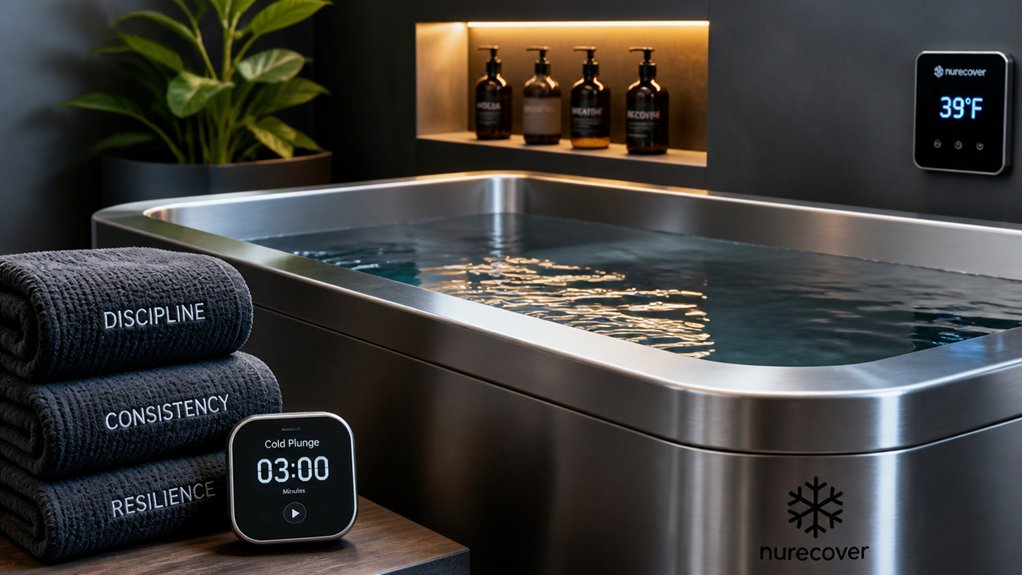
Starting cold plunging gradually is key to safely reaping its benefits. As a beginner, limit yourself to 2-3 sessions per week, and keep water temperatures between 60-65°F (15-18°C). Start with 1-2 minutes to monitor how your body responds. Incorporate water treatment solutions to maintain water quality and reduce risks associated with bacterial buildup. Don’t rush; gradually increase duration and lower the temperature over 4 to 8 weeks, aiming for 3-10 minutes at 50-59°F (10-15°C). Keep initial sessions under 2 minutes to minimize risks like hypothermia and cold stress. Avoid cold plunging immediately after intense strength training—wait at least four hours. Be vigilant for signs of overdoing, like extended cold sensations or difficulty warming up, and adjust your frequency or duration accordingly for safe adaptation.
How to Adjust Your Cold Plunge Routine as You Progress
As you become more accustomed to cold plunging, gradually increase the frequency and duration of your sessions to enhance circulatory benefits without overloading your system. This approach lets you build tolerance safely, especially for experienced users. Track your progress and respond to your body’s signals, adjusting frequency based on comfort and response. To visualize your progression:
| Initial Phase | Moderate Phase | Advanced Phase |
|---|---|---|
| 2-3 sessions/week, 1-2 mins | 3-5 sessions/week, 3-10 mins | Daily plunges, 2-5 mins |
| Water temp 60-65°F | 50-59°F | 55-60°F |
| Gradual increase | Maintain weekly total ≥11 mins | Monitor fatigue and adjust |
This structured plan helps optimize circulation without risking overexposure. Incorporating temperature control options in your routine can further enhance safety and comfort as you progress.
What Temperature and Duration Most Effectively Improve Circulation?
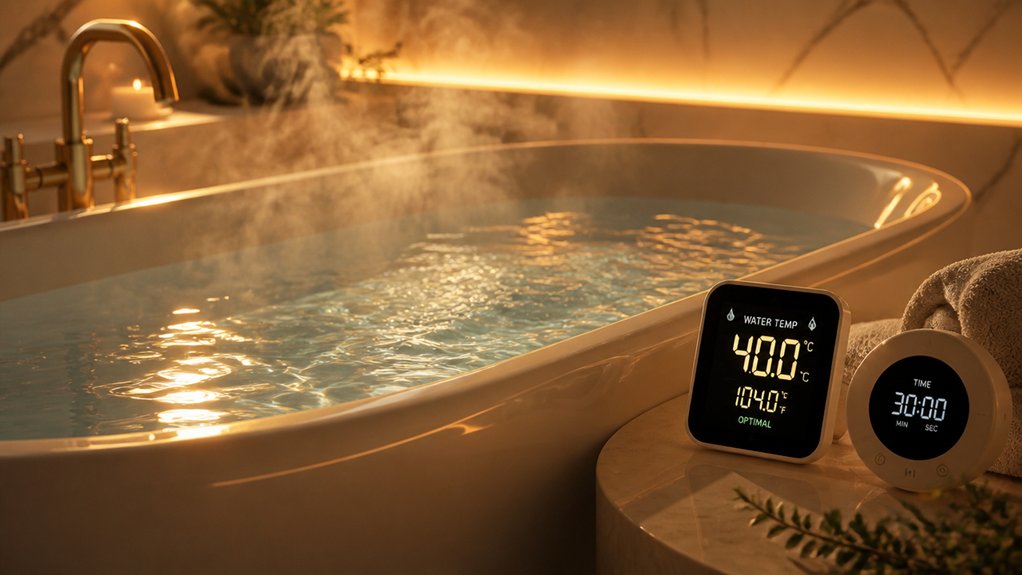
What temperature and duration should you target to maximize circulation benefits from cold plunges? Aim for a water temperature of 50-59°F (10-15°C) and a duration of 3-10 minutes per session. This range effectively stimulates peripheral circulation through vascular constriction and vasodilation. Properly controlled temperature is crucial, as maintaining the right range ensures safety and effectiveness. If you’re a beginner, start with slightly warmer temperatures of 60-65°F and 1-2 minutes of cold plunge to ease into the practice without excessive cold stress. Weekly, aim for about 11-40 minutes of total cold exposure to trigger significant vascular adaptations. Longer or colder immersions aren’t necessarily better and can cause discomfort or adverse effects. Combining cold plunges with contrast therapies or breathwork can amplify circulation improvements by promoting rhythmic vessel constriction and dilation.
When Is the Best Time to Cold Plunge in Your Weekly Routine?
The best time to cold plunge depends on your training schedule and goals. You’ll want to time your sessions for peak recovery, like doing a cold plunge 4+ hours after strength workouts or within 1-2 hours post-endurance sessions. Incorporating your plunges after workouts can optimize water temperature controls to enhance therapeutic benefits. Consistently spacing your plunges throughout the week guarantees you get circulation benefits without overstimulation.
Optimal Timing for Recovery
When is the ideal time to incorporate cold plunges into your weekly routine for best recovery? Plunging sessions are most effective when scheduled 3-4 times per week on rest days or with a 4+ hour delay after workouts. Post-exercise cold plunges, ideally 15-30 minutes after training, help reduce muscle soreness and inflammation, accelerating recovery after exercise.
Morning cold plunges boost energy and circulation, but evening sessions promote nervous system relaxation and improve sleep quality. Alternating with sauna or heated sessions enhances circulation by cycling vasodilation and vasoconstriction.
Remember to include rest days between plunges to support hormonal balance and prevent overstimulation of the sympathetic nervous system, ensuring peak recovery and overall benefits.
Aligning Sessions With Training
Scheduling cold plunges to align with your training sessions guarantees you get maximum recovery benefits without hindering progress. For strength training, it’s best to avoid plunging immediately after workouts—delay at least 4 hours or schedule on rest days to prevent blunting muscle hypertrophy. Endurance athletes, however, thrive with 4-6 cold plunges weekly, ideally post-workout, lasting 8-12 minutes to boost circulation and recovery. Beginners should start with 2-3 sessions on non-consecutive days, allowing their bodies to adapt gradually. Timing matters: morning plunges can improve circulation and alertness, while evening sessions support nervous system recovery and sleep. Incorporate plunging thoughtfully for peak workout recovery and endurance training results.
| Timing | Session Type | Purpose |
|---|---|---|
| Post-endurance | After aerobic sessions | Enhance circulation |
| 4+ hours after strength | Rest or delayed sessions | Maximize hypertrophy |
| Morning | Any session | Boost circulation, alertness |
| Evening | Recovery-focused | Improve sleep, nervous system |
| Non-consecutive days | Beginners’ schedule | Gradual adaptation |
How Cold Plunges Support Your Circulatory System’s Healing and Prevention
Cold plunges activate your circulatory system by causing blood vessels to constrict and then dilate, which improves blood flow and vessel responsiveness. This is the core of cold therapy’s ability to promote improved circulation, supporting your overall vascular health.
Regular immersion triggers your autonomic nervous system, increasing norepinephrine levels that help normalize circulation by promoting vasoconstriction and preventing blood pooling or swelling. Cold exposure also enhances endothelial function and boosts antioxidant defenses, aiding in healing and reducing inflammation.
Over time, consistent cold plunges help prevent circulatory issues like edema and support tissue recovery. Typically, 2–4 sessions weekly at 50-59°F for 3-10 minutes can maximize these benefits, strengthening your circulatory resilience and promoting long-term vascular health.
Seasonal Tips: Cold Water Immersion in Summer and Winter
Adapting your cold water immersion routine to seasonal changes can maximize benefits while maintaining safety. In summer, you can safely increase your cold plunge frequency to 4-7 times per week, using lower water temperatures to take advantage of ambient heat for enhanced circulation and recovery. This helps offset heat-related circulatory strain by promoting vasoconstriction and boosting blood flow.
During winter, reduce your cold plunge frequency to 2-4 times weekly because slower rewarming and increased cold stress demand shorter or less frequent sessions. Cooler ambient temperatures elevate the risk of prolonged vasoconstriction, so monitoring session duration and intensity is essential.
Seasonal adjustments guarantee you maintain consistent cold exposure, optimizing circulation and recovery while prioritizing your safety.
What Scientific Research Tells Us About Cold Water and Blood Flow
Scientific studies show that cold water can boost your antioxidant defenses, helping your body fight oxidative stress.
Vibration therapies at certain frequencies can increase blood cell velocity, enhancing blood flow without markedly changing peripheral temperature.
Understanding how temperature and vibration affect circulation can help you optimize your practices for better vascular health.
Cold Water Enhances Antioxidant Defense
Research shows that regular cold water swimming, typically around three times a week, can greatly boost your body’s antioxidant defenses and strengthen immune function. This frequent exposure to cold enhances your body’s ability to fight oxidative stress, reducing inflammation and supporting overall health. Scientific studies reveal that cold water at 10-15°C increases norepinephrine and beta-endorphin levels, improving mood and vascular response. Consistent immersion — totaling about 11-40 minutes weekly — activates physiological adaptions that benefit circulation. The table below highlights key points:
| Aspect | Benefit |
|---|---|
| Cold exposure | Boosts antioxidant defense |
| Immune benefits | Strengthens immune response |
| Frequent exposure | Enhances vascular responsiveness |
| Reduce inflammation | Supports recovery and health |
| Timing (Søberg Principle) | Maximizes metabolic benefits |
Vibration Influences Blood Velocity
Vibration therapy can influence blood velocity, but its effects depend heavily on frequency and application parameters. When applied at ideal frequencies, vibration enhances blood flow and increases blood cell velocity, especially in femoral arteries by up to 33%.
However, frequencies below 2 Hz or above 10 Hz tend to have minimal impact. Be aware that specific frequencies, like 4-8 Hz, may cause physiological disturbances, affecting motor control and circulation. Additionally, lower peripheral foot temperature during vibration correlates with increased heart rate variability, indicating improved autonomic regulation.
To maximize benefits:
- Use vibration within the 5-30 Hz range for ideal blood flow enhancement.
- Avoid frequencies that cause physiological disturbances (4-8 Hz).
- Monitor blood cell movement and HRV to assess circulation improvements.
Temperature’s Impact on Circulation
Cold water immersion triggers complex vascular responses that can substantially influence circulation. When you expose yourself to water between 50-59°F (10-15°C), your blood vessels undergo vasoconstriction, then reactive vasodilation, which improves blood flow efficiency. This process can regulate blood pressure and support immune function over time. Short exposures at specific frequencies may not markedly alter local blood flow, but regular cold exposure enhances vascular health. Here’s a snapshot:
| Effect | Mechanism | Outcome |
|---|---|---|
| Vasoconstriction | Cold water triggers blood vessel narrowing | Increased blood pressure regulation |
| Vasodilation | Reactive widening after constriction | Improved circulation overall |
| Immune boost | Enhanced vascular responses | Better immune function |
Your body’s response to cold water emphasizes temperature’s essential role in circulation and immune health.
Common Mistakes That Reduce Circulatory Benefits During Cold Water Immersion
Many people inadvertently reduce the benefits of cold water immersion by making common mistakes that hinder circulation. Overdoing cold plunges—more than 6-7 times weekly or sessions longer than 10 minutes—can cause poor circulation recovery and prolonged cold stress.
Jumping into water below 50-59°F without gradual adaptation triggers excessive vasoconstriction, limiting blood flow improvements. Ignoring body signals like persistent cold, fatigue, or mood changes indicates disrupted circulation and calls for less frequent or shorter immersions.
Additionally, neglecting to rewarm after immersion or plunging in unsafe environments (such as icy, running water) can cause vasospasm or cold injury, minimizing circulatory benefits. Avoid these mistakes to optimize your cold water immersion routine and enhance circulatory health.
How to Monitor Your Response and Find Your Ideal Cold Plunge Frequency
To find your ideal cold plunge frequency, start by tracking how your body responds over several weeks, noting sleep, mood, and energy changes.
Pay attention to signs of overexposure, like difficulty warming up or disrupted sleep, and adjust accordingly. Using metrics like heart rate variability can also help you fine-tune your routine for better recovery and benefits.
Track Physiological Changes
Tracking your physiological responses is essential for finding the right cold plunge frequency that benefits you without overdoing it. By closely monitoring your body’s reactions, you can fine-tune your routine effectively.
Focus on these key areas:
- Record sleep quality, energy levels, mood, and muscle recovery over four weeks to spot trends.
- Use a heart rate monitor to track heart rate variability (HRV), which indicates improvements in autonomic and cardiovascular health.
- Maintain a journal or app to log plunge duration, water temperature, and subjective sensations, helping you identify tolerance thresholds and circulation responses.
Pay attention to signs of overdoing it, like prolonged cold sensation or sleep disturbances.
Adjust frequency accordingly to optimize circulation and recovery while avoiding harm.
Recognize Recovery Signs
Monitoring how your body responds after each cold plunge helps you determine if you’re hitting your recovery sweet spot or risking overexposure. Pay attention to signs like improved sleep quality, mood, energy levels, and muscle soreness to gauge your recovery.
Regularly track your resting heart rate and heart rate variability (HRV); if either shifts unfavorably—like rising resting heart rate or decreasing HRV—you may need to reduce frequency. Notice prolonged cold sensations, difficulty warming up, or increased fatigue, which indicate you’re pushing too hard.
Keep a journal or use wearable tech to log these markers over several weeks. Adjust your cold plunge schedule accordingly, reducing sessions during periods of poor sleep, fatigue, or mood disturbances to support peak recovery.
Adjust for Personal Goals
Wondering how to find the ideal cold plunge frequency for your goals? Start with 2-3 sessions weekly, lasting 3-5 minutes, then track sleep, energy, mood, and muscle recovery. This helps you gauge your response.
To optimize, gradually increase your sessions up to 4-6 times per week, while watching for signs of fatigue, poor sleep, or mood shifts—these indicate you might need to dial back. Use heart rate variability (HRV) and wellness markers to assess your cardiovascular adaptation. Adjust your frequency downward during periods of stress or poor recovery.
Keep in mind, your goal—whether reducing inflammation or building resilience—guides your routine. Aim for the balance to the nervous system by maintaining consistency and prioritizing recovery, ensuring circulation benefits without overstressing.
Balancing Cold Plunges With Other Wellness Practices
Balancing cold plunges with other wellness practices enhances their benefits while minimizing potential drawbacks. Combining cold immersion with activities like sauna heat or breathwork boosts circulation through alternating vasoconstriction and vasodilation, promoting vascular flexibility and recovery. To optimize benefits, schedule cold plunges four times per week alongside moderate exercise and mindful breathing for synergistic cardiovascular effects. Avoid cold plunging immediately after intense strength training to prevent blunted muscle adaptation. Instead, coordinate timing on rest days or several hours post-exercise to support recovery. Incorporating stress management techniques and hydration helps prevent overstimulation of the sympathetic nervous system, maintaining balanced autonomic function. Using temperature-controlled home plunge systems makes consistent exposure easier, seamlessly integrating cold therapy into your broader wellness routine.
| Practice | Recommended Frequency |
|---|---|
| Cold plunges | Four times per week |
| Sauna heat | As desired, often post-cold plunge |
| Breathwork | Daily, especially before or after plunges |
| Moderate exercise | Most days |
| Rest and stress relief | On rest days, incorporating mindfulness practices |
When to Increase or Decrease Your Cold Plunge Frequency for Best Results?
Adjusting how often you incorporate cold plunges guarantees you maximize their benefits without risking overstimulation. To enhance your cold plunge frequency, monitor your experience level and how your body responds.
- Increase cold plunge frequency—up to 4-7 times weekly—during summer or when aiming to enhance circulation and mental resilience, with sessions around 3-5 minutes at 50-59°F (10-15°C).
- Decrease frequency during fatigue, poor sleep, or mood disturbances to prevent overstimulation of your sympathetic nervous system and support recovery.
- Beginners should start with 2-3 sessions weekly at higher temperatures (60-65°F), gradually increasing as their circulation and tolerance improve.
Adjusting based on personal markers like soreness, inflammation, and energy levels helps find your best balance.
Personalizing Your Cold Plunge Routine for Long-Term Circulatory Health
Personalizing your cold plunge routine is essential for achieving lasting improvements in circulatory health. To optimize circulation, start with 2-3 sessions per week at 60-65°F for 1-2 minutes. Over 4-8 weeks of consistent practice, gradually increase frequency and lower the temperature to promote circulatory adaptation. Aim for a total weekly cold exposure of 11-40 minutes, spread across multiple short sessions, since consistency yields better vascular benefits than infrequent, longer plunges. Adjust your routine during fatigue, poor sleep, or high resting heart rate to support recovery. Experienced users may plunge every day for 2-5 minutes at 55-60°F, but should monitor circulation and heart rate variability. Rest days and avoiding post-strength training plunges help sustain long-term circulatory health.
| Frequency Strategy | Benefits |
|---|---|
| Plunge Every Day | Enhances circulation, autonomy |
| Weekly Sessions (3-4 times) | Steady progression, adaptation |
| Short Sessions (10-15 mins/week) | Better vascular benefits |
| Adjust During Fatigue | Prevents overtraining, supports recovery |
| Rest Days | Maintains long-term health benefits |
Frequently Asked Questions
What Frequency Improves Circulation?
You improve circulation best by immersing in cold water 3-4 times weekly at 50-59°F, gradually increasing duration and intensity, while ensuring rest days and avoiding overdoing it to prevent circulatory stress.
Does Cold Water Immersion Affect Heart Rate?
Cold water immersion increases your heart rate initially due to sympathetic nervous system activation and vasoconstriction. Over time, it can improve your cardiovascular regulation, leading to better heart rate control and enhanced autonomic function with regular practice.
What Is the Recommended Frequency for Cardio-Respiratory Training?
You should aim for 3 to 5 cardio-respiratory sessions weekly, lasting 20-60 minutes at moderate to vigorous intensity. Start with 2-3 sessions if you’re a beginner, gradually increasing to avoid overtraining and promote recovery.
Is Cold Plunging Twice a Day Bad?
Cold plunging twice a day isn’t recommended unless you’re experienced, as it can cause stress and fatigue. For most, spreading sessions across the week, with rest days, helps improve circulation safely without overloading your nervous system.