Start with 15‑minute immersions at about 15 °C and add five minutes each week to avoid full shock. Practice controlled breathing—box breathing or the Wim Hof method—to calm your heart rate and reduce gasp reflexes. Wear neoprene gloves and keep a healthy body‑fat level for insulation, and try brief 1‑2‑minute ice baths to boost comfort. Aim for three to four sessions a week, tracking skin temperature, HRV, and exit signs to stay safe. Continue, and you’ll discover deeper strategies.
Ease Into Cold Water: 15‑Minute, 15 °C Starts, +5 min Weekly
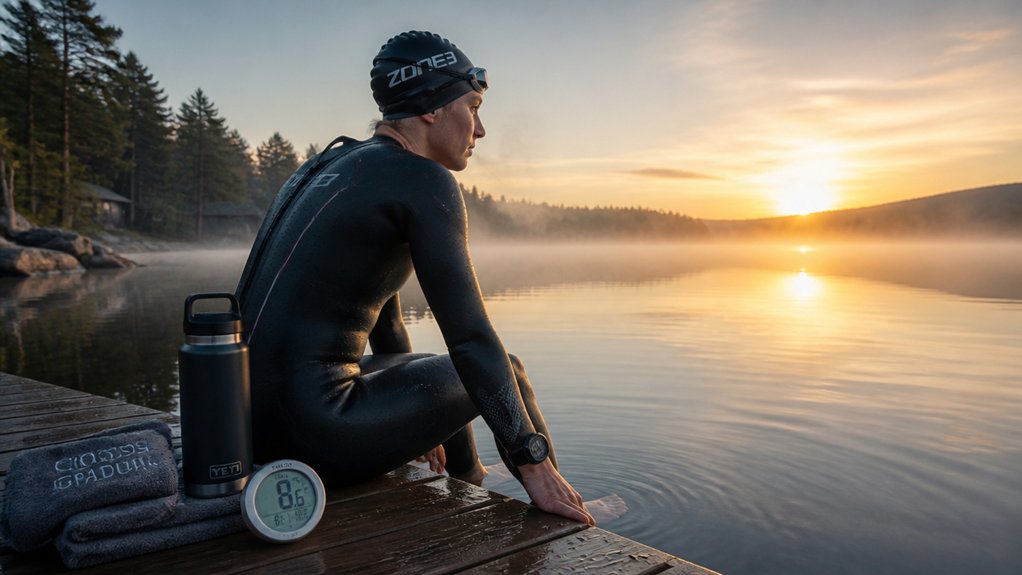
When you start cold‑water acclimation, immerse yourself for just 15 minutes at about 15°C (59°F). The brief exposure lets your body adjust without triggering a full cold water shock, and the water temperature is low enough to stimulate peripheral vasoconstriction while staying safe. Best accuracy to monitor changes in temperature/humidity during your setup sessions helps ensure consistent conditions.
Controlled Breathing for Cold‑Water Acclimation: Box or Wim Hoff Method
After you’ve built a steady 15‑minute routine in 15 °C water, the next step is to master your breath. Controlled breathing lets you blunt the cold shock response and keep your heart rate steady. The Wim Hof Method uses three to four deep inhalations, a full exhale, then breath retention for 30–60 seconds. This cycle spikes epinephrine and norepinephrine, engaging neurochemical pathways that boost alertness and cold tolerance. Box breathing—inhale 4 seconds, hold 4 seconds, exhale 4 seconds, hold 4 seconds—creates a rhythmic pattern that steadies the respiratory response and reduces panic. Practising either technique daily for 2–4 weeks lowers heart rate during cold water exposure, accelerates cold water acclimation, and improves your ability to stay calm when the chill hits. Universal compatibility
Insulation Strategies for Cold‑Water Acclimation: Neoprene Gloves, Body‑Fat Goals, Short Ice‑Baths
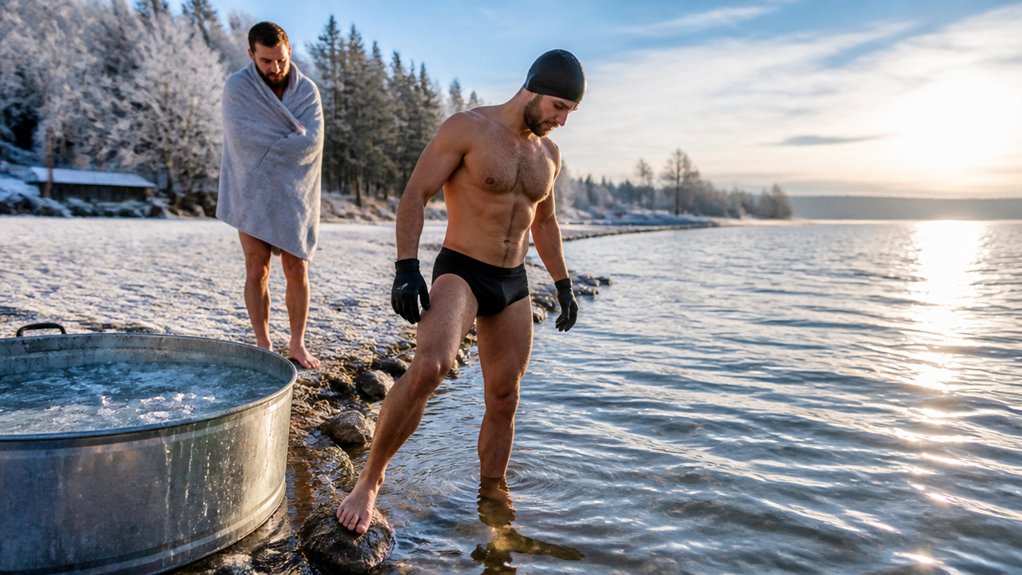
If you want to stay warm while you train, combine three simple insulation tactics: slip on neoprene gloves, aim for a modest body‑fat level, and schedule brief 1‑2‑minute ice‑baths at around 15 °C. Neoprene gloves cut hand heat loss, letting you grip the pool edge and maintain dexterity during cold water swimming. A healthy body‑fat reserve adds subcutaneous insulation, slowing core temperature drop and supporting metabolic heat production. Short ice‑baths blunt shock, improve thermal comfort, and reinforce cold water acclimation without overtaxing vasoconstriction. In addition, choosing compact and portable backdrops, like the EMART Collapsible Green Screen with Stand or the Green Screen Backdrop Kit with Stand for Streaming, can support content creation and training videos in varied environments, ensuring consistent visuals if you’re filming cold‑water acclimation routines indoors or outdoors. Largest Coverage
Training Frequency for Cold‑Water Acclimation: 3‑4 Sessions per Week, 6‑12 Months
Consistently logging three to four cold‑water sessions each week for six to twelve months drives the strongest physiological adaptations—diminished cold‑shock reflexes, steadier breathing, and heightened thermogenesis—while longer exposure solidifies those gains and keeps your tolerance intact during training breaks.
You’ll notice the cold shock response blunting within two to four weeks, but only consistent training cements it. Repeated cold exposure forces your body to upregulate thermogenesis and improve insulation, so aim for 3‑4 sessions weekly. Keep each immersion progressive, extending duration only when you feel comfortable.
This cadence maintains physiological adaptations without overtaxing recovery, ensuring your tolerance to cold rises steadily. After six months you’ll see chronic benefits; extending to twelve months locks them in, making breaks less impactful.
Track Progress Safely: Skin Temp, HRV, and Exit Signs to Prevent Hypothermia
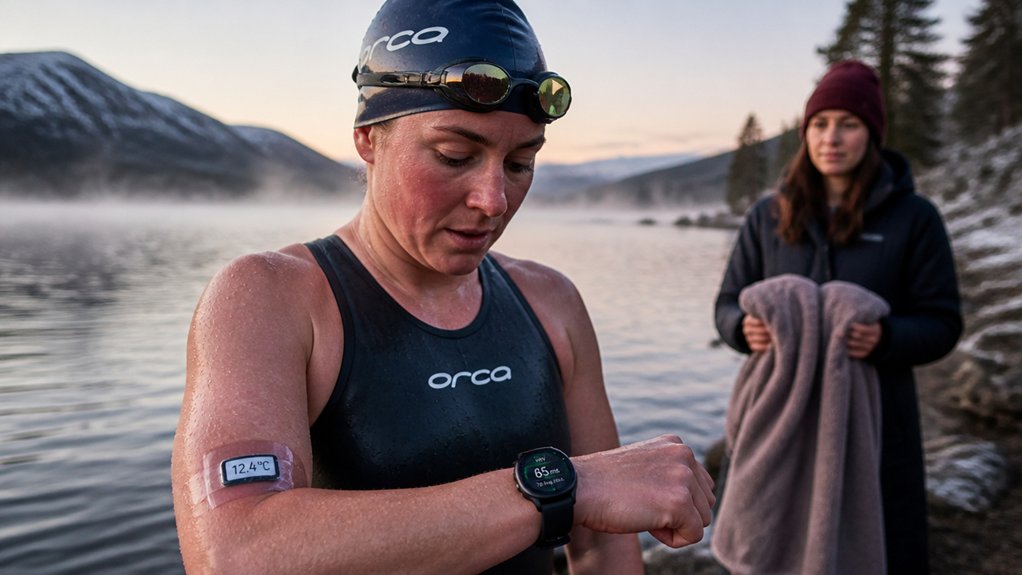
When you monitor skin temperature, heart‑rate variability, and clear exit signs during each cold‑water session, you can spot the early warning cues that prevent hypothermia.
Regular checks let you catch peripheral vasoconstriction, dropping skin temperature, and a dip in heart rate variability before core body temperature falls too low. Pair those metrics with objective exit criteria—numbness, uncontrollable shivering, or disorientation—to stop safely.
- Record skin temperature every minute to see rapid cooling trends.
- Track heart rate variability; a sharp decline flags rising stress.
- Note numbness or tingling in fingers and toes as immediate exit signals.
- Watch for shivering that becomes violent or can’t be controlled.
- Log cold shock changes like gasp frequency and heart rate spikes to adjust exposure time.
To enhance monitoring, incorporate anti‑static/ESD‑safe principles when selecting gear for your cold‑water sessions to ensure nonconductive handling and safer equipment interaction. ESD safety
Frequently Asked Questions
Can I Combine Cold‑Water Acclimation With Heat‑Therapy for Faster Results?
Yes, you can combine them, but alternate sessions, keep each exposure brief, and monitor your heart rate. Cold water boosts circulation, while heat therapy relaxes muscles; together they may accelerate adaptation without overtaxing you.
Will Daily Cold Showers Replace the Need for Longer Ice‑Bath Sessions?
No, daily cold showers won’t fully replace longer ice‑baths. Showers boost circulation and tolerance, but they’re shorter and less intense, so you’ll still need occasional deep immersion for maximal adaptation.
How Does Gender Affect the Rate of Cold‑Water Adaptation?
You’ll notice that men generally adapt faster because higher muscle mass and testosterone boost circulation, while women often feel colder longer due to higher body fat distribution and hormonal influences on thermoregulation.
Is It Safe to Practice Cold‑Water Acclimation While Pregnant?
You should avoid cold‑water acclimation while you’re pregnant; the stress can raise heart rate, reduce blood flow to the fetus, and increase miscarriage risk, so stick to warm, safe activities instead.
Do Certain Medications Interfere With Cold‑Water Tolerance?
Yes, many drugs can lower your cold‑water tolerance—beta‑blockers, antidepressants, and some antihypertensives blunt circulation and shivering. Check with your doctor before immersing, especially if you’re on medication.
In Summary
By easing in, mastering your breath, insulating wisely, staying consistent, and monitoring your body, you’ll turn cold‑water exposure from a shock into a habit. Stick to the schedule, listen to your signals, and watch your tolerance grow. The result? A stronger, more resilient you—ready to plunge into any chill without fear.