A progressive cooling pre-plunge routine gradually acclimates your body to colder temperatures and longer immersion times by starting with warm-up activities and slowly lowering water temperature over several weeks. You’ll warm up with light activity, practice mindful breathing, and then gradually expose yourself to cooler water, focusing on safety and control. This method helps reduce shock, improve thermoregulation, and build mental resilience. Keep exploring to learn more about how to implement this effective prep.
What Is a Progressive Cooling Pre-Plunge Routine and Why Do It?
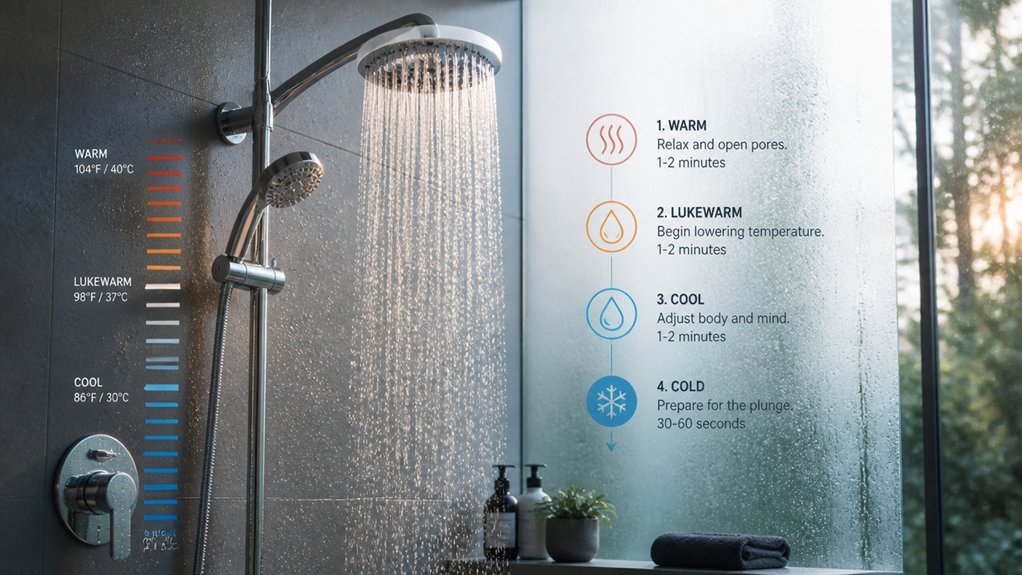
Have you wondered why some cold plunge routines emphasize gradual adaptation? It’s because a progressive cooling pre-plunge routine helps you safely build cold water immersion tolerance.
Over 4-6 weeks, you lower the water temperature and extend immersion time, starting at 60-65°F for 1-2 minutes and advancing to 50-55°F for 3-5 minutes. This phased approach supports controlled breathing and reduces shock and discomfort.
Gradually lowering water temperature and extending immersion time over weeks enhances safety and cold tolerance.
It also optimizes sympathetic nervous system activation, boosting alertness and norepinephrine levels while minimizing excessive cold stress. Gradual cooling decreases shivering and speeds up rewarming, enhancing thermoregulation.
Following this routine, you develop sustainable habits, avoid injury, and maximize the benefits of cold plunges with minimal risks. The use of accurate and quick-response blood oxygen monitors can further aid in assessing your physiological response during these sessions.
How Cooling Before Your Cold Plunge Benefits Your Body and Mind
Cooling before your cold plunge stimulates your nervous system, boosting your body’s ability to handle cold stress more effectively. It also prepares your mind by increasing alertness and reducing anxiety about the experience. Engaging in breathing exercises can further enhance your resilience and improve your overall response to cold exposure.
Enhances Nervous System Activation
Gradually lowering your skin and body temperature before a cold plunge activates your sympathetic nervous system, leading to a surge in norepinephrine levels that can boost alertness and focus. This process, known as progressive cooling, primes your nervous system for cold exposure, enhancing nervous system activation. Using a precise infrared thermometer can help monitor surface temperatures accurately, ensuring safe and effective pre-cooling durations. Starting with milder temperatures (60-65°F) for 1-2 minutes allows you to breathe throughout and maintain control, reducing cold shock response. This pre-workout cold plunge prepares your body for deeper immersion, increasing vagal tone and heart rate variability. Over time, consistent progressive cooling trains your autonomic nervous system for resilience, supporting quicker rewarming and less shivering. The neurochemical benefits, including elevated dopamine and norepinephrine, promote sustained motivation and sharper mental clarity during your cold plunge routine.
Prepares Mind and Body
Preparing your mind and body through controlled pre-cooling heightens mental clarity and physical readiness for the cold plunge. Using progressive overload, you gradually lower skin and core temperature, reducing cold shock risks and easing your nervous system’s response.
Pre-cooling activates the sympathetic nervous system gently, boosting norepinephrine by 2-3 times, which sharpens mental focus and alertness. Spending 1-2 minutes at warmer temperatures (60-65°F) helps acclimate your body, making the subsequent immersion at 50-59°F feel less overwhelming.
This approach supports better breath control, reduces shivering, and allows for longer, more comfortable sessions.
Over time, engaging in progressive cooling trains your nervous system to handle cold stress more effectively, building resilience and fostering mental and physical adaptation over weeks.
How to Structure Your Warmup: Step-By-Step From Warm to Cold
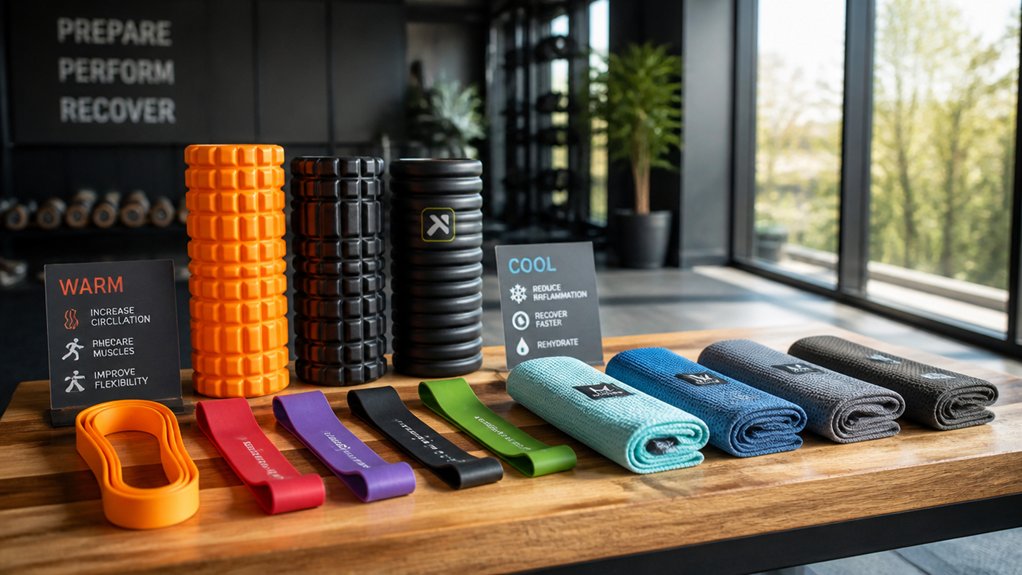
To effectively structure your warmup before a cold plunge, start with 5-10 minutes of light aerobic activity or dynamic stretching. This warm-up routine elevates muscle temperature and promotes circulation, preparing your body for cold exposure. Incorporate controlled deep breathing exercises, such as 4-6 inhales and 6-8 exhales per minute, to calm your nervous system and enhance focus. Gradually expose yourself to cooler environments or use tepid water (above 65°F) to help your body acclimate, reducing shock during immersion. Include joint mobility drills or light movements targeting major muscles to decrease injury risk and improve vasoconstriction responses. Finish this phase 5-10 minutes before your cold plunge, allowing your body to maintain readiness while beginning natural rewarming. Using a reliable interval timer can help you accurately track your warm-up and transition times for optimal preparedness.
Safety Tips: How to Lower Temperature Safely and Comfortably
When lowering your body temperature for cold plunges, it’s essential to do so safely and comfortably to prevent shock or hypothermia. Start with water around 60-65°F (15-18°C) for 1-2 minutes, helping your nervous system adapt without overload. Use controlled breathing—slow inhales and exhales—to stay calm and minimize cold stress. A well-insulated tub with multiple insulation layers can also contribute to maintaining a stable temperature, making your experience safer and more comfortable. To visualize your progression, consider this table:
| Step | Water Temp | Duration | Precautions |
|---|---|---|---|
| 1 | 60-65°F | 1-2 minutes | Observe shivering, comfort |
| 2 | Slightly cooler | Gradual increase | Adjust based on tolerance |
| 3 | Monitor signs | Stop if uncomfortable | Use environment warmth |
Ideal Duration and Temperature Targets for Each Stage
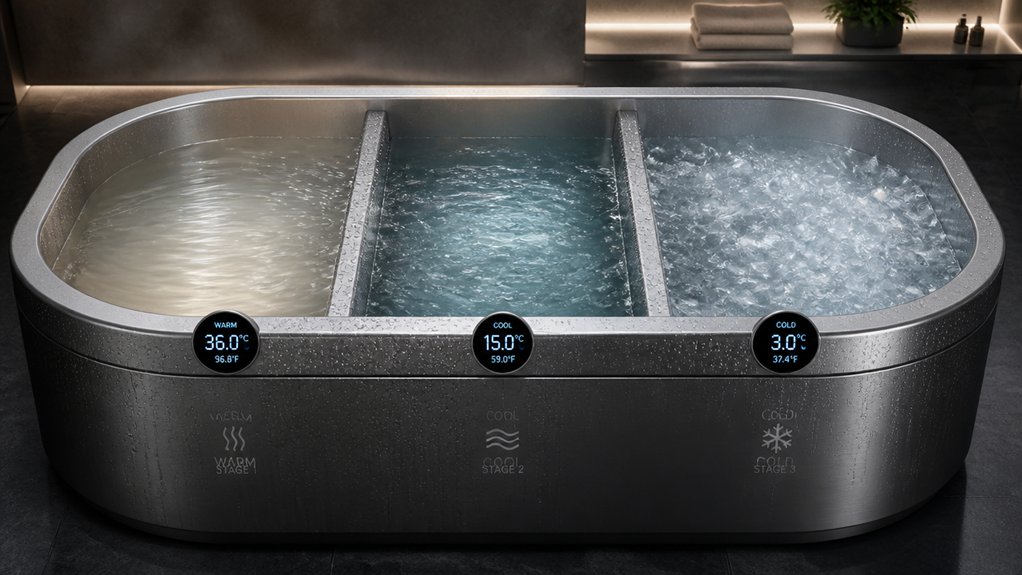
How long and at what temperature should you hold each cold plunge stage to guarantee safe progress? In the initial phases, aim for 60-65°F with 1-2 minutes per session, focusing on controlled breathing and habit formation. During phases two and three, gradually lower the temperature to 55-60°F and extend durations to 2-4 minutes, increasing sessions to 4-5 weekly to promote adaptation and reduce shivering. In later phases, target 50-55°F for 3-5 minutes, four times per week for general wellness, or 45-50°F for athletes, for 5-10 minutes. A minimum effective dose of about 90 seconds at 55°F helps maintain baseline adaptation. Regular use of water treatment solutions ensures water quality and safety during each stage. Consistent cold-water immersion across these phases allows your body to adapt safely while maximizing benefits.
How to Incorporate Breathing and Mindfulness Into Your Routine
Start your routine with controlled breathing exercises, like deep inhales and slow exhales, to calm your nervous system. Focus your attention on your breath and the sensation of cold to stay present and reduce anxiety. Practice short breath holds and quick nasal breaths to build resilience and maintain alertness during immersion. Incorporate visual-guidance cues from your device to help synchronize your breathing and enhance mindfulness throughout the process.
Breath Control Techniques
Incorporating mindful breathing into your pre-plunge routine can greatly enhance your cold exposure experience. Focus on breath control by practicing deep inhalations, about four to six breaths, followed by extended exhales lasting six to eight seconds. This calms your nervous system and supports your body’s natural response to cold. Spending 3-5 minutes engaging in mindful breathing, which reduces the shock response and lowers your breath rate to under five cycles per minute, can further improve your resilience. Incorporate breath holds of 15-30 seconds during the plunge to build CO2 tolerance, fostering resilience and improving autonomic nervous system balance. Controlled nasal breathing also increases norepinephrine, boosting alertness and reinforcing the benefits of your cold immersion. This focused breathing primes your mind and body for a safer, more effective cold plunge, especially when recovery tracking apps monitor your physiological responses for optimal safety.
Mindful Presence Strategies
Integrating mindful presence into your cold plunge routine enhances both your physical resilience and mental clarity.
Start with 3-5 minutes of slow, deep nasal breaths, extending exhales (6-8 seconds) to activate your parasympathetic nervous system and promote calming.
During the immersion, practice mindful awareness by focusing attentively on your breath sensations and physical cold stimuli, without judgment, to build tolerance and reduce shock. Incorporate breath holds of 15-30 seconds to foster resilience and refine autonomic control as part of progressive exposure.
Follow your plunge with 1-3 minutes of reflective mindfulness, observing shifts in body and mind calmness. This deliberate practice strengthens your mental toughness and deepens your connection with your body during cold exposure.
Adjusting Your Routine for Beginners, Athletes, and Goals
When tailoring your cold plunge routine, understanding your specific goals and experience level is essential to guarantee safe and effective progression.
For beginners, start with water temperatures of 60-65°F and stay immersed for 1-2 minutes, focusing on controlled breathing and habit formation during 2-3 sessions weekly.
Athletes can advance to colder temperatures of 45-50°F, increasing durations to 5-10 minutes and practicing 4-5 times per week to enhance recovery and performance.
For mental health, aim for 52-57°F for 2-4 minutes daily, emphasizing breath control and mindfulness.
General wellness routines often involve 50-55°F for 3-5 minutes, 3-4 times weekly.
Consistent practice and gradual adaptation—reducing water temperature and increasing duration—are key to building tolerance safely over 4-6 weeks.
Common Mistakes to Avoid and Troubleshooting Tips
Avoid neglecting water temperature consistency, as fluctuations can disrupt your adaptation process.
Don’t skip warm-up periods or overestimate your cold tolerance, which can lead to discomfort or stress.
Troubleshoot issues promptly with reliable equipment to keep your routine safe and effective.
Ignoring Temperature Consistency
Ignoring temperature consistency during your pre-plunge routine can severely compromise your progress because fluctuations in water temperature prevent your body from adapting reliably. Unpredictable cold exposure disrupts physiological responses and makes managing cold shock more difficult.
When water temperatures vary, you risk:
- Overexposure that causes excessive shivering and discomfort, throwing off your controlled breathing and mental focus.
- Under-stimulation that weakens your habituation process, slowing progress over weeks.
- Inconsistent progress tracking—making it harder to reduce cold shock intensity by 30-50% within four weeks, hampering progressive adaptation.
Using stable, controlled temperatures—like those from devices such as the HomePlunge H3—ensures your body responds consistently, building resilience safely and effectively.
Skipping Warm-Up Periods
Skipping the warm-up before your cold plunge can greatly increase the risk of muscle strain and discomfort, as cold muscles are less flexible and more prone to injury. A proper warm-up prepares your muscles and nervous system, reducing shock and promoting better blood circulation.
Without this initial step, you may experience excessive shivering and discomfort, hindering your tolerance development. Jumping straight into a cold plunge without warm-up or light dynamic movement prevents your body from gradually adapting, making it harder to manage the cold.
It also disrupts the progressive cooling process, making safe immersion times challenging. To maximize safety and benefits, always include a brief warm-up, such as stretching or light cardio, to prepare your body for cold exposure and facilitate smoother, more effective cooling.
Overestimating Cold Tolerance
Overestimating your cold tolerance can quickly lead to overexposure, making it harder to progress safely in your routine. If you jump into cold plunging at temperatures below the recommended phase range (like under 55°F early on), you risk excessive shivering and cold stress.
Attempting long duration phases (>5 minutes) before proper adaptation may cause hypothermia symptoms and hinder consistency. Skipping the gradual increase through temperature and duration phases—such as starting at 60-65°F for 1-2 minutes—can lead to discomfort and setbacks.
To avoid this, prioritize breath control during early sessions and focus on gradually increase your tolerance. Troubleshooting by lowering the temperature or duration to previous phases allows safe rebuilding and helps you stay on track for steady progress.
Tracking Your Progress and Making It Sustainable
Tracking your progress is essential for making your progressive cooling routine sustainable and effective. By monitoring your subjective cold shock intensity, aim to reduce it by 30-50% within four weeks, indicating better tolerance.
Pay attention to breathing control, endeavoring for fewer than five breath cycles per minute by week six to build resilience. Record how energized you feel one hour after each session, targeting a consistent rating of 7+/10, which shows you’re getting the right dose and mental clarity.
Keep a log of session frequency, temperature, and duration to stay on track and prevent overexposure. Use the “never miss twice” rule and consistent timing to develop sustainable habits, adjusting intensity or duration based on progress and your changing schedule.
FAQs: Your Questions About Cold Water Prepping Answered
Curious about how to safely start your cold water prepping journey? A progressive cooling pre-plunge routine naturally builds your cold tolerance and confidence through gradual steps. Here’s what to expect:
- Begin with water around 60-65°F for 1-2 minutes, easing your body into cold water immersion.
- Slowly decrease temperatures to 55-60°F, then 50-55°F, over several weeks.
- Focus on breathing skills, controlling your autonomic nervous system to reduce shock and stress.
This phased approach minimizes cold-induced discomfort and helps habituate your body’s response. Consistently practicing 3-5 sessions weekly reinforces your adaptation, improves norepinephrine response, and strengthens your ability to handle colder temperatures safely.
Expert Tips for Staying Motivated and Consistent
Wondering how to stick with your cold water routine even when motivation wanes? The key is a solid pre-plunge routine that uses progressive cooling to build cold tolerance gradually. Set manageable goals, like holding 90 seconds at 55°F, and follow the “never miss twice” rule to keep momentum on busy days.
Schedule consistent cold plunges at the same time daily—preferably morning—to harness natural cortisol peaks and reinforce the habit. Create a welcoming environment by preheating your bathroom and using controlled breath techniques to ease psychological barriers.
Track subjective markers, like reduced cold shock and improved breath control, to stay motivated and recognize progress. These strategies help you stay consistent cold and develop resilience, making your pre-plunge routine a sustainable part of your wellness journey.
Frequently Asked Questions
What Is a Good Cold Plunge Routine?
A good cold plunge routine involves starting at warmer temperatures, gradually decreasing over weeks, and practicing 2-4 sessions weekly for 2-5 minutes. Focus on consistency, controlled breathing, and listening to your body’s signals to maximize benefits safely.
How Cold Is Joe Rogan’s Cold Plunge?
Joe Rogan’s cold plunge is typically around 50-55°F. You can aim for a similar temperature range to experience benefits like mood enhancement, improved recovery, and increased cold tolerance, while minimizing risks associated with extreme cold exposure.
How Many Minutes a Week Should You Cold Plunge?
You should aim for around 11 to 15 minutes of cold plunging weekly, ideally three to four sessions, each lasting 2 to 5 minutes at 50-55°F, to maximize benefits without risking diminishing returns.
Is It Better to Cold Plunge in the Morning or at Night?
Morning cold plunges boost alertness and focus by activating your sympathetic nervous system, while evening plunges improve sleep and relaxation through parasympathetic response. Choose based on your goals, timing, and how your body responds to optimize benefits.