Before an ice plunge, opt for low-impact cardio warmups like brisk walking, light cycling, or gentle arm circles to boost circulation and gently raise muscle temperature. These activities activate your muscles without causing fatigue or sweating, reducing the risk of injury. Incorporate controlled breathing to calm your nervous system and improve mental focus. If you keep exploring, you’ll discover how to maximize your warmup for safety and comfort during cold plunging.
Why Should You Warm Up Before Cold Plunging?
Why should you warm up before cold plunging? Warming up increases muscle temperature, making your muscles less prone to stiffness and strain during cold exposure. A proper warm-up, including dynamic movements and light aerobic activity, can help activate your muscles and improve overall circulation. Additionally, incorporating resistance bands into your warm-up routine can further enhance muscle activation and flexibility before the cold plunge. This process helps prevent sudden vasoconstriction caused by abrupt temperature changes, maintaining healthier circulation. Elevating your core body and skin temperature beforehand can also improve comfort and tolerance, allowing you to stay longer safely in the cold. A proper warm-up primes your body for cold exposure, reducing the risk of injury while enhancing your overall experience—making cold plunges safer and more effective.
Which Low-Impact Exercises Are Best Before a Cold Plunge?
Low-impact exercises are an excellent way to prepare your body for cold plunging without overstressing your muscles or joints. They help warm your muscles and raise body temperature, reducing stiffness before a pre-workout cold plunge.
Focus on mobility exercises to enhance circulation and joint range without overexerting yourself. Gentle aerobic movements and stretching support muscle readiness while avoiding chilling before immersion.
Here are some top low-impact exercises to try:
- Brisk walking or light cycling to increase blood flow and warm back muscles.
- Arm circles and leg swings to improve mobility without strain.
- Hip openers and slow bodyweight squats to activate major joints smoothly.
- Deep breathing combined with gentle movements to boost mental alertness and prepare you for cold exposure.
A gentle flow of controlled breathing can also help optimize respiratory stamina before plunging.
How Can You Optimize Your Warmup for Safety and Better Results?
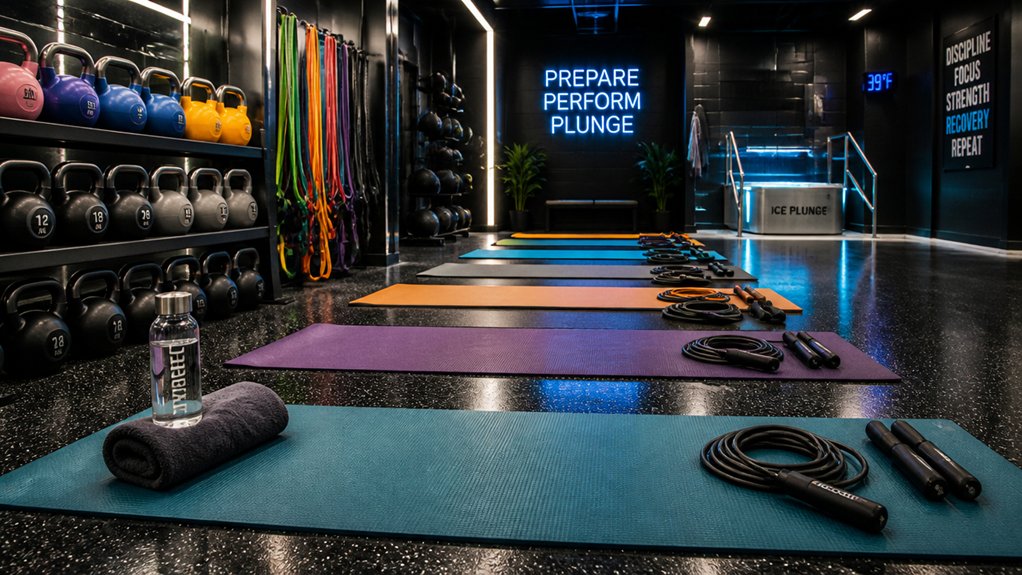
To optimize your warmup for safety and better results, start with gentle aerobic activities like brisk walking or easy cycling for 3–5 minutes. This warmup raises your muscle temperature and circulation, preparing your body for the cold plunge. Using fragrance-free body wash before and after can help maintain your skin’s moisture barrier and prevent irritation during exposure. Incorporate dynamic stretches such as arm circles, leg swings, and hip openers to improve joint mobility and prevent stiffness. Performing low-intensity bodyweight exercises like air squats or lunges activates your muscles and nervous system without causing fatigue. Avoid intense warmups that lead to sweating or muscle exhaustion, as the goal is to gently arouse your CNS without overtaxing your body before immersion. Focus on controlled, deep breathing throughout; it promotes parasympathetic response and stabilizes your nervous system, ensuring a safe, effective cold plunge experience.
Frequently Asked Questions
Should You Ice Plunge Before or After Cardio?
You should ice plunge after cardio to enhance recovery and reduce muscle soreness. Doing it beforehand might impair performance, so wait until after your workout for peak benefits and to avoid muscle stiffness or reduced power.
What Is the 3 3 3 Rule Cardio?
The 3 3 3 Rule Cardio involves doing 3 minutes each of light jogging, dynamic drills, and mobility exercises. This warms up your body gradually, boosts blood flow, activates muscles, and reduces stiffness before your ice plunge.
What Is a Good Cardio Warm-Up?
A good cardio warm-up gets your heart rate to 50-60%, involves dynamic movements like brisk walking, light jogging, or jumping jacks, and activates large muscle groups, preparing your body for ice plunges while boosting blood flow and mental focus.
Can Ice Baths Lower Blood Pressure?
Ice baths can help lower blood pressure over time by causing vasodilation after initial vasoconstriction, improving circulation, and activating your autonomic nervous system. However, consult your healthcare provider if you have hypertension before trying cold exposure.