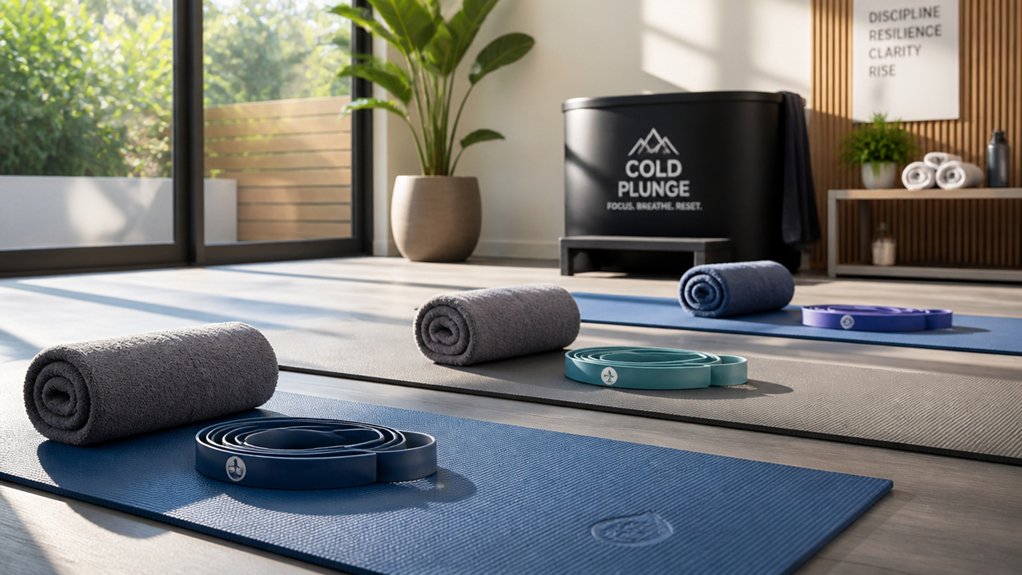
To prepare for an ice bath, start with gentle warm-up yoga like Sun Salutations, Cat-Cow, and Warrior II to activate your muscles and improve circulation. Incorporate dynamic stretches such as leg swings and arm circles, paired with deep breathing to relax your nervous system. Keep movements mild and fluid, avoiding overstretching. Shift smoothly from your warm-up into your cold plunge, and you’ll optimize your body’s resilience and recovery. If you’re curious, you’ll discover more tips to enhance your prep process.
Why Warming Up Before Your Cold Plunge Matters
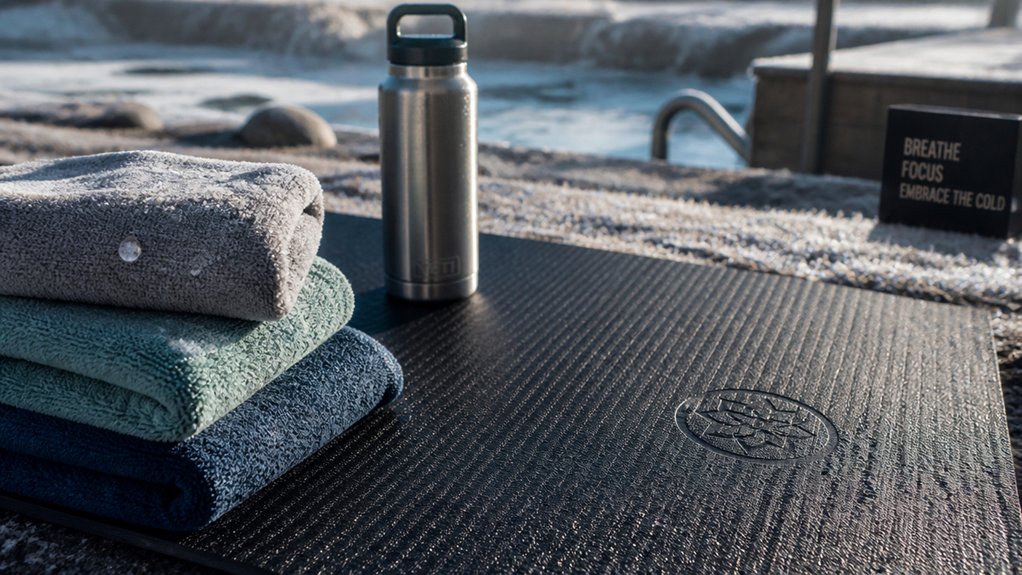
Warming up before a cold plunge is essential because it prepares your muscles and joints for the sudden temperature drop. Proper warming up helps raise muscle temperature, reducing stiffness and lowering injury risk during the ice bath. Engaging in gentle yoga warmups improves circulation, promoting better blood flow to extremities, which is vital for body temperature regulation during cold immersion. It also supports muscle recovery by prepping your muscles for the shock of cold exposure, minimizing discomfort. A thoughtful warmup counteracts muscle chilling effects that can impair strength and flexibility afterward. Additionally, incorporating resistance bands, can enhance warm-up effectiveness by activating key muscle groups and increasing circulation before the plunge. This preparation guarantees you get the most benefit and safety from your cold plunge experience.
How Gentle Movement Boosts Circulation and Flexibility
Engaging in gentle movements before your cold plunge actively enhances blood flow, which is key to preparing your body. Increased circulation helps deliver oxygen and nutrients to extremities, reducing numbness and muscle soreness during cold exposure. Slow stretches improve joint mobility and flexibility, lowering the risk of injury while tolerating cold temperatures. Light dynamic poses like leg swings, arm circles, and gentle twists help warm tissues at the cellular level, making it easier to handle the cold from your ice bath. Better circulation also promotes the removal of metabolic waste, accelerating recovery. Incorporating compression therapy as part of your warmup can further optimize circulation and support joint stability. This low-intensity movement stabilizes heart rate and breathing, easing physiological shock from immersion into cold plunge tubs.
Top Yoga Poses to Prepare Your Muscles Safely
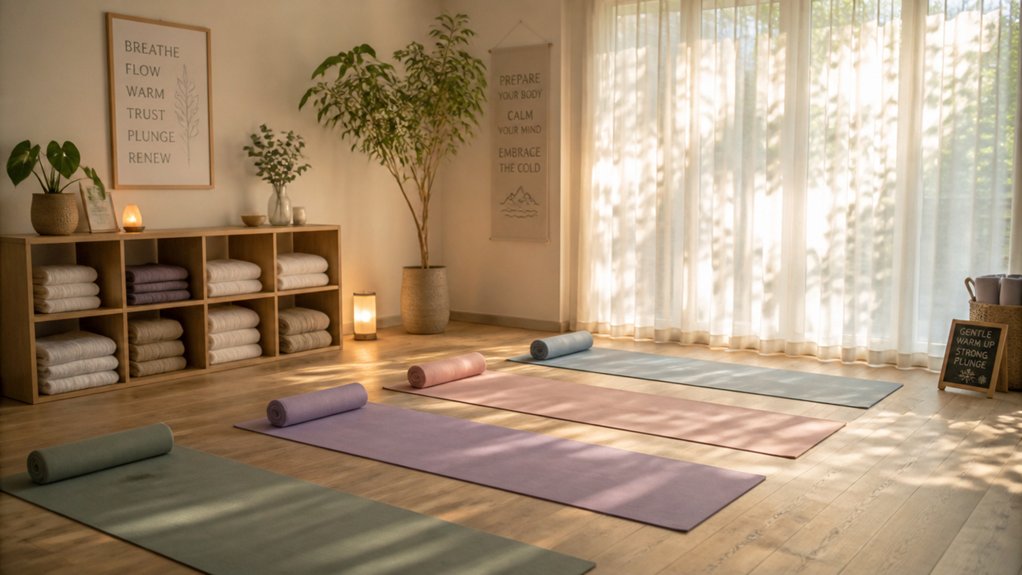
Incorporating specific yoga poses into your warmup routine effectively prepares your muscles for the cold plunge by gently increasing circulation and flexibility. Dynamic stretches like Cat-Cow mobilize your spine and warm surrounding muscles, making them more receptive to cold exposure. Warrior II activates your leg muscles, improving blood flow and decreasing stiffness during your recovery routine. Using foam rollers prior to your session can further enhance circulation and support muscle readiness deep tissue relief. Gentle Sun Salutations raise your overall body temperature gradually, minimizing shock and preparing muscles for the cold. Downward Facing Dog stretches your hamstrings, calves, and shoulders, promoting flexibility and blood flow before plunging. Finish with a seated forward bend to relax and elongate muscles, easing tension without strain. These poses guarantee your muscles are safely prepared, reducing injury risk and enhancing the benefits of your ice bath.
Breathing Techniques to Calm Your Nervous System
Focusing on deep, steady breaths before your plunge can activate your parasympathetic nervous system, helping you feel more relaxed. Controlled breathing techniques, like those inspired by the Wim Hof Method, reduce the fight-or-flight response to cold water. By maintaining mindful awareness of your breath, you lower stress hormones and prepare your mind and body for the cold immersion. Incorporating breathing exercise tools can further enhance your pre-plunge calm and lung capacity.
Deep Breathing Benefits
Have you ever wondered how deep breathing can instantly calm your nerves before a cold plunge? When you take deep breaths, you activate your parasympathetic nervous system, which helps you relax and reduces stress.
Controlled inhales through your nose and slow exhales through your mouth lower your heart rate and stabilize blood pressure, preparing your body for the cold.
Spending 3 to 5 minutes practicing this breathing helps sharpen your mental clarity, making you more focused and resilient. Breathing techniques inspired by the Wim Hof Method combine deep, rhythmic breaths with cold immersion, enhancing oxygen delivery and maintaining calmness.
Engaging in slow, mindful breaths before your plunge minimizes shock and stabilizes your nervous system, ensuring a safer, more controlled experience. Maintaining measurement accuracy of your blood oxygen levels during breathwork with a reliable pulse oximeter can help monitor your physiological responses and optimize your preparedness.
Mindful Breath Control
Mindful breath control is a powerful way to calm your nervous system before a cold plunge. By taking slow, deep inhales through your nose and controlled exhales through your mouth, you activate the parasympathetic nervous system, reducing anxiety and heart rate. Practicing this for 3-5 minutes can greatly calm your nervous, making cold exposure less stressful. Combining focused breathing with gentle yoga stretches enhances oxygen flow and mental clarity, prepping you mentally and physically. Consistent practice helps your body tolerate cold shock better, decreasing the fight-or-flight response during immersion. Incorporating breathing mode compatibility across devices can further support rhythmic pacing during these exercises.
Flow for a Pre-Plunge Yoga Routine: Sun Salutations and Dynamic Stretches
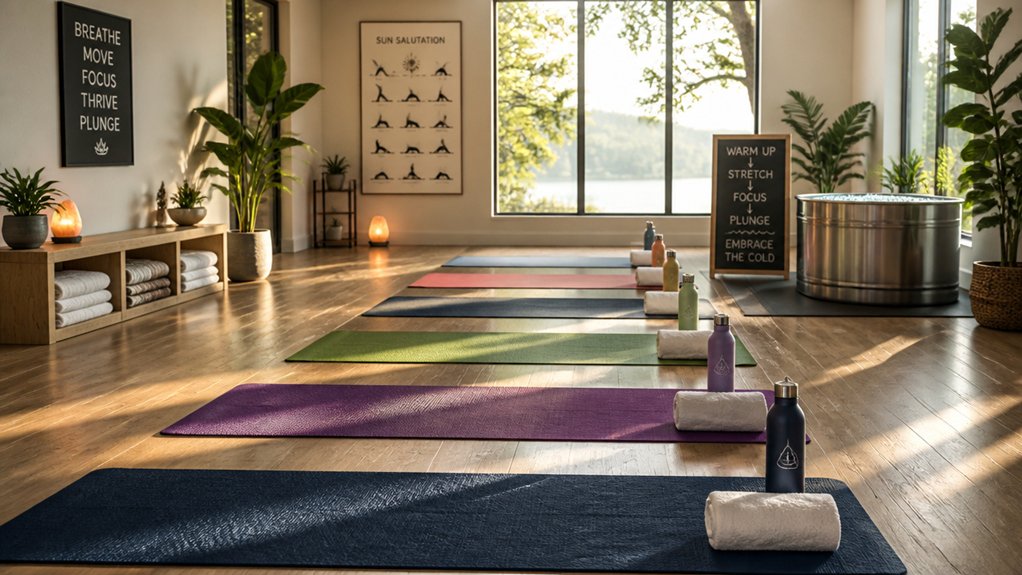
Start your warmup with a few rounds of mindful Sun Salutations, focusing on breath-synchronized movement to boost circulation and activate your nervous system.
Incorporate dynamic stretches like arm circles and leg swings to keep muscles warm and joints mobile. Gradually ramp up the intensity to prepare your body for the cold plunge, reducing stiffness and enhancing flexibility.
A quick check of your cold plunge thermometer can help you monitor water temperatures and ensure optimal safety during your recovery routine.
Mindful Sun Salutations
Engaging in mindful Sun Salutations before your cold plunge gently warms the muscles, boosts circulation, and prepares your body for immersion. This flow connects the mind and body through controlled breathing exercises, enhancing mental clarity and reducing nervousness.
As you move through poses like Mountain, Forward Fold, Halfway Lift, and Cobra, you’ll promote dynamic stretching and gradually increase your body heat. Practicing 3-5 rounds helps prevent muscle stiffness and lowers injury risk during the cold plunge.
Focus on your breath to cultivate calmness and set a mindful tone for the experience ahead. Incorporating durable, moisture-resistant posters into your recovery space can reinforce motivation and perseverance, creating an environment that supports mental resilience. This gentle yet effective routine guarantees your body is primed, both physically and mentally, for a safe and invigorating ice bath.
Dynamic Stretching Techniques
Dynamic stretching techniques serve as an essential complement to Sun Salutations by actively preparing your joints and muscles for the cold plunge. Incorporating dynamic stretches like leg swings, arm circles, and torso twists enhances joint mobility and loosens muscles, reducing stiffness during the ice bath.
These movements help raise your core body temperature and boost blood flow, which is crucial during the 5-10 minute pre-plunge yoga flow. By stimulating neural activation and improving muscle elasticity, dynamic stretches support quicker recovery and lower injury risk afterward. They also deepen the mind-body connection, especially when combined with mindful breathing.
Breathing for Warmth
Breathing techniques play a vital role in preparing your body for the cold plunge by boosting circulation and generating internal warmth. Focus on deep, controlled breathing—inhale deeply through your nose, then exhale slowly through your mouth—to stimulate blood flow.
Incorporate Sun Salutations to dynamically stretch major muscle groups while synchronizing breath and movement, allowing oxygen to flow freely. During the flow, maintain steady, rhythmic breathing to stay mindful and calm your nervous system, reducing stress before cold exposure.
Use breathwork techniques similar to the Wim Hof Method, combining full inhales with complete exhales to promote peripheral vasodilation and warm your muscles. Gradually increasing movement intensity helps elevate your heart rate, generate heat, and prepare your body for the cold immersion.
Targeting Tight or Stiff Areas for Better Comfort
Have you ever noticed how stiff shoulders or tight hips can make the cold plunge uncomfortable? Targeting these areas in your pre-plunge routine helps improve comfort and recovery. Using dynamic stretches like arm circles and leg swings increases blood flow, loosening tight hips, shoulders, and legs.
Gentle spinal twists and cat-cow poses enhance back mobility and reduce stiffness that may worsen during the cold immersion. Hip openers such as pigeon pose or low lunge specifically release tight hip flexors and glutes, easing the shock of cold water.
Including slow, deep breathing with gentle yoga stretches prepares your nervous system and muscles. A focused 5 to 10-minute warmup guarantees circulation is stimulated and muscles are more flexible, making your cold plunge less harsh and supporting better recovery.
Timing Your Warm-Up: How Long Should It Take?
How long should your warm-up last to maximize its benefits before a cold plunge? Ideally, a pre-plunge yoga warm-up takes about 5 to 10 minutes. This duration gives your body enough time to adjust, raising your core temperature gradually and preparing muscles for the cold immersion.
Keeping it within this window allows you to perform gentle stretching and light flow sequences that boost blood circulation without overexerting yourself or risking overheating. Starting with slow, mindful movements and deep breathing helps ease into the cold plunge comfortably.
If your warm-up is too short, you might experience muscle stiffness during the ice bath. Conversely, a warm-up over 10 minutes can cool your body down too much before immersion. Aim for that sweet spot to optimize your cold plunge experience.
Combining Movement and Mindfulness for Focused Preparation
To prepare effectively, combine gentle movement with focused breathing to center your mind and body.
Moving mindfully helps you stay present, while controlled breaths calm your nervous system for the cold plunge ahead. This balance sets a clear, focused mindset for a safe and beneficial ice bath experience.
Mindful Movement Practice
Could incorporating mindful movement into your pre-plunge routine enhance your cold immersion experience? Engaging in mindful movement involves slow, controlled yoga poses that gently raise your body’s temperature and boost circulation without overexertion.
Combining breath awareness with movement helps you stay present, reducing the cold shock response and improving tolerance during cold plunge therapy. Poses like cat-cow, gentle twists, and forward folds promote joint mobility and muscle relaxation, preparing your body for immersion.
Spending 3–5 minutes on mindful movement with deep, slow breathing supports nervous system regulation and fosters calming awareness. This approach enhances your body’s response to cold, allowing you to observe signals and modulate your experience safely, making the entire cold plunge more manageable and effective.
Focused Breathing Techniques
Focusing on deep, controlled breathing during your warmup can greatly enhance your readiness for cold immersion. Begin with nasal inhales and slow mouth exhales for 3-5 minutes to activate your parasympathetic nervous system, helping you relax and prepare for the cold plunge.
Integrate gentle, flowing movements like Cat-Cow or seated twists, synchronizing each with your breath. Use breath awareness during these stretches to cultivate mindfulness and stay present. This mindful focus not only calms your mind but also reduces anxiety about the cold immersion.
Combining controlled breathing with mindful movement increases oxygen flow, prepares your muscles, and helps prevent cold-induced stiffness. Practicing these focused breathing techniques regularly enhances mental clarity and body readiness, resulting in a safer, more effective ice bath experience.
Tips for Creating a Consistent and Effective Routine
| Muscle Focus | Breathing Technique |
|---|---|
| Large muscle groups | Deep diaphragmatic breathing |
| Dynamic stretches | Calm the nervous system |
| Gentle yoga poses | Activate relaxation response |
Establishing a consistent pre-plunge yoga warmup routine requires intentional planning and mindfulness. To make your cold plunge more effective, start by incorporating dynamic stretches that target large muscle groups—this boosts circulation and reduces stiffness. Follow with gentle yoga poses like Cat-Cow, Downward Dog, and Sun Salutations to gradually warm your muscles and increase flexibility. Incorporate deep breathing exercises to activate your parasympathetic nervous system, calming your mind and body. Schedule your warmup at least 5-10 minutes before the cold plunge, ensuring your body temperature gets regulated without chilling muscles. Consistency is key: keep this routine part of your regular practice and track your progress for ideal recovery benefits.
Common Mistakes to Avoid When Warming Up
Skipping gentle dynamic movements can leave your muscles stiff and unprepared for the cold plunge.
Overstretching cold muscles or rushing the warm-up increases your risk of injury and diminishes benefits.
Be mindful not to start with intense exercises or in hot environments, as these mistakes can undermine your entire routine.
Skipping Dynamic Movements
Neglecting to include dynamic movements in your warm-up routine can greatly hinder your performance and safety before a cold plunge. Skipping this step limits blood flow and muscle readiness, increasing the risk of strains during your yoga or recovery benefits from the cold plunge.
Static stretching alone doesn’t raise muscle temperature or circulation enough for effective preparation. Without a proper dynamic warm-up, your muscles remain stiff, and your core temperature stays low, which can lead to chills and slower recovery.
Research shows that 5–10 minutes of dynamic movements like leg swings or arm circles optimizes circulation and prepares your body for cold immersion. Incorporating these movements guarantees you’re physically prepared, reduces discomfort, and maximizes the recovery benefits of your ice bath.
Overstretching Cold Muscles
Overstretching cold muscles before an ice bath can quickly lead to injuries like microtears and strains, as their elasticity and suppleness are reduced at lower temperatures. When your muscle is cold, it’s less pliable, increasing the risk when you push too hard or hold deep stretches before plunging.
Avoid static stretching deeply pre-plunge; instead, rely on gentle dynamic movements that gradually warm your muscle without overstressing it. Overstretching cold muscle tissue can cause damage to tendons and ligaments, especially when combined with the chilling effect of the upcoming ice plunge.
To stay safe, limit your stretching to mild ranges of motion and prioritize light cardio or yoga flows. This approach prepares your muscle safely, reducing injury risk during your ice bath session.
Rushing the Warm-Up
Rushing your warm-up can greatly increase the risk of injury during an ice bath session. Skipping gradual movements or rushing straight into intense poses prevents your body from properly responding, which can leave muscles stiff and cold.
Starting with a quick warm shower might seem efficient, but it won’t adequately boost circulation or prepare your muscles for cold exposure. When you move too fast, your muscles remain tense, increasing the chance of strains or fatigue.
To maximize the benefits of a pre-plunge routine, take your time with gentle, progressive movements, allowing your body to respond naturally. Proper breathing and hydration during this phase also help your nervous system prepare, making cold water immersion safer and more effective. Rushing undermines all these essential steps.
How to Transition Smoothly From Warm-Up to Cold Plunge
To shift smoothly from your warm-up yoga routine to the cold plunge, focus on calming your nervous system with 2-3 minutes of deep, controlled breathing. This helps you relax, lowering stress levels so your body can adjust physically and mentally.
As you breathe, gradually lower your awareness of body temperature, practicing mindful acceptance of the cold sensations. Move gently from the warm yoga environment directly to the cold plunge area to minimize temperature shock and keep your body temperature regulated.
Avoid rapid or tense movements immediately before entering the cold bath, as these can create muscle stiffness and hinder cold tolerance. Incorporate a brief mental grounding or mindfulness exercise right before immersion to enhance focus and ease your adjustment into the icy environment.
What to Do Immediately After Warming Up for Maximum Benefit
Immediately after your warm-up yoga, enter the ice bath gradually to help your body adjust to the cold and prevent shock. This controlled approach to cold water immersion allows your body to acclimate to the 50°F to 59°F temperature safely, maximizing the benefits while minimizing risks.
Focus on maintaining deep, controlled breathing to manage the physiological stress from the shock of cold water and stay mentally centered. Limit your immersion to 3-5 minutes to enhance recovery, reduce muscle stiffness, and avoid hypothermia.
Once out, engage in gentle movements like slow walking or light stretching to promote circulation and aid gradual warming. Dress warmly afterward and hydrate with a warm beverage to stabilize your core temperature and set the stage for optimal recuperation.
Personalize Your Routine Based on Your Fitness Level
Personalizing your warm-up routine based on your fitness level guarantees you prepare safely and effectively for ice baths. As a fitness enthusiast, tailor your pre-plunge warmup to match your experience and cold tolerance. Beginners should start with gentle, dynamic stretches like cat-cow or seated forward folds for 5-10 minutes to prevent overstimulation. Intermediate practitioners can include sun salutations and balance flows to boost circulation. Advanced individuals might focus on longer holds in targeted poses to optimize muscle warmth. Adjust intensity and duration based on how your body responds, avoiding excessive stiffness or chilling. Monitoring your body’s signals guarantees you stay comfortable and prepared for the cold plunge tub.
| Fitness Level | Warmup Focus | Key Benefit |
|---|---|---|
| Beginners | Gentle stretches, low-intensity | Safe muscle heating |
| Intermediate | Dynamic flows, moderate effort | Better circulation, stiffness reduction |
| Advanced | Targeted holds, longer sessions | Deep muscle activation |
Questions? Expert Tips for Effective Pre-Plunge Preparation
Optimizing your warmup with expert tips can make a significant difference in your cold plunge experience. To prepare effectively, focus on gentle stretching and flowing movements that boost blood flow and gradually raise muscle temperature, reducing stiffness during the ice bath.
Incorporate dynamic poses like cat-cow, sun salutations, or gentle twists to mobilize joints and improve range of motion. Spend 5-10 minutes on mindful breathing exercises to calm your nervous system and mentally prepare. Avoid static holds that could cool muscles and impair circulation.
Remember to hydrate beforehand, as proper hydration supports circulation and helps enhance recovery post-ice bath. Following these expert tips guarantees your pre-plunge routine optimizes blood flow and minimizes discomfort, setting the stage for a safe, effective cold immersion.
Frequently Asked Questions
Should I Do a Cold Plunge Before or After Yoga?
You should do a cold plunge after yoga to maximize recovery benefits and reduce muscle soreness. If you prefer a pre-yoga cold plunge, make sure you warm up and stretch first, then proceed cautiously to prevent stiffness and maintain flexibility.
Can Ice Baths Help With Lipedema?
Ice baths may help reduce inflammation, alleviate pain, and support fluid balance in lipedema, but you should consult a healthcare provider first. Use cold exposure cautiously, as scientific evidence is limited, and individual responses vary.
What Should I Do Before a Cold Plunge?
Before a cold plunge, do gentle yoga stretches for major muscles, incorporate dynamic movements like arm circles and leg swings, and practice slow breathing to relax your nervous system and prepare your body for cold water immersion.
Can Ice Baths Lower Blood Pressure?
Yes, ice baths can lower blood pressure over time by improving circulation and vascular health. However, they may cause temporary spikes during immersion, so you should consult a doctor if you have pre-existing heart or blood pressure issues.