Refueling properly after an ice bath is essential for quick recovery and reducing inflammation. By eating within 30 minutes, you provide your body with essential protein and carbs to rebuild muscles, replenish glycogen, and support immune function. Staying hydrated helps restore electrolytes and enhances overall healing. Avoiding heavy foods or alcohol prevents setbacks. If you want to discover effective nutrition tips and avoid common mistakes, keep exploring what boosts your cold plunge benefits.
Why Proper Nutrition Immediately After an Ice Bath Boosts Recovery
Eating properly right after an ice bath is crucial because it directly supports muscle repair and speeds up recovery. A well-timed post-plunge meal provides essential protein and amino acids that help rebuild tissues and promote muscle healing.
It also replenishes glycogen stores depleted by cold-induced metabolic activity, aiding energy restoration. Consuming balanced nutrition immediately after immersion can reduce inflammation and cortisol levels, accelerating inflammation reduction and tissue recovery.
Additionally, foods that activate brown fat enhance thermogenesis and increase calorie burning, improving metabolic health. This approach guarantees your body gets the nutrients necessary for efficient recovery, reduces soreness, and prepares you for future activity.
Proper post-ice bath nutrition maximizes your recovery process, helping you feel stronger and ready for your next challenge.
The Best Foods and Drinks to Replenish Energy and Hydrate Post-Immersion
After an ice bath, replenishing energy and hydration is essential to support recovery and restore your body’s balance. A cold plunge or ice bath causes fluid loss and muscle stress, so you need to refuel with a balanced meal.
Prioritize protein sources like eggs or Greek yogurt to support muscle recovery and replenish glycogen stores. Include complex carbohydrates such as sweet potatoes or whole grains for steady energy.
Hydrate with water, coconut water, electrolyte drinks, or a warm herbal tea to restore fluids and minerals. Incorporate anti-inflammatory foods like leafy greens, turmeric, and ginger to reduce inflammation.
Adding healthy fats from nuts or avocado provides long-lasting energy and anti-inflammatory benefits, optimizing your recovery after cold immersion.
When and How Soon Should You Eat After Cold Water Therapy?
Timing is critical when it comes to refueling after cold water therapy—aim to eat within 30 minutes of your plunge. Eating something promptly helps replenish glycogen stores and supports muscle recovery. A meal rich in fast-absorbing proteins will deliver amino acids quickly to your muscles when they need them most, enhancing recovery. Focus on a balanced meal that includes protein, healthy fats, and complex carbohydrates, which promotes thermogenesis and aids in muscle tissue repair. Consuming nutrients quickly after your cold plunge enhances brown adipose tissue activation, increasing calorie burn and improving insulin sensitivity. Early post-plunge nutrition also helps reduce cortisol levels and supports your metabolism as you rewarm. Don’t forget hydration; drinking fluids immediately after your immersion restores electrolyte balance and maintains muscle function. Prioritizing these steps guarantees you’re optimizing recovery and maximizing the benefits of cold water therapy.
Quick Tips to Maximize Cold Plunge Benefits With Nutrition and Hydration
Maximizing the benefits of your cold plunge hinges on smart nutrition and hydration choices right afterward. After completing your cold plunge routine, focus on consuming a balanced meal within 30 minutes. Include proteins like eggs or Greek yogurt to support muscle repair and complex carbs such as sweet potatoes to replenish glycogen stores.
Hydrate with water, electrolyte drinks, or warm herbal teas to restore fluid and electrolyte balance, essential for muscle function. Incorporate anti-inflammatory foods like turmeric, ginger, and leafy greens to reduce inflammation and boost recovery.
Avoid heavy, greasy meals immediately after the plunge to prevent discomfort and guarantee efficient nutrient absorption. Additionally, engaging in light movement like walking or stretching enhances circulation and promotes nutrient delivery for faster recovery. Using muscle recovery creams with botanicals and cooling agents can also help soothe muscles and improve comfort during recovery.
- Consume a balanced meal with proteins and complex carbs
- Hydrate with water, electrolytes, or herbal teas
- Include anti-inflammatory foods in your post-plunge nutrition
- Engage in light movement to boost circulation
- Consider applying magnesium-based muscle recovery creams post-activity to enhance muscle relaxation
Common Pitfalls to Avoid When Planning Your Recovery Nutrition
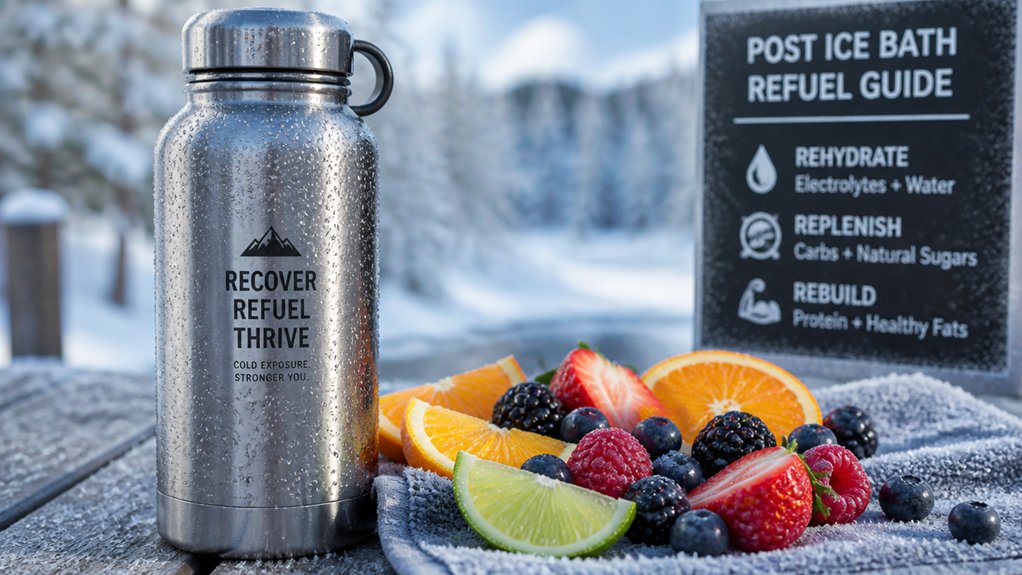
Failing to avoid common mistakes when planning your recovery nutrition can undermine the benefits of your cold plunge. You should have a proper post-plunge meal within 30 minutes to promote glycogen replenishment and muscle recovery.
Avoid heavy, greasy, or high-fiber foods immediately afterward, as they can cause digestive discomfort and hinder nutrient absorption. Hydration is vital—replenish fluids and electrolytes lost during cold exposure to prevent dehydration and maintain muscle function.
Steer clear of high caffeine or alcohol, which can interfere with rehydration and delay recovery. Equally important, guarantee adequate protein intake, as it supplies amino acids necessary for muscle repair and enhances cold-induced metabolic benefits.
Neglecting these key points can diminish recovery and prolong soreness.
Frequently Asked Questions
What Should You Do Immediately After a Cold Plunge?
Immediately after a cold plunge, gently dry off without rubbing, wear warm layered clothes, engage in light movement, avoid hot showers, and sip warm beverages. These steps help your body recover, warm up gradually, and prevent shock or dizziness.
Can You Cold Plunge if You Have Raynaud’s?
You should avoid cold plunges if you have Raynaud’s, as they can trigger attacks and worsen symptoms. Always consult your healthcare professional first, and if approved, start with mild cold exposure while carefully protecting and warming your extremities afterward.
Can Ice Baths Help With Lipedema?
Ice baths may help with lipedema by reducing inflammation and improving lymphatic flow, potentially easing swelling and discomfort. However, consult your healthcare provider first, as cold exposure can affect circulation, especially if you have sensitivity or circulatory issues.
What Does a 3 Minute Ice Bath Do?
A 3-minute ice bath constricts blood vessels, reduces inflammation, and helps flush waste from muscles. It activates brown fat, boosts metabolism, and triggers adrenaline, promoting quicker recovery and improved insulin sensitivity without risking prolonged cold exposure.