To do an interval warmup before ice baths, start with 3-5 minutes of light cardio like jumping jacks or jogging to boost your heart rate. Then, alternate 30 seconds of dynamic stretching or quick high knees with 30 seconds of gentle rest, repeating for 5-10 minutes. This builds circulation and raises core temperature efficiently. If you want to optimize your prep, keep exploring for more tips.
Why You Need a Proper Warmup Before Cold Water Immersion
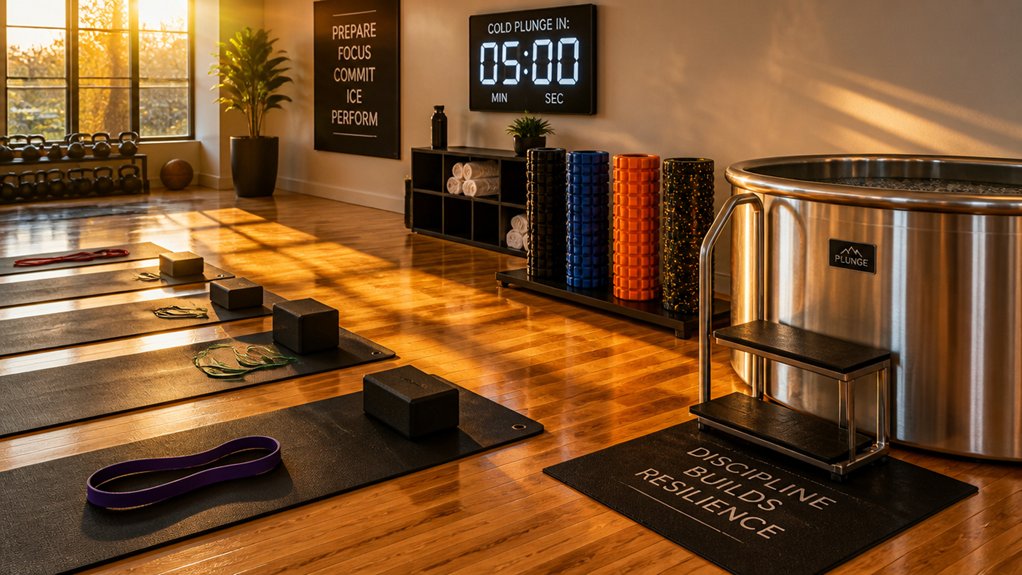
A proper warmup is essential before cold water immersion because it prepares your body to handle the sudden temperature change. A good warmup increases blood flow, helping your muscles and tissues adapt more smoothly. It also raises your core body temperature, reducing the shock caused by cold water immersion. Engaging in interval timer routines can help structure your warm-up effectively to optimize readiness. Dynamic exercises like walking lunges, high knees, and leg swings get your muscles ready and enhance joint mobility, decreasing injury risk. Warming up gradually activates your nervous system, improving mental resilience during the cold plunge. Plus, a proper warmup aids your body’s heat regulation afterward, making it easier to warm back up. Overall, it supports a safer, more efficient experience, lowering cardiovascular strain and preventing excessive vasoconstriction during cold water immersion.
Essential Elements of an Effective Warmup for Cold Plunges
To get ready for your cold plunge, start with dynamic stretching techniques like walking lunges or high knees to boost blood flow.
Gradually increase your movement intensity over 5 to 10 minutes to warm your muscles and nervous system without overexerting.
This approach guarantees you’re prepared, reducing stiffness and shock during the ice bath.
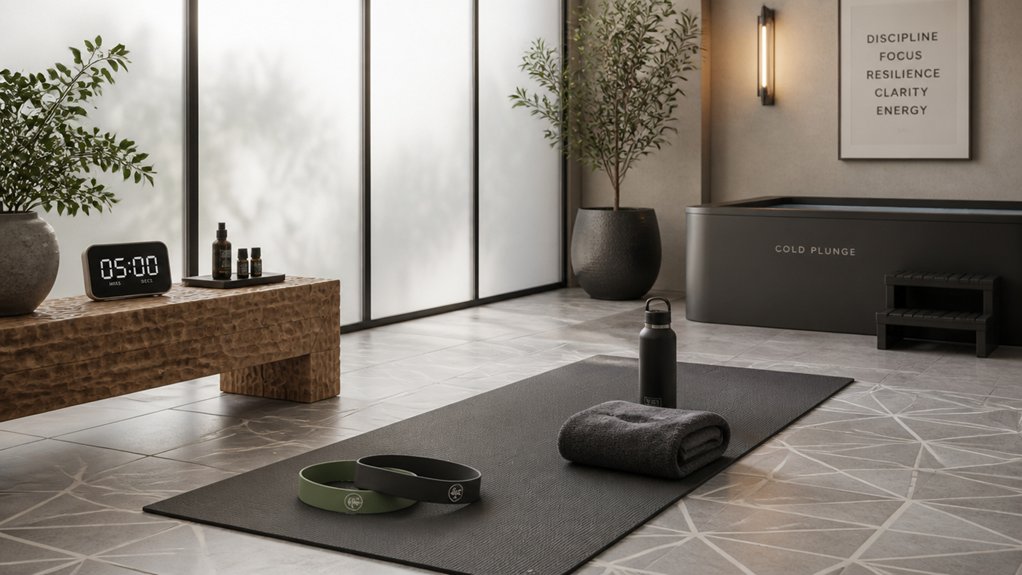
Incorporating resistance bands can enhance your warm-up by providing controlled resistance and engaging your muscles more effectively.
Dynamic Stretching Techniques
Ever wonder how to prepare your muscles effectively before diving into an ice bath? Dynamic stretching is your answer. It boosts blood flow and raises muscle temperature, helping your body better handle cold exposure and reducing post-plunge stiffness.
Aim for exercises like walking lunges, high knees, leg swings, butt kicks, and arm circles to activate major muscle groups and improve joint mobility. Performing these stretches for 5 to 10 minutes gradually elevates your heart rate and stimulates your nervous system, sharpening your mental focus. Integrating percussion massagers into your warmup routine can further enhance blood flow and muscle readiness before cold immersion.
Unlike static stretching, dynamic moves mimic real activity, maintaining muscle elasticity critical before cold immersion. Targeting both lower body and core guarantees balanced warming, especially since these areas experience the most impact during cold plunges.
Gradual Movement Increase
Gradually increasing movement intensity is essential for a safe and effective warmup before cold plunges. Starting with light dynamic movements like walking lunges, leg swings, or arm circles helps gently raise your body temperature and prepares your muscles without overexertion.
As your body warms, increase the intensity with exercises such as high knees, butt kicks, or jogging in place to stimulate blood flow. Incorporate movements targeting muscles exposed to cold immersion, like squats and jumping jacks, to improve circulation and reduce stiffness during the plunge.
Avoid sudden, intense exercises that cause excessive sweating or fatigue. Keep the warmup controlled, with a steady rise in heart rate, lasting 5–10 minutes—enough to warm muscles safely without overheating, ensuring a more comfortable cold water immersion. Using firm, supportive rollers during your warmup can also aid in muscle activation and tissue preparation.
How to Layer Your Warmup: From Light Cardio to Dynamic Stretches
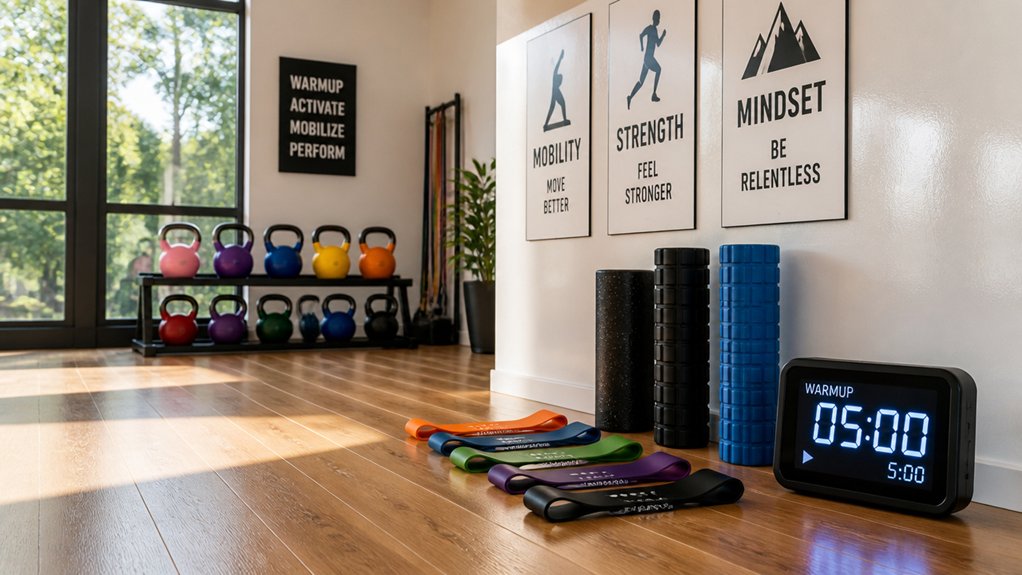
Start your warmup with 3-5 minutes of light cardio like jogging in place or jumping jacks to get your heart pumping and blood flowing. This initial step helps warm up your muscles, preventing injury and preparing your body for the cold plunge.
Next, incorporate dynamic stretches such as walking lunges, leg swings, and high knees to actively engage the muscles you’ll be targeting.
Layer your warmup by adding movement-specific exercises like squats or butt kicks, focusing on the muscle groups you’ll use during your cold exposure. Gradually increase the speed and range of motion without tiring, ensuring your muscles are adequately warmed and flexible.
You can also include controlled breathing exercises to optimize oxygen flow and enhance your body’s readiness for the cold plunge.
Finish within 8-10 minutes, so your muscles are primed, reducing post-ice bath stiffness and promoting recovery.
Using High-Intensity Intervals to Boost Circulation Before a Cold Plunge
To maximize circulation and prepare your body for the cold plunge, incorporating high-intensity interval exercises into your warmup is highly effective. Doing exercises like jumping jacks or sprint intervals for 3-5 minutes elevates your core and muscle temperature, enhancing circulation and reducing cold shock.
Alternating 20-30 seconds of intense effort with 30-60 seconds of light activity stimulates blood flow and primes your cardiovascular system for exposure to cold water. This elevated circulation helps prevent stiffness and injury, ensuring your muscles stay more elastic. Additionally, high-intensity intervals boost norepinephrine levels, sharpening alertness and mental resilience.
Engaging in these dynamic movements also increases your sensor accuracy by improving blood flow and skin temperature, which is crucial when monitoring heart rate during cold exposure. Warming up with these dynamic movements allows your body to better manage cold stress, making the plunge safer and more effective.
When Is the Best Time to Warm Up Before Your Cold Water Dip?

When is the ideal moment to warm up before jumping into an ice bath? The best time is immediately after your workout or physical activity, when your core temperature remains elevated enough to promote heat retention.
Aim for dynamic warm-up exercises like walking lunges, high knees, or butt kicks for 5–10 minutes just before cold water immersion. Timing your warm-up within 10–20 minutes before your ice baths helps optimize heat regulation and reduces shock response.
Avoid warming too far in advance, as your core temperature may drop too much, making the cold water immersion uncomfortable and increasing hypothermia risk. Gradually shifting from a warm-up to a cold water dip supports better mental control and physical tolerance during your ice baths.
Additionally, understanding your chiller model and cooling capacity can help you plan the optimal water temperature and duration for your ice baths, ensuring a safe and effective cold plunge.
Mistakes to Avoid When Warming Up for a Cold Plunge
Avoid skipping dynamic movements, as they prepare your muscles for cold exposure and prevent stiffness. Don’t overheat yourself by warming up too much or rushing, since both can cause discomfort when you step into the ice bath. Take your time with the warmup—less than five minutes often isn’t enough to get your body ready. Ensure your warmup includes adjustable heating levels, so you can customize the heat to comfortably prepare your muscles without risking overheating.
Skipping Dynamic Movements
Skipping dynamic movements before an ice bath can lead to increased muscle stiffness and a higher risk of cramps during cold exposure. Without these exercises, blood flow remains limited, and muscle temperature stays low, making the cold plunge feel even more shocking.
Dynamic movements like walking lunges, high knees, or leg swings promote cardiovascular activation, helping your nervous system prepare for the cold. Neglecting this step impairs gradual heat regulation, heightening discomfort and cold shock sensitivity.
When you skip warm-up motions, your body isn’t adequately primed, increasing the risk of dizziness or fainting and reducing your cold tolerance. Incorporating dynamic movements guarantees better circulation, reduces muscle stiffness, and prepares your body physiologically and mentally for the ice bath experience.
Overwarming Before Cold
Overheating during warm-up can greatly increase discomfort during an ice bath. When you overheat, your core temperature spikes quickly, triggering a stronger cold shock response and making the cold plunge feel harsher.
Keep your warm-up level moderate so your heart rate rises gradually without excessive stimulation. Stick to dynamic movements that elevate your body temperature just enough for readiness, avoiding heavy cardio or prolonged effort.
Avoid heavy layers or non-breathable clothing, which trap moisture and can intensify the cold sensation afterward. Overheating may also cause premature muscle fatigue, reducing your tolerance and increasing injury risk.
The goal is to warm up your muscles and elevate your heart rate slightly, but not to the point of sweating heavily or feeling too hot, ensuring a more controlled and comfortable cold plunge experience.
Rushing the Warmup
Rushing through your warm-up can undermine your preparedness for an ice bath. If you skip dynamic stretches or light cardio, blood flow decreases, leading to increased muscle stiffness, making the cold more intense. Avoid performing intense exercises that cause excessive sweating or fatigue, as this can accelerate heat loss once submerged. Static stretching alone may reduce muscle readiness, raising injury risk. Instead, gradually increase movement intensity over 5-10 minutes to activate blood vessels and prepare muscles and your cardiovascular system for the shock of cold immersion. Don’t cut this process short; a proper warmup guarantees a safer, more effective ice bath experience.
| Warm-up Step | Common Mistake | Correct Approach |
|---|---|---|
| Dynamic stretches | Skipping or rushing through | Do them steadily and purposefully |
| Light cardio | Not increasing gradually | Build intensity gradually |
| Static stretching | Relying solely on static stretches | Combine with dynamic movements |
| Duration | Rushing or going under 5 mins | Spend 5-10 minutes to warm up |
| Intensity | Performing excessive or fatigue-causing exercises | Keep intensity moderate |
Smart Safety Tips for Preparing Your Body for Cold Water Immersion
To effectively prepare your body for cold water immersion, it’s essential to follow smart safety practices that help prevent injuries and enhance your experience. Begin your warmup with dynamic stretches like walking lunges and leg swings to increase blood flow and raise muscle temperature, reducing stiffness before the plunge.
Perform light cardio, such as jumping jacks or jogging in place, for 5–10 minutes to gently elevate your core temperature and heart rate, preparing your cardiovascular system. Wear moisture-wicking base layers with removable insulation to shift easily from warmup to cold exposure without sweating excessively that can lead to heat loss.
Avoid static stretches and intense strength exercises just before the immersion, as these can cause muscle fatigue or injury when exposed to cold water. Hydrate adequately beforehand and keep warmup intensity moderate for a safe, effective prep.
Customizing Your Warmup Routine for Different Fitness Levels
Adjusting your warmup routine based on your fitness level guarantees you prepare effectively for taking an ice bath without risking fatigue or injury.
Customizing your warmup by fitness level ensures safe, effective prep for ice baths and optimal recovery.
As a beginner, focus on low-intensity dynamic stretches like walking lunges and leg swings for 3–5 minutes to gently raise your core temperature. Intermediate exercisers can include light cardio, such as jogging in place or jumping jacks for 5–7 minutes, gradually increasing movement intensity to activate muscles.
Advanced individuals might add sport-specific warmup exercises like squats or high knees for 8–10 minutes to maximize blood flow and prepare the nervous system.
This tailored approach reduces muscle soreness and enhances pre-cooling, ensuring your body is ready for cold water immersion while avoiding overexertion that could impair recovery. Layered clothing helps ease safely into your ice bath.
Frequently Asked Questions
What Is the 3-3-3 Rule for Gym?
The 3-3-3 rule guides your gym warmup, involving 3 minutes of light cardio, 3 minutes of dynamic stretching, and 3 minutes of movement drills. It boosts performance, reduces injury, and speeds up recovery.
Do Ice Baths Reduce DOMS?
Yes, ice baths can reduce DOMS by constricting blood vessels, limiting inflammation, and numbing pain receptors. You typically experience less soreness and faster recovery when using cold water immersion for 2-10 minutes at 50-59°F.
Can Ice Baths Lower Blood Pressure?
Ice baths can lower blood pressure over time by promoting parasympathetic nervous system activity and improving vascular tone, but initially, they cause vasoconstriction and may raise blood pressure. Always consult your healthcare provider if you have hypertension.
Can Ice Baths Help With Lipedema?
Ice baths can help with lipedema by reducing inflammation, swelling, pain, and fluid buildup. You might find relief through improved circulation, but always check with your healthcare provider first to confirm it’s safe, especially with circulatory concerns.