Stretching after an ice bath helps reduce muscle stiffness caused by cold-induced contraction and improves circulation, which speeds up recovery. It gently loosens tight muscles and joints, preventing injuries and enhancing flexibility. Waiting 30-40 minutes before stretching allows muscles to warm naturally, making the process safer. Combining gentle stretches with other recovery techniques can maximize results. To discover how to optimize your post-ice bath routine, keep exploring these effective strategies.
Why Stretching After an Ice Bath Crushes Muscle Stiffness
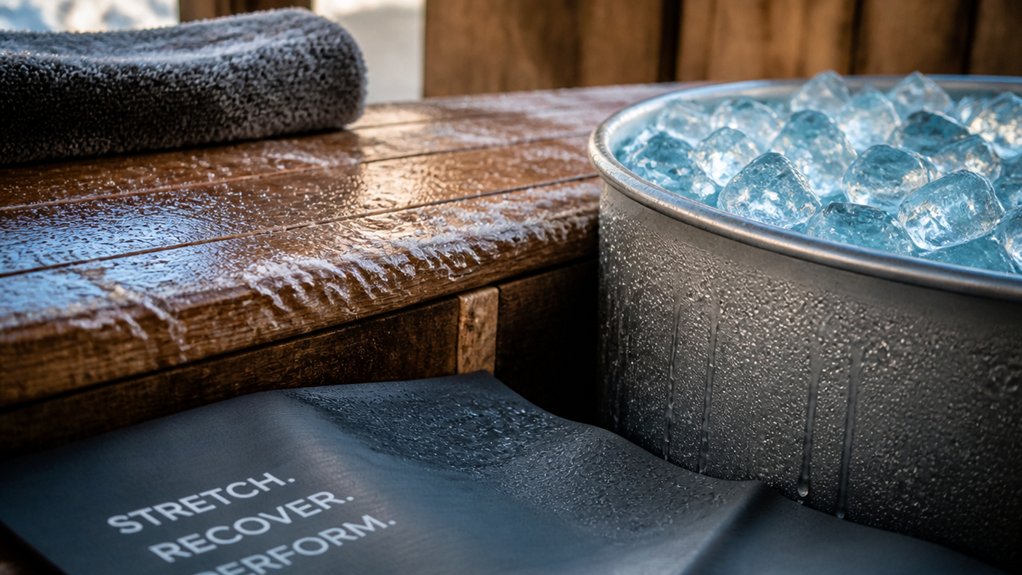
Stretching after an ice bath effectively reduces muscle stiffness by gradually loosening muscles that have tightened due to cold-induced contraction. Cold water immersion causes muscles to tighten, decreasing range of motion and increasing soreness.
Gentle stretching during post-ice bath recovery helps relax these muscles, counteracting stiffness caused by reduced nerve impulses and circulation. Performing stretching 30-40 minutes after an ice bath allows muscles to warm naturally, making the process safer and more effective.
Incorporating fast-absorbing muscle recovery creams can further support this process by delivering soothing botanicals and cooling agents that help reduce inflammation and enhance muscle relaxation. This helps improve blood flow, delivering oxygen and nutrients essential for muscle recovery. Additionally, stretching flushes out metabolic waste and toxins accumulated during cold exposure, reducing muscle soreness and speeding healing.
Incorporating gentle stretching into your cold water immersion routine guarantees a smoother recovery, enhanced mobility, and quicker return to training.
How Gentle Movement Boosts Recovery and Circulation
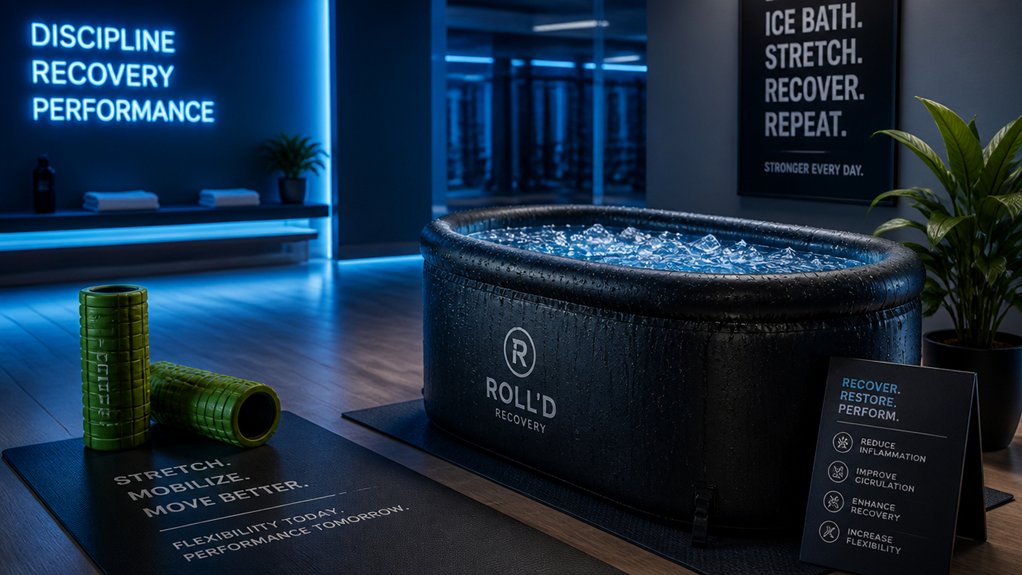
Gentle movement after an ice bath plays a crucial role in restoring proper blood flow and enhancing recovery. It helps reverse cold-induced vasoconstriction, allowing nutrients to reach your muscles more effectively. A firm support foam roller can be used to target specific muscle groups, further aiding in muscle relaxation and increasing circulation. Incorporating light stretching and mobility exercises, like shoulder rolls or hip circles, boosts circulation, aiding in flushing out metabolic waste and reducing muscle soreness. Controlled, low-intensity movements also stimulate lymphatic drainage, which supports faster recovery and inflammation reduction. These gentle movements prevent stiffness caused by cold exposure by keeping your joints mobile and your muscles flexible during the warming phase. Oxygenating tissues through mobility exercises accelerates muscle repair and relaxation.
When and How to Stretch for Max Benefits Post-Disuse
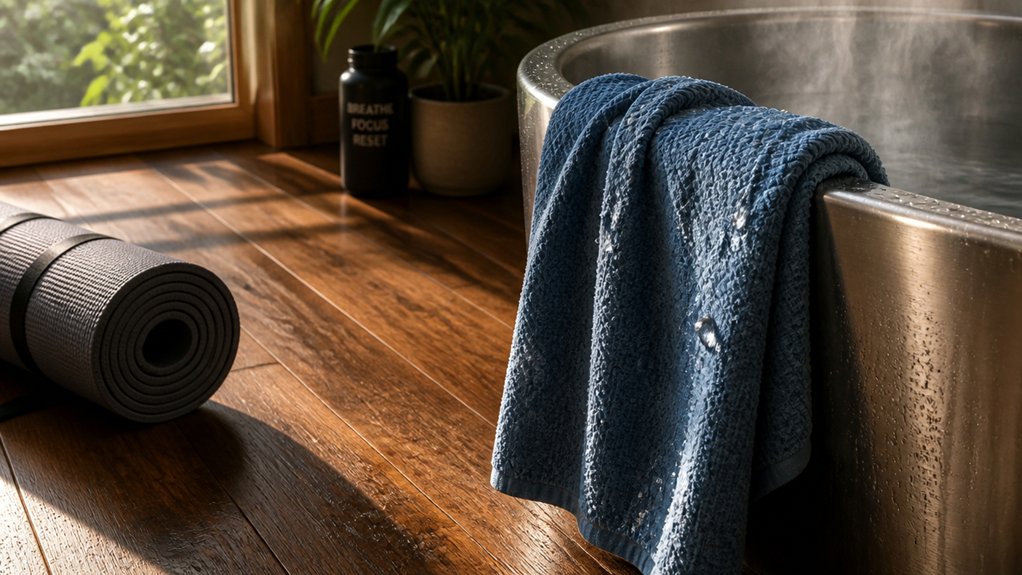
To get the most benefit from your post-ice bath recovery, timing and technique are key. Wait at least 30-40 minutes after an ice bath before stretching to let muscles warm up and blood flow normalize, reducing injury risk. Perform gentle, controlled stretches targeting major muscle groups, holding each for 15-30 seconds without bouncing. Incorporate a warm-up method such as a hot drink or warm shower beforehand to improve muscle flexibility and circulation. Additionally, include mobility exercises like shoulder rolls or ankle rotations to gradually restore joint movement. Using a cold plunge thermometer can help you accurately monitor water temperature and ensure optimal recovery conditions. Remember to prioritize comfort, avoid overstretching, and progress gradually to maximize recovery, enhance flexibility, and minimize injury risk. Your recovery routine should focus on controlled, mindful stretching for ideal results.
Best Stretches to Reduce Tightness After Cold Exposure
After waiting 30-40 minutes for your muscles to warm up, gentle stretches like hip circles, shoulder rolls, and ankle rotations can help loosen up your joints.
Static stretches targeting major muscle groups, such as hamstrings and quadriceps, boost flexibility and reduce tightness.
Incorporating light stretching with self-massage or foam rolling further improves circulation and speeds up recovery.
Gentle Muscle Lengthening
Engaging in light stretches helps loosen muscles that may tighten due to cold-induced contraction following an ice bath. Gentle stretching encourages muscle lengthening, which restores your range of motion and reduces muscle tightness. Incorporating temperature therapy features into your recovery routine can optimize muscle relaxation and healing during post-cold plunge sessions.
To maximize benefits, consider these post-ice bath stretches:
- Seated hamstring stretch – gently lengthens the hamstrings, improving flexibility.
- Standing quadriceps stretch – releases tightness in the front thigh muscles.
- Pigeon pose – opens up the hips and relaxes surrounding muscles.
Waiting 30-40 minutes before stretching allows muscles to warm naturally, decreasing injury risk. Light, controlled post-ice bath stretches promote blood flow, delivering oxygen and nutrients while aiding recovery and toxin removal.
This gentle muscle lengthening enhances overall flexibility and muscle health.
Enhanced Flexibility Benefits
Incorporating specific stretches following an ice bath can greatly enhance flexibility by effectively reducing muscle tightness caused by cold contraction.
Stretching after an ice bath helps restore flexibility by gently lengthening muscles that have tightened due to cold-induced muscle contraction. Best post-ice bath stretches — like seated hamstring stretches, pigeon pose, and shoulder stretches — promote muscle relaxation and reduce tightness.
Performing gentle stretches 30-40 minutes after an ice bath, once muscles have warmed naturally, optimizes recovery and injury prevention. Light post-immersion stretching improves blood circulation, delivering oxygen and nutrients while flushing out metabolic waste built up during cold exposure.
This ongoing muscle relaxation supports maintaining joint range of motion, reducing stiffness, and fostering enhanced flexibility for improved performance and quicker recovery. Including post-ice bath muscle activation techniques can further enhance the benefits of flexibility and recovery.
How Post-Ice Bath Stretching Can Help Prevent Injury
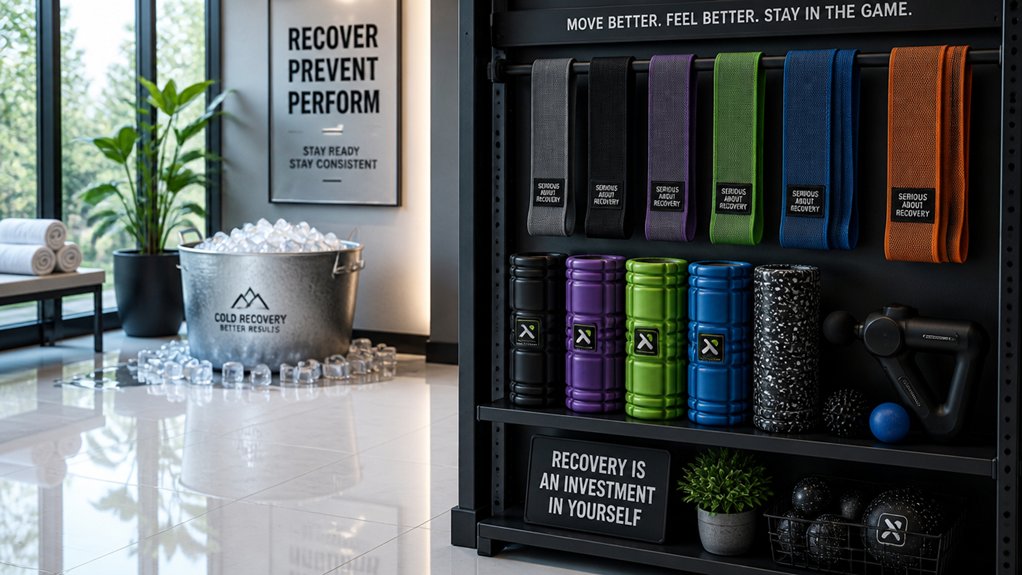
Stretching following an ice bath can greatly help prevent injuries by maintaining and improving your muscles’ flexibility and joint mobility. Post-ice bath stretching, especially after muscles warm up naturally, reduces tension and stiffness, lowering injury risk. A gentle approach ensures muscles are not overstressed while still gaining benefits. It works by:
- Loosening muscles and joints to enhance tissue repair and prevent strains.
- Improving circulation, which delivers oxygen and nutrients to support tissue recovery.
- Flushing out metabolic waste that could contribute to soreness and increased vulnerability.
- Incorporating compression therapy with stretching can further optimize recovery and reduce muscle swelling.
Gentle stretching after cold therapy guarantees muscles stay flexible, reduces muscle soreness, and promotes resilience.
Regularly incorporating post-ice bath stretching into your recovery routine helps maintain peak flexibility and joint health, ultimately lowering your injury risk.
Combining Stretching With Other Recovery Techniques for Better Results
To maximize your recovery, consider combining stretching with techniques like foam rolling or mobility exercises after an ice bath. These methods boost circulation, promote muscle relaxation, and improve flexibility more effectively together. Using a high-quality fitness tracker with accurate heart rate monitoring can help you assess your body’s response and recovery progress. When you integrate these approaches, you support overall joint health and reduce stiffness faster.
Enhancing Flexibility and Mobility
Enhancing flexibility and mobility after an ice bath requires a strategic approach that combines gentle stretching with other recovery techniques. Start with a gradual warm-up lasting 30-40 minutes to safely restore muscle flexibility and prevent injury.
Post-ice bath stretching boosts blood flow, delivering oxygen and nutrients to muscles stiffened from cold-induced vasoconstriction, which helps loosen tightness. Consider incorporating:
- Mobility exercises to improve joint range of motion
- Self-massage to reduce muscle adhesions
- Light stretching to facilitate the recovery process and flush out toxins
Boosting Circulation and Warmth
Combining stretching with other recovery techniques after an ice bath can greatly boost circulation and warmth, accelerating your muscles’ return to peak function. Post-ice bath stretching, especially when done 30-40 minutes after immersion, promotes increased blood flow and improves circulation.
Gentle stretching helps restore muscle warmth and flexibility by relaxing cold and contracted muscles, preventing stiffness. When you incorporate hydration and gradual warming—such as warm showers or electrolyte drinks—you enhance nutrient delivery and toxin removal through better circulation. Using appropriate heat therapy options, like heat pads or moist heat packs, further aids in relaxing muscles and maintaining warmth.
Light mobility exercises or self-massage further complement stretching, reducing soreness and supporting efficient recovery. These combined techniques guarantee your muscles warm up gradually, promoting improved circulation and warmth, which lead to faster muscle repair and reduced stiffness after an ice bath.
Supporting Muscle Relaxation
Supporting muscle relaxation after an ice bath works best when you pair stretching with other recovery techniques, as this synergy helps release tension and promote flexibility.
Post-ice bath stretching reduces stiffness by gently elongating muscles contracted during cold exposure, aiding muscle recovery.
To maximize benefits:
- Combine stretching after an ice bath with self-massage or foam rolling to boost blood flow and deliver nutrients.
- Wait 30-40 minutes post-ice bath before stretching, allowing muscles to warm naturally and minimize injury risk.
- Incorporate mobility exercises alongside stretching to improve joint range of motion and prevent muscle tightness relapse.
This approach enhances muscle relaxation, supports injury prevention, and maintains muscle pliability for better performance and long-term recovery.
Tracking Your Progress to Optimize Post-Ice Bath Recovery
How can you guarantee your recovery routine is truly effective? Tracking progress is key. Recording your performance metrics—like strength, endurance, and range of motion—over time helps you see how your stretching routine and cold therapy improve recovery benefits.
Monitoring inflammation markers, such as C-reactive protein, reveals how well post-ice bath stretching reduces muscle soreness and inflammation. Keeping a recovery journal of subjective feelings, stretching duration, and ice bath details enables you to tailor stretching before an ice to match your body’s response.
Consistent data on recovery responses allows you to fine-tune stretching frequency, intensity, and timing, ensuring you maximize benefits and avoid overtraining. This personalized approach enhances your long-term musculoskeletal health and recovery efficiency.
Frequently Asked Questions
Is 20 Minutes in an Ice Bath Too Long?
Yes, 20 minutes in an ice bath is too long. It can cause hypothermia, reduce circulation, and lead to numbness or frostbite. Stick to 10 minutes maximum and gradually increase your comfort level over time.
Can You Cold Plunge if You Have Raynaud’s?
You probably shouldn’t cold plunge if you have Raynaud’s without consulting a healthcare provider. Cold exposure can worsen symptoms, so it’s safer to start with milder exposure and use protective gear under medical supervision.
What Not to Do After an Ice Bath?
After an ice bath, don’t rush into vigorous activity, hot showers, or stretching until your muscles warm up naturally for 30-40 minutes. Also, avoid dehydration, cold air exposure, or skipping thorough drying and warming clothing.
Can Ice Baths Help With Lipedema?
Ice baths might help your lipedema by reducing inflammation, easing pain, and improving lymphatic flow. However, since evidence is limited, you should use caution and combine cold therapy with other treatments, monitoring your body’s response carefully.