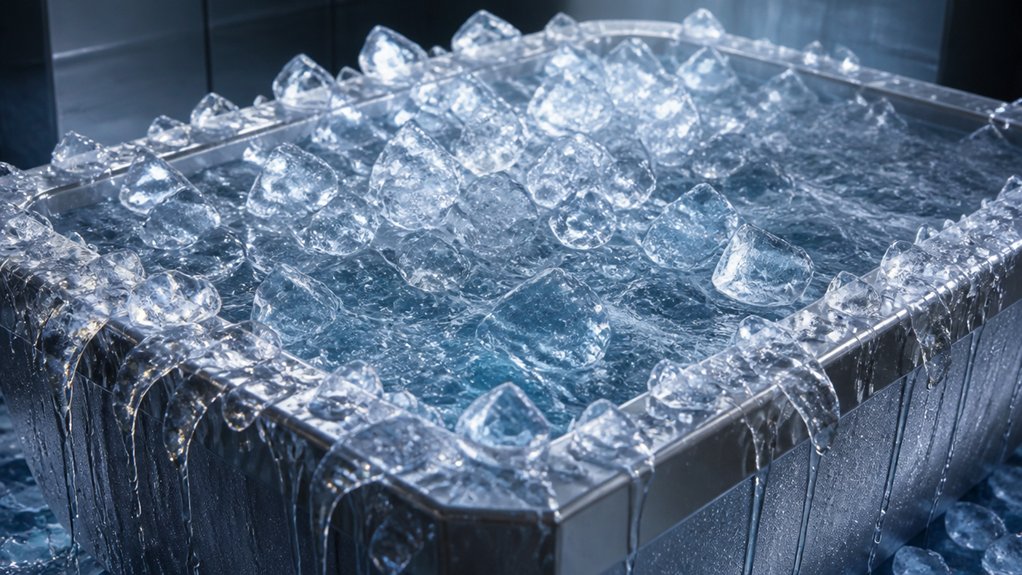
Ice baths are risky for varicose veins because cold causes strong vasoconstriction, which narrows blood vessels and puts extra stress on weak vein walls. This can worsen circulation, increase vein irritation, and raise the risk of damage, especially with prolonged exposure. Numbing nerves and slowing blood flow can also delay injury detection and healing. To protect your veins, it’s important to understand safer ways to use cold therapy and what signs to watch for.
Why Cold Temperatures Tighten Blood Vessels and Affect Circulation
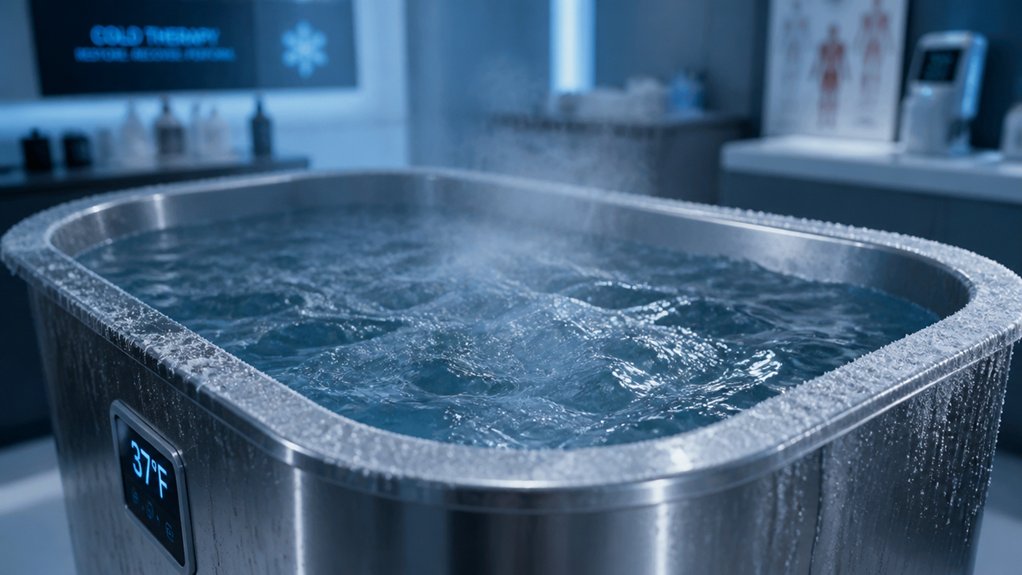
Cold temperatures activate your body’s natural defense to conserve heat by causing vasoconstriction, which tightens blood vessels. When exposed to cold, your veins respond by narrowing, reducing blood flow to the skin and extremities. A key factor is that these units are designed with thermal insulation qualities that lower heat transfer, which can intensify the constriction effect. This constriction increases vein wall tension and decreases the overall diameter of the vessels, temporarily limiting circulation. While this helps maintain core temperature, it can lead to decreased blood flow, especially if exposure is prolonged or intense.
For people with varicose veins, this tightening may worsen discomfort or cause spasms, as it adds stress to already weakened vein walls. Additionally, vasoconstriction can trigger reactive hyperemia—where blood vessels dilate after constriction—creating a stressful cycle that further impairs circulation and can lead to blood stagnation.
How Cold Water Causes Vasoconstriction and Impacts Your Veins
When your skin comes into contact with cold water, your blood vessels respond by rapidly narrowing—a process known as vasoconstriction. This reaction aims to limit heat loss but also causes blood vessels, including veins, to narrow temporarily.
Cold water exposure triggers vasoconstriction, which reduces blood flow near the skin surface. For veins, especially those affected by varicose veins, this narrowing can increase internal pressure, potentially stressing weakened vein walls and malfunctioning vein valves.
While vasoconstriction may reduce swelling temporarily, prolonged or intense cold exposure can cause irritation or damage to these compromised veins. The repeated constriction and subsequent dilation can strain vein walls, exacerbating pain caused by varicose veins and worsening their symptoms over time.
Can Cold Baths Damage Your Veins and Lead to Skin Injury?
Have you ever wondered if taking ice baths could harm your veins or skin? Prolonged cold exposure during ice baths causes blood vessels to constrict, a process called vasoconstriction. While this can temporarily reduce inflammation, excessive vasoconstriction may decrease blood flow too much, worsening vein problems in those with varicose veins.
Cold baths can also increase the risk of skin damage, including frostbite or cold-induced urticaria, especially on fragile skin near veins. If you have open wounds or ulcers, ice baths may slow healing and heighten infection risk.
Additionally, extreme cold can numb nerves and delay pain signals, making injuries harder to detect and potentially worsening symptoms without immediate awareness. It’s also important to consider that certain materials and insulation used in ice baths may influence how the cold affects your skin and veins.
What Cold-Induced Vascular Damage Looks Like and How to Recognize It
You might notice skin discoloration, like redness, pallor, or blue tinge, after cold exposure, which signals circulation problems.
Numbness or tingling in affected areas can also be warning signs of nerve or vessel damage.
If you experience persistent swelling, pain, or skin changes, it’s vital to seek medical advice immediately to prevent lasting damage.
Additionally, repeated exposure to cold temperatures can impair blood oxygen levels and circulation, increasing the risk of vascular damage during ice baths.
Signs of Skin Discoloration
Cold-induced vascular damage from ice baths often manifests as persistent skin discoloration around varicose veins, showing up as bluish, purplish, or reddish patches caused by compromised blood flow. These signs indicate that cold exposure is affecting circulation, leading to mottled skin and uneven coloration.
Early on, you might notice a cold, numb sensation or slight discoloration, warning you of underlying issues. Prolonged exposure can cause cyanosis, turning the skin dark blue or gray. Visible swelling and discoloration often accompany these patches, signaling significant cold damage. Understanding pH and temperature stability requirements is crucial, as improper conditions can exacerbate skin issues and vascular stress.
Recognizing these signs early is essential; persistent skin discoloration suggests cold has affected circulation and may require prompt medical attention to prevent further tissue damage or chronic skin changes.
Numbness and Tingling
Prolonged exposure to ice baths can cause significant vascular reactions that result in numbness and tingling in the legs. Cold exposure triggers vasoconstriction, narrowing blood vessels and reducing blood flow, which can lead to numbness or tingling sensations.
These symptoms may signal early signs of vascular damage, especially around varicose veins. Persistent numbness and tingling often indicate nerve irritation or cold-induced injury to blood vessel walls, worsening vein health if ignored.
Recognizing these feelings is essential, as they serve as warning signs to stop cold therapy immediately. Ignoring numbness and tingling can cause further vascular damage or frostbite-like skin effects.
Being aware of these sensations helps you differentiate normal cold sensitivity from early signs of harm requiring prompt medical evaluation.
Additionally, understanding the electricity consumption of cooling equipment can help ensure safe and energy-efficient use of chillers during cold therapy sessions.
Persistent Swelling or Pain
Persistent swelling or pain after an ice bath can be a warning sign of vascular damage, especially in people with varicose veins. Cold therapy that causes excessive vasoconstriction may reduce blood flow, aggravating vein function and risking cold-induced injury. Using proper filtration systems and ensuring water quality can help minimize the risk of impurities that may contribute to inflammation and delayed healing.
Signs to watch for include:
- Continued swelling despite elevation or rest
- Persistent throbbing or heaviness
- Discoloration or skin changes
- Unrelieved pain in affected areas
- Increased inflammation or tenderness
These symptoms suggest microvascular injury, leading to inflammation and compromised vein walls. Recognizing persistent swelling or pain indicates inadequate recovery and potential cold-induced vascular damage.
If symptoms worsen or skin changes appear, stop cold therapy immediately and seek medical evaluation to prevent more serious circulation issues.
Signs Your Circulation Might Be Harmed by Cold Exposure
Have you noticed numbness, tingling, or an unusual cold sensation lingering in your legs after cold exposure? These signs can indicate impaired circulation affecting varicose veins and overall vein health. Cold causes vasoconstriction, reducing blood flow and risking circulatory dysfunction. Watch for:
| Symptom | Possible Cause |
|---|---|
| Numbness, tingling | Circulatory issues, impaired flow |
| Coldness in legs | Vasoconstriction, reduced circulation |
| Swelling that persists | Circulatory dysfunction |
| Leg pain or cramps | Oxygen deprivation, poor circulation |
| Discoloration | Insufficient blood supply |
If these symptoms appear, cold exposure may harm your circulation and worsen vein problems. Recognizing these signs is essential to prevent further circulatory damage. Additionally, understanding how emissivity adjustments impact temperature readings can help ensure accurate monitoring during cold therapy sessions.
Why Prolonged Vasoconstriction From Cold Water Can Worsen Vein Problems
Extended exposure to cold water causes blood vessels to stay narrowed for longer periods, which can substantially impair blood flow. When blood vessels constrict during cold water therapy, it increases vein pressure, worsening varicose veins and encouraging swelling. A multi-layer insulation helps slow the rate of heat loss, but prolonged immersion can still cause extended vasoconstriction. Prolonged vasoconstriction reduces oxygen and nutrients reaching the vein walls, weakening their structure over time. Once vessels dilate after cold exposure, blood pooling can escalate, intensifying discomfort. This extended constriction may also heighten skin sensitivity and nerve numbness, increasing the risk of skin damage. Furthermore, sustained cold exposure triggers systemic stress responses—raising blood pressure and heart rate—that could further impair venous function.
How Cold Water Affects Vein Valve Function and Long-Term Vascular Health
Cold water immersion causes immediate and intense vasoconstriction, which can place significant stress on your vein valves. When you indulge in ice baths, this vasoconstriction reduces blood flow, potentially impairing the natural dilation and constriction cycle essential for healthy vein walls.
For those with varicose veins, repeated cold shocks can weaken or damage vein valves, increasing the risk of venous insufficiency. Prolonged exposure can inhibit vascular function, making veins less elastic and more prone to damage over time.
If the body doesn’t rewarm properly, circulation remains suppressed, exacerbating vein issues. This cycle can compromise long-term vein health, leading to worsening varicose veins and chronic venous problems.
Ice baths may seem beneficial, but they pose real risks to vein valve health and overall vascular stability.
Who Should Avoid Ice Baths and Extreme Cold for Vein Health
If you have varicose veins or chronic venous insufficiency, exposing yourself to ice baths or extreme cold can worsen your condition. The intense vasoconstriction caused by cold exposure may further impair circulation, increasing the risk of vein damage.
People with specific health issues should exercise caution or avoid cold therapy altogether:
- Those with Raynaud’s phenomenon or cold urticaria, as extreme cold triggers severe vascular reactions
- Elderly individuals or those with impaired thermoregulation, due to hypothermia and cardiac risks
- People with open wounds or infections in leg veins, which can slow healing and raise infection risk
- Individuals with cardiovascular conditions, as sudden changes in blood pressure and heart rate can be dangerous
- Anyone with poor mobility needing professional guidance before attempting ice baths
Safe Ways to Use Cold Water Therapy to Support Circulation
To safely incorporate cold water therapy into your routine, start by gradually lowering the water temperature from lukewarm to prevent vascular shock and excessive constriction. Limit cold water exposure to 10-15 minutes on your legs or feet to safely reduce inflammation and enhance circulation. Practice deep, long breaths during cold exposure to manage sensitivity and support your vascular response. Combining cold water therapy with leg elevation and compression stockings further boosts blood flow and vein support. Always use clean, sanitized water, and monitor the temperature with a reliable thermometer for safe cold exposure.
| Step | Key Consideration |
|---|---|
| Gradual cooling | Prevent blood vessel constriction shock |
| Exposure duration | Keep sessions within 10-15 minutes |
| Breathing control | Enhance circulation and reduce discomfort |
| Additional methods | Leg elevation and compression stockings |
When to Seek Medical Advice for Cold-Related Vascular Issues
Wondering when you should see a healthcare professional after cold water therapy? If you experience symptoms like severe leg pain, swelling, or discoloration following cold exposure, it’s crucial to consult a vascular specialist promptly.
If you have varicose veins, cold urticaria, or Raynaud’s phenomenon, seek medical advice before engaging in cold therapy, as vasoconstriction can worsen circulation or trigger vascular reactions.
You should also see a doctor if you notice symptoms such as:
- Persistent or worsening symptoms after cold exposure
- Signs of compromised circulation in the lower limbs
- Open wounds or infections worsened by cold immersion
- Chest pains or irregular heartbeat during or after cold water therapy
- Dizziness or fainting episodes indicating potential cardiovascular issues
Timely medical guidance helps prevent complications and guarantees safe practices.
Alternatives to Ice Baths for Improving Circulation Safely
Avoiding the risks associated with ice baths doesn’t mean you have to give up cold therapy; safer methods can still improve circulation and reduce swelling. Cold showers, finished with 30 seconds to 2 minutes of cold water, gradually expose your legs to cold, supporting vein health without sudden shocks. Contrast therapy, alternating 2 minutes of warm water with 1 minute of cold, stimulates blood vessels to constrict and dilate, enhancing circulation safely. Gentle cold compresses for 15-20 minutes beneath a cloth barrier also reduce inflammation and discomfort effectively. Use the table below to understand how these methods support varicose vein management:
| Method | Benefits |
|---|---|
| Cold showers | Improve circulation, minimize pooling |
| Contrast therapy | Stimulate blood vessel activity |
| Cold compresses | Reduce swelling and inflammation |
How to Incorporate Caution and Professional Guidance Into Cold Water Practices
Incorporating caution and seeking professional guidance when using cold water therapies is essential to guarantee safety, especially if you have varicose veins or heart conditions.
Always consult professionals before trying cold water therapy, especially with vein or heart issues, to ensure safe practices.
Ice baths at temperatures between 50-59°F can cause intense vasoconstriction, potentially worsening circulation or risking vein damage. To minimize risks, follow these practices:
- Consult with vein specialists or medical professionals before starting cold water therapy.
- Gradually introduce colder water, beginning with lukewarm and decreasing temperature slowly.
- Monitor for discomfort, numbness, or excessive shivering, and cease therapy if symptoms persist.
- Avoid ice baths if you have severe varicose veins or cardiovascular issues without professional approval.
- Use cold water therapy within an all-encompassing vein care plan to support circulation without adverse effects.
Professional supervision guarantees safe practices that complement treatments and prevent complications.
Supporting Your Vein Wellness Safely: Tips and Next Steps
Supporting your vein wellness safely involves adopting practical strategies that complement cold water therapies while minimizing risks. For varicose veins, avoid extreme ice baths and opt for gentler cold therapy like cold showers or foot baths, limiting your exposure time.
Intense vasoconstriction from ice baths can stress weakened vein walls and worsen symptoms. Always monitor temperature carefully to prevent excessive shivering or impaired blood circulation. Combining cold therapy with supportive measures like compression stockings and leg elevation can improve blood flow and reduce discomfort when done cautiously.
Before trying any cold-water practices, consult a vein specialist to guarantee personalized, safe guidance. By following these steps, you can support your vein health without risking aggravation of varicose veins.
Frequently Asked Questions
Are Cold Plunges Good for Varicose Veins?
Cold plunges can temporarily reduce pain and inflammation in varicose veins, but they don’t repair the underlying damage. You should consult a specialist and consider safer, gradual cold exposure methods to manage symptoms effectively.
How Do Chinese Treat Varicose Veins?
Chinese medicine treats varicose veins through herbal remedies like Dang Gui and Dan Shen, acupuncture to improve circulation, topical poultices, moxibustion to stimulate blood flow, and lifestyle changes such as tai chi and dietary adjustments, all aimed at enhancing vein health.
What Is Stage 4 of Varicose Veins?
Stage 4 of varicose veins involves skin changes, swelling, and ulcers, indicating advanced damage. You experience severe vein damage and chronic inflammation, requiring medical intervention to prevent complications and manage symptoms effectively.
What Shrinks Varicose Veins Naturally?
Cold therapy naturally shrinks varicose veins by constricting blood vessels, reducing blood pooling, and decreasing inflammation. Regular cold exposure also strengthens vein walls over time, improving vein tone and promoting natural reduction of varicose veins effectively.