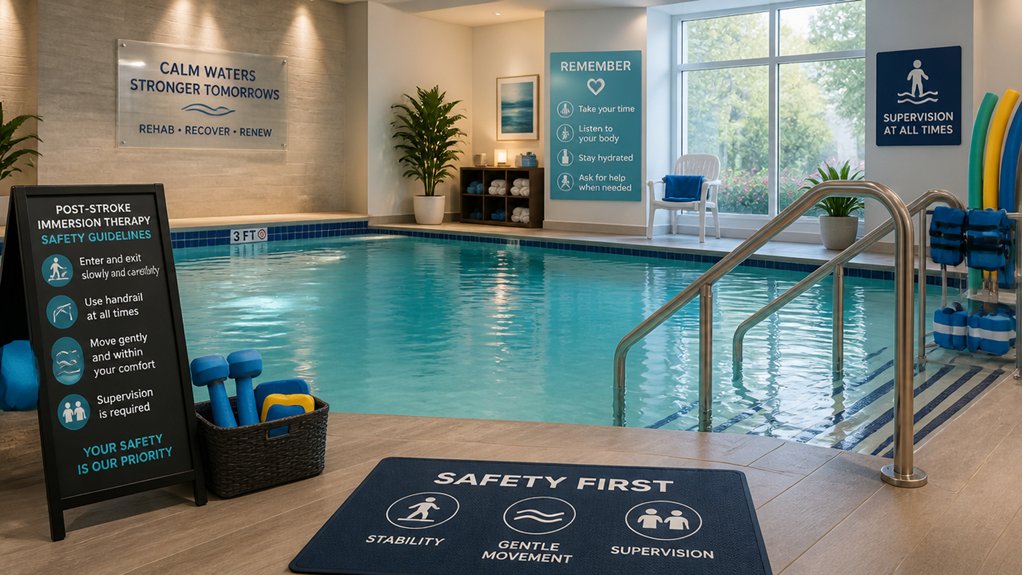
To stay safe with immersion therapy after a stroke, first, always consult your healthcare team before starting—cold therapy can affect blood pressure and brain blood flow. Second, start with brief sessions in water above 60°F (15.5°C) and have assistance nearby to prevent falls or accidents. Third, watch for signs of distress like dizziness, chest pain, or numbness, and act immediately if symptoms appear. Keep exploring this guide to learn more about keeping safe during cold therapy.
Why Is Cold Therapy Risky After a Stroke?
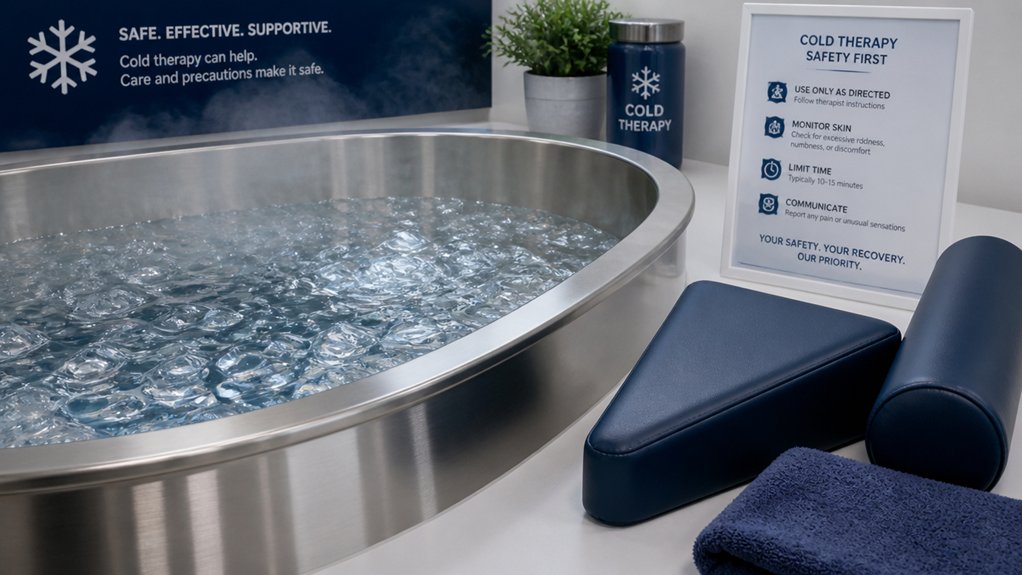
Why is cold therapy risky after a stroke? Cold therapy can cause vascular constriction, which may reduce blood flow to vulnerable brain tissues.
Since stroke survivors often experience altered sensation and impaired temperature perception, you mightn’t feel if the cold is too intense, risking skin damage or frostbite. Cold immersion can also trigger blood pressure fluctuations and place stress on your heart, increasing the chance of cardiovascular events.
Additionally, cold exposure might worsen spasticity or muscle stiffness in affected limbs, making rehabilitation more difficult. With impaired motor control and balance, falls are a real risk during cold therapy sessions. Proper filter replacement and maintenance of chillers are essential to ensure safe and effective immersion, as dirty or poorly maintained equipment can increase health risks.
How to Practice Cold Plunge Safely Post-Stroke
Practicing cold plunge therapy after a stroke requires careful planning and precautions to guarantee safety. Always consult your healthcare team before starting, as they can help assess whether this therapy is suitable for your condition.
Begin with short immersion times in water above 60°F (15.5°C) to help prevent adverse reactions like blood pressure drops or spasms.
Confirm your home environment is safe by installing grab bars and non-slip mats to support stability during entry and exit. Having a helper or physical therapist present can help monitor your response and assist with therapy exercises safely.
Use mobility aids if needed to maintain balance. Never ignore symptoms like dizziness or chest pain; cease therapy immediately and seek medical help if any symptoms occur.
Ensuring your blood oxygen levels are stable and accurately monitored can help prevent complications during ice bath sessions.
Signs of Emergency During Cold Therapy and When to Seek Help
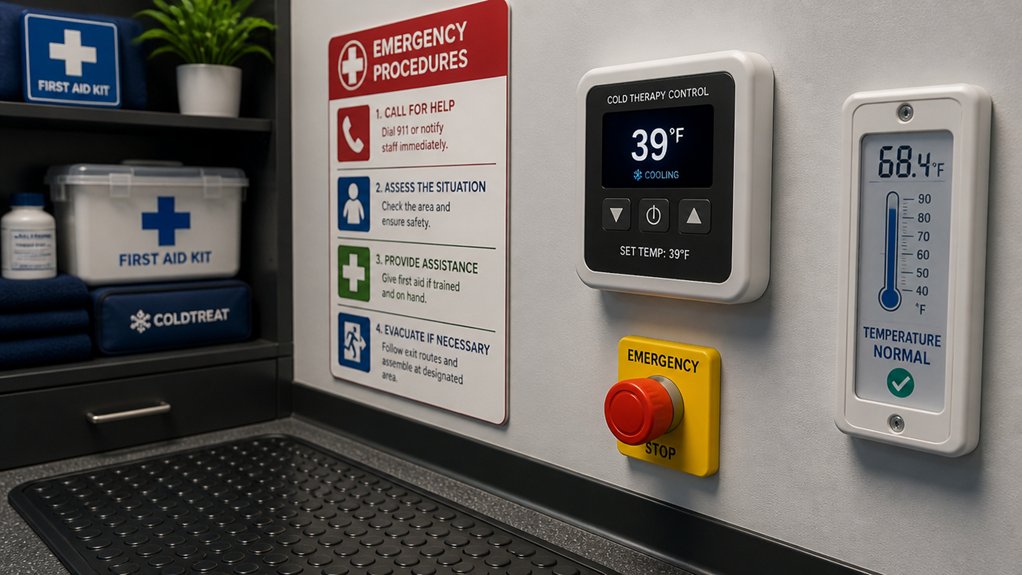
Ever wonder how to tell if cold therapy is turning dangerous? During cold immersion therapy after a stroke, recognizing signs of emergency is crucial.
If you experience worsening numbness, tingling, or severe shivering, seek help immediately—these could signal frostbite or nerve damage.
Chest pain, difficulty breathing, dizziness, confusion, or fainting are serious signs demanding an emergency room visit.
Watch for symptoms of hypothermia like uncontrollable shivering, slow heartbeat, or slurred speech.
If you feel sudden weakness, a severe headache, or unusual pain, alert your caregiver or therapist right away, as these may be stroke complications.
Keep a call device nearby so you can summon assistance quickly, ensuring safety during your cold immersion therapy sessions.
Being aware of your insulation effectiveness can also help prevent dangerous temperature drops.
Frequently Asked Questions
What Precautions Should Be Taken After a Stroke?
You should use grab bars, non-slip mats, and a sturdy seat; test water temperature beforehand; have someone nearby or a call device ready; prefer showers over baths; keep water shallow, and plan your supplies to stay safe and prevent falls.
What Are the 7 D’s of Stroke Care?
The 7 D’s of stroke care are Detection, Dispatch, Delivery, Door, Data, Decision, and Drug. You recognize symptoms early, call EMS, guarantee rapid transport, get evaluated at the hospital, gather info, make prompt decisions, and administer appropriate treatment.
Is Aqua Therapy Good for Stroke Patients?
Yes, aqua therapy benefits stroke patients by reducing joint stress, improving balance, and relaxing muscles. It supports strength recovery, enhances coordination, and boosts cardiovascular health. Just make certain sessions are supervised with safety measures in place.
How to Do Mirror Therapy for Stroke Patients?
To do mirror therapy, sit comfortably with a mirror aligned between your limbs. Move your unaffected limb while focusing on its reflection, starting under supervision. Keep sessions brief, monitor for discomfort, and avoid water immersion without proper safety measures.