
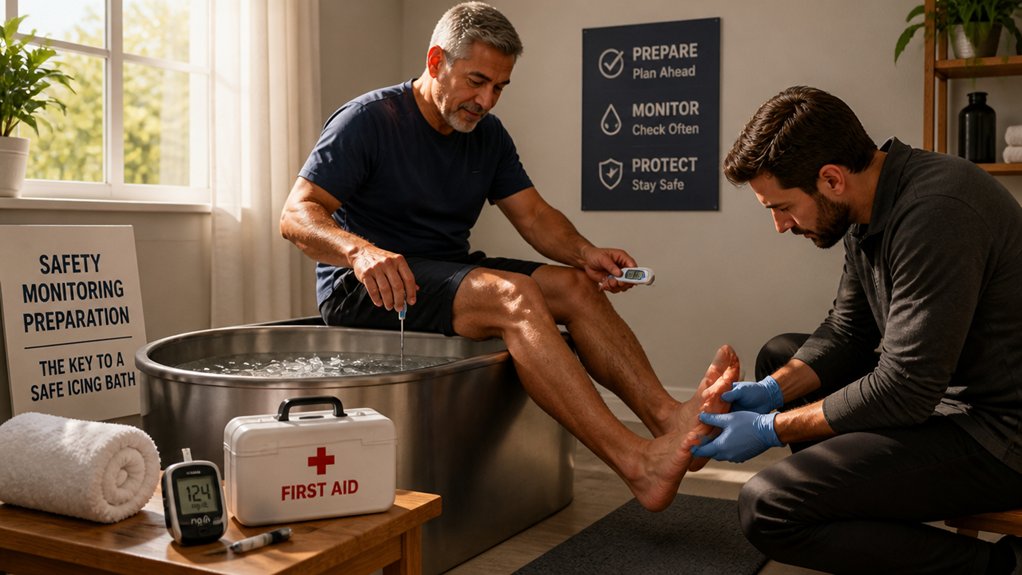
First, check your blood sugar and get a doctor’s clearance, especially if you have a heart history, before you step into any ice bath. Start with brief immersions—30 seconds to a minute—while monitoring glucose and heart rate, then gradually add 10–15 seconds every few days. Warm up with light cardio or stretching, keep the water above 50 °F, and re‑warm slowly after each session to avoid spikes or drops; keep going to discover more.
Check Blood Sugar & Heart Health Before Ice Baths

Before you step into an ice bath, make sure your blood‑sugar level is stable and your heart is up to the challenge. Cold water therapy can trigger cortisol spikes that push blood sugar levels up, then a sudden drop may cause hypoglycemia if you’re not within a safe range. Monitor your glucose with a meter just before cold exposure, and note any trends; if you’re on insulin, adjust doses only after consulting a healthcare professional. Those with cardiovascular disease or high blood pressure must check heart health first, because ice baths raise heart rate and blood pressure. A quick risk check should include confirming a safe heart status and stable glucose levels, especially if you have a history of heart issues cardiovascular risk. Get a doctor’s clearance, especially if you have a history of heart issues. By confirming stable glucose and cardiovascular status, you reduce risk and enjoy the benefits safely.
Start Short Ice‑Bath Sessions and Build Up Time
Starting with ice baths that last only 30 seconds to a minute helps you avoid cold‑shock and hypothermia while you gauge how your blood sugar and heart respond.
As a diabetic, you’ll notice that brief cold immersion triggers a modest stress response that can boost insulin sensitivity without overwhelming your system.
Keep a log of blood sugar and cardiovascular feelings after each session; if values stay stable, extend the time by 10‑15 seconds every few days.
Aim for a gradual climb to 5‑10 minutes over weeks, never jumping to longer periods abruptly. This steady buildup supports muscle recovery and reduces inflammation while keeping hypothermia risk low.
Consistency, not speed, drives safe progress. Monitoring data helps you adjust sessions safely and confirms how your body responds to cold immersion.
Warm‑Up, Monitor, and Re‑Warm After Ice Baths (Including Temperature Checks)
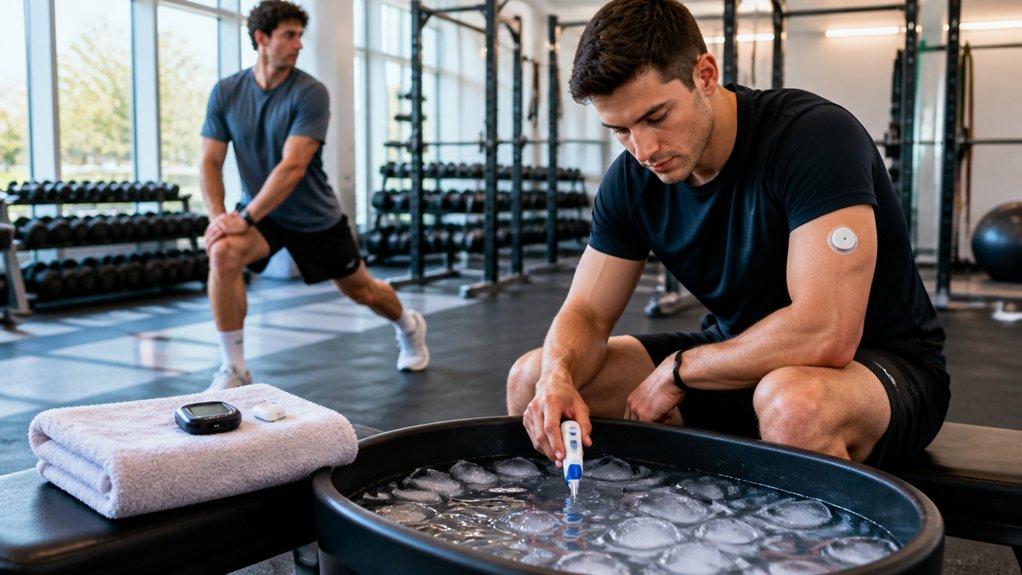
If you ease into an ice bath with a brief warm‑up—light cardio, a warm shirt, or a few minutes of gentle stretching—your blood sugar and circulation stabilize, making the cold plunge safer. Start with a warm‑up that raises blood flow, then step into water that’s cold but not extremely cold water; aim for above 50°F (10°C). While you’re immersed, monitor heart rate, shivering, and blood glucose closely. After the session, perform temperature checks on skin and sensation to spot any early cold injury. Re‑warm gradually with light movement or a warm blanket, avoiding hot showers that could shock your system. This systematic approach protects diabetes management and maximizes the benefits of cold therapy. External power considerations from cooling device guidance can inform safe recovery practices when integrating temperature management into wellness routines.
Frequently Asked Questions
Are Ice Baths Ok for Diabetics?
Yes, you can try ice baths, but consult your doctor first, start slowly, monitor heart rate and blood sugar, avoid extreme cold, and stop if you feel dizziness, numbness, or pain.
What Is the 3-Hour Rule for Diabetics?
You should wait three hours after insulin or a meal before entering an ice bath; this gives your glucose time to stabilize, reducing cortisol‑induced spikes and preventing dangerous hypoglycemia or hyperglycemia.
What Are the Precautions for Ice Bath?
You should consult your doctor first, avoid ice baths if you have heart issues or open wounds, start with short 30‑second sessions, keep your head out, monitor glucose constantly, and always have someone supervising.
Who Should Not Do Ice Baths?
You shouldn’t take ice baths if you have cardiovascular disease, peripheral neuropathy, open wounds, cold urticaria, Raynaud’s, high blood pressure, hypoglycemia risk, or any condition that impairs temperature regulation or sensation.
In Summary
By checking your blood sugar and heart health first, you’re setting a safe foundation. Keep your ice‑bath sessions brief at the beginning, then gradually extend them as your body adapts. After each plunge, monitor your temperature, stay warm, and re‑warm properly to avoid hypothermia. Following these steps lets you enjoy the benefits of ice baths while protecting your health.