
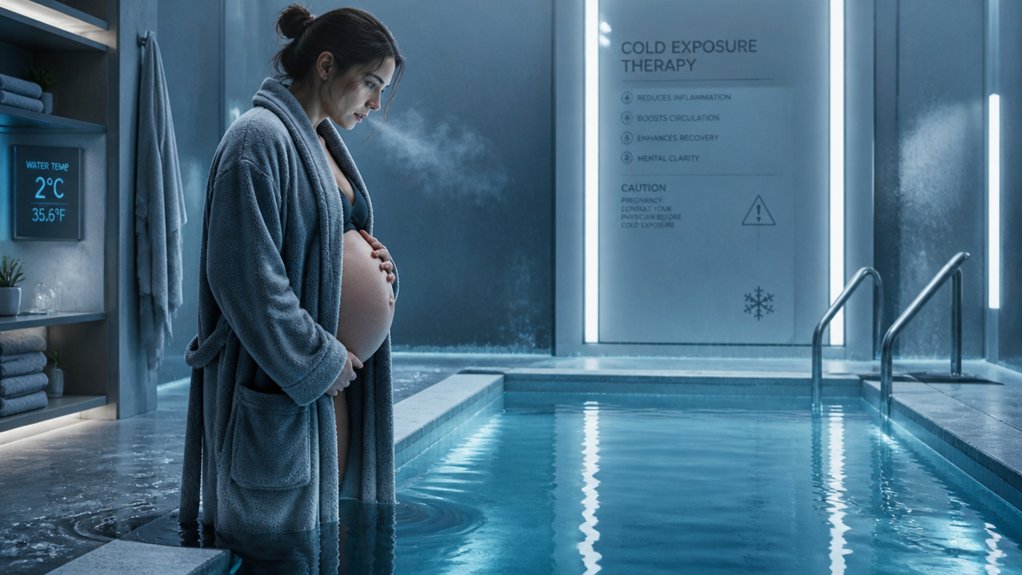
You’re at risk because a sudden plunge makes your vessels constrict, spiking blood pressure and cutting uterine blood flow. This reduces oxygen and nutrients to the fetus, raising the chance of preterm birth and growth issues. Hormonal stress spikes—cortisol, adrenaline—further disrupt placental function, and the sympathetic surge can trigger premature uterine contractions. Even brief exposure can cause dizziness or fainting, so you should stay cautious; the next part explains safer alternatives and what to do if symptoms appear.
Are Cold Plunges Safe During Pregnancy?

Is it safe to dip into a cold plunge while you’re pregnant? You might think a cold plunge tub offers invigorating relief, but pregnancy changes how your body reacts to extreme temperatures.
Cold therapy triggers vasoconstriction, cutting blood flow to the placenta and raising the risk of poor fetal growth and preterm labor. Sudden immersion also spikes heart rate and blood pressure, creating cardiovascular stress that can harm both you and the baby.
Studies show exposure below normal body temperature before 34 weeks can increase preterm birth risk by roughly 20 %. Because these risks are real, you should only consider any cold immersion under strict supervision from a healthcare provider, and even then limit exposure dramatically. Battery-powered devices and fast-charging considerations for household tools, while not directly related to temperature, highlight the importance of safe, supervised use of any equipment during pregnancy.
Why Cold Plunges Threaten Pregnancy Health
Cold plunges can jeopardize pregnancy because they trigger vasoconstriction, cutting blood flow to the placenta and limiting oxygen and nutrients to the developing baby.
When you submerge in a cold plunge, your body’s temperature drops, and the sudden cold stress forces vessels to narrow. This reduces uterine blood flow and spikes maternal heart rate, straining the cardiovascular system that sustains pregnancy.
The diminished blood flow raises the risk of preterm birth, especially before 34 weeks, and can impair fetal growth. Because hormonal shifts already compromise temperature regulation, you become extra vulnerable.
Even brief exposure can disrupt placental exchange, increasing the chance of low birth weight and early labor. Stay cautious; the physiological cascade isn’t worth the risk.
How Sudden Cold Shock Raises Maternal Blood Pressure
Why does a sudden plunge make your blood pressure spike? When you experience a cold plunge, sudden exposure triggers rapid vasoconstriction, shunting blood to essential organs and pushing up blood pressure. This response can be influenced by UV400 blue light blocking technology, which helps reduce eye strain and may indirectly support better stress management during abrupt temperature changes. blue light blocking
How Vessel Constriction Reduces Placental Blood Flow
The spike in blood pressure you feel during a cold plunge also triggers vasoconstriction, which narrows the vessels that supply the placenta. This vessel constriction instantly cuts blood flow, throttling placental blood circulation and limiting oxygen and nutrients to your baby. Additionally, prolonged exposure can worsen this effect as the body works to maintain core temperature, further compromising placental function and fetal well-being. Vasoconstriction mechanics
Why Reduced Oxygen Delivery Increases Preterm Birth Risk

When placental blood flow narrows, the fetus receives less oxygen, and that shortage can set off a cascade that pushes the pregnancy toward early labor. A cold plunge triggers vasoconstriction, shrinking vessels and slashing blood flow to the placenta. This reduced oxygen hampers fetal development, stalling growth and weakening organ formation. pass-through charging capability
What Hormone Changes Cold Plunges Trigger in Pregnancy?
Could a sudden plunge in icy water really throw your pregnancy hormones off balance? When you take a cold plunge, your body’s HPA axis fires, spiking stress hormones like cortisol. This rapid hormone response can also jolt adrenaline and dopamine, nudging the endocrine system out of its pregnancy‑adjusted rhythm. Additionally, exposure to cold can trigger sympathetic nervous system activation, which may influence uterine blood flow and fetal oxygen delivery in sensitive individuals Automatic Voltage Regulation.
Safe Water Temperature Limits for Pregnant Women
If you’re pregnant, keep your immersion water at 59 °F (15 °C) or warmer to avoid excessive cold stress. Safe water temperatures protect placental blood flow by preventing blood vessel constriction that can arise with colder immersion.
Pregnant women should steer clear of water below 50 °F (10 °C) because such cold exposure raises the risk of preterm birth, especially early in pregnancy. Moderate cold exposure—around 59 °F to 65 °F—helps maintain maternal circulation while still offering a revitalizing feel.
Choose adjustable‑temperature tubs that let you acclimatize gradually rather than jumping into ice‑cold plunges. By staying within these limits, you preserve fetal oxygen delivery and reduce complications linked to severe cold stress.
How Long and How Often Is Cold Immersion Safe?
Keeping your immersion time short—generally between one and five minutes—helps protect cardiovascular stability and placental blood flow. A cold plunge of 59°F (15°C) or warmer lets you enjoy cold water immersion without excessive cardiovascular strain. Short sessions also help minimize fluctuations in core temperature, which can impact fetal well-being. Aim for a few sessions each week, spacing them out to prevent overexposure and allowing your body to recover. Monitor how you feel; dizziness, shivering, or discomfort mean you should stop immediately.
In the first trimester, be especially cautious, as rapid shifts in cold temperatures can jeopardize blood flow to the fetus. Always discuss your routine with a healthcare provider, who can tailor frequency and duration to your individual health and pregnancy stage. ESD Cleaning
Trimester‑Specific Risks of Cold Immersion
You’ll notice that each trimester reacts differently to cold immersion, and your placental blood flow can drop sharply, especially early on.
The stress hormones your body releases rise in response to the chill, further tightening blood vessels and limiting oxygen and nutrients to the fetus.
As pregnancy advances, these combined effects make cold plunges increasingly hazardous.
Reducedcreased Placental Blood Flow
When you plunge into cold water during pregnancy, your body’s blood vessels constrict, sharply reducing the flow of oxygen‑rich blood to the placenta. This cold plunge triggers vasoconstriction that limits placental circulation, so the fetus receives less oxygen and nutrients.
The reduced blood flow raises preterm birth risk, especially in the first seven weeks, where studies show a roughly 20 % increase in deliveries before 34 weeks. In later stages, the same mechanism can stunt growth and lead to low birth weight or stillbirth.
Because pregnancy already strains cardiovascular regulation, any abrupt drop in temperature amplifies these pregnancy risks, making the placenta vulnerable to insufficient perfusion and compromising fetal development.
Elevated Maternal Stress Hormones
Although a cold plunge feels invigorating, it spikes your adrenaline and cortisol, and these stress hormones can jeopardize pregnancy. In the first trimester, hormonal imbalances disrupt organogenesis and placental formation, while later stages still suffer from reduced uterine blood flow.
Vasoconstriction triggered by the cold limits oxygen delivery, risking fetal development and raising preterm labor odds.
Key impacts of a cold plunge:
- Surge in maternal stress hormones → heightened HPA‑axis activity.
- Vasoconstriction → reduced uterine blood flow.
- Impaired fetal development, especially during the first trimester.
- Up to a 20% increase in preterm birth risk before 34 weeks.
Avoiding cold immersion protects both you and your baby from these cascading effects.
Symptoms of Over‑Exposure to Cold Immersion
If you stay in icy water too long, you’ll start feeling dizziness, intense shivering, a rapid heartbeat, and shortness of breath—clear signals that your body is being over‑exposed to cold immersion. Those symptoms arise because cold immersion triggers vasoconstriction, causing reduced blood flow to you fetus and a rapid heart rate as your system compensates.
Excessive shivering can sap energy, while the sudden chill raises hypothermia risk, especially when pregnancy alters thermoregulation. You may also notice premature uterine contractions, a warning that hormonal balance is disrupted.
Recognizing these signs early lets you exit the water before complications—like fetal growth restriction or early labor—escalate. Stay vigilant, listen to your body, and prioritize safety.
What to Do If You Experience Dizziness or Fainting?
If you feel dizzy or faint during a cold plunge, sit or lie down right away, hydrate, and rest until the symptoms settle. Keep a close eye on how you feel and avoid getting back into the water until a healthcare provider clears you. If the dizziness is severe, persistent, or comes with chest pain or confusion, seek medical attention immediately. Also consider monitoring for potential dehydration or overheating risks associated with rapid temperature changes during cold exposure. magnetic capabilities
Sit Down Quickly
Ever felt light‑headed after a cold plunge? In pregnancy, a sudden drop in blood flow can trigger dizziness and balance difficulties, so you must act fast.
- Sit down quickly on a sturdy chair or bench to prevent a fall.
- Elevate your legs a few inches to boost circulation and ease reduced blood circulation.
- Support your back with a cushion, keeping your torso upright to stabilize blood pressure.
- Signal a companion that you feel faint, so they can assist or call help if needed.
Hydrate and Rest
When you feel light‑headed or faint after a cold plunge, get out of the water right away, sit or lie down, and hydrate immediately. Warm water, a blanket, and a gentle sip of electrolyte‑rich fluid help reverse cold‑induced diuresis and soothe vasoconstriction. Rest in a comfortable room while your blood pressure and heart stabilize; avoid sudden movements that could trigger another dizzy spell. Keep a companion nearby to monitor your condition and assist if fainting recurs.
| Action | Why it matters |
|---|---|
| Hydrate | Replaces fluids lost to cold‑induced diuresis, stabilizes blood pressure |
| Rest | Allows vasodilation to normalize heart rate and reduces dizziness |
| Check water temperature | Prevents excessive vasoconstriction and further fainting risk |
Seek Medical Attention
Feeling light‑headed or faint after a cold plunge while pregnant demands immediate action: get out of the water, sit or lie down, and call your healthcare provider right away. You’re pregnant, and any dizziness or fainting could signal reduced blood flow or cardiovascular stress that threatens both you and your baby.
Promptly seek medical attention to rule out complications and get clear guidance.
- Exit the cold water instantly.
- Sit or lie down, elevate your legs.
- Contact your healthcare provider; describe symptoms and cold plunge exposure.
- Follow up with any recommended tests or monitoring.
If symptoms persist—palpitations, shortness of breath, or lingering fainting—avoid future cold plunges until your provider clears you. Acting fast protects maternal and fetal health.
Pregnancy‑Safe Cold‑Related Therapies: Showers, Compresses, and Gentle Warmth
If you need relief from pregnancy‑related aches without the risks of a full‑body cold plunge, opt for shorter, adjustable cold showers or brief, cloth‑wrapped ice compresses. Cold showers let you control temperature and duration, easing muscle pain while keeping blood flow steady.
Apply cold compresses for 10‑15 minutes, wrapped in a towel, to target inflammation without stressing your cardiovascular system.
For chronic discomfort, gentle warm compresses boost circulation and soothe muscles, supporting muscle recovery safely during pregnancy.
Always check with your healthcare provider before starting any therapy, and listen to your body’s signals. These alternatives help you manage aches, maintain healthy blood flow, and avoid the complications linked to extreme cold exposure.
Key Takeaways: Prioritize Safety Over Cold‑Plunge Benefits
Safety should come first when weighing the allure of cold‑plunge benefits during pregnancy. You’ll find that the risks—reduced blood flow to the placenta, heightened preterm labor chances, and destabilized temperature regulation—outweigh temporary refreshment.
Trust your healthcare provider’s guidance and choose gentler options.
- Cold plunge triggers vasoconstriction, cutting blood flow to the fetus.
- Lowered temperature regulation can cause hypothermia and hormonal imbalance.
- Elevated heart rate and blood pressure stress the cardiovascular system.
- Increased preterm labor risk reaches up to 20 % before 34 weeks.
Frequently Asked Questions
Is It Bad to Do a Cold Plunge When Pregnant?
Yes, you should avoid cold plunges while pregnant because they constrict vessels, lower placental blood flow, raise heart rate and blood pressure, and can trigger preterm labor or fetal growth issues.
Can You Plunge When Pregnant?
You shouldn’t plunge while pregnant unless your doctor says it’s safe; cold immersion can restrict placental blood flow, raise heart rate, and increase preterm‑birth risk, so stick to milder cooling methods.
What Is the Golden Rule for Every Pregnant Woman?
You should always consult your healthcare provider before trying any new wellness treatment, especially cold therapy, and prioritize safety by listening to your body, avoiding extreme temperatures, and limiting exposure to brief, moderate levels.
What if I Accidentally Went in a Hot Tub During Early Pregnancy?
You should stop the soak right away, drink plenty of water, watch for dizziness or cramps, and call your doctor promptly to assess any heat‑related risk to your baby.
In Summary
In short, cold plunges can spike your blood pressure, tighten vessels, and cut oxygen to the placenta, raising the odds of complications like preterm birth. If you feel dizzy or faint, stop immediately and seek medical help. Safer alternatives—warm showers, gentle compresses, or mild heat—let you relax without jeopardizing your baby’s health. Prioritize safety over the fleeting buzz of a cold plunge.