To optimize your recovery with plunge therapy, schedule your cold water immersion 4-6 hours after heavy lifting sessions, especially if aiming for muscle growth. Keep water between 10°C and 15°C and limit your time to 5-8 minutes, gradually increasing as your tolerance improves. Be sure to hydrate, practice controlled breathing, and rewarm gradually afterward. Following these guidelines helps reduce inflammation and soreness without hindering gains. Stick around to discover more tips for safe, effective cold plunges.
What Is Cold Plunge Therapy and How Does It Help Powerlifters?
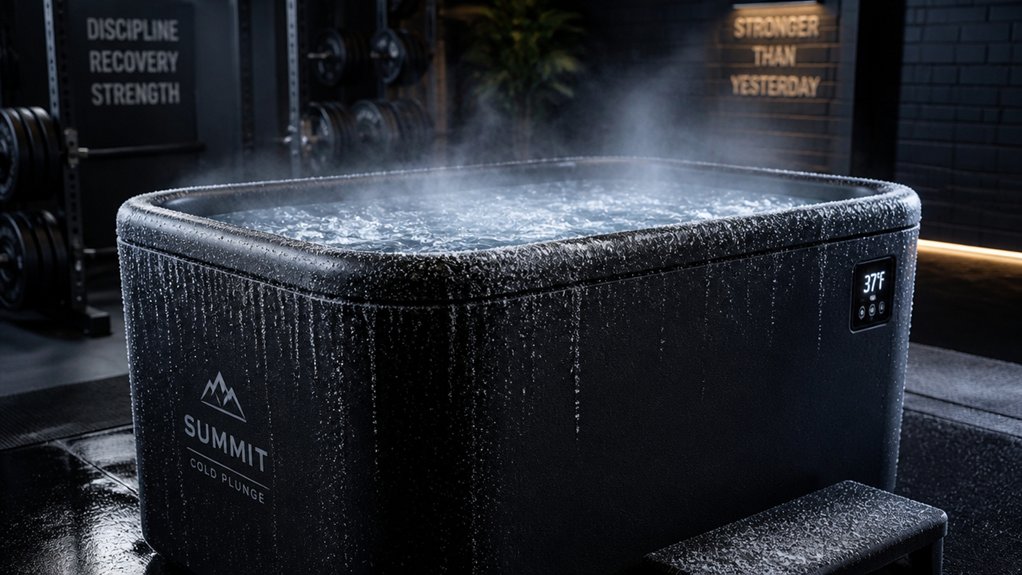
What exactly is cold plunge therapy, and how does it benefit powerlifters? Cold water immersion, or cold plunges, involve submerging your body in 10°C to 15°C water for about 10 to 15 minutes after strength training. This process helps reduce inflammation and speeds up muscle recovery, making it a valuable part of post-workout recovery. Additionally, the capacity and materials of different tubs allow for customized recovery experiences suited to your needs. By limiting inflammatory responses, cold plunges support neuromuscular function, preserving your Rate of Force Development (RFD) and stabilizing stress markers like IL-6 and TNF-α. The plunge duration is essential—staying within the ideal window allows you to recover faster without impairing muscle growth. Cold water immersion enhances your strength training results by promoting quicker nervous system recovery and reducing soreness, helping you perform better at your next session.
When Should I Cold Plunge After My Powerlifting Workout?
The timing of your cold plunge after a powerlifting session can greatly influence your recovery and muscle growth. To optimize results, wait approximately 4 to 6 hours before engaging in cold plunging. Cold water immersion at 11–15°C for 10–15 minutes can then help reduce inflammation and accelerate strength recovery effectively. Immediate cold plunging, right after your powerlifting workouts, can hinder muscle repair and hypertrophy by blunting muscle growth hormones. Incorporating a recovery cream with fast-absorbing, non-greasy textures can further aid muscle relaxation and reduce soreness post-activity. Here’s what to keep in mind: 1. Cold plunging too soon may impair muscle repair. 2. Wait 4–6 hours post-workout before cold water immersion. 3. This delay supports neuromuscular stability and faster force recovery. 4. Cold plunges are more suited for soreness relief after cardio or endurance sessions, not heavy strength training.
How to Prepare for Your Cold Water Immersion Before Powerlifting Training
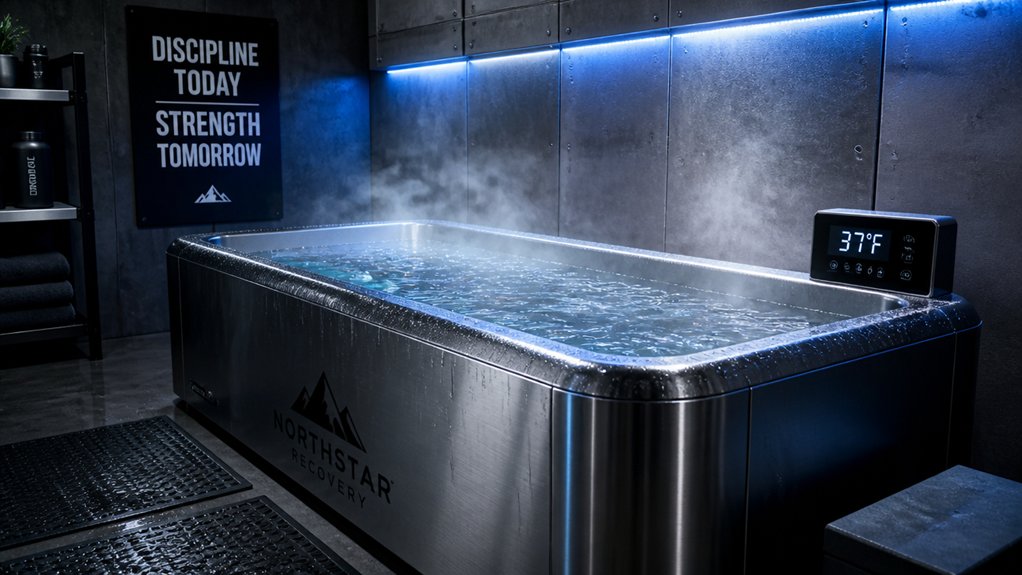
Preparing your body before a cold water immersion is essential to maximize recovery and guarantee safety. Start by scheduling your full-body cold plunge 4-6 hours after your powerlifting session to avoid disrupting muscle growth. Set the water temperature between 11°C and 15°C (50°F to 59°F) to guarantee effective cold exposure without risking cold shock or numbness. Prior to your plunge therapy, practice controlled deep breathing exercises to calm your nervous system and build tolerance to the cold. Hydrate well beforehand, as proper hydration supports circulation and reduces dizziness during immersion. Plan for a 15-minute cold plunge, with your head out of the water, and prepare a gradual warming routine afterward to prevent sudden blood pressure changes. Additionally, selecting a high-quality cold plunge tub or kit can enhance safety and comfort during your recovery routine.
What Are the Best Water Temperature and Duration for Recovery?
Selecting the right water temperature and immersion duration is key to maximizing recovery benefits from cold plunges. For effective cold therapy, aim for an ice bath temperature between 10°C and 15°C (50°F to 59°F).
Optimal cold plunge: 10-15°C for 5-15 minutes to enhance recovery and reduce soreness safely.
Staying in the water for 5 to 15 minutes helps reduce inflammation and Delayed Onset Muscle Soreness (DOMS), while improving blood flow.
Consider these points:
- Beginners should start with 1-2 minutes and gradually increase.
- Experienced lifters can safely stay up to 6-8 minutes but shouldn’t exceed 7 minutes.
- Water colder than 10°C can cause dizziness or numbness.
- Warmer than 15°C diminishes recovery benefits.
Control your breathing to enhance cold tolerance and recovery.
A Simple Routine for Safe and Effective Cold Water Immersion
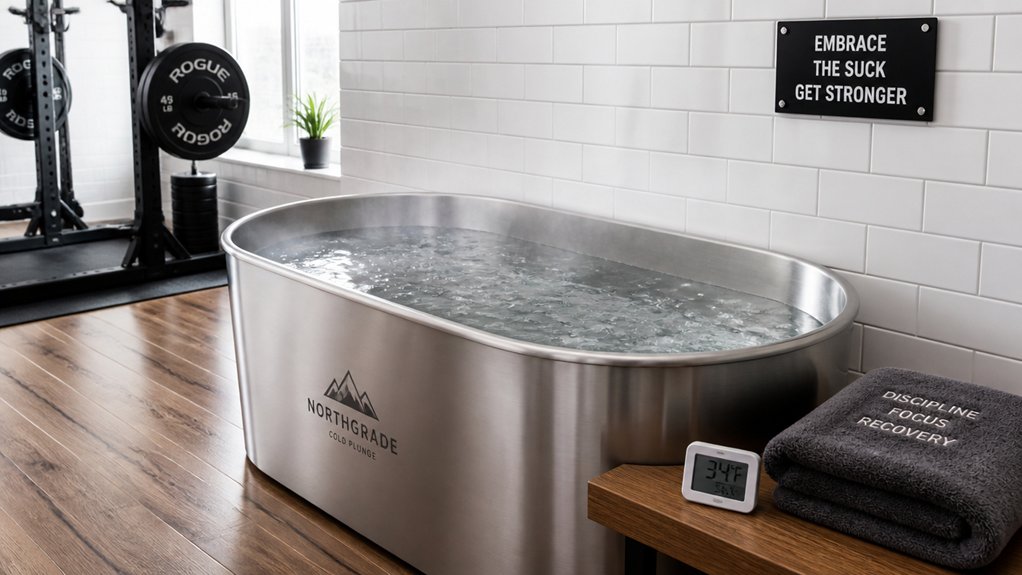
Implementing a simple, safe routine for cold water immersion can greatly enhance your recovery without risking discomfort or injury. Start with a cold plunge at 11–15°C for 10-15 minutes within 30 minutes after your powerlifting session to reduce inflammation and promote blood circulation. If you’re new, begin with 3–5 minutes, focusing on controlled, slow breathing to calm your nervous system and increase tolerance during full-body immersion with your head out. Avoid plunging immediately after heavy training if your goal is muscle hypertrophy—wait 4-6 hours to prevent blunted growth signals. Afterward, rewarm gradually using towels or light movement, hydrate, and stretch gently to support recovery and muscle fatigue management. Using ice bathing as part of your recovery tools 3–4 times weekly builds resilience and supports overall neuromuscular health. Recognizing the importance of proper equipment, choosing the right cold plunge setup can optimize thermal retention, safety, and ease of use during your recovery routine.
How Cold Plunges Speed Up Muscle Repair and Reduce Soreness
Have you ever wondered how cold plunges speed up muscle repair and help you recover faster? When you immerse in a cold plunge at 11–15°C for about 15 minutes, you trigger vasoconstriction, reducing inflammation and limiting muscle tissue breakdown.
This process accelerates muscle repair and reduces soreness, especially from Delayed Onset Muscle Soreness (DOMS).
Key benefits of Plunge Recovery include:
- Limiting inflammation to speed recovery
- Normalizing inflammatory cytokines like IL-6
- Maintaining neuromuscular function and RFD
- Enhancing post-workout muscle recovery without hindering muscle growth
Performing cold immersion 4-6 hours after lifting optimizes soreness reduction while supporting muscle repair, especially when paired with temperature therapy features that allow rapid cold adjustment.
Combining Cold Therapy With Other Recovery Strategies
Combining cold therapy with other recovery strategies can greatly enhance your muscle repair process. Using a cold plunge (around 10-15°C) with contrast therapy—alternating between cold and heat—boosts circulation and helps clear metabolic waste, speeding recovery.
After your cold plunge, applying compression therapy, like wearing compression boots for 20-30 minutes, reduces swelling and improves nutrient delivery, especially to your legs.
Initiating recovery with cold exposure followed by heat maximizes blood vessel constriction and dilation, optimizing oxygen flow and reducing inflammation.
Incorporating controlled breathing during cold plunges supports nervous system regulation, enhancing overall recovery.
Additionally, using compression technology during recovery can further improve blood flow and reduce muscle soreness.
Remember to rewarm gradually and hydrate afterward to prevent blood pressure spikes and avoid burns, ensuring your combined recovery strategies work effectively.
Common Mistakes to Avoid During Cold Water Immersion
While cold therapy offers many benefits for recovery, it’s essential to avoid common mistakes that can reduce its effectiveness or cause harm. The cold plunge involves careful timing and conditions.
Cold therapy benefits recovery, but avoiding common mistakes ensures safety and effectiveness. Proper timing and conditions are key.
First, avoid plunging immediately after heavy strength training, as this can blunt muscle growth signals. Also, don’t use water colder than 10°C (50°F), which risks dizziness and cold shock. Make sure you limit cold plunge duration to a maximum of 7 minutes to prevent hypothermia and stress.
Always practice gradual rewarming and hydrate after the plunge to support circulation and recovery. Additionally, plan your cold immersion sessions; plunging within 30 minutes of training or inconsistent use diminishes benefits. Choosing the right cold plunge tub with proper temperature controls and safety features can enhance your recovery routine. Staying mindful of these mistakes maximizes recovery and minimizes dangers.
How to Tailor Your Cold Plunge Schedule Based on Training Intensity
Determining the best cold plunge schedule depends on your training intensity and goals. For high-intensity sessions, wait 4-6 hours before plunging to prevent blunting muscle hypertrophy, while still reducing inflammation. Moderate days benefit from a cold plunge within 30 minutes post-workout at 11–15°C for 10-15 minutes to boost recovery and reduce soreness. On lower-intensity days, shorter plunges of 2-5 minutes help maintain readiness without overstressing your nervous system. Planning your plunge routine around training load maximizes benefits. Use this guide:
| Training Intensity | Water Immersion Time | Temperature | Frequency |
|---|---|---|---|
| High | 4-6 hrs wait | – | – |
| Moderate | 10-15 mins | 11–15°C | After workout |
| Light/Technique | 2-5 mins | Slightly warmer | As needed |
Adjust based on how your body responds. Incorporating a proper insulation strategy with your cold plunge setup can help maintain consistent temperatures and improve overall recovery.
FAQs: Maximizing Benefits and Staying Safe With Cold Plunges
To get the most benefits from cold plunges, time them 4-6 hours after your workout to avoid hindering muscle growth.
Keep the temperature between 10°C and 15°C for 10-15 minutes, and use controlled breathing to stay safe and improve your cold tolerance.
Rewarm gradually with towels and movement, and consider combining cold therapy with heat or compression for enhanced recovery.
Optimal Cold Plunge Timing
When is the best time to take a cold plunge after powerlifting? Ideally, you should wait 4-6 hours post-workout to maximize recovery benefits without blunting muscle growth hormone signals.
Cold plunges at 11°C to 15°C for 10-15 minutes help reduce inflammation and muscle swelling effectively. For peak powerlifting recovery, initiating the cold plunge within 30 minutes after training can accelerate the return of maximum isometric force.
Consider these points:
- Wait 4-6 hours for balance between inflammation reduction and muscle growth.
- Use 11°C to 15°C water for prime recovery.
- Limit immersion to 10-15 minutes for safety and benefits.
- Beginners should start with shorter durations of 3-5 minutes.
Safety and Technique Tips
Ensuring safety and proper technique during cold plunges is essential for maximizing benefits and avoiding adverse effects. When taking an ice bath, keep the immersion within a precise temperature range of 10°C to 15°C (50°F to 59°F).
Limit your cold plunge within two minutes initially, gradually increasing as you build cold tolerance. Use controlled deep breathing techniques during immersion to calm your nervous system and make the experience more comfortable.
Avoid staying in an ice bath too long—limit your total time to under seven minutes to reduce stress on your nervous system. Always rewarm gradually with towels or light movement, and hydrate afterward to support circulation and recovery.
Frequently Asked Questions
How Long Should You Stay in a Cold Plunge for Muscle Recovery?
You should stay in a cold plunge for 10 to 15 minutes to effectively reduce inflammation and aid recovery. Beginners might start with 3 to 5 minutes, but avoid exceeding 15 minutes to prevent hypothermia and nervous stress.
What Snacks Help Rebuild Muscle Tissue?
You should choose protein-rich snacks like grilled chicken, eggs, or whey shakes, paired with anti-inflammatory foods like berries or turmeric. Add carbs and healthy fats for ideal glycogen replenishment and hormone support, ideally within 30-60 minutes post-workout.
Are Ice Plunges Good for Muscle Recovery?
Yes, ice plunges are good for muscle recovery; they reduce inflammation, decrease muscle soreness, and help restore strength faster. By controlling biochemical stress, they support quicker recovery and improved performance when used properly after training sessions.
Do Cold Plunges Help Neuropathy?
Cold plunges may help neuropathy by reducing neuroinflammation, supporting nerve regeneration, and improving circulation. They can also calm your nervous system, potentially alleviating pain. However, more clinical research is needed to confirm these benefits specifically for neuropathy.