Using ice immersion after sprints helps you recover faster by reducing inflammation, muscle soreness, and fatigue. It constricts blood vessels to flush out metabolic waste and then increases blood flow to speed up repair. Just 8-10 minutes at 10-15°C makes a big difference in keeping you ready for your next effort. If you want to maximize your recovery and stay at your best, you’ll want to learn more about precise protocols and safety tips.
Does Cold Water Immersion Help Sprint Recovery Faster?
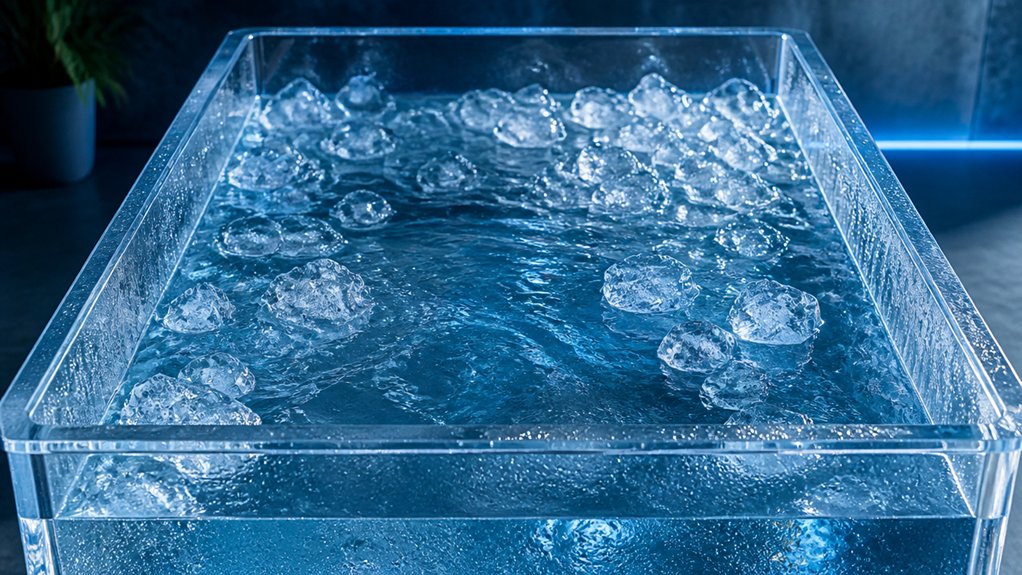
Does cold water immersion actually speed up sprint recovery? Many athletes use ice baths daily to help their muscles recover faster.
Cold water immersion at 10-15ºC for about 8-10 minutes can greatly reduce muscle inflammation and soreness after sprinting. A 2019 study showed that ice baths improved sprint recovery within 24 hours, allowing athletes to regain neuromuscular performance quickly and feel less fatigue.
Cold water immersion at 10-15ºC for 8-10 minutes enhances sprint recovery and reduces fatigue within 24 hours.
When you submerge in cold water, vasoconstriction happens, followed by rapid vasodilation, which enhances blood flow and helps flush out metabolic waste like lactic acid. This promotes quicker recovery. Proper filtering systems ensure water remains clean and safe during frequent immersion sessions.
However, keep in mind that overusing ice baths might dampen long-term training adaptations, so moderation is key for ideal sprint performance.
How Ice Baths Boost Muscle Repair and Reduce Soreness
Ice baths constrict blood vessels, reducing swelling and tissue breakdown, which speeds up muscle repair. They also lower your muscle temperature, helping to ease soreness that often tags along after sprinting. A well-designed cold therapy sleeve can prolong cold retention and support sustained recovery benefits. Cold retention duration
Reduced Inflammation and Swelling
After sprinting, immersing in cold water causes blood vessels to constrict, which markedly reduces blood flow to the muscles. This vasoconstriction minimizes inflammation and swelling in muscle tissue caused by microtrauma from sprinting. Ice baths at temperatures between 10-15ºC for 8-10 minutes help decrease muscle tissue breakdown and limit lactic acid buildup. By reducing swelling, they also flush out inflammatory markers and metabolites that contribute to delayed onset muscle soreness (DOMS). High-density insulation in ice bath designs ensures water stays colder longer, enhancing recovery effectiveness. Less inflammation speeds up muscle repair and shortens soreness experienced 12 to 72 hours post-sprint. Cold immersion not only reduces tissue swelling but also helps lower cortisol and subjective fatigue, supporting quicker recovery and allowing you to train more consistently.
Enhanced Muscle Recovery Processes
Cooling muscles through ice immersion actively boosts the body’s natural repair mechanisms by promoting quick removal of metabolic waste products like lactic acid and reducing muscle tissue breakdown. Ice baths facilitate vasoconstriction, which decreases swelling and accelerates waste removal. Additionally, using targeted muscle recovery creams after immersion can further support muscle repair and reduce soreness. When you rewarm after cold-water immersion, rapid vasodilation increases blood flow, delivering oxygen and nutrients essential for muscle recovery. This process supports healing and strengthens tissues.
Top Benefits of Using Ice Baths After Sprinting

Using ice baths after sprinting offers a range of significant benefits that can enhance your recovery process. Cold water immersion reduces delayed onset muscle soreness (DOMS) and perceived fatigue within 24-72 hours by decreasing inflammation and swelling in muscle tissue.
Spending around 8-10 minutes in ice baths at 10-15ºC helps flush out lactic acid and metabolic waste, speeding up muscle recovery after intense sprint efforts. Regular use during high-volume training improves neuromuscular performance and restores sprint capacity faster.
Ice baths also lower creatine kinase (CK) levels, reducing muscle damage markers and promoting quicker repair. Additionally, cold water immersion supports reduced cortisol levels and soreness without impairing strength, helping you stay consistent with your training. Proper temperature control ensures optimal therapeutic benefits and safety during immersion.
How Cold Exposure Alleviates Muscle Inflammation
Cold exposure alleviates muscle inflammation primarily through vasoconstriction, which temporarily narrows blood vessels and reduces blood flow to affected tissues. This process limits swelling and suppresses inflammatory responses after sprinting.
Ice baths lower tissue temperature, slowing metabolic processes and decreasing muscle fiber breakdown associated with inflammation. Additionally, cold therapy helps flush out lactic acid and reduces inflammatory markers like creatine kinase (CK), easing delayed onset muscle soreness (DOMS).
After the initial vasoconstriction, rapid vasodilation occurs, increasing oxygen and nutrient delivery to promote quicker inflammation resolution. This cycle of constriction and dilation guarantees enhanced recovery and minimizes muscle inflammation.
Incorporating ice baths into your recovery routine effectively supports inflammation control and accelerates your return to peak sprint performance.
When and How Long Should Sprinters Take Ice Baths?
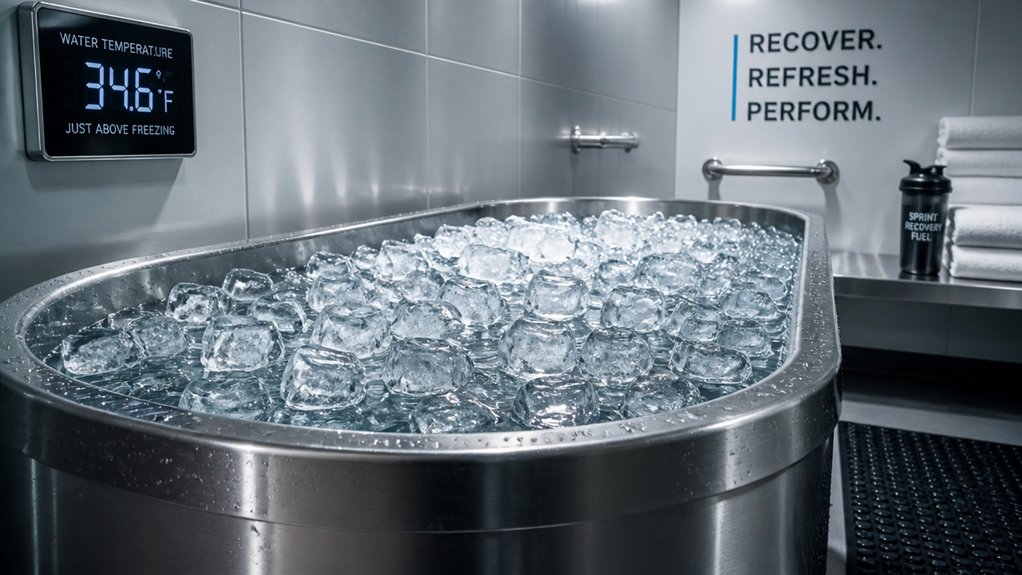
When is the best time for sprinters to take ice baths, and how long should they stay submerged? Ideally, you should take ice baths within two hours after training to optimize sprint recovery.
Best to take ice baths within two hours post-training for optimal sprint recovery.
Staying submerged for about 8 to 10 minutes in water between 10°C and 15°C helps reduce muscle soreness and inflammation, speeding up recovery. Using intermittent protocols—like two 10-minute sessions—can be more effective than one continuous immersion.
Avoid ice baths within 48 hours of competition, as they could decrease joint stiffness and impact performance. During intensive training blocks, 1-2 ice bath sessions per week can support neuromuscular recovery without hindering long-term adaptations. Additionally, having the right cold plunge setup with effective insulation and temperature control can make these sessions safer and more consistent.
Proper timing and duration enhance recovery and prepare you for your next sprint session.
What Temperatures Are Best for Effective Cold Water Immersion?
Optimizing recovery after sprint training depends heavily on choosing the right water temperature for immersion. To effectively reduce inflammation and muscle soreness, aim for water temperatures between 10°C and 15°C (50°F to 59°F). Immersion at these temperatures causes vasoconstriction, aiding in tissue recovery.
Consider these guidelines:
- Keep the water temperature around 10°C to 15°C for ideal cooling and safety.
- Avoid colder water below 10°C to reduce the risk of hypothermia and nerve damage.
- Maintain immersion for 8 to 10 minutes to balance effective cooling with comfort.
Always monitor the water temperature carefully, and choose a temperature that maximizes benefits without compromising safety during your sprint recovery.
How Often Should You Use Ice Baths to Maximize Gains?
How often you should use ice baths plays a crucial role in balancing recovery and training adaptations. Aim for 1-2 sessions weekly, focusing on high-intensity days. Overdoing it can blunt muscle strength and hypertrophy gains by suppressing necessary inflammation. Timing is key—you should prioritize ice baths 24-48 hours after intense workouts to enhance recovery without hindering subsequent performance. Longer or daily immersion beyond 10-20 minutes may reduce benefits and raise injury risks. Strategically periodize ice bath use during peak training or competitions to support sprint performance without impairing gains. Use this table to guide your routine:
| Frequency | Timing | Duration |
|---|---|---|
| 1-2 times/week | 24-48 hours post-workout | 10-20 minutes max |
| Focus on high-intensity days | Key recovery window | Avoid daily overuse |
| Periodize during training blocks | Optimize muscle recovery | Protect muscle strength |
Additionally, incorporating compression therapy with ice baths can further improve circulation and recovery efficiency.
How to Use Breathwork to Manage Cold Shock Responses Safely
Managing cold shock responses during ice immersion is essential for safety, and controlled breathwork plays a key role in this. By focusing on slow, steady, and long exhales, you activate your parasympathetic nervous system, helping to calm your body.
Focusing on slow, long exhales activates your parasympathetic nervous system, promoting calm during ice immersion.
Cold shock often causes rapid, involuntary hyperventilation and increased heart rate, which can be dangerous if uncontrolled. To manage this safely, you should:
- Practice diaphragmatic breathing, emphasizing extended exhalations.
- Maintain slow, deliberate breaths to help regulate your heart rate.
- Use breathwork techniques to gradually pass the initial shock phase, typically under a minute.
- Incorporate resistance training tools such as portable lung trainers or deep trainers to improve breath control and lung capacity over time.
This approach reduces panic, prevents hyperventilation dizziness, and minimizes cardiac stress, ensuring safe immersion and recovery.
Ice Baths Vs. Other Recovery Methods: Which Is Best for Sprinters?
Are ice baths the best recovery method for sprinters compared to other options? Ice baths, typically 8-10 minutes at 10-15ºC, effectively reduce muscle soreness and inflammation, speeding recovery following intense sprints. They provide greater core and muscle temperature reduction than cold showers, aiding lactic acid clearance and neuromuscular recovery.
While active recovery like light jogging or foam rolling supports muscle repair without hindering adaptive inflammation, ice baths can limit long-term strength and power gains if used frequently. For sprint performance recovery within 24 hours, ice baths help lower creatine kinase levels and perceived fatigue, making them ideal after races.
However, they should be used strategically, as routine use can impair training adaptations, unlike contrast or warm baths that promote ongoing progress.
What Are the Risks of Cold Water Immersion and How to Stay Safe?
Cold water immersion can pose risks like hypothermia and nerve damage if not done carefully. You should follow safety protocols, including limiting your time in the water and having warm options ready.
Consulting a doctor beforehand is especially important if you have existing health conditions.
Hypothermia and Nerve Risks
While cold water immersion can aid recovery, it carries risks like hypothermia and nerve damage if not done carefully. Prolonged exposure in ice baths, especially when the water drops below 50°F (10°C) or exceeds the recommended 10-20 minutes, increases the hypothermia risk.
Additionally, extreme cold can cause nerve damage by constricting peripheral nerves and reducing blood flow. To stay safe, you should:
- Limit immersion time and monitor water temperature constantly.
- Avoid submerging the face and extremities for too long.
- Maintain a safe environment with proper supervision and gradual temperature adjustments.
Proper Safety Protocols
To stay safe during cold water immersion, it’s essential to follow proper protocols that minimize health risks and maximize recovery benefits.
When taking ice baths, limit your immersion to 10-20 minutes in water between 50°F-59°F (10-15°C), and always monitor the cold temperature with a thermometer. Starting with shorter durations and higher temperatures helps build your cold tolerance safely, especially if you’re new to cold immersion.
Never immerse immediately or for long periods without gradually adjusting, as sudden exposure increases the risk of cold shock or hypothermia. Perform ice baths in a controlled environment with a companion present and guarantee a warm rewarming method afterward.
If you have cardiovascular issues or other health concerns, consult a medical professional before your training session.
Combining Ice Baths With Active Recovery for Peak Performance
Combining ice baths with active recovery techniques enhances sprint recovery by boosting circulation, reducing swelling, and accelerating the removal of metabolic waste. Ice baths cause rapid vasoconstriction followed by vasodilation, which, when paired with light jogging, stretching, or foam rolling, maintains elevated blood flow.
This combination:
- Promotes faster clearance of lactic acid, minimizing delayed onset muscle soreness (DOMS).
- Prevents stiffness and preserves joint elasticity, supporting better mobility.
- Improves neuromuscular function, enabling quicker readiness for subsequent sprints.
Integrating 8-10 minute ice baths at 10-15ºC with low-intensity active movements results in less fatigue and better sprint recovery within 24 hours. This combined approach optimizes performance and reduces injury risk.
Strategic Use of Cold Plunges During Sprint Competition Phases
Using cold plunges strategically during competition can boost your recovery and maintain peak performance.
Timing matters: apply ice baths during race days or high-volume blocks to optimize benefits and prevent fatigue. Misusing cold immersion, such as right before a race, may hinder your sprint mechanics, so plan accordingly.
Cold Immersions Enhance Recovery
Strategic cold immersions during sprint competitions can greatly enhance recovery by reducing muscle soreness and inflammation. Ice baths and cold plunges help lower levels of delayed onset muscle soreness (DOMS) and decrease muscle damage markers like creatine kinase.
When you immerse in 10-15ºC water for 8-10 minutes post-sprint, you improve neuromuscular performance, preserving sprint power across multiple sessions.
Key benefits include:
- Lower inflammation and swelling, promoting faster muscle repair.
- Preservation of joint elasticity and tissue stiffness for explosive movements.
- Support for sustained high-quality training by mitigating fatigue without harming muscle strength.
Using ice baths strategically during competition phases optimizes recovery, enabling you to maintain peak performance without risking injury.
Timing Critical for Performance
Timing your cold plunges during sprint competitions is essential for maximizing recovery and performance. Ice baths for recovery work best within two hours after a sprint, helping to reduce muscle soreness and speed up sprint recovery without impairing your next effort.
Carefully timed cold plunges during competition phases help maintain neuromuscular function and decrease fatigue across multiple events by minimizing inflammation. However, jumping into ice baths too close to your sprint—within 48 hours—can hinder performance, as cooling reduces joint stiffness and elasticity needed for peak biomechanics, increasing injury risk.
Strategic use of 8-10 minute ice baths at 10-15ºC after sprint sessions supports freshness and quality, ensuring you’re prepared for the next effort while avoiding long-term performance suppression.
Frequently Asked Questions
Do Ice Baths Actually Help With Recovery?
Yes, ice baths help your recovery by reducing muscle soreness, swelling, and inflammation after sprinting. They flush out lactic acid, lower muscle damage markers, and improve short-term performance, especially when used strategically after intense sessions.
Why Do NFL Players Take Ice Baths?
NFL players take ice baths to lessen muscle soreness, reduce inflammation, and speed up recovery. They help maintain strength and performance, decrease fatigue, and prevent injuries, allowing them to stay competitive and ready for upcoming games or practices.
How Long Should I Take an Ice Bath for Muscle Recovery?
You should aim for an ice bath lasting 10 to 20 minutes, ideally around 10 minutes, at water temperatures between 50°F to 59°F. Start with shorter durations and gradually increase to avoid cold shock and discomfort.
Are Ice Baths Good for Runners?
Yes, ice baths are beneficial for runners; they help reduce soreness, inflammation, and improve recovery within 24 hours. Use them strategically after intense sessions, but avoid overuse to prevent hindering long-term muscle strength and endurance gains.