Ice-bath training causes vasoconstriction, reducing blood flow and inflammation, which helps with recovery. It also activates your nervous system, boosting endorphin and noradrenaline levels for improved mood and focus. Cold exposure enhances circulation, strengthens blood vessels, and improves metabolic regulation, supporting long-term cardiovascular health. While it lowers muscle soreness and swelling, frequent cold baths can impact muscle growth. Keep exploring to discover how to optimize your cold therapy for better performance and health benefits.
How Cold Water Immersion Affects Muscle and Blood Vessels
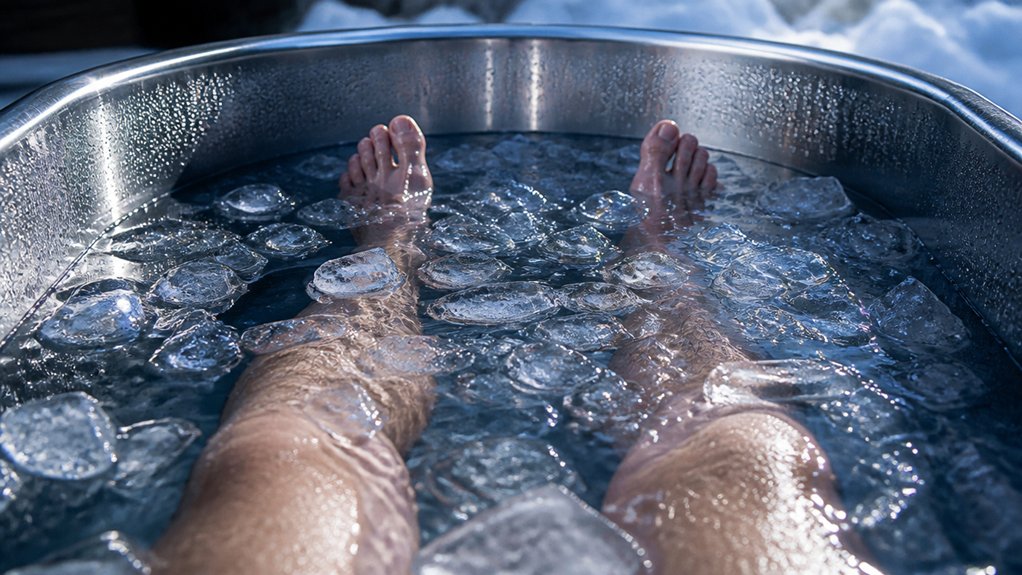
Cold water immersion (CWI) directly impacts your muscles and blood vessels by causing vasoconstriction, which narrows blood vessels and reduces blood flow to the immersed areas. This vasoconstriction limits swelling and inflammation, making Cold-Water Immersion effective for managing post-exercise muscle soreness.
As your skin, muscles, and core temperature drop, metabolic processes slow down, reducing muscle damage markers like creatine kinase. However, this constriction also diminishes nutrient delivery temporarily, which may affect muscle repair if prolonged.
When you exit the cold water, reactive vasodilation occurs, increasing blood flow again, aiding waste removal and nutrient transport. Understanding vasoconstriction helps you grasp how CWI influences recovery, as it balances short-term benefits with possible longer-term effects on muscle growth and adaptation. Cold retention techniques and advanced gel packs facilitate extended cold therapy, enhancing the overall recovery process.
Vasoconstriction and Reduced Inflammation From Cold Baths
When you take an ice bath, your blood vessels constrict, limiting blood flow to reduce swelling and inflammation in your muscles. This vasoconstriction helps lower inflammatory markers like creatine kinase, which are linked to muscle damage.
As a result, your tissue temperature drops, easing soreness and speeding up short-term recovery.
Blood Vessel Constriction
Ice baths induce vasoconstriction, causing blood vessels to constrict and reduce blood flow to muscles and surrounding tissues. This narrowing helps limit swelling and inflammation post-exercise by decreasing the permeability of blood vessels and preventing inflammatory marker leakage. When you immerse in cold water, the drop in skin and muscle temperature activates your sympathetic nervous system, promoting vasoconstriction. The extent of this response depends on water temperature, duration, and individual factors like body fat. As a result, blood flow to injured tissues slows, aiding recovery. To visualize this, consider the table below:
| Aspect | Effect | Explanation |
|---|---|---|
| Ice water temperature | Triggers vasoconstriction | Cold stimulates vessel narrowing |
| Duration of immersion | Maintains vasoconstriction | Longer exposure extends effect |
| Individual differences | Affects vasoconstriction intensity | Fat percentage, body size matter |
| Inflammatory response | Reduced blood flow helps limit swelling | Vasoconstriction minimizes inflammation |
Furthermore, understanding the insulation efficiency of ice baths can help optimize these physiological responses for better recovery.
Swelling and Inflammation Reduction
Vasoconstriction caused by ice baths directly reduces blood flow to muscles, helping to limit swelling and inflammation after intense exercise. This narrowing of blood vessels decreases the leakage of fluids into surrounding tissues, minimizing post-exercise edema and discomfort.
The reduced inflammation helps lower muscle soreness and decreases markers of muscle damage, like creatine kinase (CK). Cold immersion also suppresses inflammatory signaling pathways, further controlling swelling and inflammatory responses.
Additionally, vasoconstriction triggers a reduction in cortisol levels and perceived fatigue, supporting quicker recovery. By limiting excessive fluid buildup and inflammatory processes, ice baths provide an effective physiological response that helps you recover faster and experience less post-workout pain. Quiet operation and energy efficiency of chillers ensure consistent temperature regulation without disturbance, optimizing the recovery process.
Improved Circulatory Response
Cold immersion prompts blood vessels to constrict, reducing blood flow to muscles and helping control inflammation after exercise. This vasoconstriction limits swelling and decreases the buildup of metabolic waste products, supporting faster muscle recovery.
As blood vessels narrow, blood circulation becomes more regulated, promoting an improved circulatory response that benefits overall recovery. This process also minimizes markers of muscle damage, like creatine kinase, by reducing inflammation.
Additionally, vasoconstriction from cold baths can have a calming effect on your nervous system, aiding relaxation and recovery. By supporting better vascular control, ice baths help your body adapt to training stress, enhancing circulatory efficiency over time and reinforcing the physiological benefits of cold exposure. Incorporating medical-grade materials in ice wraps ensures safety and comfort during cold therapy, further optimizing recovery outcomes.
How Cold Exposure Boosts Endorphin and Noradrenaline Levels
When you expose yourself to cold water, your body releases endorphins that help reduce pain and lift your mood. This exposure also activates the sympathetic nervous system, increasing noradrenaline levels, which sharpens your focus and elevates your alertness. Incorporating adaptogens, known for supporting stress resilience, can further enhance these hormonal responses and promote balanced energy during cold plunge routines. Together, these hormonal responses boost your sense of well-being and resilience, supporting mental and physical recovery.
Endorphin Release Mechanisms
Exposure to cold water immersion activates your sympathetic nervous system, triggering a surge in neurochemicals like endorphins and noradrenaline. This process stimulates your hypothalamus and pituitary gland, promoting endorphin release that helps reduce pain perception and enhances your mood.
When you immerse in cold water, your body responds by increasing endorphin levels, creating a euphoric, runner’s high sensation. Cold water immersion also stimulates neurochemical pathways that buffer stress, contributing to feelings of well-being.
The heightened endorphin release not only helps with pain relief but also supports mental resilience during regular cold exposure. In this way, your body adapts by enhancing natural analgesic and mood-regulating mechanisms, reinforcing the psychological benefits of ice-bath training over time. Blood oxygen levels may also fluctuate during cold exposure, influencing overall recovery and adaptation.
Noradrenaline Activation Pathways
Immersing yourself in cold water activates your body’s cold shock response, which triggers the sympathetic nervous system to ramp up the release of noradrenaline (norepinephrine) both in the brain and bloodstream. Cold showers stimulate peripheral cold-sensitive receptors that send signals to the brainstem, prompting increased noradrenaline production. A well-designed cold plunge can also optimize energy efficiency, further supporting the body’s stress response regulation. This surge enhances alertness and improves mood by acting on alpha- and beta-adrenergic receptors in the central nervous system. Additionally, the elevated noradrenaline encourages endorphin secretion, helping to reduce soreness and elevate feelings of well-being. Regular cold exposure trains this activation pathway, boosting your resilience to stress and sharpening mental focus. Overall, cold showers effectively engage the noradrenaline activation pathways, promoting neurochemical balance and physiological resilience.
Mood and Stress Regulation
Cold exposure doesn’t just activate your nervous system; it also prompts the release of mood-boosting chemicals like endorphins and noradrenaline. During cold baths, your body responds by releasing these neurochemicals, which elevate your mood, boost alertness, and reduce feelings of anxiety and fatigue. This neurochemical surge helps you train your stress response and build mental resilience. Specifically: 1. Cold baths trigger endorphin release, fostering feelings of well-being and euphoria. 2. Noradrenaline production increases, sharpening alertness and reducing anxiety. 3. The combined effect improves stress regulation by training your nervous system to manage discomfort better. Over time, regular cold water dips may enhance mental toughness, supporting better mood regulation and stress resilience in everyday life. Cold Plunge Thermometers provide precise temperature control, ensuring consistent and safe exposure to maximize these physiological benefits.
Effects of Cold Water on Core Temperature and Thermoregulation
When you immerse yourself in ice water, your core temperature experiences a rapid, albeit transient, decline due to efficient conductive heat loss. This immediate cooling causes vasoconstriction, reducing blood flow to the skin and muscles. The cold shock response kicks in, triggering rapid breathing, increased heart rate, and elevated blood pressure as your body works to maintain homeostasis. Cold water in the range of 8–15°C influences cooling rates based on factors like body mass, fat percentage, and immersion time. Over time, repeated cold immersion can help your body better regulate core temperature and thermogenesis. These adaptations enhance your autonomic nervous system’s ability to fine-tune heat production and retention during subsequent cold exposures.
| Factor | Effect on Core Temp & Thermoregulation |
|---|---|
| Cold immersion | Rapid core temperature decline |
| Cold shock response | Immediate physiological adjustments (e.g., increased HR) |
| Body composition | Influences cooling rate |
| Immersion duration | Affects extent and duration of cooling |
| Repeated exposure | Improves thermoregulatory control |
Improving Circulation: Long-Term Vascular Benefits of Cold Water

Regular cold water immersion can lead to better circulation by causing vessel constriction followed by reactive dilation, which enhances vascular function over time.
This process promotes nitric oxide production, improving blood flow and vessel flexibility. As you persist with ice-bath training, your blood vessels adapt, supporting faster recovery and more efficient cardiovascular regulation.
Vessel Constriction and Dilation
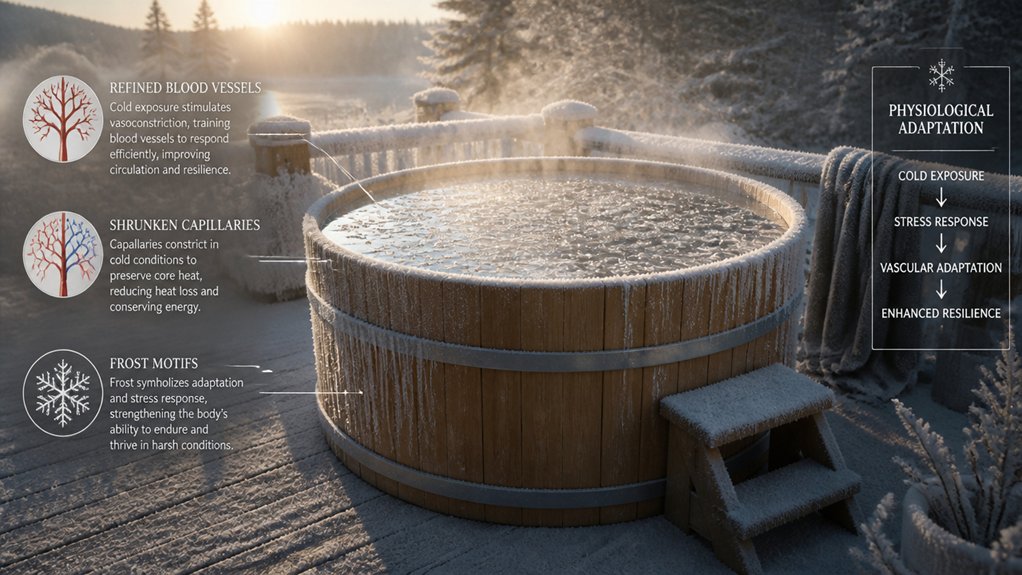
Vessel constriction and dilation are key physiological responses that underlie the circulatory benefits of ice-bath training. Cold water immersion triggers vasoconstriction, narrowing blood vessels to reduce blood flow to skin and muscles, helping preserve core temperature.
When you exit the ice bath, reactive vasodilation occurs, increasing blood flow and oxygen delivery to tissues, supporting nutrient transport and waste removal.
Over time, repeated cold exposure can improve vascular tone and endothelial function, making blood vessels more elastic and efficient. To visualize:
- Vasoconstriction reduces blood flow during immersion, protecting core temperature.
- Vasodilation rapidly increases circulation upon exit, enhancing tissue recovery.
- Long-term effects strengthen vessel flexibility and overall circulatory health, promoting cardiovascular efficiency.
Enhanced Blood Flow Dynamics
Cold water immersion repeatedly triggers vasoconstriction followed by reactive vasodilation, which actively enhances microcirculation and promotes better nutrient and waste exchange within tissues.
Through water immersion (CWI), your body adapts by improving vascular tone, leading to more efficient blood flow regulation. Cold exposure stimulates precapillary sphincters to contract and relax, boosting microcirculation and ensuring essential nutrients reach cells while waste products are removed effectively.
Habitual CWI has been linked to improved endothelial function, supporting long-term cardiovascular health. Enhanced blood flow from ice-bath training also helps reduce muscle swelling and inflammation, speeding recovery.
Over time, these adaptations strengthen your vascular responsiveness, helping your circulatory system better meet the demands of intense physical activity and overall health maintenance.
Vascular Remodeling Effects
When you consistently expose your body to cold water, it triggers adaptive changes in your vascular system that improve long-term circulation. These changes, known as vasculature remodeling, enhance vessel elasticity and function.
Cold water immersion stimulates precapillary sphincter activity, increasing microvascular blood flow regulation and capillary recruitment. Over time, repeated cold exposure prompts adaptive increases in capillary density and arterial compliance, leading to better peripheral circulation.
This remodeling process improves oxygen delivery and waste removal in your muscles. As a result, your circulatory system becomes more efficient. The key effects include:
- Vasculature remodeling enhancing vessel elasticity
- Capillary recruitment boosting microvascular flow
- Increased capillary density supporting improved circulation
Hormonal Responses and Stress Regulation During Cold Therapy
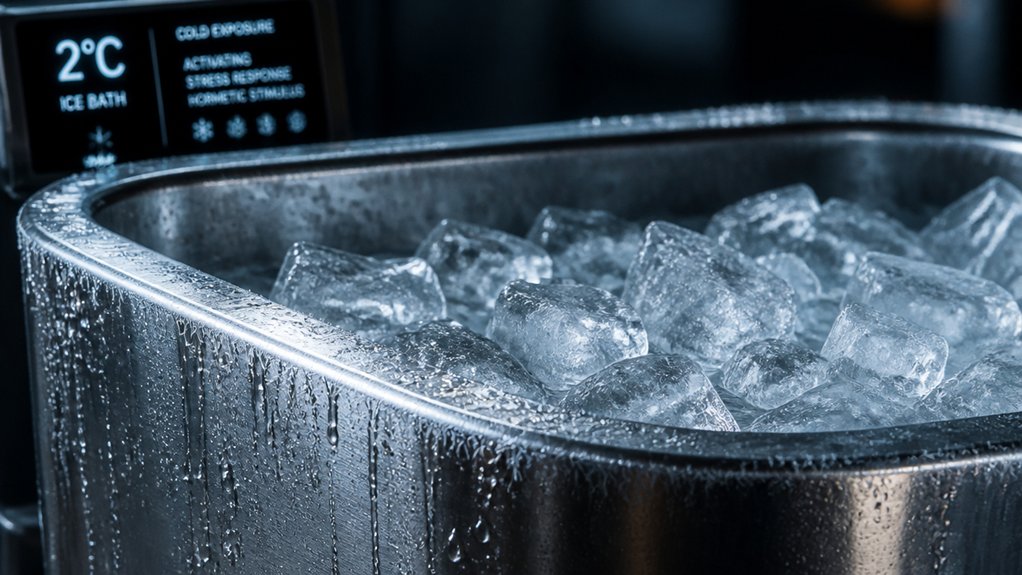
Ice-bath training elicits a complex hormonal response that plays a key role in stress regulation. When you immerse in cold water, your body responds by releasing catecholamines like norepinephrine, boosting alertness and activating your sympathetic nervous system. This creates a temporary spike in blood pressure and heart rate, but with consistent exposure, your body adapts, reducing cardiovascular stress over time.
Cold immersion also influences the hypothalamic-pituitary-adrenal (HPA) axis, decreasing cortisol levels and enhancing stress resilience. Additionally, circulating cortisol drops post-immersion, helping to lessen fatigue and soreness. These hormonal shifts not only support physical recovery but also contribute to mental toughness. Overall, cold exposure modulates hormonal responses, balancing stress, and fostering greater autonomic regulation.
Cold Exposure’s Impact on Fat Metabolism and Blood Sugar
Although research is still emerging, evidence suggests that cold exposure may influence fat metabolism and blood sugar regulation. Cold water therapy can activate brown adipose tissue, leading to increased calorie burning.
It may also trigger metabolic changes that boost alertness and reduce fatigue through endorphin and noradrenaline release, which could indirectly impact glucose metabolism.
Key points include:
- Habitual cold immersion may reduce and alter fat tissue, potentially benefiting cholesterol and blood sugar regulation.
- Cold exposure can stimulate body temperature regulation mechanisms, influencing how your body manages glucose.
- Small studies suggest cold water dips may improve energy use and cognitive performance, hinting at metabolic benefits.
More research is needed to confirm and understand these effects fully.
Cold Immersion for Muscle Repair and Injury Prevention
Cold immersion is a widely used method to accelerate muscle recovery and prevent injury after intense activity. It causes vasoconstriction, reducing blood flow, swelling, and inflammation, which aids short-term muscle repair. Cold water immersion lowers creatine kinase (CK) levels and perceived soreness, helping lessen muscle damage markers post-exercise. By decreasing inflammation, ice baths may reduce delayed onset muscle soreness (DOMS) and speed up your return to training. However, overusing cold baths can blunt necessary inflammation for long-term healing. Athletes with higher body mass or fat may need longer or intermittent water immersion sessions for effective results.
| Effect | Mechanism | Benefits |
|---|---|---|
| Vasoconstriction | Reduced blood flow | Swelling and inflammation decrease |
| CK Reduction | Lowered muscle damage markers | Faster recovery |
| Inflammation control | Short-term immune response | Less DOMS, quicker return |
| Overuse caution | Blunted long-term healing | Maintain balance |
| Individual need | Longer immersions for some | Optimized repair |
Nervous System Adaptations and Pain Perception With Regular Cold Use
Regular cold exposure can support your nervous system recovery by calming overactivation of the sympathetic branch and helping you manage stress responses during intense training periods.
Immersion in cold water trains your mental control and increases your tolerance to discomfort, leading to improved pain perception and resilience. Over time, this adaptation reduces the stress signals sent by your nervous system, which athletes notice as decreased perceived soreness and fatigue.
The cold shock response initially causes rapid breathing and a higher heart rate, but with consistent immersion, you regain breath control, stabilizing your autonomic nervous system.
Key Points:
- Cold immersion trains mental control and tolerance.
- It results in decreased perceived soreness and fatigue.
- Habituation enhances autonomic nervous system stability.
Does Ice Bathing Help Build Muscle or Increase Strength?
Ice bathing, often used to aid recovery, can have unintended effects on muscle building and strength development. Cold plunges and ice baths reduce inflammation and soreness, but this might come at a cost.
Studies show that cold water immersion immediately after resistance training can impair muscle growth by blunting satellite cell activation and suppressing key anabolic pathways like mTOR. Fyfe et al. (2019) found that cold exposure disrupted muscle-building mechanisms during a 12-week strength program.
While ice baths help manage training load, their frequent use could slow down hypertrophy and strength gains. In short, ice baths aren’t recommended if your goal is to build muscle or increase strength, though they may be useful for recovery without compromising long-term adaptation in some cases.
Long-Term Cardiovascular and Metabolic Benefits of Cold Water
Engaging in consistent cold water immersion can lead to meaningful improvements in cardiovascular and metabolic health over time. These long-term adaptations include:
- Enhanced vascular function through repeated vasoconstriction and vasodilation, boosting cardiovascular resilience.
- Metabolic benefits like better cholesterol and blood sugar regulation suggested by rodent studies, though human evidence is still emerging.
- Improved autonomic nervous system balance, shown by lowered resting heart rate and increased heart rate variability, indicating healthier cardiovascular control.
Cold water immersion triggers norepinephrine and endorphin release, boosting alertness and reducing stress.
Over time, these adaptations may help moderate acute responses like elevated heart rate and blood pressure, fostering better cardiovascular health and metabolic regulation through sustained long-term adaptations.
How Cold Plunges Change Recovery and Performance Timing
Cold plunges can greatly influence your recovery timeline and workout performance, especially depending on when you take them. Ice baths and cold exposures immediately after resistance training can impair muscle protein synthesis and hypertrophic signaling, as they reduce satellite cell activation and mTOR pathway activity.
Using ice baths more than once a day or after every training session may blunt long-term strength gains and muscle growth, particularly for less experienced athletes. To avoid disrupting muscle-building processes, ideal timing involves taking cold plunges at least six hours after training or on recovery days.
During competition weeks or high-intensity periods, ice baths can help reduce soreness, support nervous system recovery, and maintain performance without hindering adaptation.
Optimizing Cold Water Therapy: Tips for Individual Success
To get the most benefit from cold water therapy, it’s important to tailor your approach to your individual response and comfort levels. Beginners should start with leg-only exposure and shorter durations to safely build tolerance and reduce cold shock responses.
Aim for water temperatures between 9 to 12°C (48–54°F) and immersion times of 10 to 15 minutes, balancing recovery benefits and comfort. Schedule cold water immersion at least 6 hours after exercise or on rest days to avoid impairing muscle growth and strength.
Use accurate temperature monitoring tools and prepare with ice, towels, and warm clothing to stay safe. Maintaining a positive mindset during immerse sessions can boost perceived recovery and enhance mental resilience.
Frequently Asked Questions
What Are the Physiological Effects of Ice Baths?
Ice baths cause vasoconstriction, reducing swelling and inflammation, while lowering muscle damage markers and soreness. They reduce cortisol and fatigue, but can also blunt muscle growth signals, and trigger cold shock responses like hyperventilation and increased heart rate.
What Are the Physiological Adaptations in Response to Training?
You experience vasoconstriction, reduced inflammation, and improved recovery perception. Repeated cold exposure may enhance neuromuscular performance but can also hinder muscle growth, especially with long-term use, depending on individual traits like body composition.
What Are the Physiological Responses to Cold Plunge?
When you take a cold plunge, your body responds with vasoconstriction, increased heart rate, rapid breathing, and heightened blood pressure. These responses help reduce inflammation, lower muscle damage markers, and modulate recovery, but may temporarily hinder muscle growth.
Can Ice Baths Help With Lipedema?
Ice baths may help reduce swelling and inflammation from lipedema by improving blood flow and inducing vasoconstriction. However, since research is limited, you should consult healthcare providers before trying cold therapy for lipedema.