The length of your cold water immersion influences how your body reacts by shifting between parasympathetic and sympathetic activation. Short sessions trigger mood-boosting endorphins, calming responses, and cortisol drops, helping you manage stress. Longer immersions increase alertness, focus, and neuroprotective proteins like RBM3, promoting brain repair and resilience. As you explore, you’ll discover how adjusting the duration can optimize both immediate effects and long-term brain health benefits.
Why Does Cold Water Immersion Duration Matter?
Why does the duration of cold water immersion matter? Your immersion time influences the balance between activating your sympathetic nervous system and stimulating the parasympathetic system. Longer exposure increases sympathetic activity, boosting noradrenaline release, which helps with alertness and stress management.
However, extended immersion beyond a few minutes risks hypothermia and diminishes the health benefits like endorphin release. Shorter immersions, such as brief plunges, primarily trigger parasympathetic responses, aiding emotion regulation.
Maintaining ideal duration—ideally under 10 minutes—can effectively lower cortisol levels, with longer, gradual sessions enhancing stress resilience over time. Gradual acclimatization to increasing immersion times promotes tolerance and maximizes therapeutic effects, helping your body adapt safely while harnessing the neurophysiological benefits of cold water immersion. Incorporating proper thermal insulation can also improve safety and comfort during longer sessions.
How Short and Long Cold Water Exposures Affect Your Body
Short cold water exposures activate your parasympathetic nervous system, helping you feel calmer and more in control, while longer immersions stimulate your sympathetic system, boosting alertness and energy.
As you extend your time in the water, your body shifts from immediate mood perks to sustained metabolic and stress-resilience benefits.
Over time, gradually increasing exposure teaches your body to better handle thermal stress and enhances long-term temperature regulation.
Physiological Response Variations
The duration of cold water immersion profoundly influences your body’s physiological response.
During immersion in cold, short cold water face immersions activate the parasympathetic system through the diving reflex, promoting calmness and relaxation. These brief exposures primarily stimulate mood regulation without causing major stress responses.
In contrast, longer exposure times, especially full-body immersions at 10–15°C, activate the sympathetic nervous system, increasing heart rate, vasoconstriction, and metabolic rate. This triggers elevated noradrenaline and endorphin release, enhancing alertness and pain reduction.
Short immersions tend to lower cortisol levels temporarily, boosting stress resilience. However, extended durations risk cold shock and hypothermia, demanding careful acclimatization. The variability in physiological response hinges on immersion duration, dictating whether calming or stimulating effects predominate. Therapeutic features of modern cold plunge tubs, such as insulation and sanitation options, also play a role in how the body responds during and after immersion.
Depth of Stress Activation
How you experience cold water exposure depends largely on its duration, which determines how your body’s stress response is activated. Short immersions—like facial dips or quick showers—mainly trigger the parasympathetic nervous system via the diving reflex, promoting calm and relaxation. In contrast, longer full-body cold water immersions (several minutes in 10–15°C water) activate the sympathetic nervous system, increasing noradrenaline release, boosting heart rate, and metabolic rate for resilience. Extended exposure also heightens endogenous endorphin release, easing pain and uplifting mood. Repeat long immersions reduce cortisol levels, strengthening stress resilience. Here’s how immersion time influences stress activation:
| Immersion Time | Stress Response | Effect |
|---|---|---|
| Short | Parasympathetic activation, cold shock | Relaxation, calmness |
| Long | Sympathetic activation, cold stress | Increased arousal, endorphin release |
| Repeated | Reduced cortisol, enhanced resilience | Better stress management |
Long-Term Adaptation Effects
Repeated cold water exposures lead to lasting changes in your body’s stress response and overall physiology. Long-term repeated cold water exposure encourages adaptation from repeated immersions, which gradually reduces cold shock responses like gasping, lowering physical stress and cardiovascular risks.
During prolonged immersions, your body sustains norepinephrine elevation, boosting energy, focus, and stress resilience. Over time, gradual acclimatization enhances your physiological tolerance, enabling longer immersions without overwhelming shock.
This process also promotes parasympathetic regulation and reduces cortisol levels, supporting relaxation and recovery. Additionally, chronic cold exposure stimulates cold-shock proteins like RBM3, which may aid nerve repair and neuroprotection, reinforcing the benefits of sustained cold therapy.
Understanding the importance of adaptogen synergy can further optimize your stress adaptation and resilience during cold plunges. These adaptations reflect your body’s capacity to maximize responses through consistent immersion, shaping your overall resilience.
What Are the Neurochemical Changes With Varying Cold Water Durations?
Have you ever wondered how different durations of cold water immersion influence your brain chemistry? Short immersions, like facial dips or 2-3 minute full plunges, trigger a quick, temporary release of endorphins, offering immediate mood boosts.
Short cold water dips release endorphins instantly, boosting mood and alertness.
Longer immersions, around 10-15 minutes, activate the sympathetic nervous system, boosting norepinephrine levels that sharpen focus and stress resilience.
The key neurochemical responses include:
- Rapid endorphin surges for immediate relief
- Sustained norepinephrine increases for alertness and stress regulation
- Production of cold-shock proteins like RBM3, supporting neural repair
- Breathing techniques used during immersion can also influence these neurochemical changes, enhancing calming effects and stress management.
Duration impacts these responses, with longer exposures leading to more stable changes in stress hormones like cortisol and promoting brain health.
How Extended Cold Water Immersion Promotes Long-Term Brain Benefits
Extended cold water immersion stimulates the production of cold-shock proteins that support nerve cell repair and growth, promoting better brain health over time.
This longer exposure also activates neural pathways that enhance stress resilience and neuroplasticity. As you gradually adapt, you can strengthen these beneficial effects, leading to lasting improvements in brain function. fast-absorbing, non-greasy
Neural Repair and Growth
When you undergo prolonged cold water immersion, your body responds by activating neural repair mechanisms that promote long-term brain health.
During extended cold plunging, your brain increases production of RBM3, a cold-shock protein that aids neural repair and regeneration. This process strengthens synaptic connections and encourages neural plasticity, essential for brain resilience.
The neuroprotective effects of sustained immersion support brain health by:
- Boosting RNABinding Protein (RBM3) expression to prevent neuronal loss.
- Activating adaptive neural pathways that enhance neural plasticity.
- Reinforcing neural networks to slow neurodegenerative disease progression.
Additionally, exposure to cold water can influence recovery tracking by aiding the regulation of physiological responses, further enhancing neural repair and growth. These physiological responses from extended cold water immersion help promote neurorepair and growth, offering lasting benefits for brain resilience and overall neural health.
Duration and Brain Health
Prolonged cold water immersion enhances brain health by supporting long-term neural adaptations that go beyond immediate repair. The duration of CWI is essential, as extended cold exposure boosts production of cold-shock proteins like RBM3, which aid nerve cell repair and may slow neurodegenerative disease progression.
Longer immersions keep noradrenaline levels elevated, improving blood flow and enhancing energy, focus, and mood regulation. Repeated, extended sessions activate neural pathways that strengthen brain stress resilience and emotional regulation by continuously stimulating cold receptors.
Additionally, prolonged immersion induces endorphin surges that promote lasting mood improvements and pain relief. Gradually increasing the duration of CWI allows your body to safely adapt, maximizing these neurophysiological benefits without triggering excessive cold shock responses that could undermine your brain health gains. Incorporating proper waterproof timers can help monitor immersion time accurately and safely.
Is Too Much Cold Water Safe? Risks of Excessive Exposure
Is soaking in cold water for too long dangerous? Yes, excessive immersion time can pose health risks.
Prolonged cold water exposure (beyond 10 minutes) lowers your core body temperature, increasing hypothermia risk. It can also trigger a cold shock response, causing involuntary gasping and hyperventilation, which raises drowning danger.
Extending cold water immersion beyond 10 minutes risks hypothermia and triggers a shock response that can lead to drowning.
Extended immersion may cause heart arrhythmias or cardiac events, especially if you have preexisting issues.
To stay safe, follow these guidelines:
- Limit cold water exposure time and guarantee gradual acclimatization.
- Avoid water colder than 10°C without professional supervision.
- Prioritize safety guidelines to prevent hypothermia and other physiological stressors from prolonged exposure.
How to Optimize Your Cold Water Routine for the Best Results
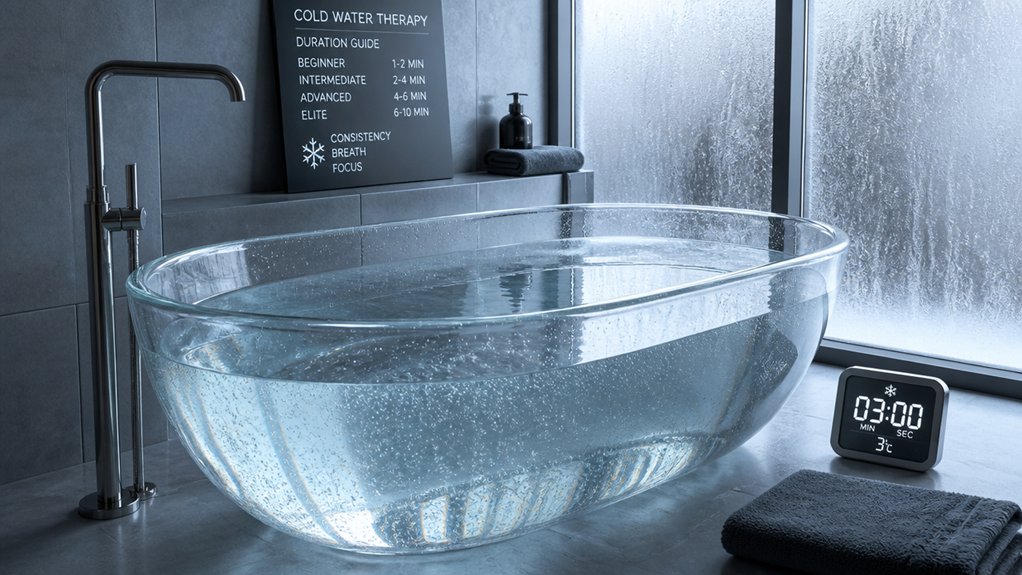
To get the most benefits from cold water routines, it’s essential to start with manageable exposure times and gradually increase both duration and cold intensity. Begin with short sessions—around 2 minutes—in slightly warmer water (~20°C/68°F) to promote adaptation and minimize the cold shock response.
Over time, extend your immersion time carefully, aiming for under 10 minutes to avoid hypothermia and support beneficial stress responses like noradrenaline release and endorphin production. Incorporate facial cold water or cold showers daily to trigger parasympathetic activation and enhance emotional regulation without risking overexposure.
Adjust your immersion frequency and duration based on your tolerance and health, prioritizing safety to prevent risks like cardiac arrhythmia or drowning, while optimizing overall therapy effects.
How Immersion Duration Changes Cortisol and Endorphin Levels
When you immerse yourself in cold water, the duration of exposure greatly influences your neurochemical response. Shorter sessions primarily trigger an acute endorphin release, providing immediate pain relief and mood elevation.
Short cold water immersions trigger quick endorphin boosts for immediate mood and pain relief.
Longer immersions, however, markedly alter cortisol and norepinephrine levels:
- Prolonged immersion (up to an hour) can reduce cortisol levels well below baseline, enhancing stress resilience.
- Extended exposure activates the sympathetic nervous system more intensely, promoting sustained norepinephrine increases.
- Endorphin surges are transient during immersion, diminishing with time and repeated sessions.
This means that, depending on your immersion duration, you’ll experience different neurochemical responses—initial endorphin spikes versus deeper cortisol modulation and sympathetic activation—shaping your overall therapeutic benefits.
Practical Tips for Safe and Effective Cold Water Immersion Sessions
Beginning cold water immersion requires careful planning to maximize benefits while minimizing risks. To guarantee safety, limit your cold water immersion sessions to under 10 minutes, which helps reduce hypothermia risk and adverse reactions.
Gradually acclimate by starting with shorter immersions around 2 minutes in warmer water (~20°C/68°F) before progressing to colder temperatures and longer durations. Enter the water slowly to manage the cold shock response, minimizing involuntary gasping and heart rhythm issues.
Full-body immersion should always be performed with supervision or a partner to guarantee immediate assistance if needed. Maintain water temperature no colder than 10°C (50°F), and incorporate relaxation techniques like progressive muscle relaxation to enhance comfort and safety throughout your session.
Frequently Asked Questions
What Is the 3 Month Rule in Mental Health?
The 3-month rule in mental health means that you often see noticeable improvements after about three months of consistent therapy. It reflects neural and behavioral changes that need time to consolidate, highlighting patience and persistence in your treatment journey.
How Effective Is Immersion Therapy?
Immersion therapy is highly effective, often producing faster and longer-lasting fear reduction than traditional methods. By engaging you emotionally through personalized VR scenarios, it enhances treatment outcomes and helps you transfer gains to real-world situations efficiently.
Does the Time Change Affect Your Mood?
Yes, the immersion time affects your mood; longer stays boost endorphins and reduce cortisol, leading to improved mood and resilience, while shorter immersions activate calming pathways for quick emotional shifts. Adjusting duration controls these effects effectively.
Can You Overdo Exposure Therapy?
Yes, you can overdo exposure therapy. Pushing too hard or spending too long can cause increased anxiety, distress, or sensitization. It’s essential to follow your therapist’s guidance to guarantee safe, gradual exposure that promotes healing without overwhelming you.