

You should ice your face 2–3 times per week, aiming for 1–2 minute sessions with no more than 30 seconds on each area. Daily icing isn’t recommended, especially for sensitive skin, to prevent irritation. If you experience redness or burning, reduce frequency and use gentle tools instead of direct ice contact. Keep your routine consistent and balanced—if you want tips to optimize your overall ritual, you’ll find helpful advice further below.
How Often Should I Ice My Face for the Best Results?
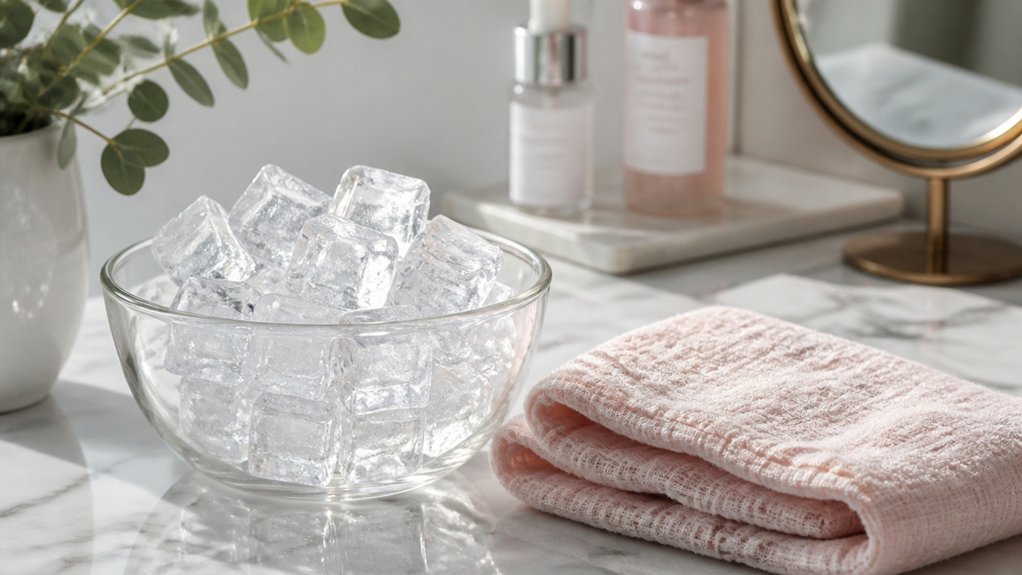
Wondering how often you should ice your face for the best results? Typically, icing 2–3 times per week works well for most skin types. Keeping each facial icing session limited to 1–2 minutes—no more than 30 seconds per area—prevents irritation or cold burns.
Cold therapy helps reduce puffiness, enhances skin’s appearance, and promotes healthy blood flow by constricting blood vessels. Integrating ice cubes into your skincare routine can invigorate your skin in the morning or soothe inflammation in the evening, especially if you have sensitive skin.
However, over-icing or daily prolonged sessions may lead to increased sensitivity or damage. Balance is key: stick to recommended frequency to enjoy benefits without risking adverse effects, making facial icing a safe, soothing addition to your skincare routine.
How Can I Adjust My Icing Routine if I Have Sensitive Skin?
If you have sensitive skin, adjusting your icing routine is essential to prevent irritation or discomfort. Always use wrapped ice cubes, cooled gel globes, or tools instead of applying ice directly to your skin, which can cause cold burns or damage. When icing your face, limit sessions to no more than 1–2 minutes, with no more than 30 seconds on any single area. Gently perform light, upward, outward strokes with minimal pressure, especially around delicate areas like under the eyes. To avoid overstimulation, reduce frequency to 1–2 times per week. If your skin feels red, burning, or more irritated, discontinue immediately. Incorporating passive insulation techniques can help regulate temperature and prevent skin overexposure.
How to Build a Consistent Facial Icing Routine?
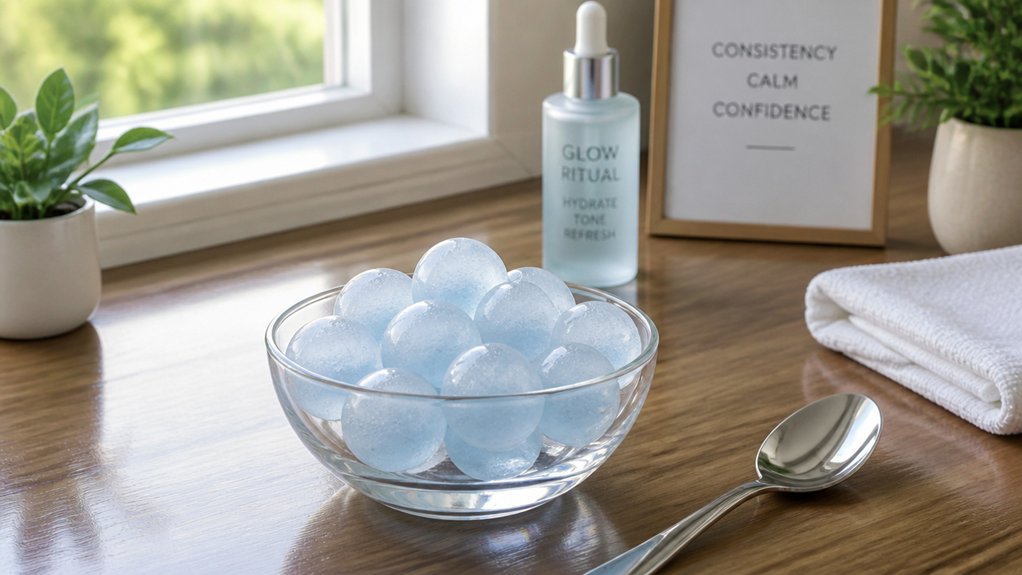
Creating a consistent facial icing routine starts with establishing clear, manageable steps that fit your schedule and skin’s needs. Begin with clean, makeup-free skin, and use chilled tools like an ice roller or wrapped ice cubes for comfort and effectiveness.
Limit each session to 1–2 minutes, with no more than 30 seconds on any area, to help reduce irritation. Applying ice with gentle, upward, and outward strokes, especially around delicate areas like under the eyes, boosts blood flow, helping to tighten the appearance of pores and soothe inflammation.
Perform this 2–3 times a week to maintain skin benefits without causing sensitivity. Using a floating thermometer to monitor water temperature ensures consistent and safe icing conditions, preventing potential overexposure. Follow each session with serums, eye creams, and moisturizer to maximize absorption and lock in hydration, enhancing firmness and radiance.
Frequently Asked Questions
Is Icing Your Face Three Times a Day Good?
Icing your face three times a day isn’t recommended; it can cause irritation, sensitivity, or cold damage. Instead, consider icing 2-3 times weekly for safe, effective puffiness reduction and pore tightening, always for 1-2 minutes max per session.
What Is the 20 20 20 Rule for Ice?
The 20 20 20 rule for ice involves applying ice for 20 seconds, then removing it for 20 seconds, repeating 20 times. This method guarantees safe cooling, prevents skin damage, and promotes healthy circulation during your cryotherapy sessions.
What Is the Best Interval for Icing?
You should ice for 1-2 minutes, no more than 30 seconds per area, 2-3 times weekly for facial skin, or as recommended post-surgery, avoiding over-ice to prevent irritation or damage. Adjust frequency based on your skin or recovery needs.
Is It Okay to Do Icing Every Day?
You can do icing every day if you limit sessions to 1-2 minutes, use gentle strokes, and avoid sensitive skin areas. However, most skin types prefer 2-3 times weekly to prevent irritation and maintain healthy skin.