For beginners, the best timing for ice baths is within 30 minutes to 2 hours after intense workouts to maximize recovery and reduce soreness. Avoid cold plunges immediately after light or moderate sessions, and skip them right before strength training. Morning baths can boost alertness and reduce lingering inflammation, while evening dips help relax muscles and improve sleep. Schedule cold plunges on rest days or after cardio, and keep sessions between 5-10 minutes at 50-59°F. Continue to explore how timing can work best for you.
Why the Timing of Your Cold Plunge Matters for Recovery
The timing of your cold plunge can greatly impact your recovery process. If you plunge immediately after an intense workout, you’ll likely reduce muscle inflammation by constricting blood vessels, which can speed up short-term recovery.
But diving in too soon might also dampen muscle adaptation and growth because it lessens the natural inflammatory response needed for muscle repair. Waiting 1-2 hours after your workout strikes a better balance—helping recovery while preserving long-term muscle gains.
Evening cold plunges can also improve sleep quality and support nervous system regulation. Just keep your cold exposure limited to 10-15 minutes at 50-59°F (10-15°C). This timing guarantees you get the benefits for recovery without overly stressing your body or hindering muscle development. Additionally, choosing a suitable cold plunge tub with features like insulation and temperature control can enhance the effectiveness of your recovery routine.
When Is the Best Time of Day to Take an Ice Bath?
Choosing the right time of day for an ice bath depends on your workout schedule and personal preferences. Taking one within 30 minutes after exercising can speed up recovery. Additionally, using a percussion massager with temperature therapy can enhance muscle relaxation and recovery during your bath. Temperature therapy options like heat and cold cycling rapidly within seconds to minutes, making it easier to customize your recovery session. Evening baths might aid muscle repair without disrupting sleep. Be mindful of timing to get the most benefit without compromising performance or comfort.
Morning or Evening Baths
Wondering when to take an ice bath for maximum benefit? The best time depends on your goals. Morning baths can boost recovery by reducing inflammation and muscle soreness from previous workouts, while giving you mental clarity. Imagine waking up refreshed, ready to tackle the day with increased alertness.
Evening baths, on the other hand, are perfect for calming your nervous system and promoting recovery after a busy day. Picture soaking in cold water as your muscles wind down, decreasing inflammation and easing tension.
To visualize:
- You wake up and immerse yourself to clear your mind.
- After intense training, you cool down to speed muscle repair.
- At day’s end, you relax and recover, preparing for tomorrow.
- Selecting the right joint-friendly design ensures comfort and safety during each session.
Choose morning or evening based on your recovery needs and daily schedule.
Post-Workout Timing
Timing your ice bath within 30 minutes to 2 hours after an intense workout optimizes muscle recovery and reduces inflammation. This post-workout timing helps your body constrict blood vessels, flush out metabolic waste, and decrease muscle soreness. Incorporating a cold plunge with insulation features can further enhance temperature retention and effectiveness during recovery. If you perform intense strength training or HIIT, taking an ice bath during this window can speed up recovery and prepare you for your next session. However, avoid ice baths immediately after light or moderate workouts, as they may interfere with inflammation that promotes muscle growth. Keep your ice bath around 10–15 minutes at 50–59°F (10–15°C) to maximize benefits. Proper timing during this post-workout window enhances your overall recovery process and guarantees you’re ready for subsequent training.
How Often Should Beginners Ice Bath for Maximum Benefits?
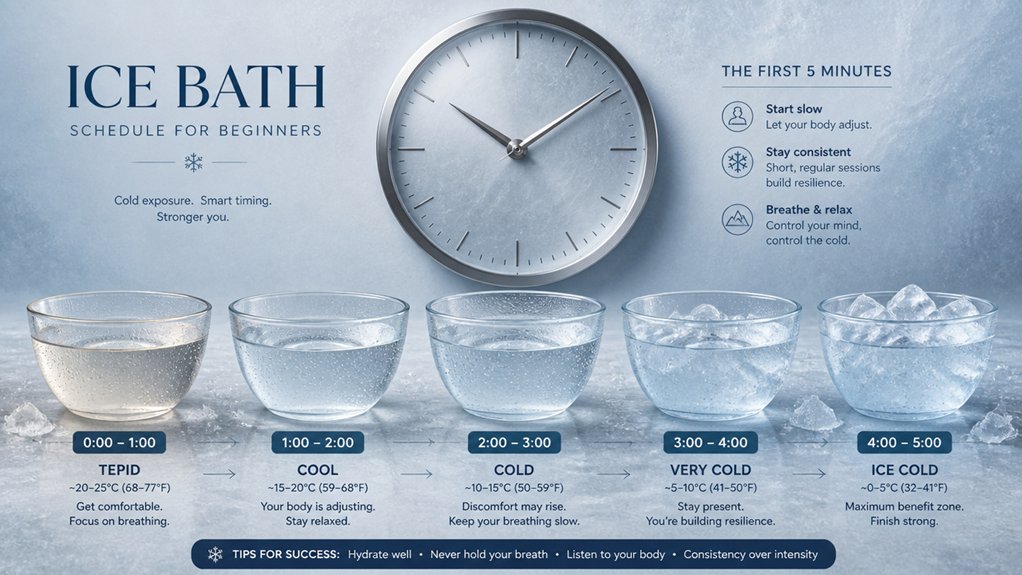
How often should beginners ice bath to get the maximum benefits without risking overexposure? Generally, 2-3 times per week is ideal for your body to recover and adapt without overloading it.
Picture your routine like this:
- Your first session cools down your muscles, easing inflammation.
- The second, spaced a few days later, helps continue recovery without fatigue.
- The third, in a new week, reinforces benefits while allowing your body time to heal naturally.
This frequency guarantees you avoid the risks of regular exposure, like numbness or decreased strength.
Keep your ice baths between 5-10 minutes at 50-59°F, and don’t forget, always consult a healthcare provider if you have circulation or heart concerns. Incorporating proper water treatment solutions can also help maintain water quality and safety during your sessions.
Scheduling Your Cold Plunge to Align With Your Workout
Scheduling your cold plunge at the right moments can greatly boost your recovery and performance. To maximize benefits, time your cold plunges after workouts and cooldown periods. This helps reduce muscle soreness and inflammation without impairing strength gains. Avoid cold plunges immediately before strength training, as they can decrease muscle strength and power output. Limit sessions to 5–10 minutes in water between 50–59°F (10–15°C) for peak recovery without overexposure. Incorporate cold plunges 2–3 times per week, depending on your workout intensity and recovery needs. Proper insulation of your plunge pool can also optimize temperature retention and energy efficiency during these sessions. Use the following guide to help schedule your cold plunges effectively:
| Timing | Purpose |
|---|---|
| Post-cardio or high-intensity | Normalize heart rate, reduce fatigue |
| After cooldown | Minimize soreness and inflammation |
| Rest days | Support overall recovery |
| Before strength training | Avoid, as it may hinder muscle performance |
Morning or Evening: Which Time Slot Works Best for You?

Deciding whether to work out in the morning or evening depends on your personal rhythm and daily commitments, but both options have distinct advantages.
A morning workout can boost your energy levels and metabolism, setting a positive tone for the day, while an evening session might help you feel stronger and more flexible, enhancing performance and endurance.
Consider these imagery scenarios:
- Visualize starting your day with an energizing workout, fueling your focus from morning onward.
- Picture unwinding after work, using exercise to melt away daily stress.
- Recognize that consistency in timing is key—choosing a time that fits your lifestyle guarantees you stick to your workout plan.
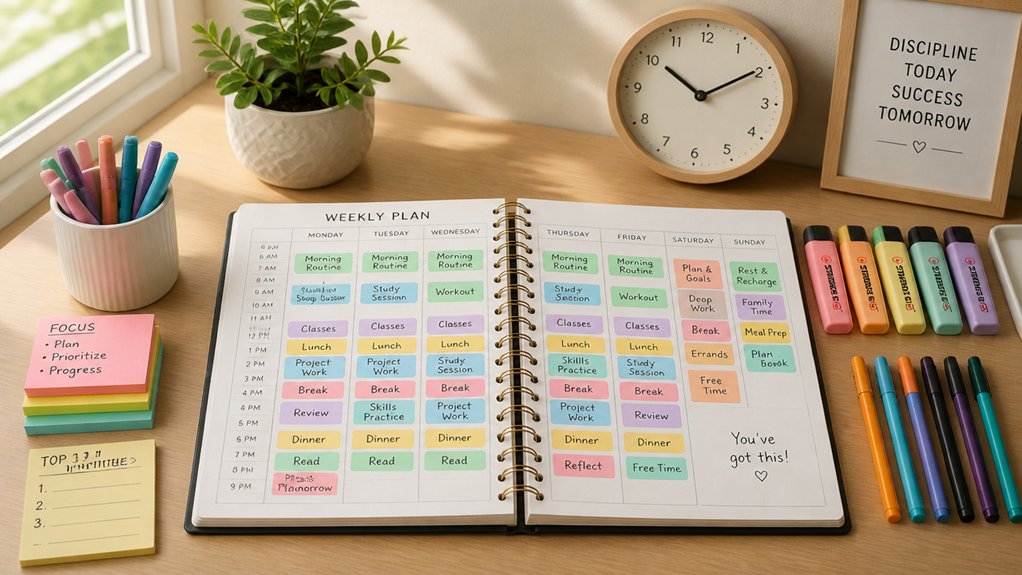
- Utilizing timers and alarms can help you stay on track and maintain your routine, regardless of whether you prefer morning or evening sessions.
Rest Days and Warm-Ups: When and How to Prepare for Cold Immersions
To get the most benefit from cold immersions, you should warm up with activities like brisk walking or gentle stretches beforehand to boost circulation and loosen muscles. Using a reliable cold plunge thermometer can help you monitor water temperature and ensure optimal conditions. Plan rest days or light activity afterward to support recovery and prevent overexertion. Avoid cold exposure immediately after intense workouts, giving your muscles time to cool down and prepare safely.
Optimal Rest Periods
Have you ever wondered how to best time your rest days and warm-up routines before cold immersions? Proper planning guarantees peak recovery and safety.
Your rest days should be spaced evenly—ideally 1-2 days per week—to give your muscles time to recover, reduce injury risk, and promote muscle recovery. During these days, gentle stretching or low-impact activities keep you mobile without stressing your muscles.
When preparing for cold immersions, a 5–10 minute warm-up with light cardio and dynamic stretches boosts circulation and flexibility, reducing muscle stiffness.
To visualize this:
- Rest days act as recovery havens, preventing overtraining.
- Scheduled warm-up activities prime your muscles for immersion.
- Proper rest and warm-up routines combine to enhance comfort and results during cold exposure.
Effective Warm-Up Techniques
Preparing your body properly before cold immersions involves effective warm-up techniques that boost circulation and increase flexibility. Spend five minutes engaging in dynamic movements like leg swings, ankle rotations, or a brisk walk. These activities activate muscles, elevate your core temperature, and promote proper form, which helps prepare your body for cold exposure.
A quick warm-up reduces the risk of injury and shock by gradually acclimating your body to temperature changes. Focus on movements that increase blood flow without tiring you out. Properly warmed-up muscles are better able to handle cold immersion, maximizing benefits and safety.
Incorporating these five-minute warm-up routines into your schedule guarantees you’re physically ready, reducing strain and making your cold exposure both effective and safe.
Precautions for Cold Exposure
Since cold exposure can place stress on your muscles and nervous system, it’s crucial to take precautions. First, make certain you have rest days, allowing at least 24 hours after intense workouts to prevent overloading your body and promote recovery.
Second, before immersing, perform a warm-up at room temperature with dynamic movements to boost blood flow and reduce injury risk.
Third, start with gradual cold exposure by beginning with brief durations of 1-2 minutes and slowly increase over time, helping your body adapt safely.
Throughout, remember to drink water to stay hydrated and support circulation. Following these steps will help you minimize risks like hypothermia and cardiovascular strain, making your cold immersion safer and more effective.
Adjusting Your Cold Plunge Timing as You Learn What Works for You
As you experiment with your cold plunge routine, it’s important to adjust the timing based on how your body responds.
For muscle recovery and after workouts, start by plunging immediately to help reduce inflammation and soreness. Watch how you feel afterward—if you notice significant relief and less stiffness, stick with that timing. Try beginning with 1-2 minute dips and increase duration gradually, but don’t exceed 10 minutes to avoid negative effects.
Some prefer morning cold plunges for alertness, while others opt for evening dips to relax and improve sleep. Pay attention to your energy levels, muscle soreness, and joint stiffness; these cues will help you fine-tune when to plunge, maximizing benefits tailored to your recovery needs.
Frequently Asked Questions
What Is the 3-3-3 Rule for Gym?
The 3-3-3 rule guides you to work out three times a week, focusing on three muscle groups per session, with three exercises each. It keeps your routine balanced, simple, and helps prevent burnout while promoting steady progress.
What Is the 5 5 5 30 Rule?
The 5 5 5 30 rule is a beginner workout guideline recommending 5 exercises, 5 sets each, with 5 reps per set, all completed within 30 minutes, helping you build strength efficiently and keep workouts manageable.
What Is the 5-3-1 Rule?
The 5-3-1 rule is a strength training program where you focus on progressing gradually by performing one main lift per workout at 85-95% of your one-rep max, increasing weight slowly over cycles for steady gains.
What Is the Best Workout Schedule for Beginners?
You should start with three full-body workouts weekly, focusing on compound movements with light weights, and add low-impact cardio on non-lifting days. Gradually increase intensity, rest adequately, and listen to your body’s recovery needs.