To optimize recovery, you should time your cold plunges based on your training and injury status. For general recovery, 2-3 sessions weekly at 10-15°C for 10-15 minutes work well, while acute injuries might need daily short dips. During maintenance phases, once or twice weekly suffices. Be mindful of overdoing it; signs like persistent soreness indicate you need to cut back. Keep learning more tips to balance recovery and performance effectively.
Understanding the Benefits of Cold Plunge Therapy for Athletes
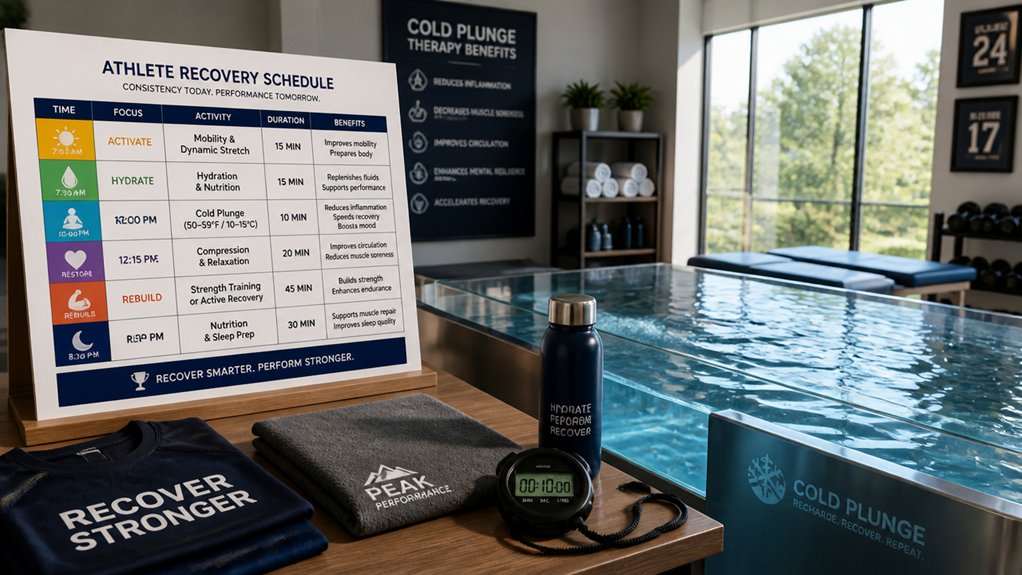
Cold plunge therapy offers athletes a quick and effective way to reduce muscle inflammation and soreness after intense workouts. By constricting blood vessels, cold plunge therapy lessens metabolic activity in tissues, speeding up muscle recovery. It also helps decrease soreness, so you can return to training sooner. Using an appropriate temperature control system ensures consistent and safe immersion temperatures during each session. When done correctly, cold plunge therapy can modestly improve endurance performance by supporting faster recovery between sessions. However, timing is key—immediate use may hinder muscle adaptation, so it’s best after the initial recovery window. Ideal rest involves cold plunges lasting between 5 to 15 minutes at temperatures of 10-15°C (50-59°F). Combining cold plunge therapy with active recovery strategies and proper nutrition boosts overall recovery, helping you manage recovery time effectively during heavy training periods.
How Often Should Athletes Cold Plunge? Best Practices
You should limit cold plunge sessions to 2-3 times per week and keep each session between 10-15 minutes at temperatures of 10-15°C. Capacity, Size, and Joint-Friendly Design considerations can enhance comfort and safety during recovery. Timing is key—post-exercise cold plunges help recovery, but overdoing it can hinder long-term gains. Pay attention to training intensity to optimize benefits without impairing performance.
Optimal Cold Plunge Timing
How often should athletes incorporate cold plunges into their recovery routine? Ideally, you should cold plunge 2-3 times per week, focusing on recovery days or after intense training sessions. This helps reduce muscle soreness and inflammation without hindering long-term adaptation. Keep sessions between 10-15 minutes at 10-15°C (50-59°F). Cold plunges immediately post-exercise can accelerate recovery but should be limited during heavy training blocks to avoid disrupting muscle growth. Active protocols—alternating cold immersion with movement—are effective for stimulating circulation.
| When to Cold Plunge | Benefits |
|---|---|
| After intense workout | Reduce muscle soreness |
| On recovery days | Prevent inflammation |
| Post-competition | Enhance quick recovery |
| During training blocks | Avoid impairing muscle growth |
| When feeling muscle fatigue | Promote circulation and healing |
Frequency for Recovery Benefits
To maximize recovery benefits without compromising training progress, athletes typically should incorporate cold plunges about 3-4 times per week. Cold water immersion helps reduce inflammation and muscle soreness, aiding recovery but must be timed properly. Using an effective temperature control system, such as a Wi-Fi-enabled chiller with a digital interface, ensures consistent cold immersion sessions. Sessions lasting 10-15 minutes at 10-15°C (50-59°F) are ideal for effective results. Cold plunges performed soon after training, ideally within 30 minutes, help mitigate metabolic stress and inflammation, speeding up recovery.
However, overdoing cold water immersion or extending sessions can blunt anabolic signaling and impair muscle adaptation, negatively affecting long-term training gains. Combining cold plunges with active recovery on non-training days promotes physiological balance. With proper frequency, cold water immersion becomes a valuable tool for athletes seeking to optimize recovery without hindering training progress.
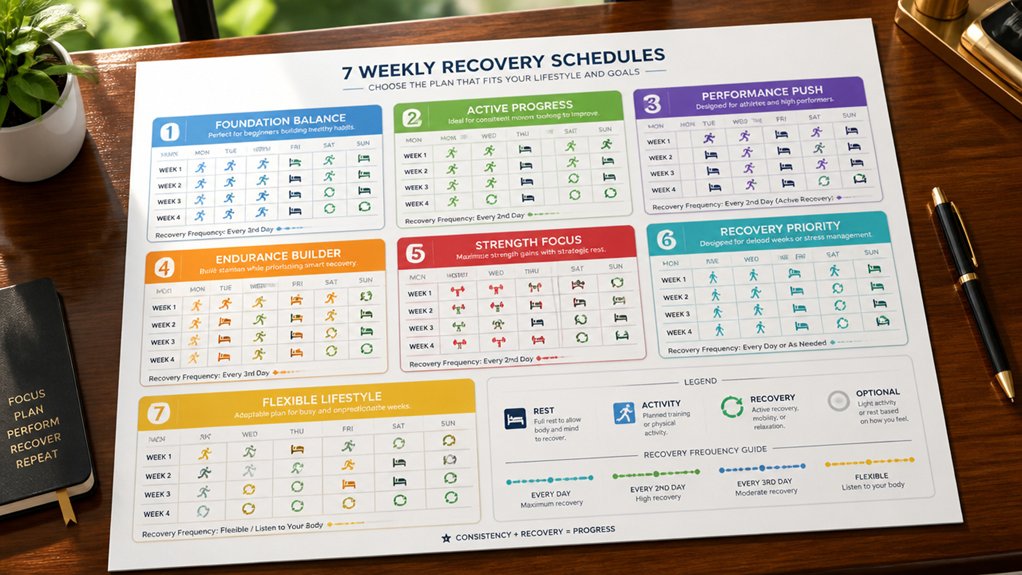
7 Cold Plunge Schedules for Different Recovery Phases
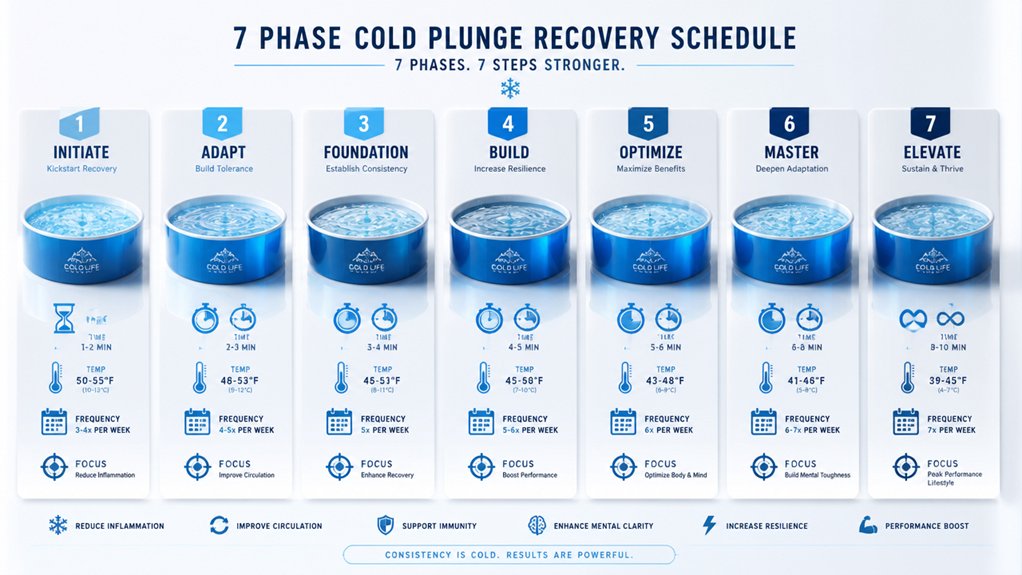
Cold plunge schedules vary depending on the recovery phase, with each phase requiring a tailored approach to maximize healing and mitigate setbacks.
In the acute injury phase, you’ll want to do 3-5 cold plunge sessions daily to rapidly reduce inflammation and pain.
During the subacute or tissue repair phase, 2-3 sessions weekly for 2-4 weeks support tissue healing, promote angiogenesis, and aid collagen synthesis without disrupting recovery practices.
In the maintenance and remodeling phases, 1-2 cold plunge sessions weekly help strengthen tissue and vascularization while preventing long-term adaptation issues.
For chronic injuries, extend cold plunge frequency to 2-3 times weekly over 6-12 weeks, maintaining anti-inflammatory benefits.
Each cold plunge typically lasts 10-15 minutes at 10-15°C, balancing therapy and tolerance.
Cold Plunge Water Treatment Solutions can be effective tools to ensure water quality and safe, consistent therapy conditions.
Signs You’re Overdoing Cold Plunges and When to Cut Back
While cold plunges can be an effective recovery tool, overdoing them can actually hinder your progress. If you notice prolonged muscle soreness despite adequate Rest, it could be a sign you’re overusing cold immersion.
A drop in training performance, such as decreased strength or endurance, also indicates you’re cutting into your muscle’s healing process. Feeling unusually fatigued even after Rest suggests you’re hindering recovery rather than supporting it.
Cold plunge sessions should be limited during muscle-building phases, as excessive exposure may blunt anabolic signals and satellite cell proliferation, impairing long-term adaptation. Monitor your body’s feedback, including recovery quality and workout intensity.
When inflammation processes necessary for adaptation are compromised, it’s time to cut back, allowing your muscles to recover naturally and optimize performance. Utilizing reliable recovery tracking apps can help you stay within safe and effective immersion schedules.
How to Customize Your Cold Plunge Routine for Injury and Performance
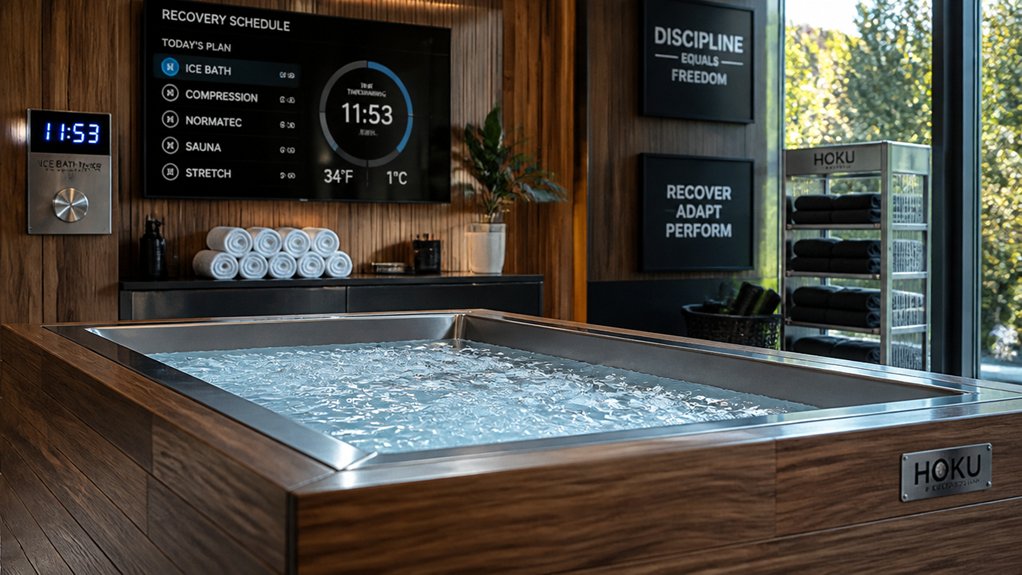
To tailor your cold plunge routine effectively, you need to take into account the timing, temperature, and duration based on your injury or performance goals. Monitoring how your body responds helps you adjust frequency and intensity appropriately, ensuring ideal recovery or enhancement. By aligning these factors, you can create a personalized routine that supports your specific needs. Incorporating cold-weather-optimized battery technology can also ensure reliable device performance during prolonged cold exposure.
Optimal Timing Strategies
Timing is essential when customizing your cold plunge routine to maximize benefits for injury recovery or athletic performance. Scheduling sessions on rest days or low-intensity days supports performance and recovery by promoting inflammation reduction without compromising muscle adaptation.
Limit cold plunge sessions to 10-20 minutes at temperatures around 10-15°C, ensuring you don’t blunt anabolic signaling or satellite cell activity.
For injury management, apply cold plunges immediately after exercise or injury to enhance tissue repair. During high inflammation or soreness, increase frequency or duration; in heavy training phases, reduce use to maintain ideal load management.
Careful timing helps regulate metabolic rate and inflammation levels, allowing you to recover faster while still advancing your training goals.
Choosing the right chillers with appropriate filtration systems and precise temperature control can further optimize your recovery routine.
Temperature and Duration
Ideal temperature and duration are essential for tailoring your cold plunge routine to support injury recovery and athletic performance. Maintaining a cold plunge temperature between 50°F to 59°F (10°C to 15°C) offers peak recovery benefits without causing excessive vasoconstriction.
The use of advanced temperature control features, such as digital LCD touchscreens and high-performance chillers, ensures precise and consistent water temperature management. Duration should typically last 10 to 15 minutes to reduce muscle inflammation and soreness effectively. For injury recovery, shorter sessions of 5-10 minutes at colder temperatures help control inflammation without impairing tissue repair.
During intense training or competitions, sticking to 10-15 minute cold plunges at moderate cold temperatures fosters faster recovery without blunting anabolic signals. Customizing your routine by adjusting temperature and duration guarantees you maximize benefits while minimizing risks like hypothermia or nerve damage.
Monitoring Recovery Response
Monitoring your recovery response is essential for customizing your cold plunge routine effectively, especially when balancing injury healing and athletic performance. You should track subjective recovery markers like muscle soreness, fatigue, and performance to determine if your cold plunge sessions need adjustment.
If you experience delayed muscle repair or decreased neuromuscular function, consider increasing rest intervals or reducing frequency. Use cold plunges post-high-intensity workouts to support metabolic recovery but avoid routine use during periods focused on long-term adaptation, as it can blunt anabolic signals.
Additionally, integrating wearable data like heart rate variability and sleep quality with your subjective feedback helps fine-tune your routine. This approach guarantees peak recovery, maintaining performance while preventing overexposure and injury.
Common Mistakes in Cold Plunge Scheduling (And How to Avoid Them)
Are you inadvertently hindering your recovery by misjudging how often or when to use cold plunges?
Frequent cold plunge sessions, especially immediately after training, can blunt anabolic signaling and delay muscle repair, hindering training adaptations.
To avoid this, consider these common mistakes:
- Using a cold plunge daily right after training—this can impair recovery and muscle growth.
- Scheduling cold plunges during phases focused on hypertrophy or strength—this may interfere with satellite cell activity.
- Not timing cold plunge sessions strategically—ideal times are after competitions or intense endurance sessions, with sessions lasting 10-15 minutes at 10-15°C.
Integrate cold plunges thoughtfully within your broader recovery plan, balancing their benefits without sacrificing your long-term training gains.
How to Combine Cold Plunges With Other Recovery Techniques
To maximize your recovery, it’s important to combine cold plunges with other techniques tailored to your training and rest days. Cold plunges are most effective immediately after exercise to reduce muscle soreness and inflammation, but should be balanced with methods that discourage blunting long-term adaptations.
On rest days, incorporate active recovery like light mobility exercises or yoga to boost circulation and support tissue repair without overloading muscles. Following a cold plunge, practice breathwork at six breaths per minute to help regulate your autonomic nervous system, promoting relaxation.
Additionally, pairing cold plunges with passive recovery methods like massages or Epsom salt baths can ease muscle tension and enhance relaxation. Integrate these techniques within a periodized plan to optimize rest, recovery, and training outcomes.
Frequently Asked Questions
What Is the 4-2-1 Rule for Athletes?
The 4-2-1 rule guides your training by alternating four days of moderate to high-intensity work, two active recovery days with low-intensity activities, and one full rest day to optimize recovery, adaptation, and prevent injuries.
What Is the Recovery Routine for Athletes?
You should include at least one full rest day every 7-10 days, incorporate active recovery like light movement, and listen to your body’s signs of fatigue. Adjust your routine based on your training load and how you feel.
Is Recovery for Athletes a Legit Site?
Yes, Recovery for Athletes is legit; it’s backed by sports science, expert insights, and reputable studies. You can trust its tailored, practical recovery advice, including resting schedules and active recovery strategies, to support your athletic performance effectively.
How Long Should You Rest Between Sessions for a Muscle Group Question 7 Options 1 8 Hours 2 12 Hours 3 24 Hours 4 48 Hours?
You should rest a muscle group for 24 to 48 hours between sessions. Shorter periods, like 8 or 12 hours, aren’t enough after heavy training, but 48 hours gives full recovery and helps prevent overtraining.