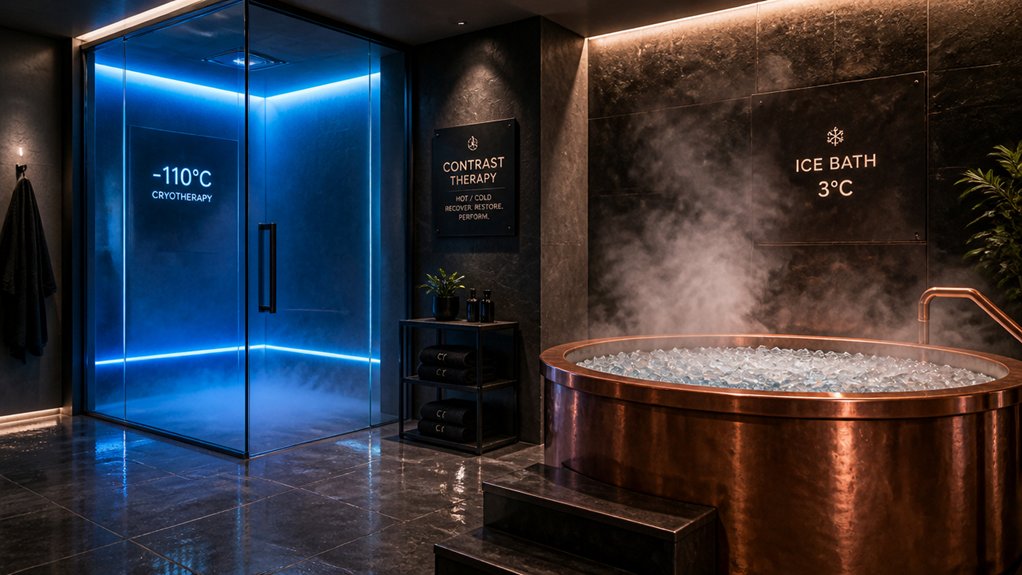
Timing hot and ice contrast therapy correctly maximizes circulation, muscle recovery, and inflammation control. You should spend about 3-4 minutes in the heat and 1-2 minutes in the cold, repeating these cycles 3-5 times. Ending with cold immersion helps reduce swelling and stabilize vascular tone. Proper timing prevents discomfort and overstimulation, ensuring safe and effective results. Keep exploring how to optimize your sessions for better recovery and performance.
What Is Contrast Therapy and How Does Timing Matter?
Have you ever wondered how alternating heat and cold can boost your recovery? That’s the principle behind contrast therapy, which involves switching between hot and cold exposures to improve circulation and muscle repair. Many infrared saunas feature full-spectrum infrared heat, combining red, near, mid, and far-infrared to optimize therapeutic benefits. Timing is essential—typically, you’ll spend 3-4 minutes in heat (around 100-110ºF) then 1-2 minutes in cold (50-59ºF), repeating this cycle 3-5 times during a 15-20 minute session. Proper timing guarantees heat relaxes your muscles and dilates blood vessels, while cold constricts blood flow, reducing inflammation and promoting recovery. Ending with cold after intense activity helps manage swelling. Knowing how to time these exposures precisely makes contrast therapy an effective tool for post-exercise recovery, enhancing circulation and minimizing soreness.
Why Do Proper Duration and Timing Boost Circulatory Benefits?
Timing and duration are key to maximizing blood flow during contrast therapy, so sticking to ideal cycles of 3-4 minutes heat and 1-2 minutes cold is essential.
When you repeat these cycles 3-5 times within 15-20 minutes, you boost circulation and improve waste removal while fueling tissue recovery. Proper temperature balance, especially the cold phase at 50-59°F, guarantees effective vascular response without causing numbness or reduced inflammation control.
Optimal Cycle Lengths
Optimizing the cycle lengths in contrast therapy is essential for maximizing circulatory benefits. The ideal peak contrast therapy cycles involve 3-4 minutes of heat followed by 1-2 minutes of cold, effectively harnessing vasodilation and vasoconstriction.
Repeating 3-5 cycles maintains consistent vessel pumping and promotes improved blood flow. Precise timing intervals guarantee the vessels fully expand during heat and constrict during cold, creating a rhythmic circulatory boost.
Short heat cycles under 3 minutes may not relax muscles or increase circulation effectively, while extended cold exposure over 2 minutes can cause discomfort without added benefit. Proper cycle lengths balance circulation enhancement with safety, preventing overstimulation and vascular strain.
This approach maximizes tissue oxygenation and waste removal, supporting faster recovery and reduced soreness. The use of appropriate heat pad settings ensures safe and effective temperature control during each phase of therapy.
Timing for Maximum Effect
Proper duration and timing during contrast therapy are essential for maximizing circulatory benefits because they guarantee that your blood vessels undergo effective vasodilation and vasoconstriction cycles. When you follow the recommended timing—about 3-4 minutes of heat followed by 1-2 minutes of cold, repeated 3-5 times—you optimize the vascular pump effect, enhancing blood flow.
This careful timing prevents tissue damage and maintains comfort, ensuring effective stimulation of circulation without pain or numbness. Finishing with cold helps control inflammation, while applying heat before or between sessions promotes muscle relaxation and joint mobility.
Keeping sessions within 15-20 minutes balances the benefits of reducing delayed onset muscle soreness (DOMS) and boosting recovery, without overstressing your cardiovascular system.
Temperature Balance Importance
Maintaining the correct temperature balance during contrast therapy is essential because it directly influences how effectively your blood vessels expand and contract. When you use contrast baths with heat and cold, controlled durations—such as 3-4 minutes of heat followed by 1-2 minutes of cold—maximize the pumping effect, promoting blood flow and waste removal. Keeping heat between 100-110ºF and cold between 50-59ºF prevents tissue damage while enhancing circulation. Ending with a cold phase helps manage inflammation and stabilize vascular tone after repeated heat exposure. Applying precise timing and temperatures avoids overstressing your cardiovascular system, supporting a safe, rhythmical expansion and contraction of blood vessels. This balance guarantees you get the full circulatory benefits without risking discomfort or injury. Proper timer accuracy ensures your sessions stay within optimal limits.
How Do Heat and Cold Durations Affect Muscle Recovery?
The length of heat and cold exposures directly influences how well your muscles recover. Short, controlled durations optimize circulation, reduce inflammation, and prevent overstimulation or numbness. Additionally, utilizing infrared heat therapy can penetrate deeper tissues for more effective relief.
Optimal Temperature Timing
How you time heat and cold exposures during contrast therapy greatly impacts muscle recovery. Proper timing guarantees you maximize benefits from alternating hot and cold, such as improved circulation and reduced muscle soreness.
Typically, 3-4 minutes of heat increases blood flow, followed by 1-2 minutes of cold to reduce inflammation. Repeating this cycle 3-5 times enhances circulatory pumping and aids waste removal. Cold immersion around 1 minute effectively diminishes inflammation without causing discomfort. Ending with a cold phase after intense exercise limits muscle swelling and promotes quicker recovery.
Proper temperature timing guarantees you get the most from contrast therapy, balancing heat’s muscle-relaxing power with cold’s inflammation-controlling effects.
- Hot durations dilate vessels, relax muscles, and expedite waste removal
- Cold phases constrict vessels, reduce inflammation, and numb soreness
- Alternating hot and cold infrared heat optimizes circulation and tissue repair
- Timing cold carefully minimizes discomfort while reducing muscle swelling
Effects of Duration Length
Have you ever wondered how the length of heat and cold applications influences muscle recovery? Longer durations can enhance benefits, but too much might cause discomfort. For heat therapy, 3–4 minutes promotes vasodilation, increasing blood flow and relaxing muscles. Cold therapy for 1–2 minutes induces vasoconstriction, reducing inflammation and numbness. Alternating between hot and cold cycles for 15–20 minutes optimizes waste removal and reduces delayed onset muscle soreness (DOMS). Using advanced infrared heating technology can provide deeper heat penetration, further improving recovery outcomes.
What Is the Right Cold Exposure Time to Avoid Overcooling?
Determining the right cold exposure time during contrast therapy is essential to maximize benefits while minimizing risks. Typically, a cold phase lasts 1 to 2 minutes, allowing you to prompt vasoconstriction without overcooling your tissue.
Keeping water temperatures between 50°F and 59°F (10°C to 15°C) strikes a balance—strong enough to reduce inflammation and promote muscle recovery, but not so cold that it causes numbness or prolonged stiffness.
Short cold durations prevent excessive tissue cooling that can lead to increased muscle stiffness or counterproductive inflammation. Limiting time also reduces risks like dizziness, nerve pain, or circulatory issues.
Ending with a brief cold phase guarantees inflammation is managed without overly dropping your body or localized tissue temperature.
- Immerse in water just long enough to feel the cold but not numbness
- Use water within the recommended temperature range for peak results
- Avoid prolonged cold exposure that can increase muscle stiffness
- Limit cold phases to 1-2 minutes to prevent overcooling and adverse effects
- Incorporate appropriate insulation, such as neoprene or insulated tubs, to maintain consistent temperatures and enhance comfort during cold exposure.
How to Balance Hot and Cold for Maximum Muscle Relaxation
Balancing hot and cold during contrast therapy is key to maximizing muscle relaxation and recovery. To achieve this, alternate 3-4 minutes of heat (100-110ºF) with 1-2 minutes of cold (50-59ºF). Starting with heat loosens muscles and increases blood flow, while cold constricts vessels, reducing inflammation and pain due to tightness. Ending with cold helps prevent swelling and manage inflammation after intense activity. To optimize benefits, maintain hot cycles slightly longer than cold, but avoid overexposure that could cause skin irritation or nerve discomfort. Use the following guide:
| Phase | Duration | Purpose |
|---|---|---|
| Hot | 3-4 mins | Loosen muscles, increase blood flow |
| Cold | 1-2 mins | Reduce inflammation, dull pain due to |
| Repeat | Several cycles | Improve circulation and recovery |
| Final Step | Cold | Control swelling and inflammation |
Additionally, incorporating temperature regulation helps enhance the effectiveness of contrast therapy by ensuring optimal safety and comfort throughout the process.
How Long Should Each Contrast Bath Session Last?
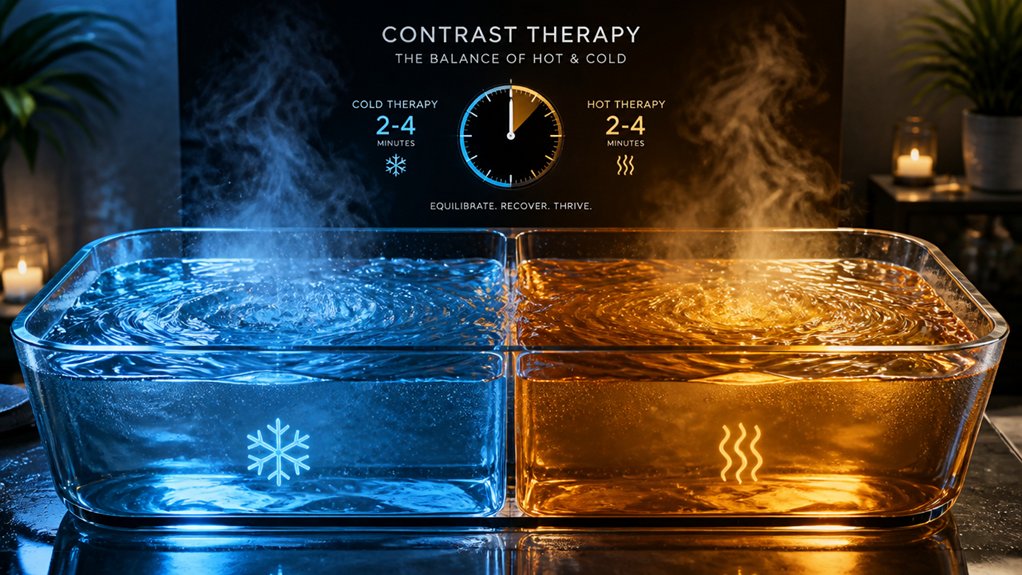
A typical contrast bath session usually lasts between 15 and 20 minutes, during which you repeat cycles of hot and cold immersions to promote circulation and aid recovery.
Each hot water phase should last about 3 to 4 minutes, while the cold plunge lasts 1 to 2 minutes. This cycle of hot cold contrast therapy is usually repeated 3 to 5 times for best results.
Ending with a cold immersion helps reduce inflammation and swelling after physical therapy or intense activity. To guarantee safety and effectiveness, maintain water temperatures within the recommended range—hot water around 100-110°F and cold water at 50-59°F.
These timed cycles maximize the benefits of contrast therapy, helping your muscles recover more efficiently.
Does Longer or Shorter Contrast Therapy Make a Difference?
Have you ever wondered whether longer or shorter contrast therapy sessions provide better benefits? With hot, cold contrast therapy, shorter sessions of 6-15 minutes are often enough for elite athletes, maximizing recovery and balancing practicality with effectiveness.
Longer sessions, up to 20-30 minutes with multiple cycles, can enhance circulatory pumping, helping reduce muscle fatigue and soreness more efficiently after training. Repeated hot/cold cycles promote metabolic waste removal better than a single prolonged exposure.
However, excessively short durations may not produce enough vascular pump effect, limiting circulation benefits. The ideal timing depends on your goals: shorter sessions before training help prepare muscles, while longer ones after exercise support recovery.
Choosing the right length impacts how well your body benefits from contrast therapy.
When Should You Use Contrast Therapy During or After Exercise?
Determining the best timing for contrast therapy depends on your workout intensity and goals.
For muscle recovery and soreness reduction, using contrast therapy within 60 minutes after light to moderate exercise can be effective. Post-strength workouts, avoid immediate cold application longer than 2 minutes or delaying it more than 6–8 hours, and apply heat right away to promote muscle relaxation.
For high-intensity sessions, wait at least 90 minutes before contrast therapy to prevent hindering muscle growth. During endurance training, brief cold water bouts—1 to 3 minutes—help decrease inflammation without causing excessive chill.
You can also use contrast therapy between events, alternating hot and cold water to boost alertness and quicken recovery. Timing is key for maximizing benefits without interfering with muscle adaptation.
Common Mistakes in Timing and How to Get It Right
Timing is key when it comes to contrast therapy, but many make common mistakes that can limit its benefits or cause harm. Using contrast incorrectly, especially right after intense workouts, can blunt muscle growth and reduce recovery efficiency. Physical therapists often warn against cold exposure within 90 minutes of heavy training, as it interferes with muscle adaptation. Properly timed contrast cycles involve short cold bursts of 1–2 minutes, followed by longer heat phases of 3–4 minutes, to maximize circulatory benefits. Ending each session with cold immersion helps control inflammation and prevents swelling. Avoid extending cold phases beyond 3 minutes or using water below 50°F. Follow this table to get contrast timing right:
| Mistake | Correct Practice | Explanation |
|---|---|---|
| Applying cold too soon | Wait 6–8 hours after intense exercise | Promotes muscle recovery without inhibiting growth |
| Cold phases longer than 3 min | Keep cold bursts short and controlled | Prevents nerve pain and vasoconstriction |
| Ending with heat only | Always finish with cold immersion | Limits inflammation and swelling |
| Ignoring personal response | Adjust timing based on comfort and feedback | guarantees safe, effective contrast therapy |
Frequently Asked Questions
Should You End Contrast Therapy With Hot or Cold?
You should end contrast therapy with cold because it helps reduce inflammation, constrict blood vessels, and dull pain signals, promoting faster recovery and minimizing swelling, especially after intense activity or injury, making it the safest and most effective choice.
How Long Do You Wait Between Heat and Ice Therapy?
You should switch immediately between heat and ice therapy, ideally without a wait, to maximize circulation benefits. Avoid longer pauses over 30 seconds, especially after cold exposure, to prevent reducing contrast therapy’s effectiveness and support best recovery.
Is 20 Minutes in an Ice Bath Too Long?
Yes, 20 minutes in an ice bath is too long. It can increase risks like hypothermia and nerve pain, and may hinder muscle recovery. Stick to recommended durations of 1-5 minutes for safe, effective cold exposure.
Can You Overdo Contrast Therapy?
Yes, you can overdo contrast therapy by exceeding recommended durations or frequency, which may cause cardiovascular stress, tissue damage, or skin irritation. Always monitor your body’s responses and stick to guidelines to avoid adverse effects.