Using contrast therapy with ice baths can boost your recovery by improving circulation and reducing soreness more effectively than ice alone. Alternating hot and cold immersions promotes blood flow, speeds up waste removal, and eases muscle stiffness while minimizing cold shock and discomfort. This balanced approach is more tolerable, especially for at-home use, helping you recover faster with less discomfort. If you want to discover how to do it safely and maximize benefits, keep exploring further.
What Is Contrast Therapy and How Can It Help Your Recovery?
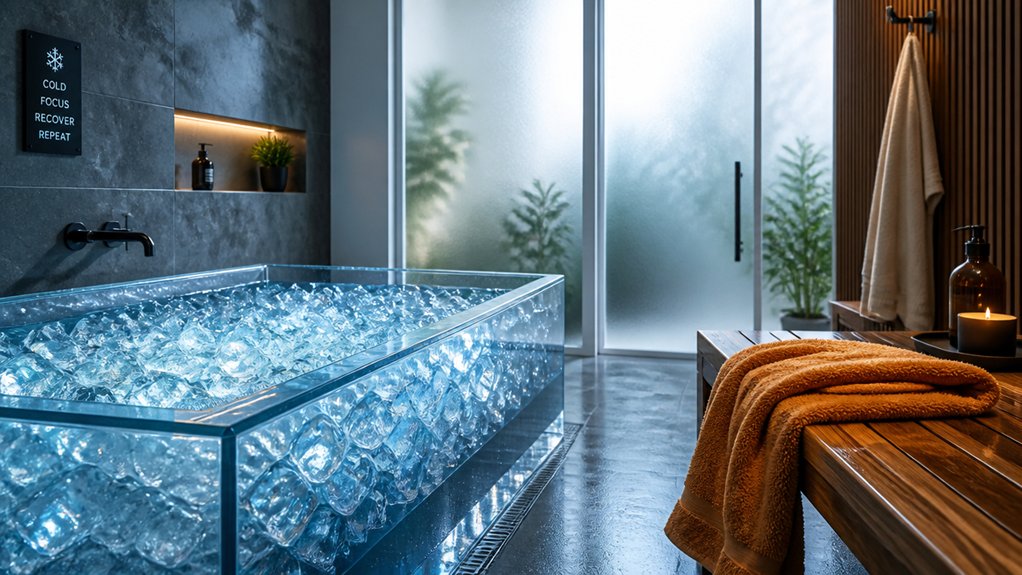
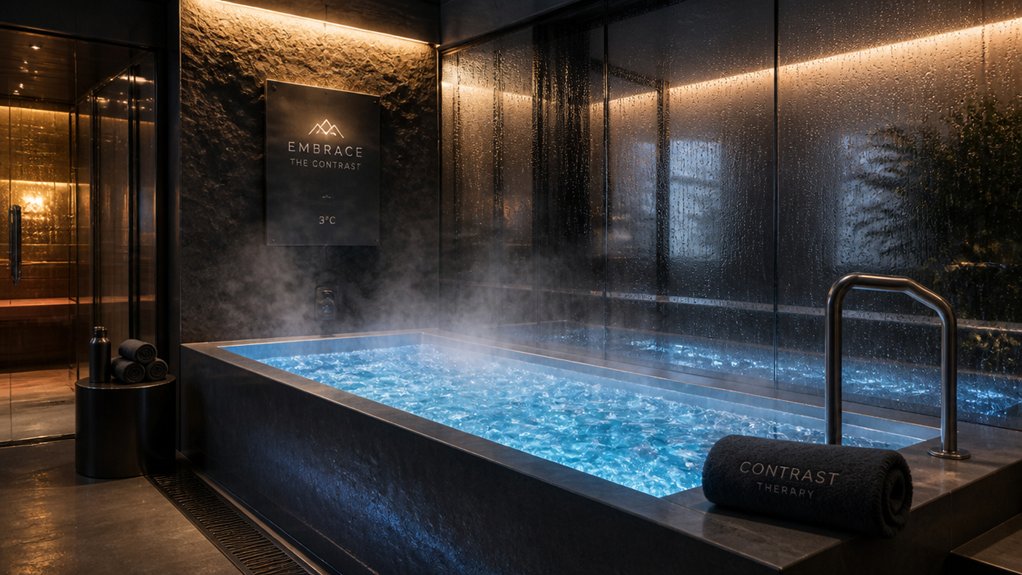
Have you heard of contrast therapy and wondered how it could benefit your recovery? Contrast therapy involves alternating immersion between hot and cold water, typically 100-110°F for 3-4 minutes and 46-59°F for 1 minute. This process creates a vascular pumping effect that enhances blood circulation and speeds muscle recovery.
The hot water promotes vasodilation, increasing oxygen and nutrients to your muscles, while the cold causes vasoconstriction, reducing inflammation and swelling. This cycling helps accelerate the removal of metabolic waste like lactic acid, effectively reducing muscle soreness and delayed onset muscle soreness (DOMS).
Unlike ice baths alone, contrast therapy supports lymphatic drainage and tissue oxygenation, which promote healing and relaxation. It’s a comfortable, efficient way to recover post-exercise.
How Hot and Cold Immersions Boost Circulation and Reduce Soreness
Alternating between hot and cold water immersions creates a rhythmic vascular pumping effect that markedly boosts blood circulation. During hot water applications, vasodilation widens blood vessels, increasing blood flow and delivering nutrients to stressed tissues.
Switching to cold water causes vasoconstriction, constricting blood vessels to reduce inflammation and numb pain receptors. This contrast therapy cycle accelerates the removal of metabolic waste, such as lactic acid, while decreasing muscle soreness and swelling.
The rapid shifts in circulation enhance oxygenation and promote lymphatic drainage, speeding up healing. By combining hot and cold immersions, you improve circulation more effectively than cold water alone, resulting in better muscle relaxation and joint mobility. Additionally, infrared heat lamps can support this process by providing deep, targeted warmth to further facilitate recovery.
Why Contrast Therapy Is More Tolerable Than Ice Baths Alone
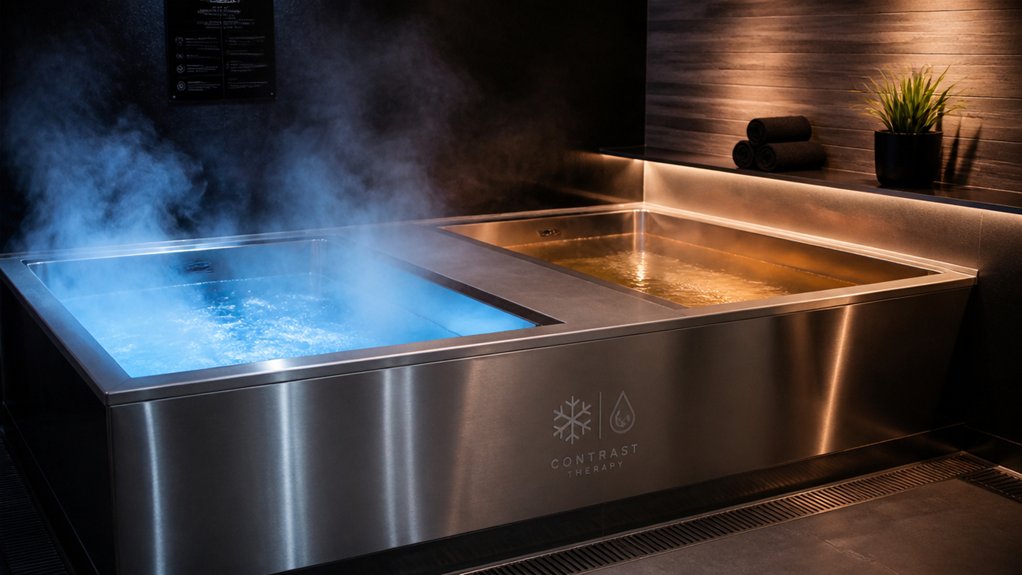
Contrast therapy reduces your cold discomfort by limiting the time spent in freezing water and adding warm periods that promote relaxation. This approach makes the overall experience more comfortable and easier to tolerate than staying in an ice bath for a long time. Plus, the rhythmic changes improve your comfort and make the process feel less intense. Incorporating equipment like infrared saunas with full-spectrum red light, which provides near, mid, and far infrared, can further enhance the contrast therapy experience by offering consistent, soothing warmth.
Reduced Cold Discomfort
Cold discomfort is a common barrier to full immersion in ice baths, but incorporating warm phases greatly reduces this challenge. Contrast therapy helps by alternating hot and cold water, which eases the shock of cold immersion and lessens discomfort.
The warm phases promote muscle relaxation and help reduce pain, making the cold therapy more tolerable. Because the temperature cycling limits cold immersion to about a minute, you avoid the extreme numbness and stiffening that often come with prolonged cold exposure.
The hot water phases act as a soothing recovery break, preventing the harshness of sustained cold temperatures. Additionally, many waterproof timers are designed with easy-to-read displays and simple controls, making it easier to adhere to the precise timing needed for effective contrast therapy. Overall, contrast therapy’s balance of hot and cold temperatures supplies a more comfortable experience, encouraging full participation in cold therapy without the intense cold discomfort of ice baths alone.
Enhanced Overall Comfort
The discomfort often felt during ice baths can discourage many from fully engaging in cold therapy. Contrast Therapy, especially At-Home Contrast Therapy, makes cold plunges more tolerable by alternating hot water with ice bath sessions.
The brief, 1-minute cold phases reduce shock and numbness compared to longer ice baths. Meanwhile, warm water promotes muscle relaxation and prevents stiffness, easing the overall experience.
The temperature cycling creates a vascular pumping effect, producing a rhythmic sensation that diminishes the harshness of extreme cold. Incorporating adjustable temperature control can further customize the experience to enhance comfort and effectiveness. This enhanced overall comfort makes it easier to stay longer in cold immersion, boosting recovery benefits.
Many users find contrast therapy more tolerable, resulting in improved adherence and outcomes compared to cold-only ice baths.
Step-by-Step Guide to Doing Contrast Therapy Safely at Home
To do contrast therapy safely at home, you first need to gather the right equipment, like two containers for water at specified temperatures. Always follow the recommended temperature guidelines and pay close attention to how your body responds during each cycle. Using proper water treatment can help maintain water quality and protect your skin during sessions.
Prepare Proper Equipment
Before starting contrast therapy at home, gather two clean basins or tubs large enough to comfortably submerge the desired body parts. Use these basins for contrast therapy, ensuring each contains either hot water or cold water.
Maintain hot water between 100°F and 104°F, and cold water between 46°F and 50°F, using reliable thermometers for precise temperature control. Replenish hot water with hot tap water and add ice to cold water as needed to stay within the therapeutic range throughout your session.
Have a timer or clock nearby to monitor immersion durations and a comfortable seating area with towels for drying off. Always hydrate before, during, and after, and consult a healthcare professional if you have underlying health conditions.
To ensure accurate readings and safety, using high-quality floating thermometers with clear displays and precise sensors can help monitor water temperatures effectively during your sessions.
Follow Temperature Guidelines
Ensuring safe contrast therapy begins with strict adherence to recommended water temperatures. To do this, you need to:
- Use a thermometer to check hot water, keeping it between 100°F and 104°F (38°C to 40°C).
- Keep cold water between 46°F and 50°F (8°C to 10°C) for effective cold water immersion.
- Regularly monitor water temperature during the repeat cycle, adjusting as needed.
- Finish each session with cold immersion to help reduce swelling and inflammation.
- Choosing the right ice bath cover can help maintain consistent temperature levels throughout your therapy session.
Following these temperature guidelines helps prevent overheating or excessive cold exposure, ensuring safe contrast therapy.
Monitor Body Responses
Monitoring your body’s response during contrast therapy is essential for safety and effectiveness. As you switch between hot water and cold water immersions, pay close attention to your skin response and any signs of discomfort. Notice how your body reacts to temperature contrasts, and immediately stop if you experience sharp pain, dizziness, or unusual discomfort. During immersion, monitor for numbness or skin changes, and make certain you don’t exceed safe temperature ranges. After completing each cycle, take a rest period to observe any delayed reactions like swelling or heightened sensitivity. Always stay hydrated, and consult a healthcare professional if you have existing health conditions. Use this table to guide your sensations during therapy:
| Aspect to Monitor | Potential Warning Signs |
|---|---|
| Skin response | Sharp pain, numbness |
| Body reactions | Dizziness, dizziness |
| Discomfort | Unusual pain, swelling |
Additionally, being aware of the Sensor Latency is crucial to ensure real-time monitoring and safety during each immersion.
When Should You Use Contrast Therapy Versus Traditional Ice Baths?
Deciding when to opt for contrast therapy instead of traditional ice baths hinges on your recovery goals and comfort preferences. Use contrast therapy if you’re aiming to boost tissue oxygenation, accelerate blood flow, and reduce muscle stiffness through hot-water and cold exposure.
Choose contrast therapy for improved circulation and quicker recovery without prolonged cold discomfort.
Visualize:
- Alternating hot water (100-110°F) for 3-4 minutes, warming blood vessels.
- Switching quickly to cold (46-59°F) for 1 minute, constricting blood flow.
- Repeating the cycle to promote vascular pumping and metabolic waste removal.
- Feeling more comfortable, as contrast therapy minimizes prolonged cold discomfort, supporting faster tissue recovery.
Choose ice baths if your main goal is to lower core temperature or reduce inflammation post-injury.
Contrast therapy offers a balanced, tolerable approach for enhanced recovery without intense cold exposure.
Top Tips to Maximize Your Contrast Therapy Results
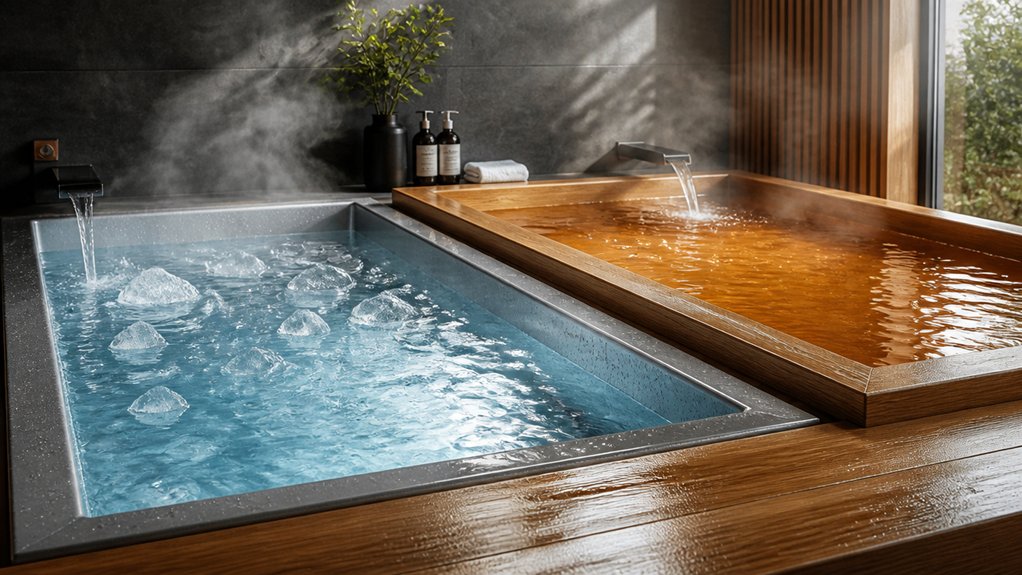
To get the most benefits from your contrast therapy sessions, focus on optimizing every aspect of the process. Proper temperature control and consistent water temperatures are essential. Alternate hot water immersion at 100°F–104°F (3-4 minutes) with cold ice bath immersion at 46°F–50°F (1 minute) to boost blood flow and vascular pumping. End with a cold immersion to reduce inflammation and swelling. Gradually increase contrast cycles from 3 to 5 as your tolerance improves. Hydrate well before and after, and rest briefly post-therapy for better muscle recovery and overall well-being. Here’s a visualization:
| Hot Water Immersion | Cold Ice Bath | Benefits |
|---|---|---|
| Temperature 100°F–104°F | Temperature 46°F–50°F | Maximize blood flow |
| 3–4 minutes | 1 minute | Reduce inflammation |
| Consistent replenishment | Ice addition | Safe, effective therapy |
| Gradual cycle increase | Post-session rest | Enhanced recovery |
| Hydration + rest | Better muscle recovery |
Frequently Asked Questions
Is Contrast Therapy Better Than Ice Bath?
Yes, contrast therapy is better than ice baths because it improves circulation, reduces stiffness, and speeds recovery more effectively. You’ll find it more comfortable and effective in enhancing flexibility and muscle function, making your recovery process quicker and less painful.
What Are the Disadvantages of Contrast Bathing?
Contrast bathing can cause burns if water isn’t properly regulated, increases bleeding risk from sudden temperature shifts, and may worsen nerve pain or tissue damage if done improperly or with excessive duration. It’s risky for certain health conditions.
How Long Should I Stay in Contrast Baths?
You should stay in contrast baths for 20 to 30 minutes, alternating 3-4 minutes in hot water and 1 minute in cold water, completing 3 to 5 cycles, ending with cold immersion to reduce swelling.
Can You Overdo Contrast Therapy?
Yes, you can overdo contrast therapy. If you extend sessions too long, use excessively hot or cold water, or repeat cycles beyond recommended limits, you risk skin burns, nerve pain, dizziness, or worsening symptoms. Always follow safe protocols.