Contrast therapy helps you recover faster by alternating hot and cold water immersion, which boosts blood flow and reduces muscle soreness. The heat relaxes muscles, dilates vessels, and enhances nutrient delivery, while the cold constricts vessels, decreases swelling, and triggers proteins that support repair. This cycle creates a pumping effect that speeds up waste removal and inflammation reduction. Keep exploring to discover how you can incorporate this effective recovery technique into your routine.
What Is Contrast Therapy and How It Boosts Muscle Recovery
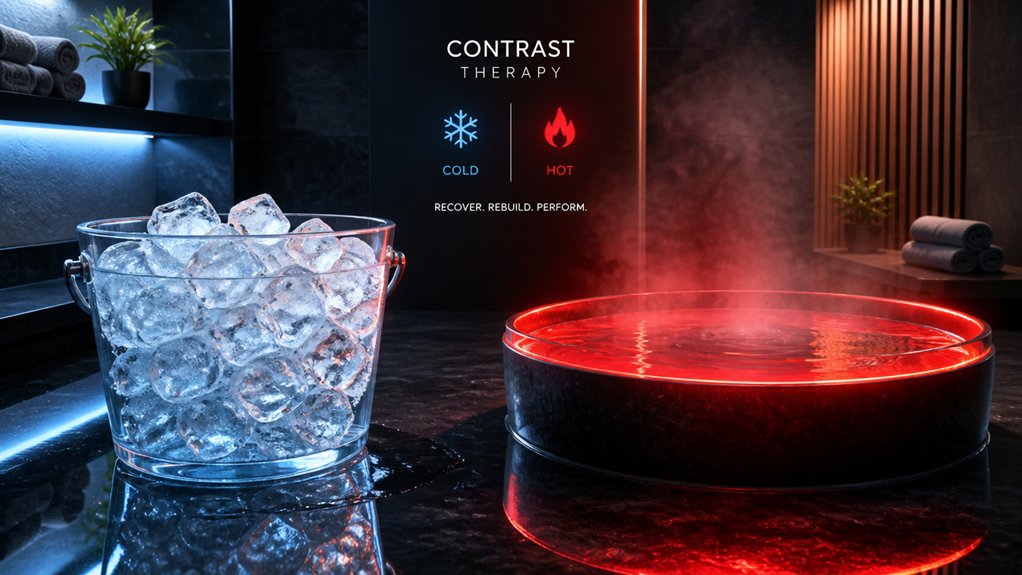
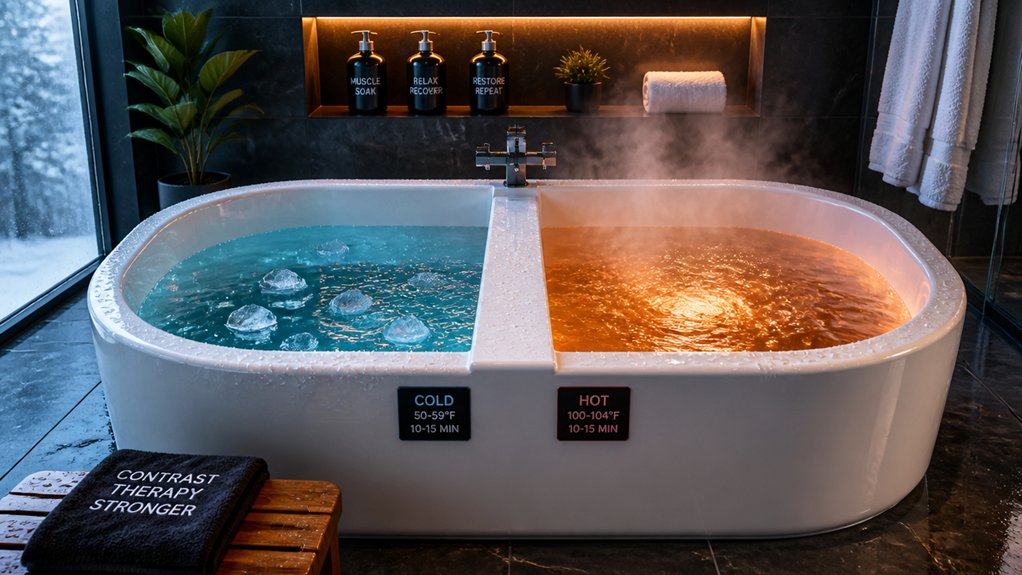
Contrast therapy involves alternating between hot and cold water immersions to promote muscle recovery. When you switch between hot water (100-110ºF) and cold water (50-59ºF), you create a pumping effect that enhances blood flow and helps remove metabolic waste from your muscles.
The warm water relaxes your muscles and dilates blood vessels, leading to better circulation and reducing inflammation. The cold water constricts blood vessels, decreases swelling, and triggers proteins that improve mitochondrial activity, which can lessen delayed onset muscle soreness (DOMS). Devices with temperature therapy features allow for rapid and precise adjustments, optimizing the contrast cycles.
Typically, these cycles last 3-4 minutes in hot water and 1-2 minutes in cold water, totaling 15-20 minutes. Using contrast therapy before or shortly after exercise can help reduce fatigue and speed your recovery without impairing muscle repair.
How Heat Exposure Promotes Muscle Relaxation and Improves Blood Flow
Heat exposure plays a crucial role in muscle recovery by promoting relaxation and enhancing blood flow throughout the body. Through heat therapy, blood vessels dilate, increasing blood flow, which delivers more oxygen and nutrients needed for muscle repair. This process helps reduce stiffness and relaxes muscle fibers, easing spasms and tension. The warmth from heat exposure also triggers heat shock proteins (HSPs), aiding in cell repair and immune regulation. Additionally, heat therapy mimics some physiological responses of exercise, boosting circulation and hormonal responses that support healing. This combined effect accelerates muscle recovery and decreases soreness. Incorporating heat exposure into your recovery routine can optimize muscle relaxation and improve blood flow, making your recovery both faster and more effective. Far infrared technology, like that used in many advanced heating pads, can penetrate deep tissues for more effective relief.
How Cold Water Immersion Reduces Muscle Soreness and Swelling
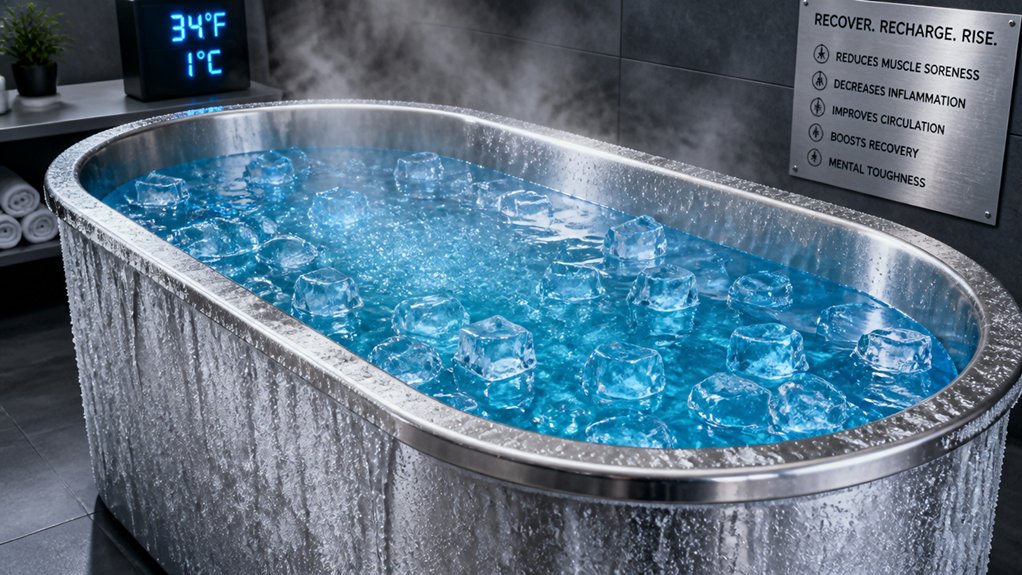
Cold water immersion (CWI) effectively reduces muscle soreness and swelling by constricting blood vessels, which limits inflammation and fluid buildup in fatigued muscles. A variety of recovery creams, especially magnesium-based, arnica-containing, and menthol-rich formulas, are used afterward to further support muscle and joint healing. Here’s how it works:
- Reduces muscle soreness by lowering inflammation and swelling.
- Boosts muscle oxygenation and helps clear metabolic waste rapidly.
- Prompts cold shock proteins (CSPs) that enhance mitochondrial activity and support muscle repair.
- Activates immune responses like T and NK cells to modulate inflammation and alleviate pain.
Effective recovery support can be achieved through a combination of cold water immersion and targeted topical treatments, maximizing benefits and promoting faster recovery.
Why Alternating Hot and Cold Water Helps Your Muscles Recover
Alternating hot and cold water treatments create a dynamic “pumping” effect in your muscles by repeatedly dilating and constricting blood vessels. This contrast stimulates circulation, which accelerates the removal of metabolic waste and delivers oxygen and nutrients essential for muscle recovery.
Hot water relaxes your muscles and increases blood flow, easing stiffness and supporting repair. Cold therapy, on the other hand, reduces inflammation, numbness, and soreness by constricting blood vessels and limiting fluid buildup.
The cyclical temperature changes also activate heat shock and cold shock proteins, promoting cellular repair and boosting immune functions. Evidence indicates that contrast therapy improves muscle recovery and reduces fatigue more effectively than single-temperature treatments, making it a powerful tool to enhance your post-exercise recovery process. Understanding the heat transfer process involved in these treatments can help optimize their effectiveness.
How to Do Contrast Hydrotherapy at Home: A Step-by-Step Guide
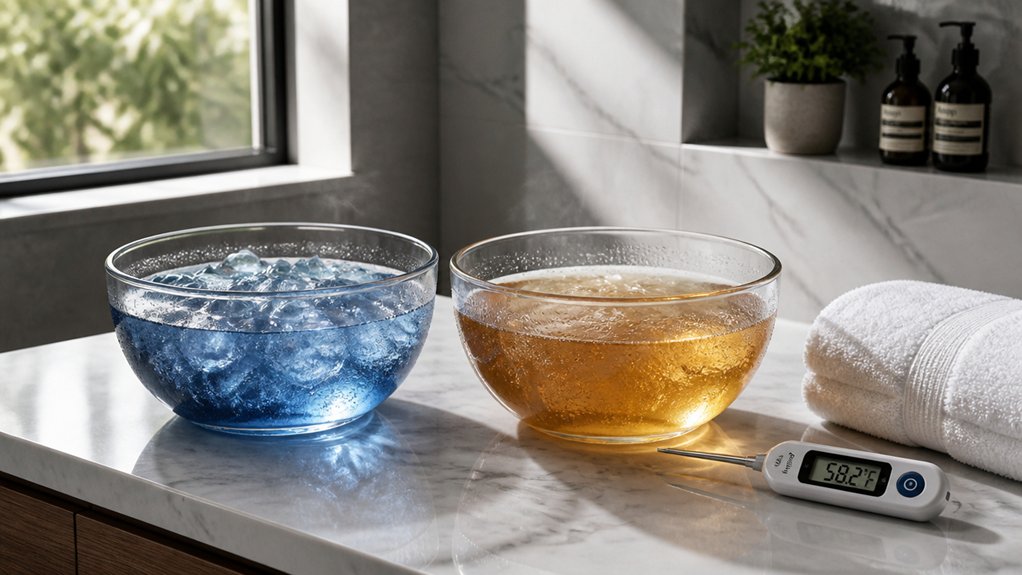
Setting up for contrast hydrotherapy is straightforward—you’ll need two tubs or large containers of hot and cold water. Next, prepare your space by ensuring you have a timer and a thermometer to monitor temperatures easily. Once you’re ready, follow a step-by-step process to alternate between hot and cold, keeping safety and comfort in mind. Incorporate water treatment solutions to keep water clean and safe throughout your session.
Preparing Your Setup
To prepare your setup for contrast hydrotherapy at home, start by gathering two basins or tubs large enough to comfortably immerse the target muscles.
Guaranteeing the correct water temperature is key: hot water should be between 100°F and 104°F, while cold water stays between 46°F and 50°F.
- Use a thermometer to monitor water temperature accurately.
- Add ice gradually to cold water to maintain consistent cold water immersion, especially during longer sessions.
- Keep hot water topped up as needed to sustain the desired temperature.
- Prepare a timer to guarantee immersion times—around 3-4 minutes in hot water and 1 minute in cold—are precise during the contrast baths.
- Opt for a high-accuracy thermometer with fast response times to ensure consistent and safe temperature control during each session.
Following these steps guarantees effective contrast baths and ideal muscle recovery.
Step-by-Step Procedure
Start by filling two basins with hot and cold water, ensuring the temperatures are within recommended ranges—hot water between 100-104°F and cold water between 46-50°F.
For contrast hydrotherapy, immerse the target muscles in hot water for 3 to 5 minutes, which helps dilate blood vessels and relax muscles.
Then, switch to cold water immersion or a cold shower segment lasting about 30 seconds to 1 minute, constricting blood vessels and reducing inflammation.
Repeat the alternating hot and cold cycles 3 to 5 times, ending with cold exposure to aid recovery.
Maintain proper water temperatures using a thermometer for safety and effectiveness.
This method encourages healthy blood flow, decreases inflammation, and accelerates muscle recovery, making contrast hydrotherapy an effective post-exercise recovery tool you can do at home. Accurate measurement of water temperatures can ensure safety and optimal results during sessions.
When and for How Long Should You Use Contrast Therapy
Timing and session length are key to getting the most out of contrast therapy. Generally, sessions last 6 to 15 minutes, with cycles of 1-2 minutes of heat followed by 1 minute of cold. Knowing when to use it—before, after, or during recovery—helps maximize benefits and avoid interfering with muscle repair. Incorporating the right foam roller support can enhance fascia release and deep tissue recovery during these sessions.
Timing of Sessions
Wondering when to schedule your contrast therapy sessions for ideal recovery? The timing is essential for optimizing post-exercise recovery and managing muscle fatigue and tension. Follow these tips:
- Use contrast water therapy within 60 minutes after light to moderate exercise to maximize benefits.
- Avoid contrast therapy within 90 minutes after high-intensity or heavy strength training to prevent impairing muscle repair.
- Keep your sessions around 15-20 minutes, alternating 3-4 minutes of heat with 1-2 minutes of cold immersion.
- Ending with cold immersion helps reduce inflammation and soreness while controlling muscle tension.
Proper timing enhances blood flow, accelerates waste removal, and supports recovery, making contrast water therapy a powerful tool when used at the right moments.
Duration of Cycles
Choosing the right duration for each cycle in contrast therapy guarantees you get maximum benefits without overexposure. Typically, you’ll alternate 1 minute of cold water immersion with 1-2 minutes of hot water, repeating for about 6 to 15 minutes.
For more targeted recovery, aim for 3-4 minutes in hot water followed by 1 minute in cold water, doing this 3-5 times to total around 15 to 20 minutes. Start cold water exposure with just 15-30 seconds, gradually increasing to 2-3 minutes to improve tolerance.
Always end with cold immersion, especially after intense activity, to reduce inflammation and swelling. Adjust the duration based on your muscle response and comfort, ensuring you don’t overdo it and risk impairing recovery.
Equipment and Tools for Safe Contrast Baths and Showers
To guarantee safe and effective contrast bath therapy sessions, you need the right equipment and tools. Proper setup guarantees consistent temperature control, preventing pain due to temperature extremes.
Here are essential items:
- Two basins or tubs: Use for hot and cold water, monitoring temperatures between 100-110ºF and 50-59ºF.
- Thermometers: Vital for checking water temperatures and maintaining safe, consistent ranges during each cycle.
- Protective layers: Towels or fabric should be placed between cold packs and your skin to prevent frostbite or irritation during cold immersion.
- Digital thermal recovery systems: Automate the hot and cold cycles, controlling timing and temperature to enhance safety and ease.
Having these tools helps optimize contrast bath therapy and minimizes risks of injury.
Who Can Benefit Most From Contrast Hydrotherapy
Who can benefit most from contrast hydrotherapy? If you’re an athlete, especially dealing with delayed onset muscle soreness (DOMS), contrast therapy can accelerate muscle recovery and reduce fatigue by boosting blood circulation and waste removal.
Older adults experiencing joint stiffness and muscle tightness also gain, as it decreases pain, improves mobility, and reduces inflammation, especially in colder months.
Those recovering from soft tissue injuries like tendonitis, ligament damage, or fractures will find contrast hydrotherapy helpful in reducing swelling and speeding healing.
Even sedentary individuals or those feeling muscle fatigue after inactivity can improve blood flow and ease stiffness.
However, athletes should time sessions wisely, avoiding immediate post-heavy training, to maximize recovery without interfering with muscle repair.
Precautions and Tips to Avoid Injury During Contrast Therapy
While contrast therapy offers notable benefits for muscle recovery, it’s important to follow safety guidelines to prevent injury.
To stay safe during your water sessions, keep these tips in mind:
- Avoid contrast therapy immediately after heavy training, as it may impair muscle protein synthesis.
- Carefully control water temperatures—cold between 50-59ºF and heat between 100-110ºF—to prevent burns or nerve pain.
- Start cold exposure gradually—begin with 15-30 seconds and increase to 2-3 minutes—to build cold tolerance safely.
- Monitor for adverse reactions like dizziness, chills, or skin irritation. If you notice these, discontinue therapy and consult your physical therapist, especially if you have circulatory or neurological conditions.
Always prioritize safety for effective recovery.
Comparing Contrast Therapy to Other Recovery Methods
Have you ever wondered how contrast therapy stacks up against other muscle recovery methods? Unlike cold water immersion, which primarily causes vasoconstriction to reduce inflammation, contrast therapy combines heat and cold to boost circulation through vasodilation and vasoconstriction in alternation.
This pumping action enhances muscle recovery by speeding up metabolic waste removal and reducing soreness more effectively than single-temperature methods. Research shows contrast baths outperform cold immersion alone, especially in reducing delayed onset muscle soreness (DOMS).
Plus, contrast therapy supports both inflammation reduction and muscle relaxation, providing a balanced approach. Timing is key—using contrast therapy within 60 minutes after light to moderate exercise maximizes benefits without impairing muscle repair, making it a preferred method for overall muscle recovery.
Incorporating Contrast Therapy Into Your Routine for Faster Recovery
Incorporating contrast therapy into your recovery routine can substantially accelerate muscle healing and reduce soreness. To maximize benefits, follow a structured approach:
- Start with 3-5 minutes of heat exposure to relax muscles and boost blood flow.
- Immediately switch to 1-2 minutes of cold immersion to reduce muscle inflammation.
- Use protocols like the National Champion method, alternating 1 minute cold and 1-2 minutes hot water for 6-15 minutes.
- Incorporate contrast therapy within 60 minutes post-exercise, but avoid it after intense, heavy training to prevent impairing muscle repair.
Gradually increase cold exposure time from 15-30 seconds to 2-3 minutes to boost cold shock proteins safely and promote faster muscle recovery.
Frequently Asked Questions
What Are the Downsides of Contrast Therapy?
You could risk skin burns or damage if water temperatures are too high or low, and cold exposure might worsen nerve pain if you have certain conditions. Incorrect timing or prolonged therapy could also cause bleeding or delayed recovery.
Why Does Contrast Therapy Feel so Good?
Contrast therapy feels so good because the alternating heat and cold stimulate your blood vessels, boosting circulation, releasing tension, and triggering your body’s natural healing responses, which leaves you feeling relaxed, refreshed, and energized afterward.
Can You Overdo Contrast Therapy?
Yes, you can overdo contrast therapy. Too many sessions or exceeding recommended durations can cause skin issues, circulatory strain, or delayed muscle recovery. Follow protocols, monitor your tolerance, and consult professionals to prevent overuse and adverse effects.
How Long Should Contrast Therapy Last?
You should aim for 15 to 20 minutes of contrast therapy, cycling hot and cold water immersions. Keep exposures within advised durations to avoid discomfort, gradually build cold tolerance, and always listen to your body during recovery sessions.