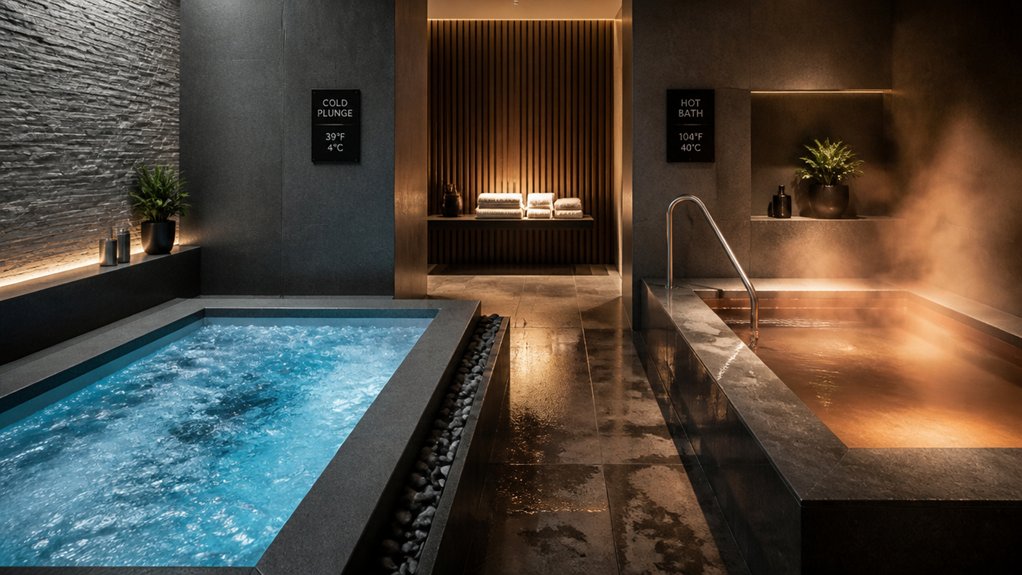
For safe contrast therapy, start with hot temperatures between 100-110°F and cold around 50-60°F, adjusting gradually to avoid shock. Keep your core body temperature below 103°F to prevent overheating or hyperthermia. Use shorter sessions—1 to 3 minutes in cold water or immersion, and limit heat exposure to safe durations. If you want to discover more tips for customizing your sessions based on your goals and tolerance, stay tuned.
What Are the Safe Temperature Ranges for Hot and Cold Therapy?
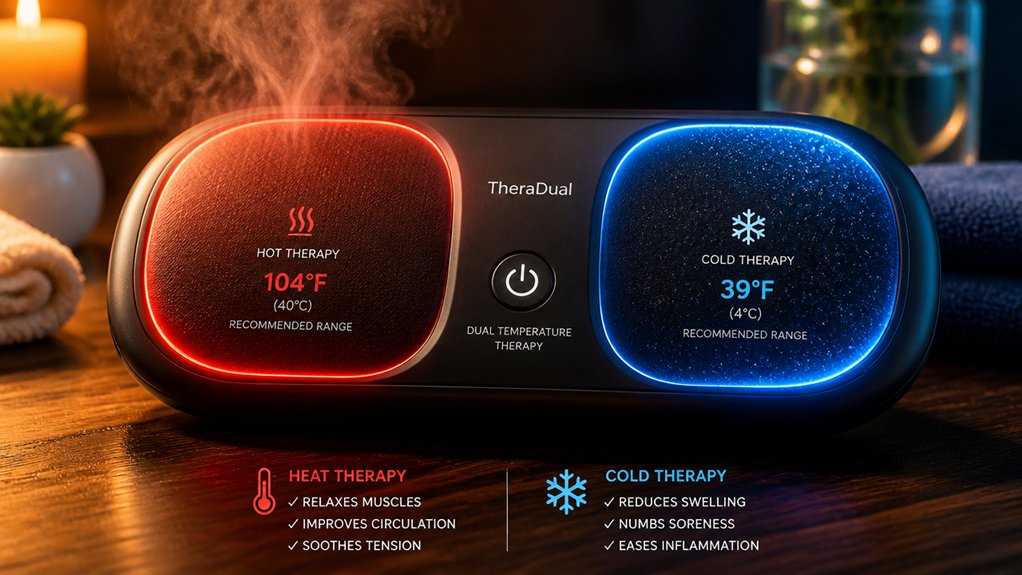
Wondering about the safe temperature ranges for hot and cold therapy? In contrast therapy, knowing these ranges helps you avoid risks while enhancing muscle recovery.
For hot therapy, the safe temperature range typically falls between 100°F and 110°F (38°C to 43°C). Infrared saunas often operate slightly higher, at 110-130°F (43°C to 54°C), but staying within the lower end prevents overheating. During hot water immersion, aim for around 100°F to 104°F (38°C to 40°C).
For cold therapy, cold immersion should be at 50°F to 60°F (10°C to 15.5°C), with brief cold plunger dips recommended at these temperatures. Always keep your core body temperature below 103°F (39.4°C) during the hot phase to avoid hyperthermia and maximize the benefits of contrast therapy.
Additionally, selecting low-EMF infrared heating panels can help ensure safer, more comfortable sessions during contrast therapy.
What Are the Best Tips for Choosing Temperatures Safely?
Choosing temperatures for contrast therapy safely involves starting with moderate heat and cold levels to prevent discomfort or injury. Begin contrast therapy sessions with heat between 100-110°F (38-43°C) to relax muscles and open blood vessels. Use cold water at 50-60°F (10-15°C) during the cold phase for 1-3 minutes to constrict blood vessels and reduce inflammation safely. Always adjust the temperature gradually to avoid adverse reactions, especially if you’re new to contrast therapy. Guarantee sauna temperatures don’t exceed a core body temperature of 103°F (39.4°C) to prevent hyperthermia. Incorporating proper cold retention techniques ensures prolonged therapeutic benefits and prevents discomfort. Ending with a cold phase helps limit residual inflammation. Avoid prolonged exposure beyond recommended times to maintain safety and guarantee your body’s response remains controlled throughout the therapy.
How Can You Adjust Hot and Cold Temperatures Based on Your Goals and Tolerance?
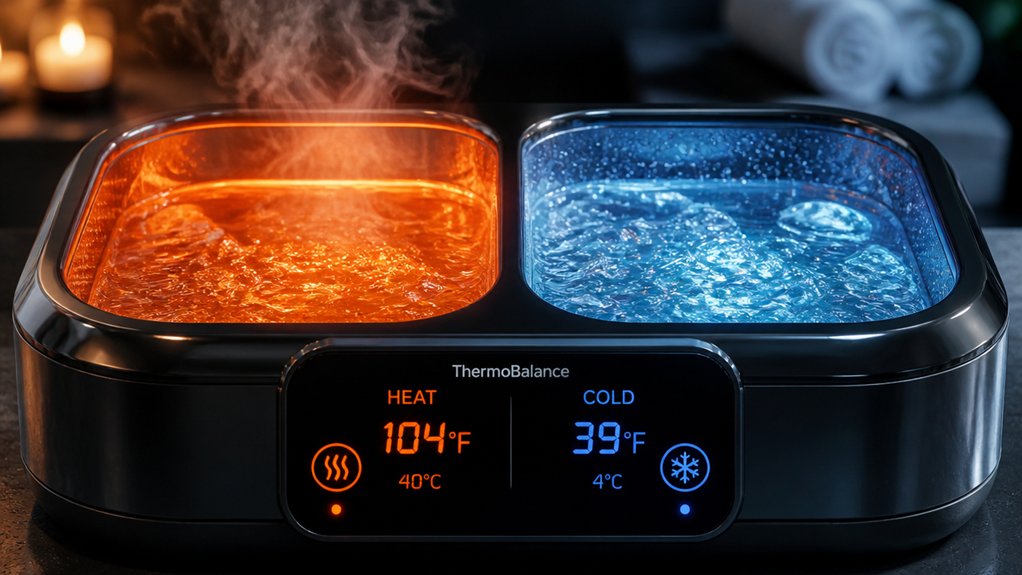
Adjusting hot and cold temperatures during contrast therapy depends on your personal goals and how your body responds. For muscle relaxation and inflammation reduction, start with moderate hot temperatures around 100-110°F, gradually increasing up to 110-130°F for deeper tissue detoxification and blood flow. Cold temperature exposure can begin at 50-60°F for general inflammation, lowered to 46-50°F for more intense immune boosting and soreness relief. If you’re aiming for circulation and energy, use higher heat with shorter cold bursts. Evenings sessions typically involve slightly lower cold temperatures (5-8°C) and longer heat exposure for relaxation. Always adjust the intensity and durations based on your tolerance, starting with shorter cycles, and increase only if comfortable to avoid overstressing your body. Incorporating high-powered chillers can ensure rapid and efficient temperature adjustments, enhancing your contrast therapy experience.
Frequently Asked Questions
Is It Better to End on Hot or Cold for Contrast Therapy?
You should end contrast therapy on cold to reduce inflammation, promote circulation, and aid recovery. Finishing with cold constricts blood vessels, flushing out waste, and leaving your body feeling rejuvenated rather than fatigued.
How Hot Should Water Be for Contrast Therapy?
You should use hot water between 100°F to 110°F for contrast therapy. This range effectively induces vasodilation without risking burns, ensuring safe, beneficial treatment. Always monitor body temperature and adjust as needed for comfort and safety.
What Is the Proper Way to Do Contrast Therapy?
You should start with heat at 100-110°F for 15-20 minutes, then switch to cold at 50-60°F for 1-3 minutes. Alternate 3-4 times, ending with cold, and listen to your body’s signals for safety.
How Long Should a Contrast Bath Be Hot and Cold?
You should keep the hot water immersion for 3 to 4 minutes, followed by cold water for 1 to 3 minutes. Repeat these cycles 3 to 5 times, ending with a cold phase to maximize benefits and recovery.