For effective contrast therapy, spend 15–20 minutes alternating hot and cold exposures. Typically, stay in the sauna or hot bath at 100–110°F for 3–4 minutes, then switch to a cold plunge at 50–60°F for 1–3 minutes. Repeat for 3–5 cycles, ending with cold to reduce inflammation. Adjust durations based on your comfort, and if you keep going, you’ll find out how to tailor sessions for ideal recovery.
How Long Should You Stay in the Hot and Cold?
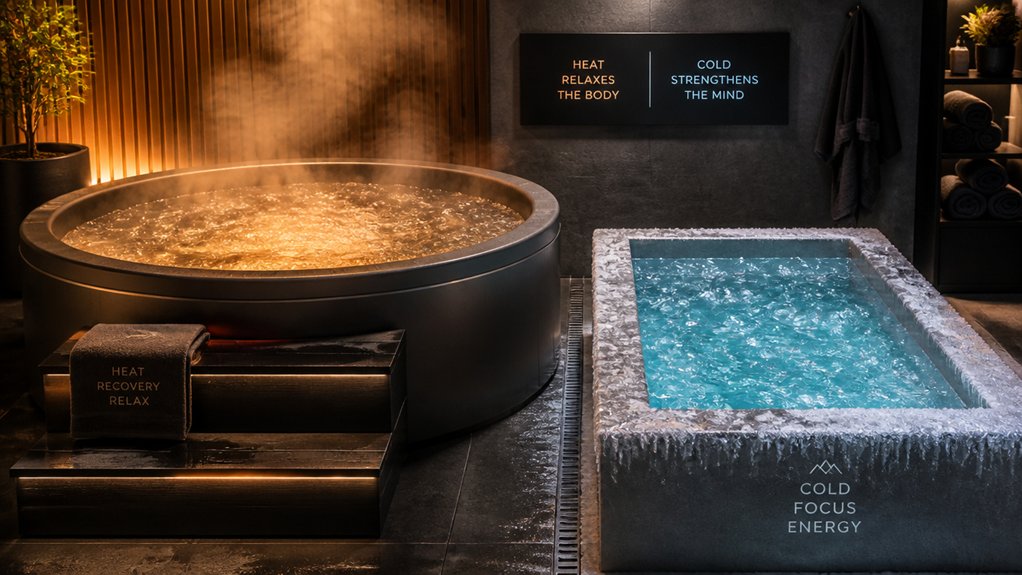
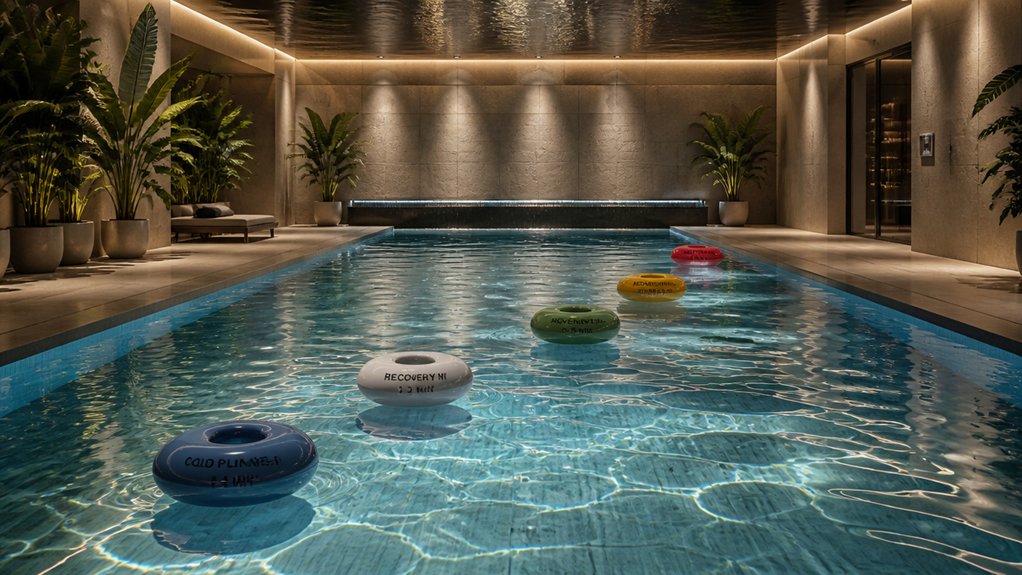
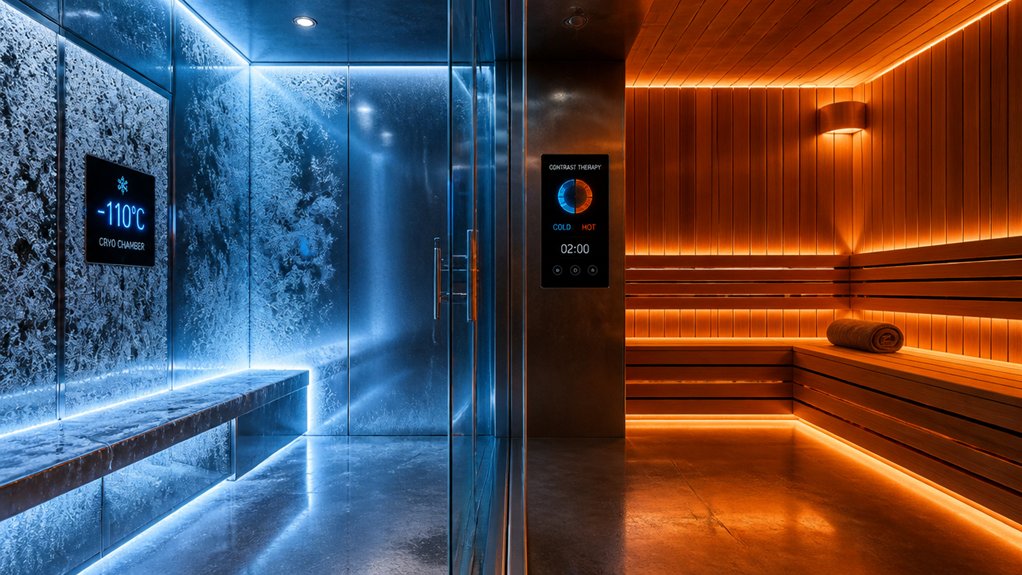
How long should you stay in the hot and cold to get the maximum benefits without overdoing it? With Contrast Therapy, you typically spend 15–20 minutes in a hot environment like a sauna or hot bath, at about 100–110°F, to promote vasodilation and relax your muscles. Follow with 1–3 minutes in a cold plunge or water at 50–60°F to trigger vasoconstriction and reduce inflammation. You should alternate between hot (3–4 minutes) and cold (1–3 minutes) for 3–5 cycles to maximize circulation and recovery. Finish with a brief cold phase lasting 1–3 minutes to lock in anti-inflammatory effects. Incorporating infrared heat therapy can further enhance muscle recovery and relaxation during your contrast sessions. Keep the total session between 20–30 minutes, adjusting based on your comfort and tolerance, to avoid discomfort or adverse effects.
What Are the Typical Contrast Therapy Durations for Athletes?
Athletes typically allocate 20 to 30 minutes for contrast therapy sessions, carefully balancing heat exposure and cold exposure to enhance recovery. During each cycle, you’ll usually spend 3–4 minutes in heat (like a sauna or water immersion at 100–110°F) followed by 1–3 minutes in cold (such as cold plunges at 50–60°F). Most protocols include 3 to 5 cycles, totaling around 15–20 minutes. Beginners should start with shorter cold exposure, around 1–2 minutes, and gradually increase as tolerated. For contrast baths, alternate 1–2 minutes in hot water with 1 minute in cold water, with session durations typically ranging from 6 to 15 minutes depending on your training session and goals. Proper timing helps optimize benefits without interfering with muscle recovery. Adjustable heat settings allow for gradual warming and prevent skin shock, making the process safer and more effective.
How to Adjust Contrast Cycles Based on Your Experience and Goals
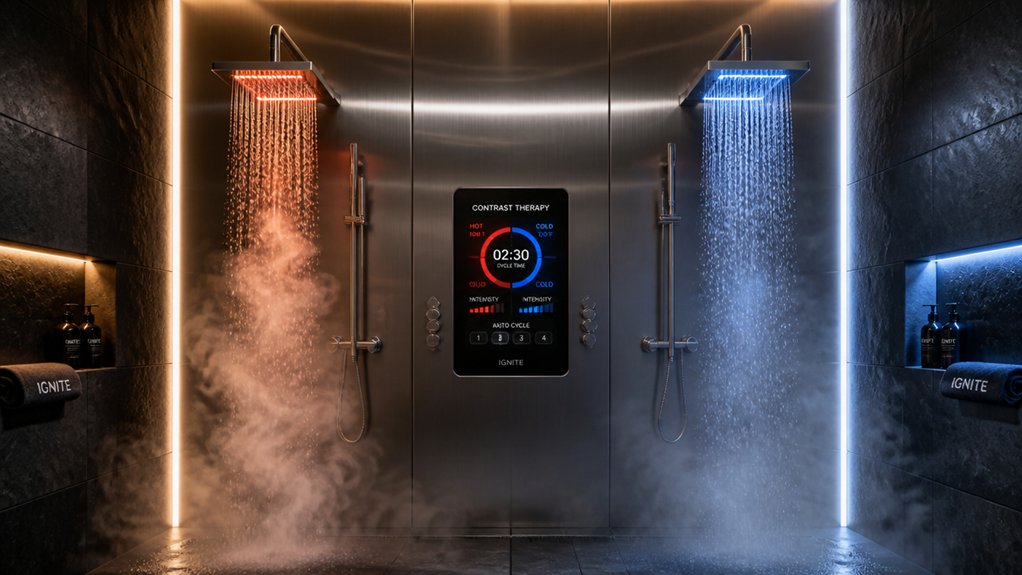
Adjusting your contrast therapy cycles depends on your experience level and specific recovery or performance goals.
If you’re a beginner, start with shorter sessions, like 10–15 minutes of heat exposure followed by 60–90 seconds in cold immersion, gradually increasing the cold exposure to 2–3 minutes as your cold tolerance improves.
For rapid recovery, perform 3–5 contrast cycles, alternating 3–4 minutes of heat with 1–3 minutes of cold immersion to maximize blood flow and waste removal.
To reduce inflammation and muscle soreness, end with a cold plunge of 2–3 minutes to promote vasoconstriction.
Keep total session duration between 20–30 minutes and avoid overly prolonged heat or cold phases to prevent discomfort and unwanted physiological effects, especially after heavy strength training.
Incorporating high-density foam rollers during your warm-up or cool-down routines can enhance circulation and tissue readiness for contrast therapy.
Common Protocols and Timing for Effective Recovery
Effective contrast therapy protocols typically involve cycling between heat and cold exposures in a structured manner to maximize recovery benefits.
Structured heat and cold cycling maximizes recovery and enhances athletic performance benefits.
As an athlete, you’ll want to follow these guidelines for ideal results:
- Start with 15-20 minutes of heat exposure, like a sauna at 100-110°F, to loosen muscles and stimulate circulation.
- Alternate with 1-3 minutes of cold plunge at 50-60°F to constrict blood vessels and reduce inflammation.
- Complete 3-5 rounds, each lasting 3-4 minutes in heat and 1-3 minutes in cold, for balanced muscle recovery.
- End the session on cold exposure to help decrease delayed onset muscle soreness and boost alertness, with a total session duration of 20-30 minutes.
- To maintain consistent plunge temperatures, selecting a suitable chiller model with appropriate cooling capacity is essential for effective contrast therapy.
Tips to Maximize Benefits and Avoid Overdoing It
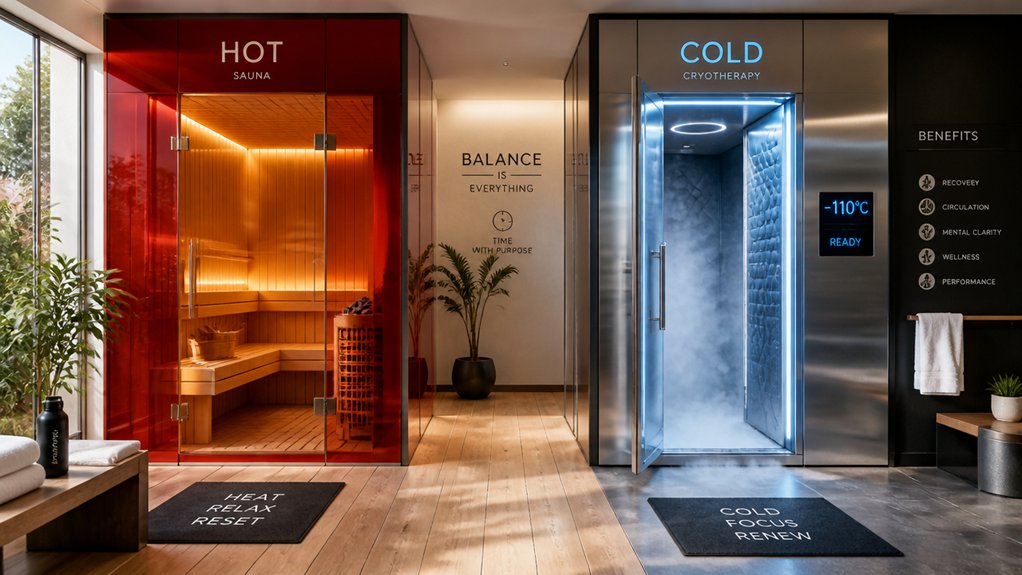
To maximize the benefits of contrast therapy while avoiding overdoing it, start with shorter sessions and gradually increase exposure times as your body adapts. Limit each session to 20-30 minutes, alternating heat with cold immersion—3-4 minutes of heat and 1-3 minutes of cold for 3-5 cycles. Begin cold exposure with shorter durations (60-90 seconds) and extend as tolerated. Adjust session frequency based on soreness and fatigue, aiming for 2-3 times weekly, and always end with cold therapy to reduce inflammation. Monitor your body’s response closely, staying hydrated and stopping if you experience dizziness or discomfort. Proper pacing prevents overstressing blood vessels and muscles while boosting recovery. Choosing the right chiller features can ensure safer and more effective sessions.
Frequently Asked Questions
Can Contrast Therapy Be Safely Combined With Other Recovery Methods?
Yes, you can combine contrast therapy with other recovery methods like stretching or foam rolling. Just make sure you listen to your body, avoid overdoing it, and consult a healthcare professional if you’re unsure about safety or potential interactions.
How Often Should Athletes Perform Contrast Therapy Weekly?
You should perform contrast therapy about two to three times per week, allowing your body enough time to recover. Listen to your body’s response and adjust frequency if you notice increased soreness or discomfort.
Are There Any Health Conditions That Restrict Contrast Therapy?
Certain health conditions, like circulatory issues, skin infections, or cardiovascular problems, can restrict your use of contrast therapy. You should consult your healthcare provider before trying it, especially if you have any chronic or serious health concerns.
What Signs Indicate You’Re Overdoing Contrast Therapy?
You might be overdoing contrast therapy if you experience persistent muscle soreness, excessive fatigue, skin irritation, dizziness, or chills. Stop immediately, and consult a healthcare professional if symptoms worsen or don’t improve after several sessions.
Is It Necessary to Warm up Before Starting Contrast Cycles?
You should warm up before starting contrast cycles to prepare your muscles and improve circulation. A brief warm-up increases flexibility, reduces injury risk, and enhances therapy effectiveness, ensuring your body is ready for the temperature shifts involved.