Contrast therapy can be risky for beginners because sudden temperature shifts put extra stress on your heart and nerves, increasing the risk of burns, frostbite, or overexertion. Without proper guidance, you might experience dizzy spells, skin damage, or blood pressure fluctuations. Your body needs time to adjust safely, so it’s important to start slowly and follow guidelines. Keep learning how to introduce contrast therapy safely, and you’ll protect yourself from unnecessary risks.
Why Beginners Should Be Careful With Contrast Therapy
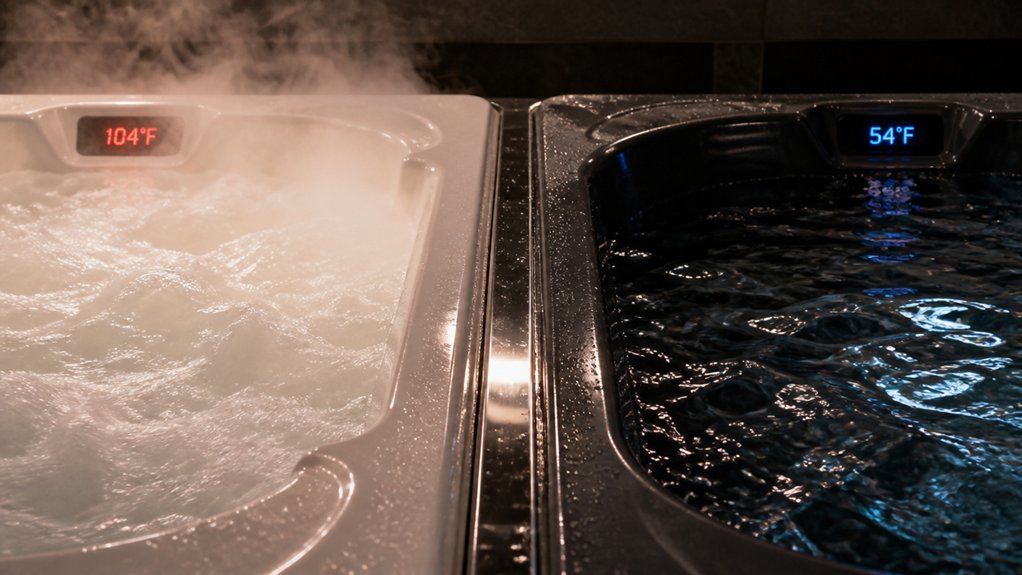
Since contrast therapy involves rapid shifts between hot and cold temperatures, beginners need to approach it with caution. Sudden cold exposure can cause vasoconstriction, while heat induces vasodilation, stressing your cardiovascular system. If you have underlying cardiovascular conditions, these quick changes might strain your heart or disrupt blood pressure regulation. Additionally, inexperienced users risk skin damage, like burns from hot water or frostbite from prolonged cold. The nervous system also reacts strongly to abrupt temperature shifts, possibly causing dizziness, nausea, or weakness. Without proper gradual acclimatization, you increase the chances of cold shock or hyperventilation. Incorporating adaptogens into your recovery routine may help support your body’s stress response and resilience during temperature fluctuations. Without careful temperature control and timing, contrast therapy could worsen health issues or fail to deliver the intended recovery benefits, making caution essential for beginners exploring this technique.
What Are the Risks of Sudden Temperature Changes?
Sudden temperature changes can put your cardiovascular system under strain, causing rapid blood vessel dilation and constriction.
This abrupt shift might trigger a cold shock response, leading to hyperventilation or increased heart rate. If you’re not cautious, it can also overstimulate your nervous system, causing dizziness or nerve pain.
Nerve Shock Potential
Why do sudden temperature changes in contrast therapy pose a risk? Rapid shifts can trigger a nerve shock response, overloading your nervous system. You might experience sensations like hyperventilation, panic, or sharp nerve pain, especially if your nervous system is sensitive.
Quick temperature and time changes can overstimulate the peripheral nervous system, leading to dizziness, weakness, or nerve hypersensitivity. Cold exposure after heat causes vasoconstriction, which can induce nerve vasospasms, increasing the chance of nerve injury or painful sensations.
Beginners are at a greater risk because their nervous systems aren’t accustomed to abrupt shifts. To minimize risks, start with milder temperature differences and shorter durations, allowing your body to gradually adapt to the contrast therapy process. Proper insulation and gradual temperature adjustment can help reduce temperature shock risks and promote safer recovery.
Blood Vessel Strain
Rapid shifts in temperature during contrast therapy cause your blood vessels to rapidly expand and contract, which can put significant strain on their delicate walls. This process, known as vascular pumping, involves vasodilation in response to heat and vasoconstriction with cold, creating intense fluctuations in blood vessel diameter.
These sudden changes challenge your cardiovascular system, leading to unpredictable blood pressure variations. For beginners, this increased vascular stress raises the risk of vessel rupture, bruising, or internal bleeding. Additionally, inadequate adaptation to temperature swings can trigger cold-induced vasospasms, especially in peripheral vessels, causing pain or numbness.
Research on high-powered chillers emphasizes the importance of gradual temperature adjustments to minimize stress on blood vessels. Without proper gradual exposure, the repeated vasodilation and vasoconstriction may compromise blood flow regulation, risking dizziness, fainting, or other symptoms linked to unstable blood vessel behavior.
Sudden Heart Stress
When you expose your body to abrupt temperature changes during contrast therapy, your heart must quickly adapt to shifting blood flow and pressure. Such sudden shifts cause rapid vasodilation and vasoconstriction, leading to fluctuations in blood pressure and heart rate. This cardiovascular strain raises significant concerns if you have heart disease or underlying cardiovascular issues. Be aware that:
- The intense temperature stress can suddenly increase cardiac workload, risking overburdening your heart.
- Sudden shifts from hot to cold may overstimulate the autonomic nervous system, causing dizziness or fainting.
- Rapid blood vessel changes can trigger arrhythmias or worsen existing heart conditions.
- Proper waterproof timers and thermometers can help monitor and control temperature changes to reduce cardiovascular stress.
Without proper gradual adaptation, contrast therapy can cause chest pain, palpitations, and shortness of breath, especially in beginners unfamiliar with these risks.
How Inexperience Can Lead to Burns or Frostbite
If you’re not careful, you might misjudge water temperatures or stay in cold or hot water too long, risking burns or frostbite. Without proper knowledge and protective measures, your skin may suffer damage from improper thermal stress. Recognizing early signs and controlling exposure can help prevent serious injuries during contrast therapy. Utilizing a reliable digital thermometer can provide accurate and consistent temperature readings, reducing the risk of accidents.
Improper Temperature Control
Lack of experience with temperature control can lead beginners to dangerously misjudge water temperatures during contrast therapy. Without proper measurement, you risk exposing your skin to hazards like skin damage.
Here are key points to keep in mind:
- Using hot water above 104°F without proper monitoring can cause scalding burns during contrast therapy.
- Cold water immersion below 46°F, especially without time limits, may result in frostbite.
- Inconsistent temperature control can cause abrupt thermal shocks, damaging nerves and skin tissues.
Without accurate thermometers and correct setup, you may unintentionally expose yourself to unsafe conditions. Poorly managed hot and cold cycles compromise your safety, increasing the chance of burns, frostbite, and skin injury during contrast therapy sessions.
Inadequate Time Monitoring
Inexperience often causes beginners to misjudge how long they should stay in hot or cold water during contrast therapy, increasing the risk of skin injuries. Without proper timing devices or an adequate use of thermometers, you might accidentally prolong exposure or enter unsafe temperature ranges.
A lack of understanding about optimal temperature ranges and their effects can further compound these risks, especially without proper waterproof timers to track session duration accurately. Staying too long in hot water above 104°F can cause scalding burns, especially if you don’t monitor your immersion time carefully. Similarly, extended cold exposure beyond 1–2 minutes at 46–50°F can lead to frostbite or nerve pain. Without accurate timers, you may unintentionally overexpose tissues to thermal extremes, overwhelming your skin’s tolerance.
This improper time monitoring raises the risk of skin damage, and beginner inexperience can make safe contrast therapy dangerous.
Lack of Protective Measures
How carefully you monitor water temperatures can make the difference between a safe contrast therapy session and a painful injury. Beginners often lack protective measures like thermometers or temperature controls, increasing the risk of burns or frostbite.
Without proper tools, you might:
- Use water that’s too hot—above 104°F—causing scalding burns.
- Stay in cold water below 50°F too long, risking frostbite or nerve pain.
- Misjudge your tolerance, leading to prolonged exposure without noticing early skin or nerve distress.
These mistakes happen when you’re unaware of safe temperature ranges or ignore your body’s signals. Without protective measures, your inexperience can unintentionally cause serious injury during hot or cold immersion cycles.
Additionally, relying on accurate infrared thermometers with proper emissivity adjustment can help ensure precise readings, reducing these risks significantly.
How Your Blood Pressure Could Fluctuate When Starting Out
When you start contrast therapy, your blood pressure can fluctuate rapidly as your body reacts to sudden changes between heat and cold. This process involves vasodilation (heat), which lowers blood pressure, and vasoconstriction (cold), which raises it. Beginners’ cardiovascular systems may struggle to adapt quickly, risking dizziness, lightheadedness, or fainting. These abrupt changes put stress on your heart and circulation. If you have poor blood pressure regulation or hypertension, you’re especially vulnerable during initial sessions. To minimize risks, start with milder temperatures and shorter durations. Recognizing these fluctuations helps you understand why proper guidance is essential when beginning contrast therapy. Additionally, understanding thermal insulation can help you better monitor and manage temperature stability during sessions.
Why Proper Water Temperature Matters for Safety
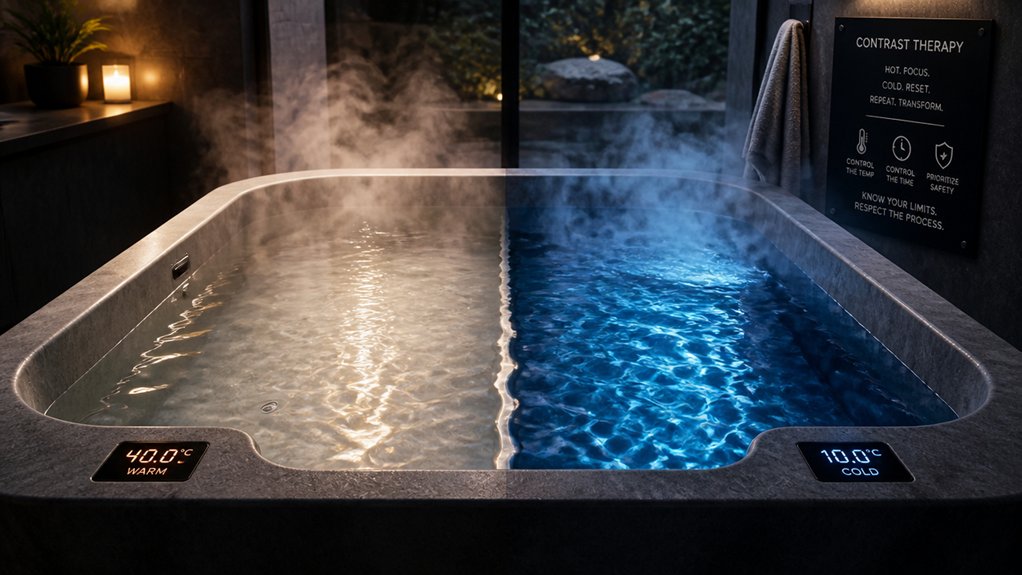
Maintaining the correct water temperature during contrast therapy is essential to your safety and effectiveness. Using hot and cold water outside safe limits can harm your body. To minimize risks, remember these guidelines:
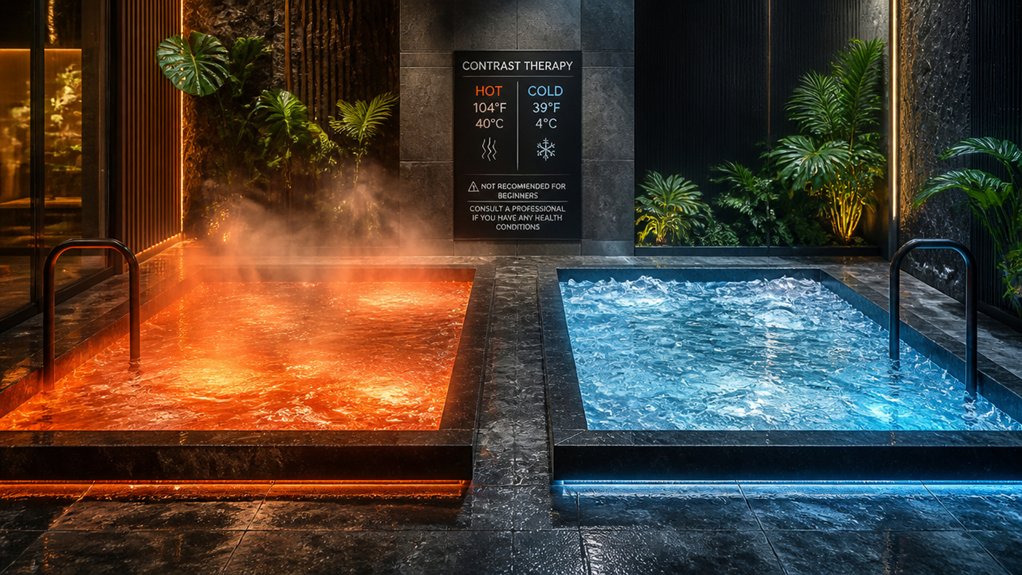
- Keep hot water between 100–104°F to promote blood vessel dilation without burns.
- Use cold water between 46–50°F to tighten blood vessels safely without frostbite or shock.
- Avoid sudden temperature changes that can overstimulate your nervous system, causing dizziness or fainting.
Improper temperature control can lead to skin burns or nerve pain. When your body is exposed to extreme heat or cold, your blood vessels respond accordingly—vasodilation and vasoconstriction—helping with recovery.
Correct water temperature guarantees safe, beneficial contrast therapy without risking injury.
Signs You’re Overdoing It and When to Stop
Ever wonder if you’re pushing your body too hard during contrast therapy? If you experience dizziness, nausea, or lightheadedness, you’re likely overdoing it, signaling your body is under excessive stress.
Pushing too hard? Dizziness, nausea, or lightheadedness mean you’re overstressing your body.
Signs like a rapid heart rate, excessive sweating, or shivering indicate your temperature exposure is too intense for beginners.
Persistent fatigue, insomnia, or nervous system overstimulation after sessions suggest you’re exceeding safe limits in frequency or duration.
Notice skin redness, burns, or frostbite symptoms? You need to stop immediately, as these indicate inadequate temperature control.
Any unusual pain, swelling, or cardiovascular discomfort calls for discontinuing contrast therapy and seeking medical advice.
Recognizing these signs helps prevent risks and guarantees you practice contrast therapy safely.
How Long Should You Stay in Hot and Cold Baths?
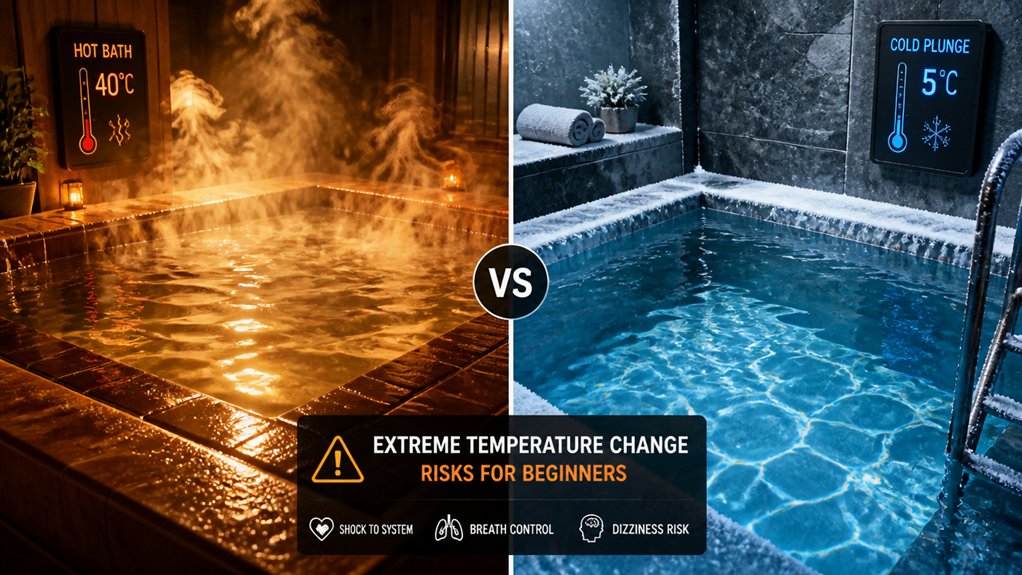
To enjoy contrast therapy safely, it’s important to know how long to stay in hot and cold baths.
For beginners, a typical session involves:
- Spending hot water for three to four minutes to avoid overheating and skin damage.
- Engaging in cold immersion for one minute at temperatures between 46–60°F to prevent cold shock and nerve pain.
- Alternating between these temperatures, often 3-4 minutes in heat followed by one minute in cold therapy, to promote healthy vascular pumping.
Keep total sessions around 15-20 minutes, gradually increasing the duration and temperature as your tolerance improves.
Ending with cold exposure helps reduce inflammation, but avoid prolonged cold to minimize nerve or cardiovascular stress.
Who Should Avoid Contrast Therapy Without Talking to a Doctor
Who should think twice before trying contrast therapy without consulting a healthcare professional?
If you have cardiovascular issues, avoid contrast to prevent strain caused by rapid temperature changes. People with circulation problems like Raynaud’s disease, peripheral vascular disease, or diabetes risk worsening symptoms without medical guidance.
Those with cardiovascular or circulation issues should consult a healthcare professional before trying contrast therapy.
If you have neuropathy or reduced temperature sensitivity, you face higher risks of burns or frostbite from incorrect heat or cold exposure. Pregnant women should avoid contrast therapy unless approved by a healthcare professional, as it can affect blood pressure and pregnancy health.
Anyone with active infections, open wounds, skin conditions, or severe health issues must seek medical advice first. Consulting a healthcare professional guarantees contrast therapy is safe for your specific health circumstances.
Why Consulting a Healthcare Professional First Is Important
Why is consulting a healthcare professional before starting contrast therapy so essential? Because it helps identify contraindications like heart disease, unstable blood pressure, or circulation disorders such as Raynaud’s, which increase your risk.
A healthcare provider can:
- Tailor the temperature and duration of heat and cold exposures based on your individual health.
- Guarantee safe progression from mild to more intense treatments, avoiding nervous system overstimulation or fatigue.
- Monitor for interactions or exacerbation of symptoms, especially if you have chronic conditions or take medication.
Consulting a healthcare professional minimizes potential dangers, like cardiovascular strain, and guides you through safe, effective contrast therapy. Their expert advice supports your health and helps prevent avoidable complications.
Common Mistakes Beginners Make That Can Be Dangerous
Are you aware that many beginners make simple mistakes with contrast therapy that can put their health at risk? One common mistake is using extreme temperatures or staying in hot or cold environments too long, increasing the risk of burns or cold shock.
Inadequate hydration before and after sessions can cause dehydration and electrolyte imbalances, leading to dizziness or weakness. Many ignore pre-existing cardiovascular issues or blood pressure instability, risking dangerous strain from rapid blood vessel changes.
Failing to monitor timing—like exceeding 3-4 minutes in hot water or 1-2 minutes in cold—may cause skin damage or nerve pain. Starting contrast therapy immediately after acute injuries or with open wounds can worsen inflammation, delay healing, and raise infection risks.
Tips to Introduce Contrast Therapy Safely and Gradually
Starting contrast therapy gradually allows your body to adapt safely to temperature changes and minimizes the risk of discomfort or injury. To do this effectively, follow these tips:
- Begin with milder temperatures, such as 100°F for heat and 60°F for cold, and limit sessions to 3 minutes heat and 1 minute cold.
- Keep initial sessions short, staying within 10–15 minutes total, and only increase time and cycles as your comfort and stamina grow.
- Watch for adverse symptoms like dizziness, nausea, or fatigue—if these occur, stop immediately, and consult with a healthcare professional or physical therapist.
Maintaining proper hydration and understanding your limits are key to avoiding complications during cold-water immersion or heat and cold therapy.
How to Watch for Your Body’s Signals During Your First Sessions
Pay close attention to your body’s signals during your first contrast therapy sessions to guarantee safety. Dizziness, nausea, or lightheadedness are signs of dehydration or overstimulation—you should pause the session immediately.
Monitor your body carefully to stay safe and comfortable during contrast therapy sessions.
Also, monitor for skin discomfort like burning or numbness, which indicate too hot or cold water temperatures and risk burns or frostbite.
During cold immersion, watch for excessive shivering or uncontrollable cold reactions, signaling that your body isn’t tolerating the temperature well. Unusual heart palpitations, chest discomfort, or shortness of breath may mean your cardiovascular function is strained by the therapy’s vascular effects.
Additionally, fatigue or persistent weakness after sessions suggest your body is overexerted, and the session should be shortened or made milder.
Listening to these signals helps you stay safe and comfortable.
Frequently Asked Questions
What Are the Risks of Contrast Therapy?
You risk cardiovascular strain, burns, frostbite, nerve pain, dizziness, and dehydration with contrast therapy. Rapid temperature changes and poor monitoring can cause blood vessel issues, fainting, or skin injuries if you’re not experienced or cautious.
How to Do Contrast Therapy for Beginners?
You should start contrast therapy with milder temperatures—sauna at 160°F for 5 minutes and cold water at 50-60°F for 1-2 minutes—gradually increasing cycles, staying hydrated, monitoring for symptoms, and consulting a healthcare provider beforehand.
Is Contrast Therapy Actually Good for You?
Contrast therapy can be good for you if used correctly, as it may improve circulation and reduce soreness. However, you should be cautious, follow proper protocols, and consult a professional to avoid risks like burns or cold injuries.
Can You Overdo Contrast Therapy?
Yes, you can overdo contrast therapy by extending sessions, cycling too rapidly, or using intense temperatures without proper acclimation. This can cause fatigue, dehydration, skin damage, or nervous system overstimulation, especially if you don’t listen to your body’s signals.