After intense workouts, alternate between warm and cold therapies to boost recovery. Use a hot infrared sauna at 120-140°F for 8-10 minutes, then plunge into cold water at 50-59°F for 1-2 minutes. Repeat for 2-3 cycles, starting with moderate settings to build tolerance. Keep hydrated and avoid cold exposure immediately after exercise. Adjust durations to fit your needs, and you’ll discover how to optimize your recovery even further.
Why Contrast Therapy Boosts Your Workout Recovery
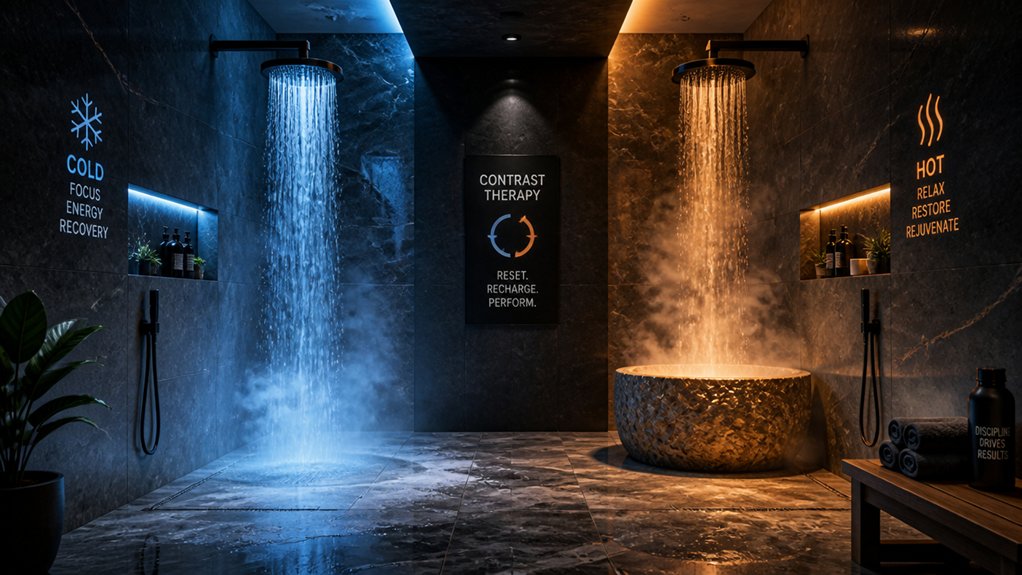
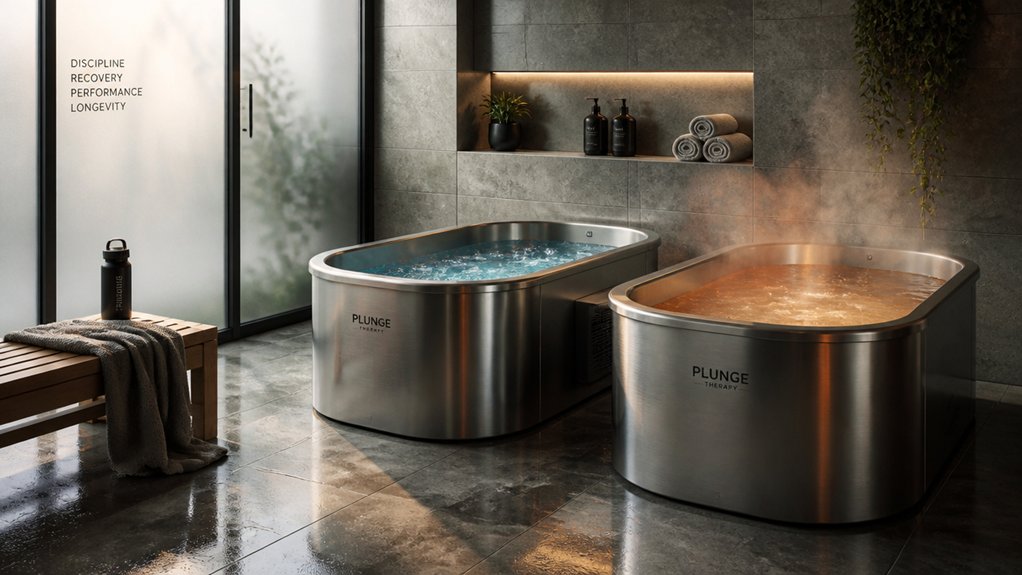
Have you ever wondered how contrast therapy accelerates your workout recovery? It works by alternating hot and cold treatments, like infrared saunas and cold plunges, to improve blood circulation.
Contrast therapy enhances recovery by alternating hot and cold treatments to boost circulation and reduce inflammation.
When you use heat, the warmth has a vasodilating effect, increasing nutrient delivery to your muscles, while cold constricts blood vessels, helping to reduce inflammation and swelling. This vascular flushing clears metabolic waste, like lactic acid, which often causes muscle soreness.
Infrared saunas penetrate deep into muscle tissue, promoting healing, while cold plunges decrease tightness. The process also triggers endorphin release, easing pain and elevating mood.
Regular contrast therapy can lower muscle damage markers, speeding up overall recovery and restoring your readiness for the next workout. The use of low-EMF infrared panels ensures safe, consistent heat without additional health risks during frequent sessions.
How to Pick the Right Cold Plunge and Warm-Up Settings
Choosing the right cold plunge and warm-up settings is essential to maximize contrast therapy benefits and prevent injury. Use a cold plunge between 50-59°F (10-15°C) to effectively reduce inflammation and promote muscle recovery. For warm phases, infrared saunas at 120-140°F (49-60°C) for 8-10 minutes open blood vessels and boost oxygen flow. Alternate 1-2 minutes in cold water with 8-10 minutes in hot, repeating 2-3 cycles, based on your workout schedule. Start with moderate temperatures and short durations to build tolerance—this gradual increase avoids shock. Controlled environments, like private suites at SWTHZ, help tailor these settings precisely for your needs. The use of durability aspects in cold plunge tubs can ensure consistent performance during regular contrast therapy sessions.
Creating Your Ideal Contrast Cycle Routine
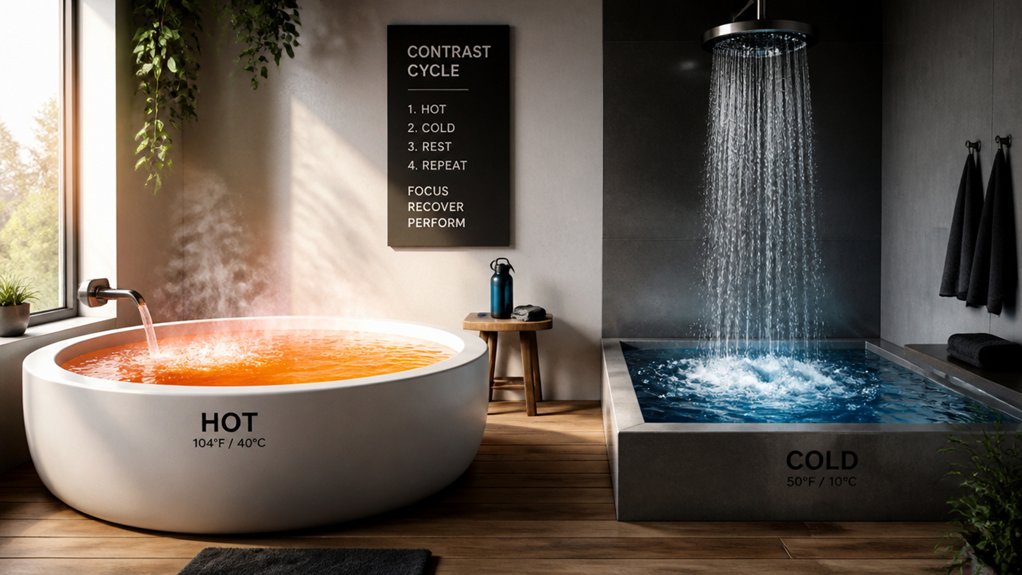
Wondering how to design an effective contrast cycle routine? Start with contrast therapy by alternating hot and cold.
Begin with 20-30 minutes in an infrared sauna set at 120-140°F to promote deep muscle heat penetration and increase blood flow. Follow with a 2-5 minute cold plunge at 50-59°F to constrict blood vessels, flush out waste, and reduce soreness. Repeat these cycles 2-3 times, always ending with cold immersion to maximize muscle recovery. Incorporate full-spectrum heaters to enhance warmth and therapeutic benefits during the hot phases.
During the warm phases, incorporate light stretching to further enhance circulation. Stay hydrated throughout your session, as fluid intake supports the benefits of contrast therapy.
Adjust session length and frequency based on your workout intensity and personal tolerance, optimizing recovery and performance.
Using Contrast Therapy Safely After Exercise
After exercising intensely, it’s important to wait at least an hour before starting contrast therapy to allow your muscles and cardiovascular system to recover. Proper contrast therapy supports muscle recovery while minimizing cardiovascular strain.
Keep hot phase temperatures between 120-140°F (49-60°C) for 8-10 minutes, followed by cold plunge temperatures of 50-59°F (10-15°C) for 1-2 minutes to promote a healthy vascular response. Start cold immersion with under a minute, gradually increasing exposure as tolerated to avoid cold-related risks.
Stay hydrated throughout your session and watch for signs of excessive discomfort, dizziness, or chest pain. Avoid contrast therapy if you have pre-existing health conditions like heart disease or circulation issues, as these can increase risks during cold immersion. Additionally, using a fitness tracker with temperature monitoring can help ensure safe exposure levels during cold plunges for accurate temperature tracking.
Personalizing Contrast Therapy to Fit Your Goals
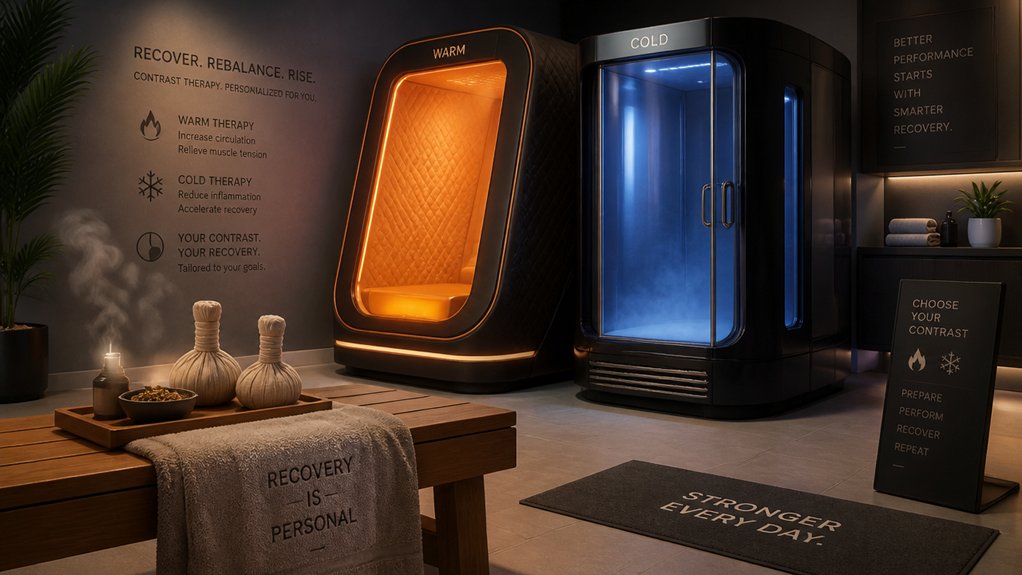
To effectively personalize contrast therapy, it’s important to adjust the duration and temperature settings based on your specific goals and workout intensity. For contrast therapy sessions, you might start with 8-10 minutes in infrared saunas and 1-2 minutes in a cold plunge, tailoring these durations to your muscle soreness and recovery needs. Increasing the temperature difference gradually—from infrared heat (120-140°F) to cold plunge (50-59°F)—can enhance vascular flushing and improve your tolerance. Timing is essential: scheduling sessions within an hour after your workout helps optimize blood flow, reduce inflammation, and support tissue repair. Monitoring how you feel afterward, adjusting parameters to create a personalized recovery method aligned with your fitness goals, can lead to more effective results. Exploring deep heat penetration options or adjustable temperature controls can further customize your contrast therapy experience.
Frequently Asked Questions
Can You Do Contrast Therapy After a Workout?
Yes, you can do contrast therapy after a workout. It boosts blood flow, reduces soreness, and speeds recovery by alternating heat and cold, ideally about an hour post-exercise, for peak muscle healing and inflammation reduction.
What Is the Best Thing to Do After an Intense Workout?
After an intense workout, you should perform contrast therapy by starting with a 20-30 minute infrared sauna session, then quickly switching to a 2-5 minute cold plunge, stay hydrated, and do light stretching to maximize recovery.
Can You Overdo Contrast Therapy?
Yes, you can overdo contrast therapy by exceeding recommended durations, repeating too many cycles, or frequent sessions. This overuse strains your cardiovascular system, blood vessels, and can cause burns or circulatory issues, especially if you have health conditions.
How to Maximize Contrast Therapy?
To maximize contrast therapy, you should personalize sessions with appropriate hot and cold durations, stay hydrated, incorporate light stretching, and always end with cold immersion. Consistency and listening to your body boost recovery and overall benefits effectively.