To safely incorporate contrast therapy into your post-surgery rehab, always consult your doctor first and follow proper temperature guidelines—hot water should be 100°F-104°F, cold water 46°F-50°F. Stick to the recommended cycle times: hot for 3-4 minutes, cold for 1 minute, for 20-30 minutes total. Monitor for increased pain or sensitivity, and stop if symptoms worsen. Continuing with these tips will guide you toward safer and more effective recovery.
How Can I Safely Incorporate Contrast Therapy Into My Post-Surgery Recovery?
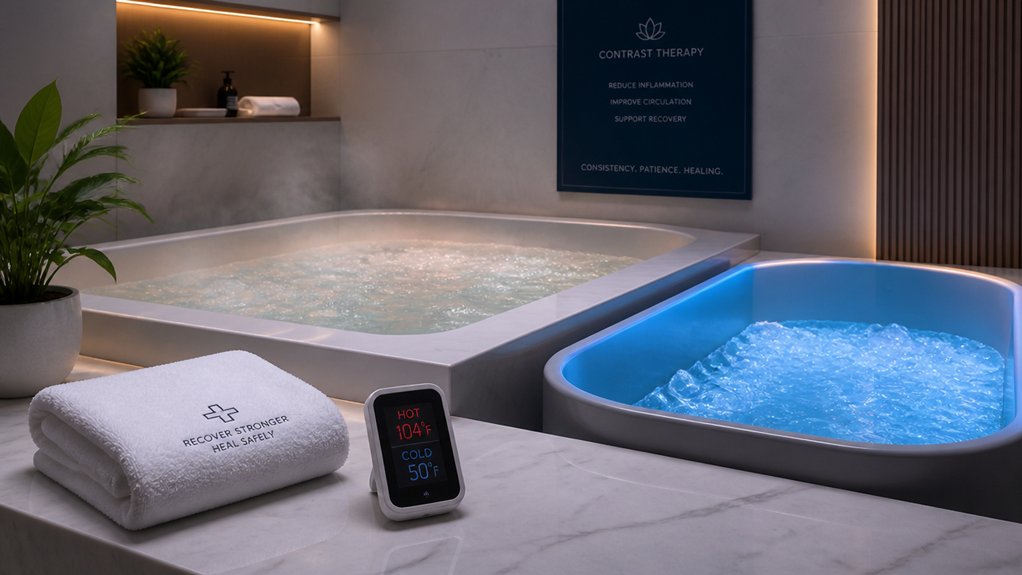
How can you safely incorporate contrast therapy into your post-surgery recovery? Start by consulting your physician to guarantee it’s appropriate for your specific condition and healing stage.
Use temperature-controlled baths with hot water around 100°F to 104°F, and cold water between 46°F and 50°F, to promote safe vascular responses. Follow the recommended protocol: immerse in hot water for 3-4 minutes, then switch to cold for 1 minute, repeating for 20-30 minutes.
Contrast therapy helps reduce swelling, improve circulation, and activate blood vessels through the vascular pumping action. It can also lessen pain when done correctly.
Contrast therapy reduces swelling, boosts circulation, and alleviates pain when used safely and correctly.
Always monitor for adverse reactions, stop if you experience increased pain or sensitivity, and seek guidance from your physical therapist to personalize your routine for safe, effective recovery.
What Temperature Settings Are Safe and Effective for Contrast Baths?
Are you unsure about the right temperature settings for contrast baths after surgery? Contrast therapy helps reduce swelling, post-surgery inflammation, and pain by promoting vasodilation and vasoconstriction.
To do this safely, keep these guidelines in mind:
- Maintain the hot water temperature between 100°F and 104°F to guarantee effective vasodilation without risking burns.
- Keep the cold water temperature between 46°F and 50°F to safely induce vasoconstriction and reduce swelling.
- Limit hot immersion to 3-4 minutes and cold to about 1 minute to prevent skin damage and optimize vascular pumping.
- Choosing a properly sized chiller is essential for maintaining consistent and safe temperature ranges during your contrast baths.
Be cautious if you have peripheral neuropathy or vascular issues—consult your doctor for tailored settings. Proper temperature control is essential to maximize contrast therapy’s benefits safely.
How Can I Maximize Benefits and Avoid Common Mistakes During Contrast Therapy?
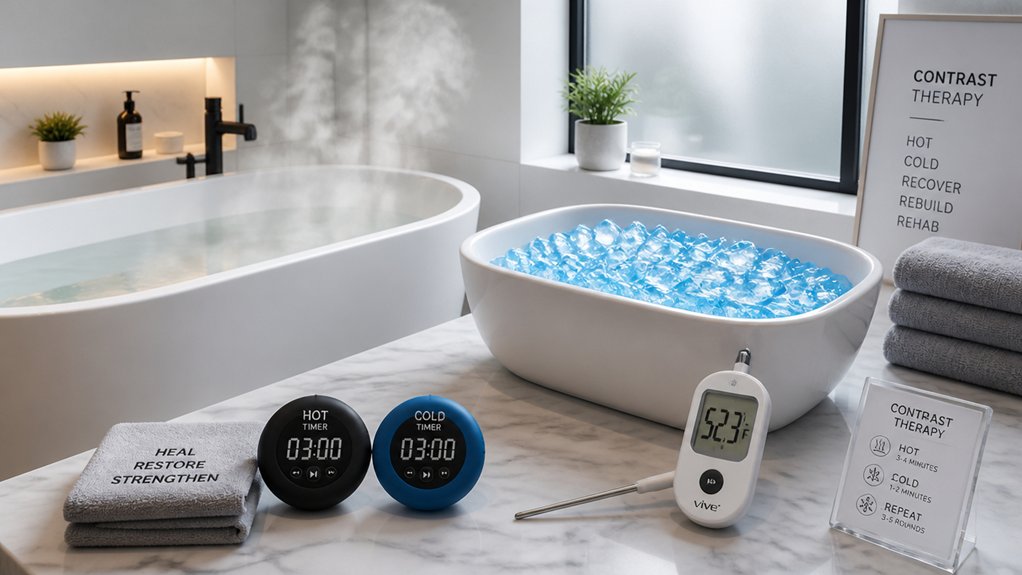
Maximizing the benefits of contrast therapy hinges on following precise procedures and avoiding common pitfalls. During post-surgery recovery, make certain you stick to recommended temperature ranges—hot water between 100°F-104°F and cold water between 46°F-50°F—to promote effective vasodilation and vasoconstriction. Utilizing appropriately sized heat pads can enhance comfort and ensure better coverage during treatment. Follow the 3-4 minute hot immersion, then 1-minute cold immersion protocol, repeating for 20-30 minutes to optimize circulation and accelerate healing. Always finish with cold immersion to lock in vasoconstriction, reduce swelling, and trigger norepinephrine release for natural pain relief. Avoid excessive hot water, which risks burns, and monitor for increased bleeding or nerve pain, especially with underlying conditions. Consult your healthcare provider to personalize your contrast therapy plan, securing safe and effective muscle recovery.
Frequently Asked Questions
How to Maximize Contrast Therapy?
To maximize contrast therapy, you should follow the recommended temperature and timing, switch between hot and cold precisely, always end cold, stay consistent, and consult your doctor to tailor sessions safely for your recovery.
Does Contrast Therapy Help With Recovery?
Yes, contrast therapy helps your recovery by improving circulation, reducing swelling and pain, and speeding tissue repair. It’s a safe, non-invasive method that supports healing naturally, enhances mobility, and minimizes reliance on medications during your post-surgery rehab.
Can You Overdo Contrast Therapy?
Yes, you can overdo contrast therapy. Spending too much time in hot or cold water, or using it too frequently, can cause burns, blood vessel damage, or worsen nerve pain. Always follow recommended durations and consult your doctor.
How to Do Contrast Therapy for the First Time?
Start your first contrast therapy session with hot water at 100°F–104°F for 3–4 minutes, then cold water at 46°F–50°F for 1 minute, repeating for 20–30 minutes, always monitoring temperature and resting afterward.