For ideal recovery, aim for ice baths 2–3 times a week, especially after workouts, and incorporate heat sessions like saunas 2–4 times weekly. Avoid daily ice baths to prevent immune suppression and fatigue, and use heat to boost blood flow. Balance the two, adjusting based on your workouts and how your body feels. If you keep following these guidelines, you’ll discover more tips to fine-tune your contrast therapy routine.
Why Contrast Therapy Works: Benefits of Cold and Heat Treatment
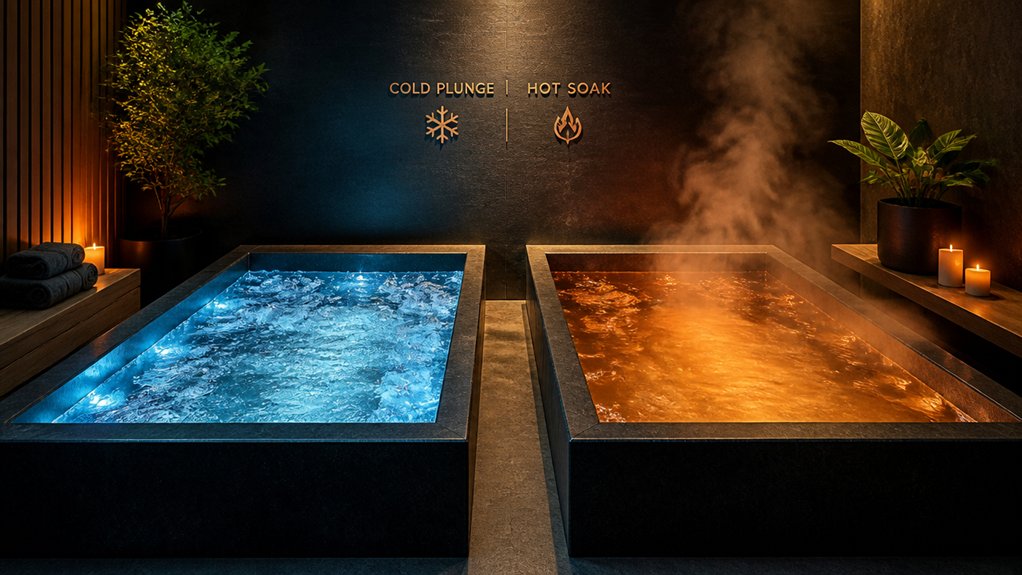
Contrast therapy works because alternating cold and heat treatments directly influence your blood vessels, improving circulation and speeding up recovery. During ice baths, blood vessels constrict, reducing inflammation and muscle soreness while limiting swelling.
When you switch to heat exposure, blood vessels dilate, increasing blood flow and delivering nutrients that aid muscle relaxation and repair. This cycle helps remove metabolic waste products efficiently and boosts oxygenation of your muscles.
Additionally, contrast therapy enhances nervous system recovery by balancing sympathetic stimulation from cold with parasympathetic activation from heat, supporting overall stress regulation. Utilizing appropriate timing intervals maximizes the benefits of contrast therapy by ensuring effective temperature shifts without overtaxing the body.
How Often Should You Use Cold and Heat Sessions? Find Your Ideal Frequency
Knowing how often to incorporate cold and heat sessions into your routine can maximize recovery without risking overtraining or unnecessary fatigue. For ice baths, aim for 2–3 sessions per week to support muscle recovery and inflammation reduction without overtaxing your body. Cold plunges after intense workouts help speed recovery processes, but daily ice baths can impair immunity and cause mental fatigue. Heat sessions like sauna use are beneficial 2–4 times weekly, aiding relaxation and further inflammation control, especially when combined thoughtfully with cold therapy. Always listen to your body, adjusting the frequency based on your training load and recovery needs. Spacing out ice baths and heat sessions guarantees peak benefits while maintaining safety and sustainability in your overall recovery routine. Incorporating proper treatment and considering water quality can also optimize your recovery experience.
How to Balance Safety and Effectiveness in Contrast Therapy
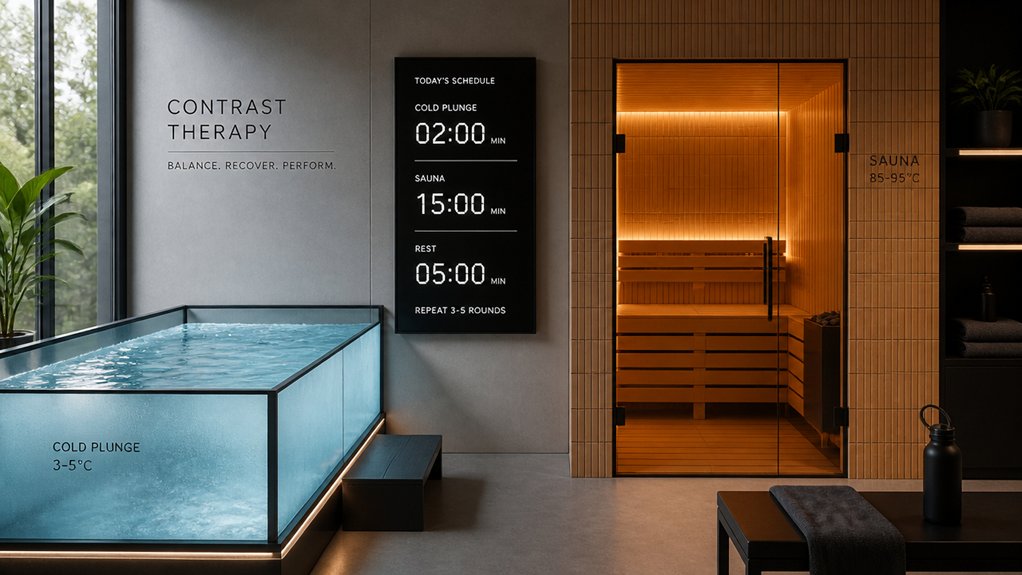
Balancing safety and effectiveness in contrast therapy requires careful planning and listening to your body.
The ideal contrast therapy frequency is typically 2–3 sessions per week, which provides recovery benefits without risking immune suppression. Alternating ice baths and heat sessions helps control inflammation reduction and boost circulation, supporting safe recovery.
Optimal contrast therapy is 2–3 sessions weekly, balancing recovery and immune health effectively.
Cold immersion immediately after exercise aids inflammation control, while heat sessions before workouts enhance blood flow and muscle readiness.
Keep ice baths under 15 minutes and moderate heat exposure to prevent hypothermia and overheating, maintaining nervous system balance. Pay attention to your body responses—adjust the frequency based on your fitness level, injury status, and mental fatigue.
This approach guarantees sustainable contrast therapy and optimizes recovery benefits safely.
Designing Your Weekly Cold and Heat Routine for Better Recovery
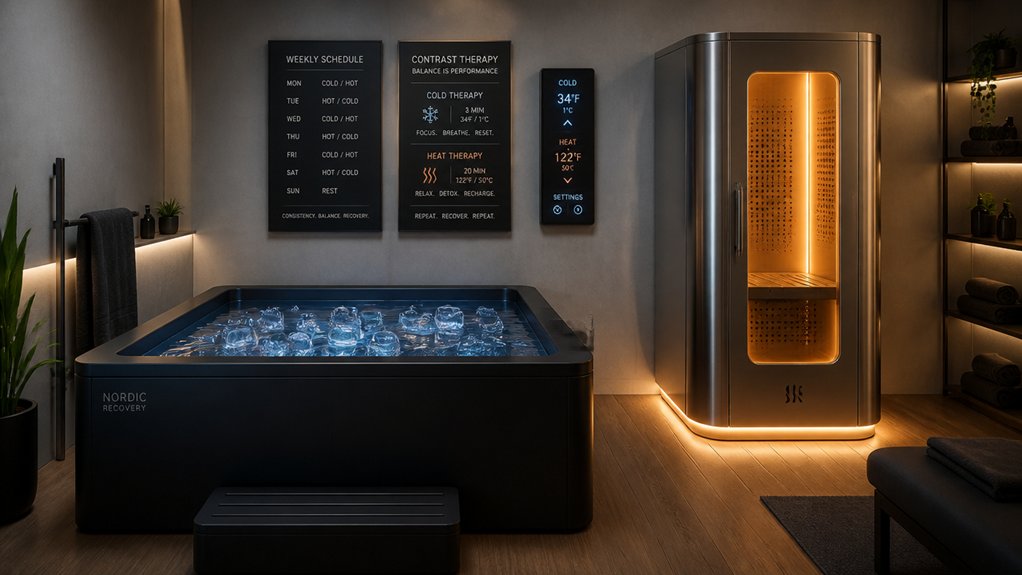
Designing a weekly routine for cold and heat therapy guarantees you get the maximum recovery benefits without overtaxing your body. Aim for about three sessions per week with ice baths, ideally post-exercise to reduce inflammation and muscle soreness.
Alternate cold exposure with heat sessions like sauna pods or warm showers—these promote circulation and muscle relaxation. Keep in mind:
- Avoid daily ice baths to prevent immune suppression and nervous system fatigue.
- Increase cold water therapy during high-load training phases, using heat on lighter or rest days.
- Listen to your body—adjust your routine based on how you feel to avoid overtraining.
- Proper water treatment and insulation help maintain water quality and temperature efficiency, enhancing your recovery sessions.
Balancing alternating cold and heat secures effective recovery while supporting overall resilience. This recovery tool, when tailored correctly, optimizes benefits without risking burnout.
Tips to Optimize Your Contrast Therapy Routine and Avoid Common Mistakes
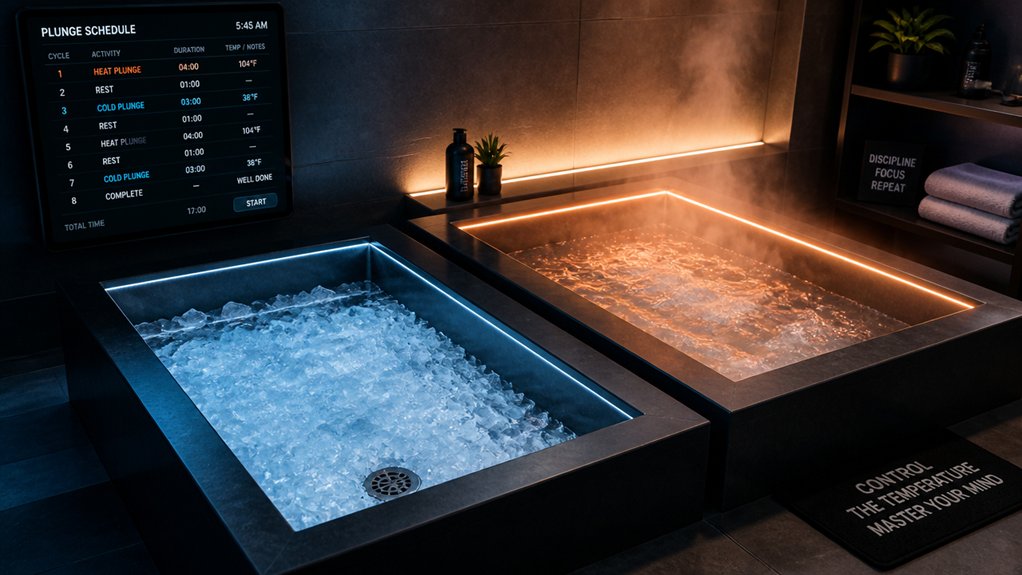
Wondering how to get the most out of your contrast therapy routine without overdoing it? Keep your ice baths and heat sessions balanced by sticking to a 2–3 times weekly frequency schedule.
Start with shorter ice baths (3–6 minutes at 50–59°F) to prevent shock and promote peak vascular response. Post-exercise ice baths help reduce inflammation and muscle soreness, while heat sessions later improve blood flow and relax muscles.
Avoid daily ice baths to prevent negative side effects like immune suppression and mental fatigue. Pay close attention to your body signals—if you experience discomfort or nervous system overload, scale back.
Properly managing your contrast therapy guarantees recovery benefits without cold habituation or fatigue, enhancing your cold plunge experience safely. Incorporating appropriate cold retention durations ensures sustained therapeutic effects and deeper tissue recovery.
Frequently Asked Questions
What Is the Best Ice Bath Routine?
You should start with one ice bath weekly at 50–59°F for 3–6 minutes, gradually increasing to 2–3 sessions per week. Take them immediately after intense workouts and guarantee recovery time between sessions to maximize benefits and prevent overload.
How Frequently Should I Ice My Bath?
You should ice your bath 2 to 3 times a week to maximize recovery and minimize fatigue. Start with one session if you’re a beginner, then gradually increase based on how your body responds and recovers effectively.
Do Cold Plunges Help Neuropathy?
Cold plunges can help neuropathy by reducing inflammation and easing nerve irritation, but you should use them cautiously. Always consult your healthcare provider, avoid overexposure, and combine cold therapy with your medical treatments for best results.
Can Ice Baths Lower Blood Pressure?
Ice baths can lower your blood pressure over time by improving vessel elasticity and reducing arterial stiffness. However, avoid frequent sessions without consulting your healthcare provider, especially if you have hypertension, to prevent potential temporary increases in blood pressure.