Contrast therapy, which alternates hot and cold treatments, often provides better recovery benefits than ice-only methods. It combines the advantages of increased blood flow from heat with inflammation reduction from cold, helping your muscles heal faster and reducing soreness more effectively. This approach improves circulation and promotes quicker tissue repair. If you want to get the most out of your recovery, discovering how to create the ideal hot-and-cold routine can make a big difference.
What Are Cold and Hot Therapy, and How Do They Help?
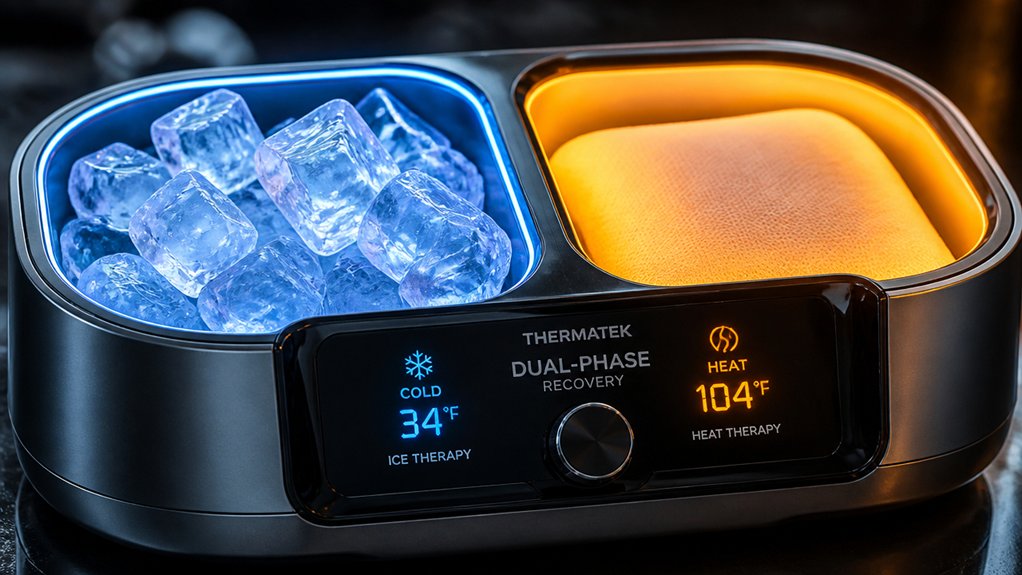
Ever wondered how cold and hot therapies assist in recovery? Cold therapy, or ice, reduces inflammation, swelling, and pain by constricting blood vessels and numbing pain receptors. It’s especially effective immediately after injury or intense exercise.
Cold therapy reduces inflammation and pain by constricting blood vessels, ideal immediately after injury or intense exercise.
Applying cold therapy helps limit tissue damage and eases soreness, particularly within the first 24 hours.
Heat therapy, on the other hand, increases blood flow, relaxes muscles, and boosts metabolism, which promotes faster healing and relieves stiffness and spasms.
When used correctly, these therapies complement each other—cold therapy controls inflammation, while heat therapy supports muscle relaxation and metabolic activity. Combining both can speed up recovery, reduce discomfort, and improve overall muscle health.
Understanding how each works helps you optimize your post-exercise or injury recovery plan.
When Should You Use Ice Therapy for Injury and Inflammation?
Use ice therapy immediately after an injury or within the first 48 to 72 hours to reduce swelling and inflammation.
Apply ice for 20 minutes at a time, with at least 30-40 minutes between sessions, to avoid skin damage and get the best anti-inflammatory effect.
Make sure to protect your skin with a towel barrier, especially for sensitive areas, and target joints like knees, elbows, or shoulders.
Choosing an appropriate cold plunge tub with effective insulation layers can help maintain consistent temperatures during therapy sessions.
Immediate Post-Injury Use
Applying ice therapy immediately after an injury is essential for controlling swelling and alleviating pain. Ice helps reduce inflammation by narrowing blood vessels, limiting bleeding, and preventing excessive swelling during the first 48 to 72 hours. Using appropriate bromine levels in ice baths can extend the benefits of cold therapy by ensuring sanitation without compromising temperature stability.
Use cold packs or ice wraps for 20 minutes on, then at least 30-40 minutes off, to prevent skin damage and allow proper blood flow. During this acute phase, cold therapy effectively decreases tenderness and pain sensations at the injury site. Avoid heat during this time, as increased blood flow can worsen inflammation and tissue damage. Prompt ice application helps manage inflammation and pain, setting the stage for a better recovery process.
Timing and proper techniques are vital for maximizing the benefits of ice in immediate post-injury care.
Acute Inflammation Reduction
When managing acute inflammation, it’s crucial to start cold therapy promptly after an injury, ideally within the first 48 to 72 hours. Applying an ice pack helps reduce pain and inflammation by constricting blood vessels, which decreases blood supply to the injured area. Use ice for about 20 minutes at a time, with a towel barrier to avoid skin damage.
This constriction limits swelling and controls bleeding, minimizing edema. Avoid heat during this stage, as heat increases blood flow and can worsen swelling and pain. After the initial phase, cold therapy remains the best option for reducing acute inflammation. Incorporating magnesium-based topical creams after cold therapy might also support muscle relaxation and recovery once the initial inflammation subsides.
Proper Application Techniques
Timing is essential when managing acute inflammation, and starting cold therapy as soon as possible after an injury can greatly reduce swelling and pain.
When applying ice, use an ice pack or cold compress for 15 to 20 minutes with a towel barrier to protect your skin from frostbite or nerve damage. After each session, wait 30 to 40 minutes before reapplying. Avoid applying ice directly to the skin, especially if you have sensitive skin or conditions like diabetes.
Once the initial swelling subsides, use heat to promote blood flow and relax muscles, but only after the inflammation phase.
Proper application techniques guarantee effective relief and prevent injury. Remember, ice therapy is most effective in the early stages, so timing and cautious use are key. Additionally, timer accuracy in extreme cold temperatures ensures your device functions properly during treatments in chilly environments.
How Does Heat Therapy Relax Muscles and Ease Stiffness?
Have you ever wondered how heat therapy helps relax muscles and relieve stiffness? When you apply heat therapy, it increases blood flow to the muscles, delivering oxygen and nutrients that promote relaxation and healing. This warmth causes blood vessels to widen, reducing joint stiffness and muscle spasms, making your muscles more pliable.
Heat therapy also speeds up tissue metabolism, helping to eliminate chemical byproducts like lactic acid that cause soreness. Applying moist heat for about 15 minutes can soothe tight muscles effectively after exercise or strain. It’s particularly useful for large muscle groups and is best used after the initial swelling phase has subsided, usually after 48 hours post-injury.
- Enhances blood circulation and oxygen delivery
- Reduces muscle spasms and tightness
- Accelerates removal of soreness-causing byproducts
- Improves tissue flexibility and comfort
- Provides deep muscle relaxation
How Does Contrast Therapy Work to Accelerate Healing?
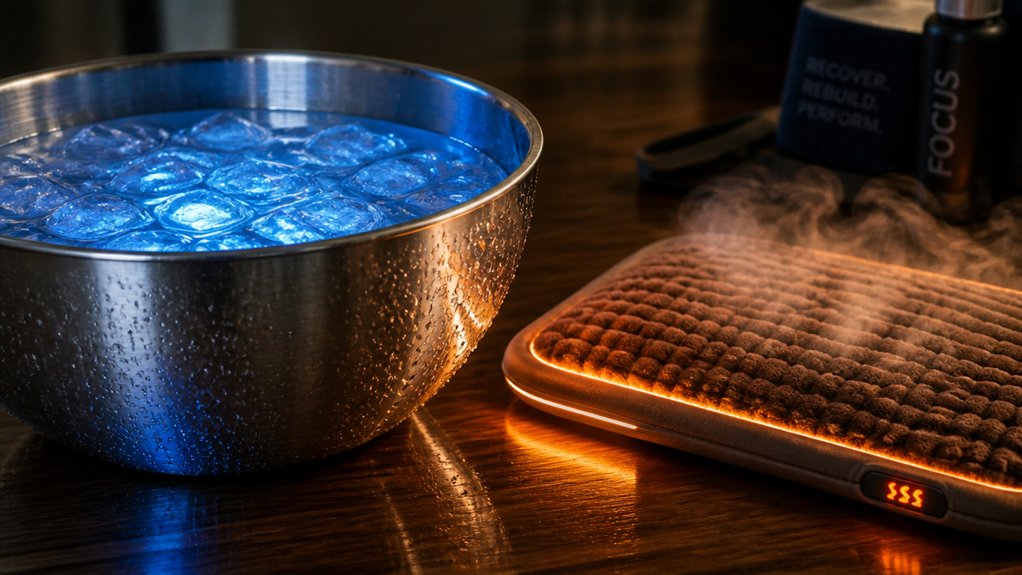
How does contrast therapy accelerate healing? Contrast therapy works by alternating between heat and cold to optimize recovery. When you apply heat, it boosts blood flow and relaxes muscles, promoting faster healing and preventing tissue damage. Cold therapy, on the other hand, reduces swelling, inflammation, and pain, especially when used 24 hours after exercise. Additionally, anti-inflammatory ingredients in recovery oils can further enhance the benefits of contrast therapy. By cycling between approximately 15 minutes of heat and 20 minutes of cold, with the session ending on cold, contrast therapy enhances circulation and manages inflammation effectively. This approach helps your muscles recover more efficiently than using ice alone, which can lead to less strength loss—about 4% versus 24%.
How Contrast Therapy Boosts Circulation and Promotes Recovery
Ever wondered how contrast therapy actually improves circulation and speeds up recovery? When you switch between heat and cold, you stimulate your blood vessels to dilate then constrict. This process enhances blood flow, helping your body deliver oxygen and nutrients more efficiently while removing metabolic waste like lactic acid.
Cold therapy also reduces inflammation and numbs pain, supporting quicker recovery. Combining heat and cold immediately after exercise boosts muscle repair and reduces damage better than ice alone.
Contrast therapy works by:
- Increasing oxygen delivery via heat
- Reducing swelling through cold constriction
- Promoting micro-tear repair
- Enhancing circulation for faster waste removal
- Relaxing muscles for better metabolism
This cyclical process speeds recovery and supports muscle health more effectively than single-temperature treatments.
Safe Ways to Apply Cold Packs and Warm Compresses at Home
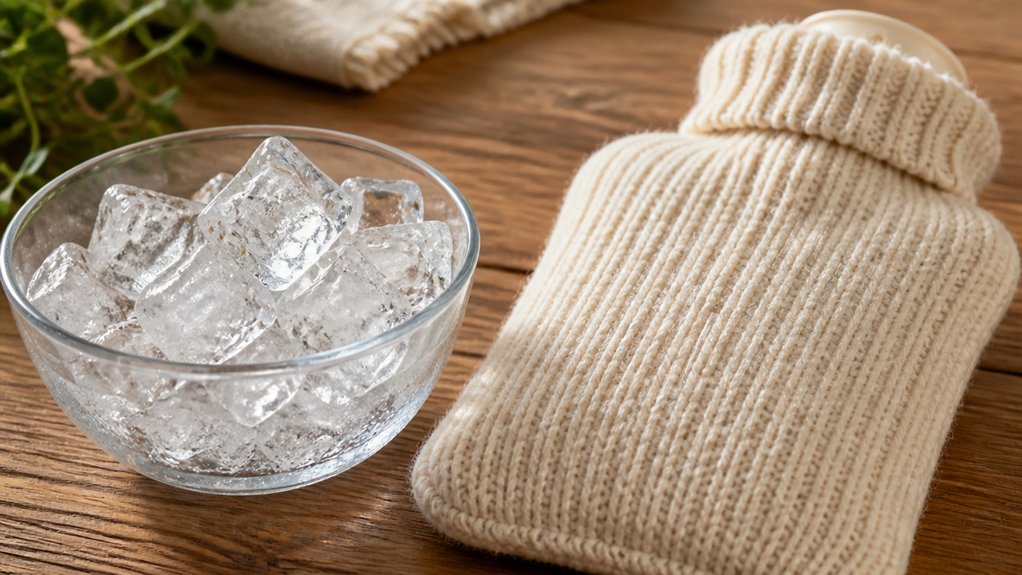
Using cold packs and warm compresses correctly can greatly enhance your recovery process while preventing injury. Always make sure to place a cloth barrier, like a towel, between the cold or heat source and your skin. For cold therapy, use melting ice packs—not direct ice—to avoid nerve damage, limiting application to 20 minutes, then wait 30-40 minutes before reapplying. Warm compresses or heat should be used for no longer than 15-20 minutes per session. Whether to use ice or heat depends on the affected area and timing; cold reduces blood flow and inflammation, while heat makes muscles more flexible. Remember, don’t apply heat within the first 48 hours after an injury. Use both ice and heat carefully, targeting specific muscle groups and body parts for safe, effective recovery. Proper water treatment and regular maintenance of your cold plunge can also support your overall recovery routine.
Is Cold, Heat, or Contrast Therapy Better for Your Injury?
Wondering which therapy works best for your injury? Cold, heat, or contrast therapy each offers unique benefits depending on your recovery stage.
Considering cold, heat, or contrast therapy? Each supports different recovery stages for optimal healing and performance.
- Cold therapy helps immediately and 24 hours after exercise by numbing pain receptors and reducing inflammation.
- Heat therapy right after exercise promotes faster strength recovery and prevents tissue damage.
- Contrast therapy combines both: heat boosts blood flow, while cold reduces swelling and stiffness.
- Using both approaches can minimize strength loss—studies show only about 4% with therapy versus 24% without.
- Contrast therapy is especially useful for managing swelling at different recovery stages, whereas ice-only suits acute injuries.
- Proper water treatment and insulation features ensure safe, effective recovery sessions for home setups.
When and How Long Should You Use Cold, Heat, or Contrast Treatments?
Knowing when and how long to apply cold, heat, or contrast treatments can greatly impact your recovery. Use cold therapy immediately after injury or intense exercise for 15-20 minutes, with at least 30-40 minutes off to prevent vasodilation. After 48-72 hours, switch to heat therapy for 15-20 minutes to boost circulation and relax muscles. Contrast treatments involve alternating 20 minutes cold with 15 minutes heat; finish with cold to control inflammation. Avoid heat within the first 48 hours to prevent increased swelling, and never apply directly to skin to avoid burns. Proper wattage and heat types, such as infrared lamps or ceramic emitters, help ensure safe and effective treatment temperature control. Here’s a quick guide:
| Treatment Type | Timing | Duration |
|---|---|---|
| Cold | Immediately after injury or exercise | 15-20 minutes |
| Heat | Post 48-72 hours, during recovery | 15-20 minutes |
| Contrast | During recovery, alternating treatments | 20 min cold, 15 min heat |
Best Recovery Strategies for Common Injuries: Cold, Heat, or Both?
When treating common injuries, selecting the right recovery strategy can make a significant difference in healing speed and pain management.
Using cold therapy immediately after injury helps reduce inflammation, swelling, and pain, while heat therapy works best after 48 hours to relax muscles and increase blood flow. Combining hot and cold treatments in cycles can optimize recovery by controlling inflammation and enhancing muscle repair.
Applying ice within the first 72 hours is ideal for acute inflammation, but adding heat afterward aids in muscle relaxation and waste removal. Studies show both therapies minimize strength loss after intense activity, making a hot-and-cold approach superior to using ice alone.
- Use ice first, especially in early stages
- Switch to heat after 48 hours
- Combine treatments for faster recovery
- Prevent muscle damage with heat pre-activity
- Enhance overall healing with cycle therapy
Risks and Precautions When Using Cold and Heat Therapies
Applying cold and heat therapies can be effective, but it’s essential to do so safely to prevent complications. Always protect your skin by using a barrier like a towel to avoid burns from heat or frostbite from cold.
Don’t apply heat within the first 48 hours after injury to prevent worsening inflammation and swelling. Limit ice application to 20 minutes per session, with 30-40 minute breaks, to avoid skin damage and excessive vasodilation.
If you have conditions such as diabetes, neuropathy, or allergies to cold, take extra caution due to impaired sensation and higher risk of injury. Never apply ice or heat directly on open wounds, surgical areas, or infections, as doing so can cause further complications or delay healing.
Combining Contrast Therapy With Other Recovery Techniques
Combining contrast therapy with other recovery methods can boost circulation, reduce muscle tension, and speed up healing.
When used with rest, stretching, or massage, it enhances overall recovery effectiveness. Just remember to stay safe by integrating these techniques thoughtfully and listening to your body’s responses.
Enhancing Circulation and Healing
Enhancing circulation and healing is most effective when contrast therapy is integrated with other recovery methods. Alternating heat and cold stimulates vasodilation and vasoconstriction, promoting faster waste removal and oxygen delivery.
Applying heat right after exercise boosts blood flow and metabolic activity, supporting tissue repair, while cold therapy reduces inflammation and numbs pain, creating a synergistic effect. Combining contrast therapy with active recovery, like light stretching or low-intensity exercise, further accelerates healing by increasing blood flow and reducing stiffness.
Research highlights that this approach can cut strength loss from 24% to about 4%, improving recovery efficiency. When paired with proper rest, hydration, and nutrition, contrast therapy enhances muscle repair processes and minimizes delayed onset muscle soreness (DOMS).
Reducing Muscle Tension
To effectively reduce muscle tension, you should consider integrating contrast therapy with other recovery techniques like gentle stretching and massage. Alternating heat and cold relaxes tight muscles, enhances blood flow, and reduces inflammation. Use heat to loosen muscles and increase circulation, then cold to decrease soreness and prevent tissue damage. Sessions typically last 15-20 minutes each, boosting recovery beyond ice-only methods. Adding stretching and massage afterward deepens relaxation and speeds up healing. Here’s how contrast therapy and these techniques work together:
| Technique | Benefits |
|---|---|
| Heat Therapy | Relaxes muscles, boosts blood flow |
| Cold Therapy | Reduces inflammation, numbs soreness |
| Gentle Stretching | Enhances flexibility, relieves tightness |
| Massage | Breaks up lactic acid, promotes relaxation |
| Contrast Therapy | Combines benefits, minimizes strength loss post-exercise |
Combining Techniques Safely
Integrating contrast therapy with other recovery methods requires careful attention to safety and timing. To maximize benefits and prevent injury, follow these guidelines:
- Use cold therapy immediately after exercise or injury to reduce swelling and pain.
- Apply heat afterward to boost blood flow and ease muscle tension.
- Keep ice on 15-20 minutes and heat for about 15 minutes, with 30-40 minute breaks.
- Combine contrast therapy with gentle stretching or light activity once the acute phase passes.
- Always protect your skin with barriers like towels and avoid prolonged exposure to prevent burns or frostbite, especially when combining multiple therapies.
Create Your Own Cold-and-Heat Routine for Faster Healing
Creating your own cold-and-heat routine can accelerate healing by tailoring treatments to your specific needs and injury stage.
Start with ice therapy immediately after injury or exercise, applying cold packs for 15-20 minutes to reduce inflammation and numb pain. After 24 to 48 hours, switch to heat therapy with warm towels or heating pads for about 15 minutes to boost blood flow, relax muscles, and support healing.
To maximize benefits, alternate treatments: apply ice for 20 minutes, rest for 30-40 minutes, then use heat for 15 minutes. Always protect your skin with a barrier and avoid heat in the first 48 hours to prevent worsening inflammation. Adjust treatments based on pain levels and stage of recovery for peak healing.
What the Research Says About the Effectiveness of Contrast Therapy
Research shows that contrast therapy—alternating heat and cold—can greatly boost muscle recovery after exercise. It combines heat’s ability to increase blood flow with cold’s pain relief and inflammation reduction, offering all-encompassing benefits.
Studies reveal that applying heat immediately after exercise helps in strength recovery, while cold therapy benefits recovery when used 24 hours later. Using either method alone markedly reduces strength loss—down to 4% compared to 24% without therapy.
Combining hot and cold treatments, with proper timing, may optimize recovery efforts. The sequence matters: heat first for elastic tissue protection, followed by cold for pain relief. Overall, the research suggests that contrast therapy can be more effective than single therapies if used correctly, making it a valuable recovery strategy.
Choosing the Right Recovery Method: Single Therapy or Contrast?
When deciding between a single therapy or contrast therapy for recovery, understanding how each method works and when to use them can make a significant difference. Heat therapy right after exercise can prevent tissue damage and promote faster strength recovery. Cold therapy 24 hours later helps reduce pain and boosts recovery. Using both sequentially—heat first to relax muscles and increase blood flow, then cold to lessen inflammation—offers all-encompassing benefits. Studies show that applying either heat or cold alone results in only 4% muscle strength loss compared to 24% without therapy.
| Therapy Type | Best Timing | Benefits |
|---|---|---|
| Heat therapy | Immediately after exercise | Prevents tissue damage, reduces stiffness |
| Cold therapy | 24 hours after exercise | Pain relief, reduces inflammation |
| Contrast therapy | Sequential, starting with heat then cold | Combines benefits of both, enhances recovery |
| No therapy | – | 24% strength loss |
| Both therapies | – | Accelerates recovery, minimizes strength loss |
Frequently Asked Questions
What’s Better for Recovery, Ice or Heat?
You should combine heat and cold therapy for ideal recovery. Use heat to relax muscles and improve blood flow, then cold to reduce inflammation and numbing pain. Alternating them promotes faster, more effective healing after exercise or injury.
Why Is Ice No Longer Recommended?
Ice is no longer recommended because it can cause vasoconstriction, slow healing, and limit blood flow essential for tissue repair. Overuse may lead to skin damage and rebound vasodilation, reducing its effectiveness for recovery.
Does Icy Hot Help With Recovery or Just Pain?
Icy Hot mainly helps with pain relief rather than speed up recovery. It numbs discomfort and relaxes muscles temporarily, but for effective recovery, you still need proper cold or heat therapy protocols focused on reducing inflammation and promoting tissue healing.
Why 20 Minutes on 20 Minutes off Ice?
You should ice for 20 minutes on and 20 minutes off because this cycle effectively reduces inflammation and numbs pain without risking skin damage or nerve injury. It balances cooling benefits with safety, maximizing recovery while minimizing risks.