
Cold water therapy activates your stress response, increasing hormones like adrenaline, norepinephrine, and cortisol, especially during nighttime. Your menstrual cycle influences how your body tolerates cold; for example, estrogen boosts cold tolerance, while progesterone can cause sensitivity. Cold exposure doesn’t directly change estrogen or progesterone but impacts overall hormonal balance and stress resilience. Timing your dips according to your cycle optimizes benefits and safety. Keep exploring to discover how to make cold therapy work best for your hormonal health.
How Cold Water Activates Your Stress Response
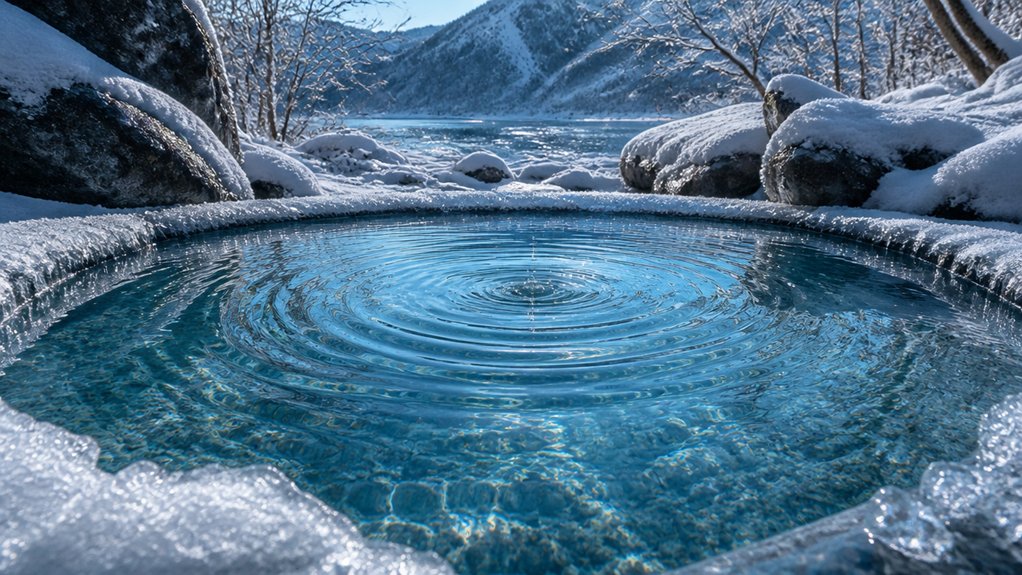
When you immerse yourself in cold water, your body reacts instantly by activating the sympathetic nervous system, triggering an acute stress response. Cold water immersion prompts a rapid release of stress hormones like adrenaline and norepinephrine, which can increase up to 500% during cold shock.
These hormonal changes cause blood vessel constriction and elevate your heart rate, helping mobilize energy swiftly for survival. The surge in cortisol and adrenaline is brief but significant, supporting physiological adaptation and metabolic shifts that improve resilience over time.
Notably, cold water immersion, especially at night, induces a stronger stress response compared to daytime, with higher levels of cortisol, ACTH, and epinephrine. This natural response ultimately trains your body to handle stress more effectively.
How Menstrual Phases Affect Cold Tolerance and Hormonal Responses
Your menstrual cycle greatly influences how your body responds to cold water exposure, as hormonal fluctuations modify your sensitivity and tolerance. During the menstrual phase, low progesterone makes you more sensitive to cold, so limit cold plunge durations to about a minute to prevent worsening cramps. In the follicular phase, rising estrogen enhances energy and cold tolerance, allowing for longer cold immersion of 2–3 minutes. Around ovulation, peak estrogen makes cold water therapy more comfortable, with typical sessions lasting 1–3 minutes. During the luteal phase, elevated progesterone raises core temperature, increasing fatigue and requiring brief cold exposure of 30–90 seconds to avoid worsening PMS symptoms. Tailoring cold water therapy to cycle phases optimizes hormone health and minimizes hormonal stress.
| Menstrual Phase | Hormonal State | Cold Water Response |
|---|---|---|
| Menstrual | Low progesterone | Sensitive, brief exposure |
| Follicular | Rising estrogen | Increased tolerance, longer dips |
| Ovulation | Peak estrogen | Comfortable, moderate durations |
| Luteal | Elevated progesterone | Higher core temp, brief exposure |
Does Cold Exposure Change Progesterone and Estrogen Levels?
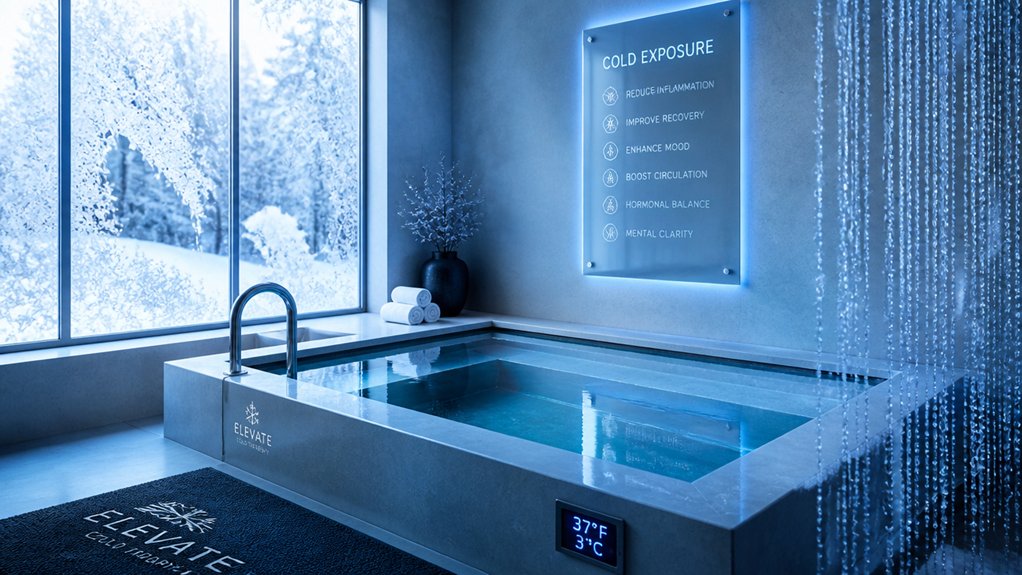
Does cold exposure directly influence the levels of progesterone and estrogen? Not exactly. Cold water immersion can elevate cortisol and adrenaline, which might indirectly affect progesterone levels, especially during the luteal phase, possibly disrupting hormone balance and worsening PMS symptoms.
Incorporating adaptogens like ashwagandha and rhodiola supports stress resilience and may help mitigate some of these hormonal fluctuations caused by cold exposure.
When to Cold Plunge During Your Cycle for Best Hormonal Support
Timing your cold plunges to align with your menstrual cycle can enhance hormonal support and reduce discomfort. During the follicular phase (Days 6-14), rising estrogen improves hormone balance and energy, making this ideal for longer cold immersion (2-3 minutes). Menstruation (Days 1-5) benefits from brief exposure (~1 minute), with warming beforehand to minimize sensitivity. The ovulation phase (~Days 14-17) peaks estrogen, so cold water therapy (1-3 minutes) can boost mental clarity without disrupting hormones. In the luteal phase (Days 15-28), elevated progesterone raises core temperature, making short dips (30-90 seconds) preferable to avoid PMS flare-ups. Listening to your body and adjusting timing guarantees peak hormonal benefits from cold immersion. Incorporating water treatment solutions can also support water quality and ensure a safe, effective cold plunge experience during your cycle.
How to Practice Cold Water Therapy Safely Throughout Your Cycle
Practicing cold water therapy safely throughout your cycle involves paying close attention to your body’s signals and making adjustments based on how you feel during each phase.
Listening carefully and adjusting your practice ensures safe, beneficial cold water therapy throughout your cycle.
During menstruation, keep cold water immersion to about 1 minute and add heat beforehand to reduce cramps and inflammation while preventing prolonged cold sensitivity.
In the follicular phase, with rising estrogen and higher energy, colder plunges of 2–3 minutes at 14–15°C support hormonal balance and metabolic health.
Around ovulation, shorter dips of 1–3 minutes optimize mental clarity and energy, benefiting from peak estrogen and increased cold tolerance.
During the luteal phase, limit immersion to 30–90 seconds to avoid aggravating PMS symptoms caused by higher progesterone and body temperature.
Always listen carefully, especially if feeling cold-intolerant or fatigued, and incorporate warm-up and post-plunge heat to maintain hormonal balance and nervous system health.
Furthermore, choosing the right water treatment solutions and ensuring proper insulation can enhance safety and effectiveness during each cycle phase.
Frequently Asked Questions
Are Cold Plunges Bad for Female Hormones?
Cold plunges aren’t inherently bad for your hormones if timed correctly and practiced safely. They can help regulate cycles and mood, but avoid extreme exposure or during menstruation to prevent hormonal disruptions and excessive stress hormone production.
Does Cold Water Cause Hormonal Imbalance?
Cold water can cause hormonal imbalance by elevating cortisol and adrenaline, especially if done excessively or at sensitive times. However, moderate, well-timed cold plunges with warming afterward typically don’t disrupt hormones in most women.
Who Should Avoid Cold Water Therapy?
You should avoid cold water therapy if you have heart conditions, vascular diseases, or Raynaud’s syndrome, are pregnant, on hormone-related medication, or experience strong cold aversion, menstrual issues, or metabolic disorders, as it may worsen your health.
What Happens to the Body After 30 Days of Cold Showers?
After 30 days of cold showers, you’ll notice improved mood, focus, and energy due to increased norepinephrine and dopamine. Your stress resilience rises, circulation improves, fat burning speeds up, and hormonal balance, especially in women, becomes more regulated.