After an ice bath, start by drying off with a towel and layering warm clothes to restore body heat. Gently stretch or walk to boost circulation and reduce stiffness. Drink warm beverages and eat balanced meals to replenish energy and fluids. Practice deep breathing or mindfulness to calm your nervous system. Monitor how you feel and adjust your recovery methods accordingly. If you continue exploring, you’ll discover even more effective strategies to speed up your recovery process.
Begin by Drying Off and Layering Warm Clothing
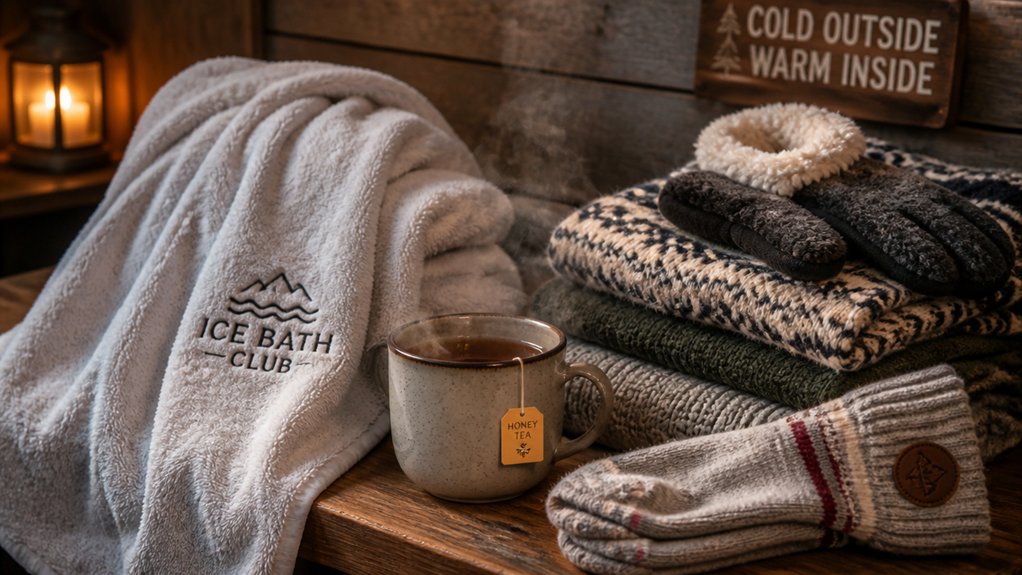
After exiting the ice bath, it’s essential to dry off slowly with a towel or robe to prevent rapid heat loss. Carefully drying off helps start the rewarming process and reduces heat loss from your skin and extremities. Incorporating the use of passive insulation from thermal socks or neoprene booties during this stage can further enhance warmth retention. Next, layering warm clothing is critical; it supports gradual recovery of your body temperature and lessens shivering, which can drain your energy. Wearing dry socks and insulating layers made of wool or fleece enhances warmth retention and moisture-wicking. These natural fibers keep your skin dry and promote circulation, preventing numbness or tingling in your limbs. Proper drying and clothes help restore blood flow, reduce stiffness, and protect your body from further heat loss, ensuring a safer, more effective recovery after your ice bath.
Gently Stretch and Walk to Boost Circulation
Once you’ve dried off and layered warm clothing, gentle movements can help kickstart circulation and enhance recovery. Light activities like walking or gentle stretching promote blood flow, encouraging vasodilation, which helps flush out metabolic waste and reduce muscle stiffness. Moving slowly prevents prolonged vasoconstriction caused by ice baths, supporting a smooth change back to normal temperature and circulation. These activities are also effective at reducing swelling and alleviating numbness or tingling sensations. Keep movements low-intensity to avoid strain, aiming for 5 to 10 minutes of walking or stretching. This approach guarantees your body rewarms gradually, boosting recovery without risking injury or muscle strain. Incorporating high-density foam rollers can further aid in muscle relaxation and aid recovery post-ice bath.
Hydrate With Warm Beverages and Eat Nutritious Foods
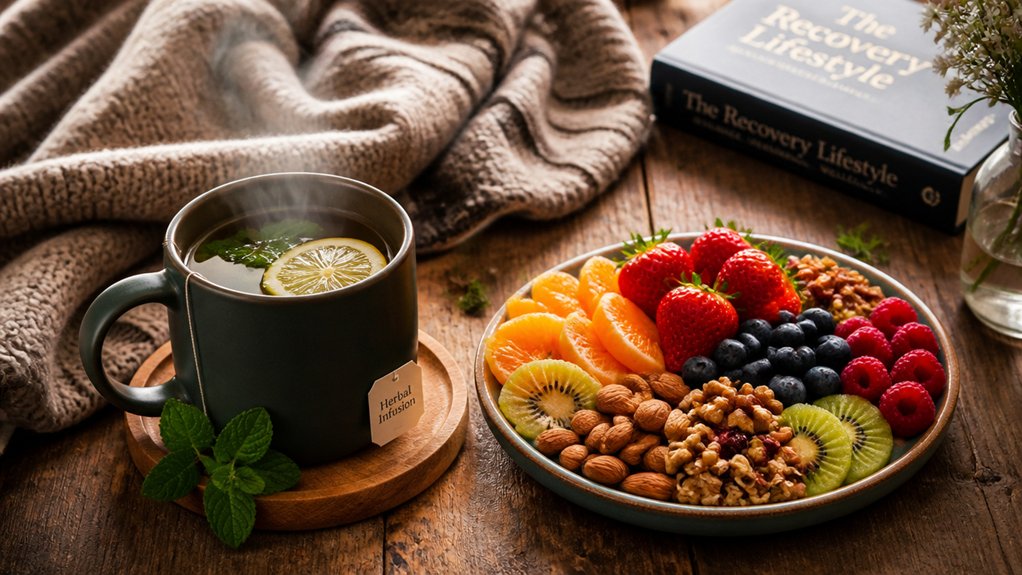
Hydrating with warm beverages and eating nutritious foods directly supports your recovery process after an ice bath. Warm drinks like herbal tea or warm water with lemon aid rehydration and help manage cold-induced shivering, promoting natural thermoregulation.
Consuming a balanced snack or meal rich in carbohydrates and proteins replenishes glycogen stores and supports muscle repair, essential after cold exposure. Proper hydration replaces fluids and electrolytes lost through vasoconstriction and cold-induced diuresis, ensuring peak physiological recovery. Incorporating electrolyte balance into your post-ice bath routine helps optimize rehydration and muscle function.
Warm fluids also enhance circulation, facilitating nutrient delivery to sore muscles. Avoid alcohol and caffeine immediately afterward, as they can hinder hydration and recovery. Prioritizing these practices helps boost your rehydration efforts while fueling your muscles to recover effectively from cold exposure.
Practice Deep Breathing and Mindfulness to Calm Your Nerves
Practicing deep breathing and mindfulness immediately after an ice bath helps calm your nervous system and speeds up recovery. Controlled breathing, like inhaling slowly through your nose and exhaling through your mouth, aids natural thermoregulation and reduces cold-induced stress.
Engaging in mindfulness techniques, such as meditation or focused breathing, lowers cortisol levels and enhances mental recovery by calming your nervous system. Deep breathing activates your parasympathetic nervous system, counteracting the shock response from cold exposure and promoting relaxation.
This process stimulates the anterior midcingulate cortex (aMCC), strengthening mental toughness and stress tolerance. Incorporating breathwork into your recovery strategy supports a smoother shift to normal body temperature, diminishes shivering, and accelerates physiological and psychological recovery, making it a crucial step after an ice bath. One effective breathing exercise tool can help optimize your practice and monitor progress for better cold plunge recovery.
Monitor How Your Body Responds and Adjust Your Recovery
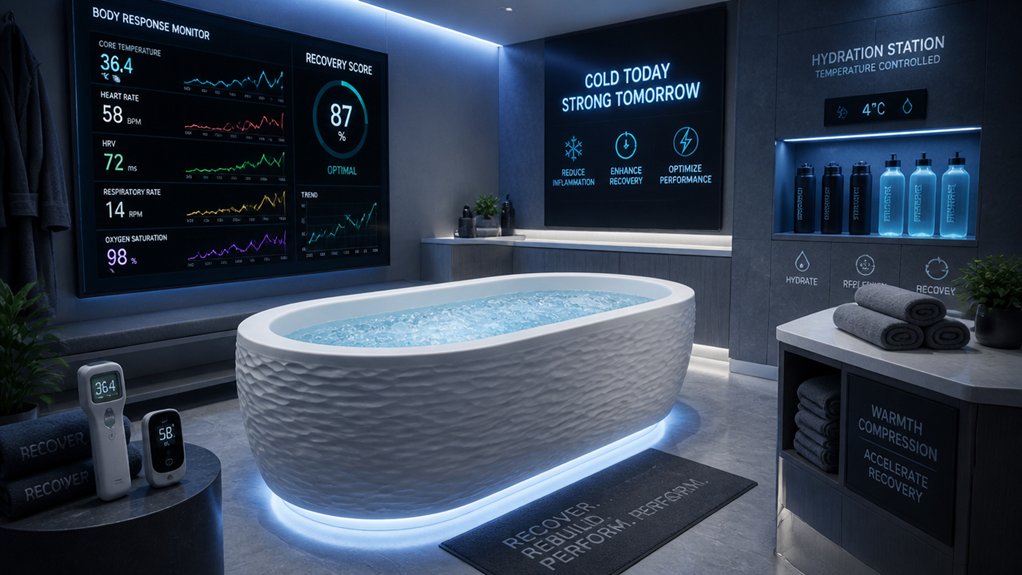
To optimize your recovery, pay close attention to how your body responds after an ice bath by keeping a detailed journal of your physical sensations, mood changes, and recovery markers over 24 to 48 hours. Monitor signs like muscle soreness, fatigue, and temperature fluctuations to understand your body’s reaction to the ice baths. Using a recovery tracking app can help you organize and analyze this data more effectively. Observe any skin reactions such as redness or itchiness, and avoid scratching, using gentle moisturizers if needed. Assess your mental recovery by tracking stress and alertness levels, using breathing or mindfulness techniques to support thermoregulation. Based on body feedback, gradually adjust the temperature, duration, or frequency of your ice baths, ensuring safe warming protocols. This approach helps tailor recovery strategies for ideal results.
Frequently Asked Questions
How to Recover After an Ice Bath?
After an ice bath, you should dry off slowly, wear warm clothing, engage in gentle movements, and drink warm beverages. Wait 5-10 minutes before applying heat, and moisturize your skin to promote safe, effective recovery.
Does an Ice Bath Speed up Recovery?
Yes, an ice bath speeds up recovery by reducing inflammation, soreness, and metabolic waste, especially when done within 30–60 minutes post-exercise. It improves blood flow and decreases fatigue, helping you recover faster and perform better.
What Not to Do After an Ice Bath?
After an ice bath, don’t jump into hot showers, consume alcohol or caffeine, engage in strenuous activities, expose extremities to heat, or scratch irritated skin. These actions can hinder recovery, cause injury, or worsen skin issues.
How Long Does It Take to Recover From a Cold Plunge?
You typically recover within 24 to 48 hours after a cold plunge. Your body gradually rewarms, blood flow improves, and soreness decreases over that time. Gentle movement and proper hydration speed up your recovery process.