To prepare for your cold plunge, try five quick activation moves: arm circles to boost shoulder circulation, leg swings to loosen hips, torso twists to improve mobility, high knees to raise your core temperature, and gentle neck rolls to relieve tension. These easy movements get your blood flowing and muscles ready, making the experience safer and more comfortable. Keep going for more tips on optimizing your warm-up and cold plunge routine.
Why Warming Up Before Cold Plunge Matters for Comfort and Safety
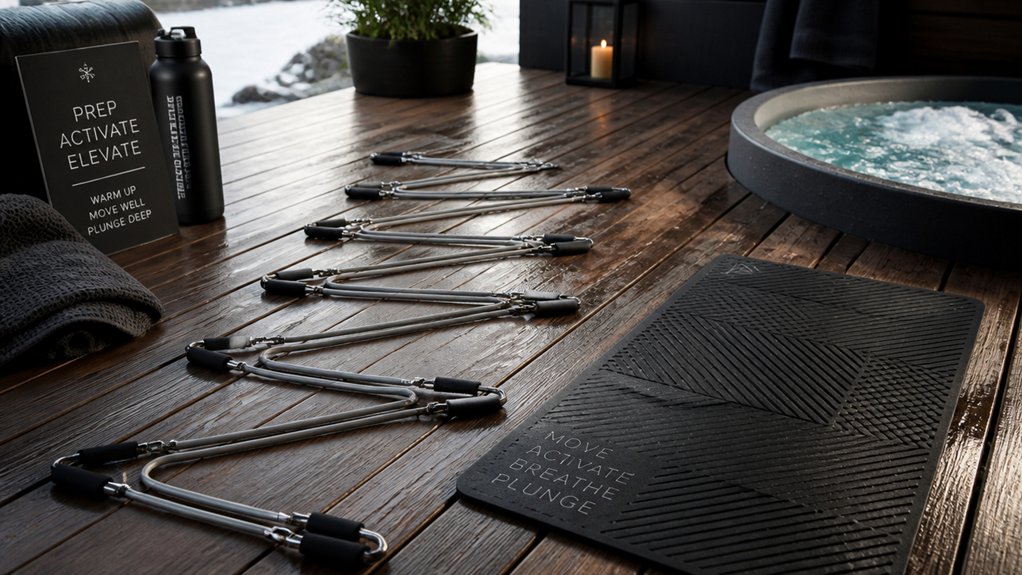
Warming up before a cold plunge is essential because it helps your body prepare for the sudden exposure to cold, making the experience more comfortable and safer. During a pre-workout cold plunge, gentle movement increases your body temperature, boosting circulation and blood flow to muscles. This warming up prevents excessive core temperature reduction, which can cause shock or discomfort. It also helps maintain muscle contractility, reducing stiffness after plunging. Additionally, using firm foam rollers can help activate your muscles and improve circulation prior to cold exposure. Activating the parasympathetic nervous system through controlled warm-up exercises enhances breathing and stress management during immersion. Starting with an elevated baseline temperature lowers the risk of hypothermia and cardiovascular stress, especially for beginners. Overall, warming up optimizes your body’s response to plunging, elevating safety and comfort during your cold water experience.
What Are the Best Dynamic Stretches to Warm Up Before Cold Water?
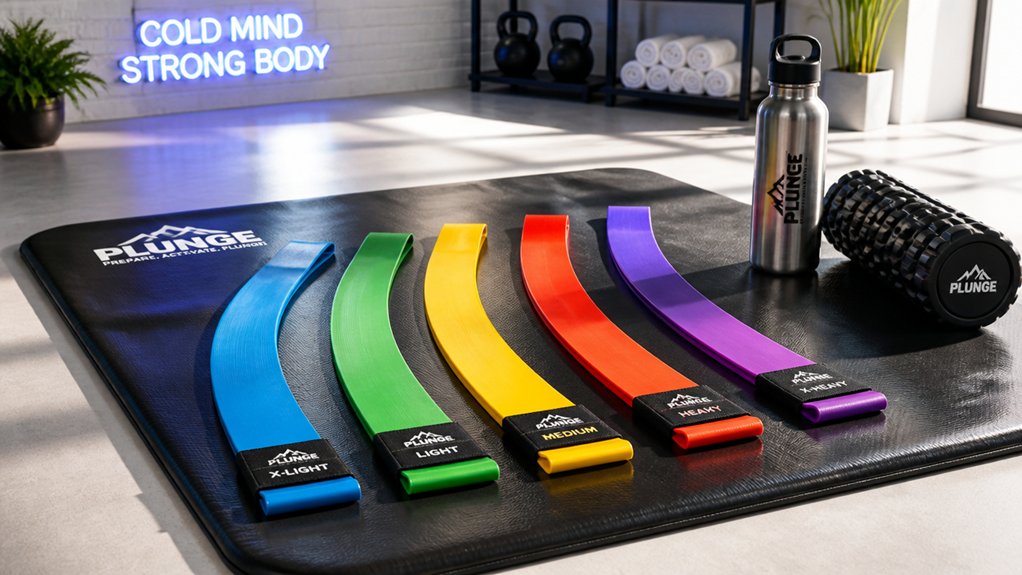
Incorporating dynamic stretches into your pre-cold plunge routine effectively boosts circulation and prepares your muscles for the cold exposure. Focus on movements that increase blood flow and joint mobility, reducing muscle stiffness during cold water immersion. Using resistance bands during your warm-up can further enhance muscle activation and flexibility, ensuring your body is optimally prepared. Typical stretches include:
Dynamic stretches before cold plunges enhance circulation and prepare muscles for cold exposure.
- Leg swings and arm circles to activate large muscle groups and enhance circulation.
- Torso twists and slow spinal rotations to improve thoracic mobility and support controlled breathing.
- Lunges and high knees perform for 3-5 minutes to raise your core temperature and loosen muscles, helping to stabilize your nervous system before plunging.
Combining these stretches with controlled breathing (inhale 4 counts, exhale 6 counts) helps prime your parasympathetic response, ensuring a smoother shift into cold water immersion.
How to Boost Circulation and Loosen Joints With Simple Movements
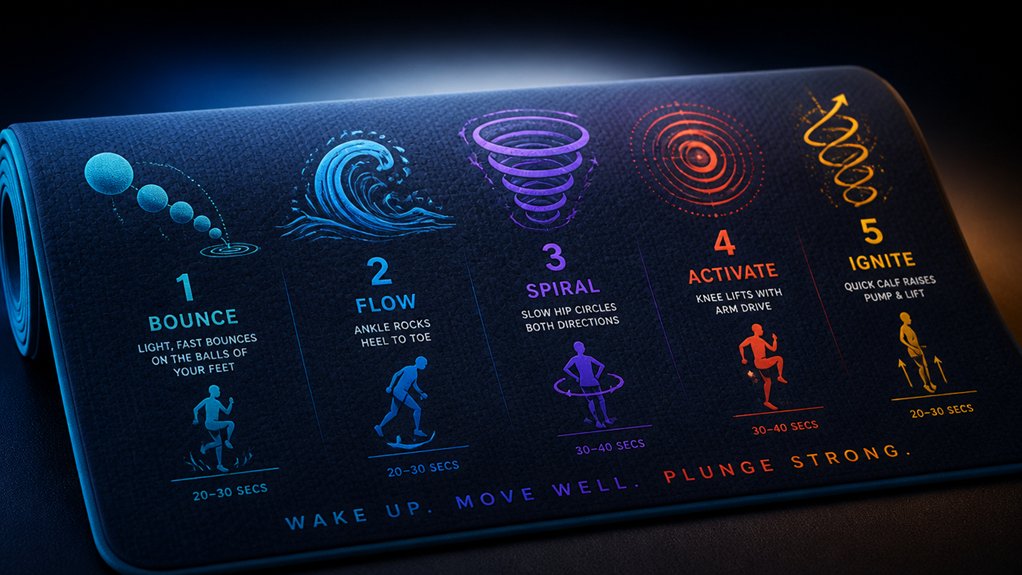
Boosting circulation and loosening joints before a cold plunge can be achieved through simple, dynamic movements that activate your muscles and joints.
Water immersion triggers, like arm and hip circles, increase synovial fluid flow, improving joint lubrication during your cold plunge routine. Light aerobic exercises such as jumping jacks or brisk walking raise blood pressure and stimulate circulation, providing the training stimulus needed for active recovery. Controlled limb swings help loosen muscles and enhance circulation to extremities, reducing muscle soreness and preparing your body for cold exposure.
Slow deep squats and lunges mobilize the lower body joints, boosting blood flow and flexibility. Gentle spinal twists and neck rolls improve spinal flexibility, aiding inflammation signaling that drives recovery benefits with moderate cold exposure per week.
Using precise timing and temperature control tools can optimize your warm-up and ice bath routines, ensuring you get the most out of each session.
How to Use Breathing Exercises to Enhance Your Pre-Plunge Warm-Up
Before stepping into cold water, your breath can be a powerful tool to prime your body and mind. Using targeted breathing exercises during your pre-plunge routine boosts relaxation and prepares your nervous system.
- Practice slow, controlled diaphragmatic breathing with a 4-count inhale and 6-count exhale to activate your parasympathetic nervous system, calming stress responses.
- Incorporate breath-hold exercises after a deep exhale to increase carbon dioxide tolerance and enhance cold resilience.
- Use rhythmic nasal breathing to stabilize your heart rate and reduce shock, supporting mental focus and calm before immersion.
- Utilizing effective breathing exercise tools can help you achieve more consistent and controlled breath patterns, optimizing your pre-plunge preparation.
These techniques optimize vasoconstriction, improve oxygen delivery, and modulate your stress response, setting the stage for a safer, more controlled cold plunge.
How to Customize Your Pre-Plunge Routine for Better Comfort and Safety
Customizing your pre-plunge routine guarantees you stay comfortable and safe during cold water immersion. Start with gentle dynamic movements like arm circles and leg swings to boost circulation and raise muscle temperature before cold immersion.
Adjust your warm-up intensity based on the cold plunge temperature and duration; for colder water (50-55°F), keep mobility exercises light. Perform controlled breathing exercises—inhale for 4 counts, exhale for 6—to activate your parasympathetic nervous system and prepare your nervous system.
Include joint rotations and light bodyweight movements to reduce stiffness, especially if your pre-plunge exceeds three minutes. Avoid strenuous activity right before cold immersion to prevent dropping core temperature too quickly and to support ideal rewarming after the plunge.
Incorporating adaptogen support into your routine can enhance your stress resilience and recovery, making your cold plunge experience more balanced and effective.
Frequently Asked Questions
What Is the 3 3 3 Rule for Exercise?
The 3 3 3 rule for exercise involves doing three different movements, each for three sets of three repetitions. You focus on quality, controlled movements to warm up muscles, boost blood flow, and prepare safely for activity.
Is a 2 Minute Cold Plunge Enough?
Yes, a 2-minute cold plunge is enough to activate your nervous system, boost alertness, and prepare your body for exercise. It minimizes risks while providing neurological priming, especially effective before warm-up and intense workouts.
What Are the Pre Run Activation Exercises?
You should include dynamic exercises like leg swings, walking lunges, high knees, and resistance band monster walks. These activate your glutes, hamstrings, and calves, boost blood flow, and prepare your nervous system for peak running performance.
What Should You Do Immediately After a Cold Plunge?
Immediately after a cold plunge, you should perform gentle movements like arm circles and leg swings, breathe slowly to relax, and engage in light activity to rewarm muscles and boost circulation without overstressing your cold muscles.