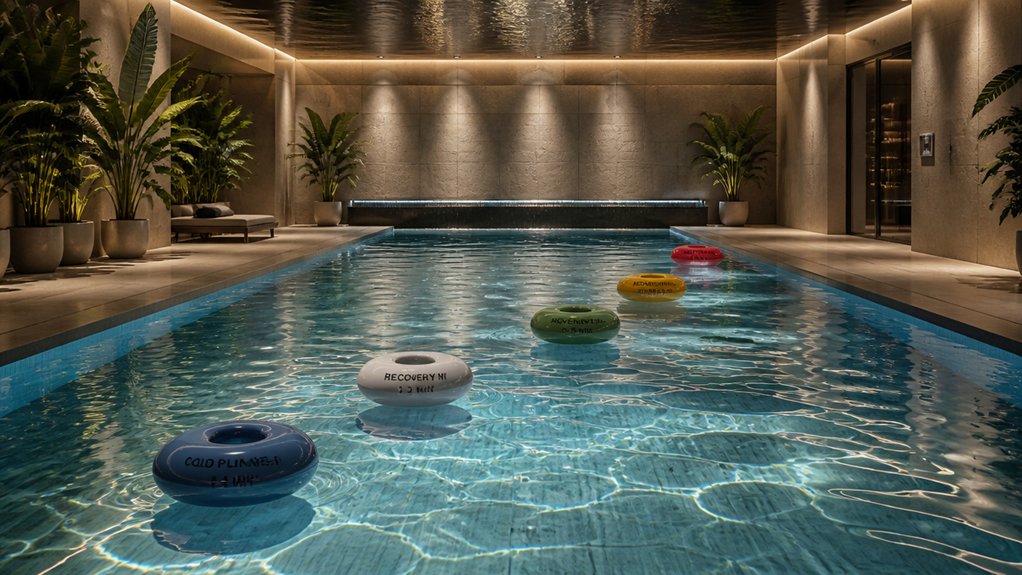

Immersion in cold water triggers your nervous system’s stress and calming responses. It causes a sudden surge of alertness, increased heart rate, and rapid breathing, known as the cold shock response. At the same time, facial immersion activates the vagus nerve, calming your heart and promoting relaxation through the mammalian dive reflex. Repeated exposure can strengthen your neural resilience and improve stress management. Keep exploring to discover how you can optimize these powerful effects safely.
Why Cold Water Immersion Affects Your Nervous System

Cold water immersion influences your nervous system by directly activating sensory receptors in your skin. This triggers the sympathetic nervous system, releasing norepinephrine that boosts alertness and focus.
The initial cold shock response also causes a surge of endorphins, providing pain relief and a sense of well-being. When you immerse your face, the trigeminal and vagus nerves engage, triggering the mammalian dive reflex, which increases parasympathetic activity. This slows your heart rate and promotes calmness.
Regular cold water exposure helps reduce cortisol levels, enhancing stress resilience. It creates hormetic stress by activating your sympathetic nervous system followed by parasympathetic recovery, promoting autonomic balance. This process trains your nervous system for better stress regulation and quicker recovery from daily stressors. Recognizing the importance of breathing exercises can further optimize your nervous system’s response to cold immersion.
What Is the Cold Shock Response: and Why Does It Matter?
When you suddenly immerse in cold water, your body reacts instantly through the cold shock response, triggering rapid breathing and increased heart rate. This reflex, caused by skin sensors sending signals to your brain, can endanger your safety if not properly managed. Understanding this reaction helps you stay safer and more in control during cold exposure. Recognizing how adaptogens support stress resilience can further enhance your ability to handle the physical stress of cold plunges effectively.
Physiological Reaction Mechanisms
The cold shock response is your body’s immediate autonomic reaction to sudden immersion in cold water, designed to activate quickly and trigger a series of physiological changes.
During cold-water immersion, your sympathetic nervous system surges, causing the gasp reflex, hyperventilation, increased heart rate, and elevated blood pressure. Skin cold receptors send signals to the brainstem, prompting this alert response to mobilize energy and maintain core blood flow through vasoconstriction.
After this initial phase, your parasympathetic nervous system kicks in, increasing vagal tone, which slows the heart rate and restores autonomic balance. This complex reflex helps adapt to cold exposure, but uncontrolled hyperventilation can raise drowning risk and cardiac strain, especially in those with existing cardiovascular issues. Recognizing the role of blood oxygen monitors in tracking oxygen levels during cold stress can provide valuable insights into the body’s response and assist in safety monitoring.
Importance for Safety
Understanding the cold shock response is vital for safety because it explains why sudden cold water immersion can be so dangerous. When you experience abrupt contact with cold water, your sympathetic nervous system activates instantly, triggering the cold shock response.
This involuntary reaction causes rapid hyperventilation, an involuntary gasp reflex, and a spike in heart rate and blood pressure, increasing the risk of drowning or cardiac events. For those with cardiovascular conditions, this sudden acute stress can be hazardous.
To guarantee safety, it’s important to enter water slowly, allowing your body to undergo physiological acclimatization and reduce autonomic overload. Anticipating and managing the cold shock response minimizes panic, arrhythmias, or fainting, making cold water activities safer for everyone involved. Additionally, using insulated and supportive tubs can help maintain temperature stability and reduce stress on the nervous system during immersion.
The Mammalian Dive Reflex: How Facial Immersion Activates the Vagus Nerve
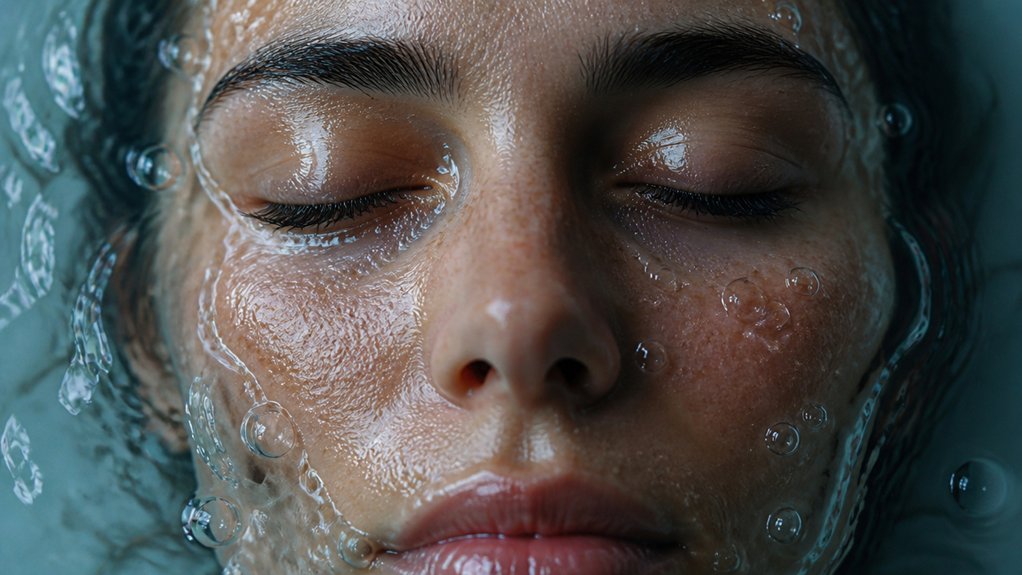
When your face touches cold water, it triggers the mammalian dive reflex by stimulating the trigeminal nerve’s branches. This activation sends signals to your brainstem that increase vagus nerve activity, leading to a calming parasympathetic response. As a result, your heart rate slows, and your body conserves oxygen efficiently. Using devices with cold-weather-optimized batteries can help ensure safety during prolonged cold plunges that activate this reflex.
Activation of Diving Reflex
Immersing the face in cold water triggers the mammalian dive reflex by activating specialized facial nerves that send rapid sensory signals to the brainstem. This initiates the diving reflex, primarily involving the trigeminal nerve, which detects cold stimulation.
In response, the parasympathetic system is prompted to increase vagus nerve activity, resulting in bradycardia—slowed heart rate—and a shift toward parasympathetic dominance. Meanwhile, sympathetic vasoconstriction maintains central blood flow, conserving oxygen. The vagal activation also suppresses respiratory muscles, encouraging breath-holding.
This integrated response reduces oxygen consumption and enhances autonomic balance, promoting calmness and stability during facial cold-water immersion. The autonomic shifts triggered by facial immersion are vital for cardiovascular regulation and stress resilience. Additionally, proper implementation of bromine tablets in ice bath systems helps maintain water quality without affecting the temperature or natural responses.
Role of Trigeminal Nerve
Facial immersion in cold water triggers a complex neural pathway that starts with the trigeminal nerve, which detects facial cold stimulation. This nerve’s ophthalmic (V1) and maxillary (V2) branches send sensory signals to the brainstem, activating the nucleus tractus solitarius (NTS).
The NTS then signals the vagus nerve (cranial nerve X), initiating parasympathetic responses that slow the heart rate, leading to bradycardia. This process is core to the dive reflex, an autonomic reflex that balances sympathetic vasoconstriction with parasympathetic activity.
Fundamentally, facial cold stimulation activates the trigeminal nerve, which triggers vagal output, promoting relaxation and nervous system regulation through this powerful reflex—integral to how immersion affects your nervous system. Newer innovation in insulation materials helps improve the durability and efficiency of cold plunge tubs, enhancing the overall recovery experience.
Parasympathetic Response Increase
Cold water contact with the face activates the mammalian dive reflex, a powerful autonomic response that greatly increases parasympathetic activity via the vagus nerve.
When you immerse your face in cold water, nerve signals from facial immersion stimulate the trigeminal nerve, triggering a response in the brainstem’s nucleus tractus solitarius. This enhances vagal efferent output, leading to bradycardia (heart rate slowing) and respiratory adjustments.
Simultaneously, sympathetic vasoconstriction preserves core blood flow, balancing autonomic function. This vagal activation improves nervous system health by increasing parasympathetic tone, promoting relaxation, reducing heart rate, and easing stress responses.
The mammalian dive reflex, thus, effectively shifts autonomic balance toward parasympathetic dominance, supporting nervous system resilience and overall well-being. Additionally, the use of recovery tracking apps can help monitor these physiological responses and optimize cold plunge sessions for health benefits.
Balancing Stress and Calm: How Cold Water Modulates Your Nervous System

When you expose your body to cold water, your nervous system initially responds with a surge of alertness driven by the sympathetic branch, often called the fight-or-flight response. This triggers a cold shock response, increasing heart rate, gasp reflex, and norepinephrine release, heightening alertness.
Cold water exposure triggers a surge of alertness and increased norepinephrine release, activating the fight-or-flight response.
However, within a minute, your parasympathetic nervous system, via the vagus nerve, activates, slowing your heart rate and invoking the mammalian dive reflex, creating a calming effect. This balance between vasoconstriction and cardiac control enhances your stress resilience and heart rate variability over time.
Regular cold immersion can boost baseline norepinephrine and vagal tone, supporting better mood, focus, and recovery. Controlled cold face immersions and breathing help quickly modulate nervous activity, reducing anxiety and promoting calm.
- Cold immersion triggers initial sharp sympathetic activation
- Vagus nerve promotes parasympathetic calming through the mammalian dive reflex
- Balancing these responses strengthens stress resilience
How Repeated Cold Exposure Strengthens Your Neural Resilience
Repeated cold exposure trains your nervous system to become more resilient by inducing lasting changes in neural pathways. Regular cold water immersion boosts neural resilience by elevating norepinephrine levels, which sharpens focus, mood, and attention. It also strengthens vagal tone, enhancing parasympathetic activation and promoting better stress recovery.
Over time, it reduces cortisol responses, leading to improved stress management. Cold exposure triggers the activation of cold-shock proteins like RBM3, which support nerve cell repair and neural health. Additionally, it enhances heart rate variability (HRV), a key indicator of efficient autonomic nervous system regulation.
Safe Strategies to Use Cold Water for Nervous System Health
To safely harness the nerve-calming benefits of cold water, it’s essential to start gradually and pay attention to your body’s responses.
Begin with short cold water immersion sessions (30-60 seconds) at milder temperatures (~20°C/68°F) and gradually progress to colder water (10-15°C/50-59°F) and longer durations to acclimate your nervous system.
Slow, controlled entry helps manage the cold shock response, preventing involuntary gasping and cardiovascular stress during sympathetic activation.
Incorporate facial immersion for 10-20 seconds to stimulate the trigeminovagal reflex, boosting parasympathetic activity.
Use diaphragmatic breathing to support vagal tone, stress resilience, and balanced autonomic regulation.
Always avoid cold water immersion alone, especially in open water, and consult healthcare professionals if needed for safety.
Frequently Asked Questions
Are Cold Plunges Good for the Nervous System?
Cold plunges are good for your nervous system because they boost focus, mood, and resilience by activating the sympathetic nervous system, then promote calmness through the vagus nerve, reducing stress hormones and enhancing overall neurological health over time.
Does Cold Water Reset Your Vagus Nerve?
Yes, cold water immersion can reset your vagus nerve by activating the dive reflex, increasing parasympathetic tone, and promoting relaxation. Regular exposure strengthens vagal tone, improves stress resilience, and helps balance your nervous system’s response.
What Happens When You Train Your Nervous System?
When you train your nervous system, you boost resilience, improve stress management, and enhance recovery. You increase norepinephrine and vagal tone, strengthening your body’s ability to handle physical and emotional challenges more efficiently over time.
Does the Ocean Reset Your Nervous System?
Yes, ocean immersion resets your nervous system by activating the dive reflex, boosting parasympathetic activity, calming your heart rate, and promoting emotional balance, helping you recover from stress and improve overall autonomic regulation.