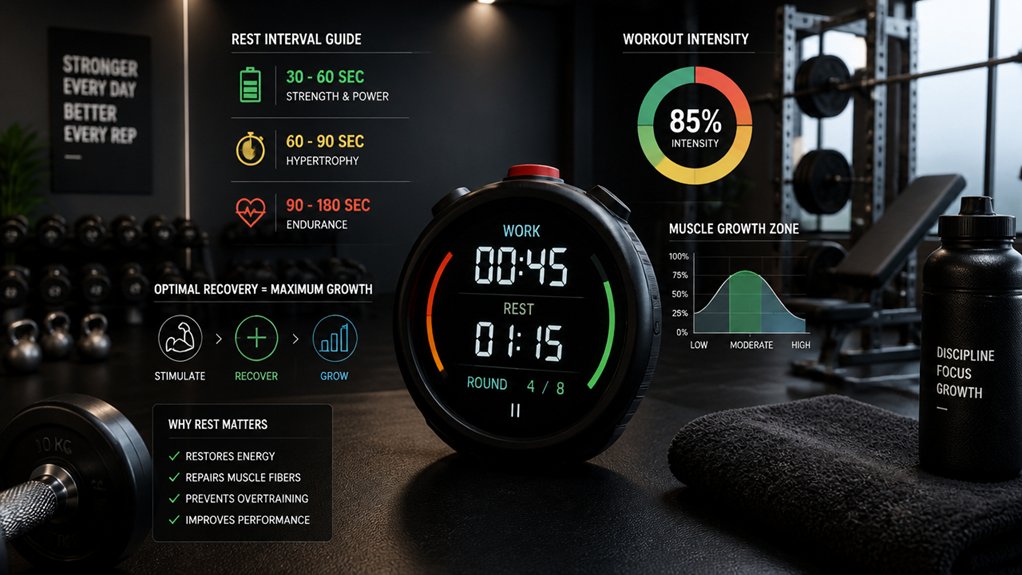
To optimize muscle growth, give your muscles 72 to 96 hours of rest between intense workouts, allowing full recovery and supercompensation. Your recovery needs depend on workout intensity, volume, and systemic fatigue, so it’s essential to listen to your body’s soreness and fatigue signals. Training different muscle groups on alternating days helps prevent overtraining. Stick to these principles, and you’ll discover how personalized adjustments can maximize results while reducing injury risk.
Why Is Recovery Time Crucial for Building Muscle?
Why is recovery time so essential for building muscle? Because muscle growth happens mostly during recovery, not workout time.
When you train intensely, you cause micro-tears in muscle fibers. During rest periods, your body repairs these fibers through muscle protein synthesis, making them stronger and larger.
Adequate recovery, usually 72–96 hours between sessions, gives your muscles the time they need to fully recover energy systems and neuromuscular functions. High-intensity workouts demand longer rest to prevent overtraining and fatigue.
Systemic fatigue affects overall recovery efforts, so rest isn’t just for the targeted muscles—it’s for your entire body. Without proper rest, muscle growth stalls, and biochemical resources become depleted, hindering your progress.
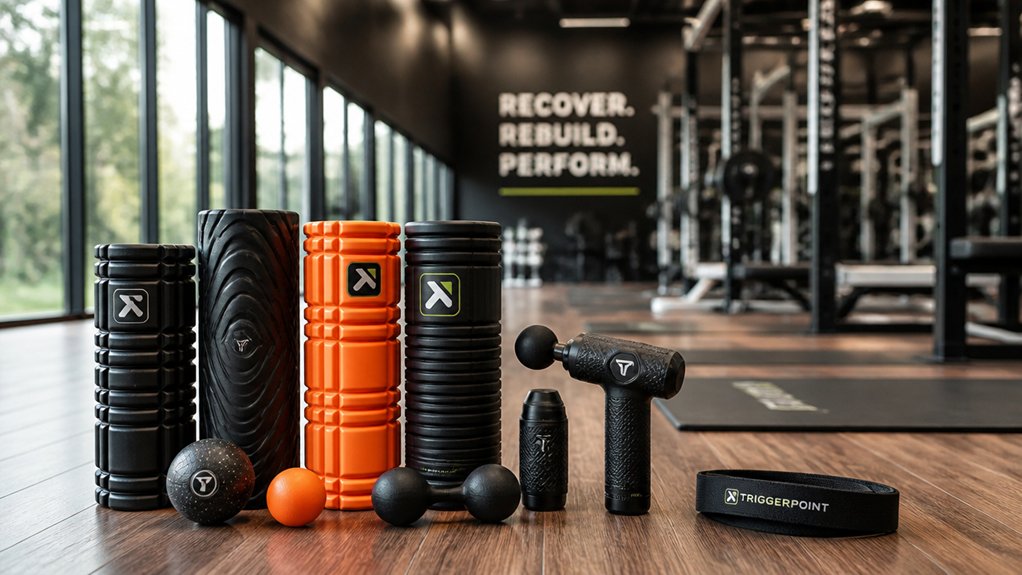
Using tools like percussion massagers paired with cold plunge therapy can accelerate recovery by reducing inflammation and promoting deep tissue healing.
Proper recovery guarantees your body can repair effectively and grow stronger.
How Does Workout Intensity Impact Your Recovery Needs?
When you push harder in your workouts, your body needs more time to recover because of increased systemic fatigue. A higher intensity also elevates your body’s internal temperature and metabolic stress, which can require longer periods for optimal cooling and recovery. High-intensity sessions stress your nervous and endocrine systems, extending recovery periods well beyond volume-based training. Understanding how thermal insulation quality drives recovery needs helps you optimize rest and avoid overtraining for better muscle growth.
Greater Intensity, Longer Recovery
Higher workout intensity considerably increases your recovery needs because the more effort you push into each session, the greater the systemic and muscular stress you generate.
During strength training, high-intensity training that pushes your muscles to failure or uses advanced techniques stimulates significant fatigue, requiring longer periods for full recovery—often 72 to 96 hours or more. This extended rest allows muscle repair, energy replenishment, and protein synthesis, which are essential for growth.
Increased intensity also taxes your central nervous system, making frequent high-intensity sessions risky without proper recovery. As Mike Mentzer highlighted, effort intensity, rather than volume, dictates recovery demands.
To optimize muscle growth, prioritize spaced-out, high-intensity workouts that give your body enough time to fully recover and adapt. Incorporating foam rolling into your recovery routine can help reduce muscle soreness and improve flexibility, ultimately supporting better recovery processes.
Recovery Demands Increase Significantly
Increased workout intensity substantially amplifies your recovery needs because it produces greater systemic fatigue that impacts multiple body systems. High-intensity training, especially pushing to muscular failure, stresses your endocrine, nervous, and immune systems, leading to longer recovery demands. Incorporating multi-chamber designs and adjustable pressure levels can help facilitate more effective recovery by targeting specific muscle groups and improving circulation. This systemic fatigue requires extended rest periods—typically 72 to 96 hours—to allow your body to fully recover and support muscle overcorrection. If you don’t give yourself enough recovery time, your immune system and nervous system remain overwhelmed, increasing the risk of chronic overreaching and burnout. This can impair muscle growth despite having trained hard.
Following a high-intensity workout, understanding and respecting these recovery demands is essential to optimize your progress while maintaining overall health.
Systemic Fatigue Over Volume
While workout volume contributes to overall fatigue, it’s workout intensity—particularly training to momentary muscular failure—that has a more immediate impact on systemic recovery needs. Your training style, especially when pushing to failure, greatly increases systemic fatigue, involving your endocrine, nervous, immune, and energy systems. This broader fatigue extends recovery beyond the targeted muscles, meaning your body needs more time to recover fully. Additionally, incorporating adaptogens like Reishi mushrooms can help support the body’s stress response and enhance recovery processes.
Research indicates that training different muscle groups on consecutive days can hinder hypertrophic gains because recovery resources are shared system-wide. Peak recovery intervals of 72–96 hours guarantee complete systemic recovery and overcompensation. High-intensity methods, like Mentzer suggests, require infrequent sessions to prevent systemic exhaustion, underscoring intensity’s critical role in managing recovery needs.
What’s the Difference Between Local and Systemic Fatigue?
When you work out a muscle, it gets temporarily exhausted, which is local fatigue.
However, your body’s overall recovery capacity can also become depleted, known as systemic fatigue, affecting multiple systems. Recognizing the difference helps you plan rest and training more effectively to maximize muscle growth. Incorporating adaptogens like Rhodiola or Ashwagandha can help modulate stress hormones and support stress resilience, enhancing your recovery process.
Local Muscle Fatigue
Understanding local muscle fatigue involves recognizing how a specific muscle temporarily loses its ability to produce force during intense activity. This occurs because metabolic byproducts build up, and energy stores in that muscle become depleted, impairing its function.
In contrast, systemic fatigue affects the entire body, involving multiple systems like nervous, endocrine, and immune. When you train, local fatigue happens quickly, but recovery can be faster because it’s limited to one muscle.
However, systemic fatigue involves a “competition for resources,” such as amino acids and energy, across the whole body. This means that even if a muscle feels recovered, systemic fatigue can still impair your ability to train effectively, impacting overall muscle growth and recovery across multiple muscle groups.
Systemic Recovery Demands
Local muscle fatigue affects a specific muscle or group, resolving relatively quickly as metabolic waste is cleared and energy stores replenish.
In contrast, systemic fatigue impacts the body’s overall ability to recover, depleting resources like amino acids, energy, and protein synthesis capacity. This type of fatigue is caused by training different muscle groups on consecutive days, which can hinder recovery even in muscles not directly targeted.
Systemic fatigue involves interconnected systems such as endocrine, nervous, and immune functions, requiring longer recovery times. Proper use of muscle recovery creams, for example, can support the body’s recovery process after intense training sessions.
When you push volume and frequency too high without proper rest, you risk competing for finite recovery resources. This explains why training smart, with adequate rest, maximizes the body’s ability to recover fully and promotes peak muscle growth.
How Long Should You Rest Between Workouts According to Science?

How long should you rest between workouts to promote ideal muscle growth? Generally, 72 to 96 hours of rest is recommended to allow full recovery and supercompensation. The exact duration varies based on individual factors like systemic fatigue, tolerance, and training intensity. Incorporating resistance band training can also help facilitate active recovery without overtaxing your muscles. Resting a muscle group too soon hampers recovery, and insufficient rest may hinder strength gains. To optimize growth:
Rest 72 to 96 hours between workouts for optimal recovery and muscle growth.
- Aim for training each muscle group 2-3 times per week, respecting recovery needs.
- Prioritize high-intensity workouts, which require longer rest periods to support strength gains.
- Listen to your body, extending rest when feeling systemic fatigue or soreness.
Following these guidelines guarantees you maximize recovery, prevent overtraining, and experience consistent hypertrophy progress.
Does Training Volume Change How Often You Should Workout?
Does training volume influence how often you should work out? Yes, it does.
Higher total weekly volume means you’ll need more recovery time before your muscles are ready for another session. If you’re doing a lot of sets or exercises for a muscle group, training sessions per week should be spaced out to prevent overtraining and allow full recovery.
Generally, training each muscle 2 to 3 times per week strikes a good balance for hypertrophy. However, if your weekly volume is excessive, reducing sessions per week might be necessary.
Keep in mind, intensity also matters—more effort demands longer recovery. Adjusting your workout frequency based on your total weekly volume helps optimize growth while minimizing fatigue and injury risks.
How Can You Personalize Your Rest and Workout Schedule?
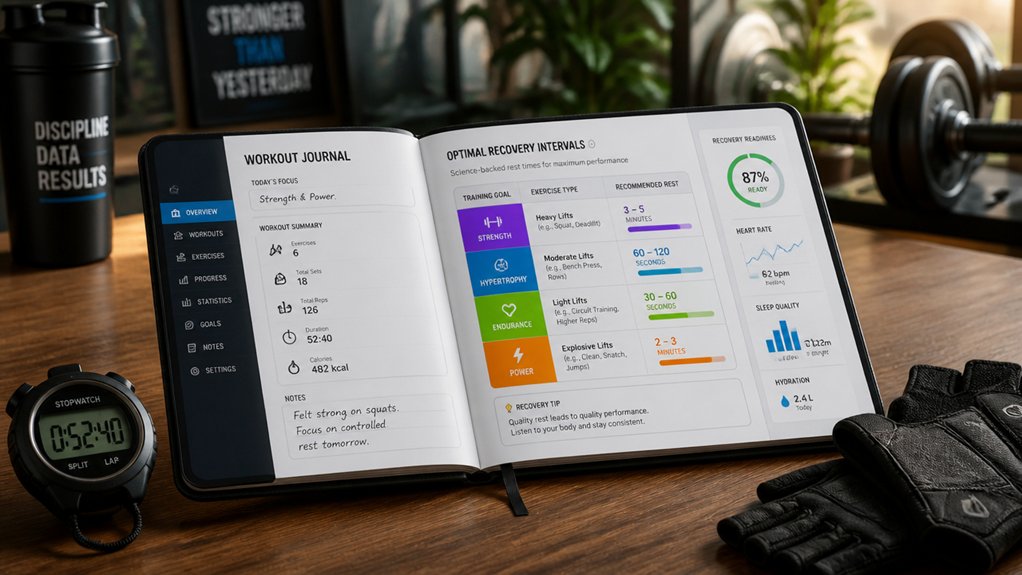
Personalizing your rest and workout schedule hinges on understanding your body’s unique recovery patterns. Track your performance, soreness, and fatigue to identify your recovery speed, especially if you’re engaging in endurance training or regular strength sessions.
Consider these key factors:
- Adjust frequency: Allow 72–96 hours or more between intense workouts to optimize recovery and muscle overcompensation.
- Space out muscle groups: Avoid overlapping recovery demands to prevent stagnation or overtraining.
- Watch intensity signals: High-intensity workouts need longer rests, reinforcing the importance of listening to your body’s cues like soreness or fatigue.
Athletes benefit from tailoring their schedule, working out the right number of times a week, based on individual response. Personalization guarantees you maximize growth without risking burnout.
Frequently Asked Questions
What Is the 3-3-3 Rule for Gym?
The 3-3-3 rule advises you to train each muscle group every three days, which helps guarantee proper recovery, prevent fatigue, and promote muscle growth by fitting within the ideal 72-96 hour recovery window.
What Frequency Is Best for Muscle Growth?
You should train each muscle group 2 to 3 times weekly, ensuring 72 to 96 hours of recovery, focusing on high-intensity, brief workouts, and allowing full rest for peak muscle growth and avoiding systemic fatigue.
Can I Build Muscle While on Zepbound?
Yes, you can build muscle on Zepbound by maintaining proper nutrition, adequate protein intake, and a consistent training schedule of 2-3 sessions per muscle group weekly. Monitor recovery closely and adjust as needed for peak results.
What Is the 5-3-1 Rule?
The 5-3-1 rule suggests you should rest about 5 days between training the same muscle group, ensuring full recovery within 72-96 hours, to optimize muscle growth and prevent overtraining.