Post-workout cold water immersion, like ice baths or cold showers, can improve your sleep by lowering your core body temperature and activating your parasympathetic nervous system. Doing this 1-2 hours before bed helps signals your body that it’s time to sleep, promoting relaxation and melatonin production. To maximize benefits and avoid disruptions, follow recommended durations and temperatures. Keep exploring to discover more effective recovery tips that enhance your sleep quality.
What Is Cold Water Immersion and How Does It Boost Sleep?
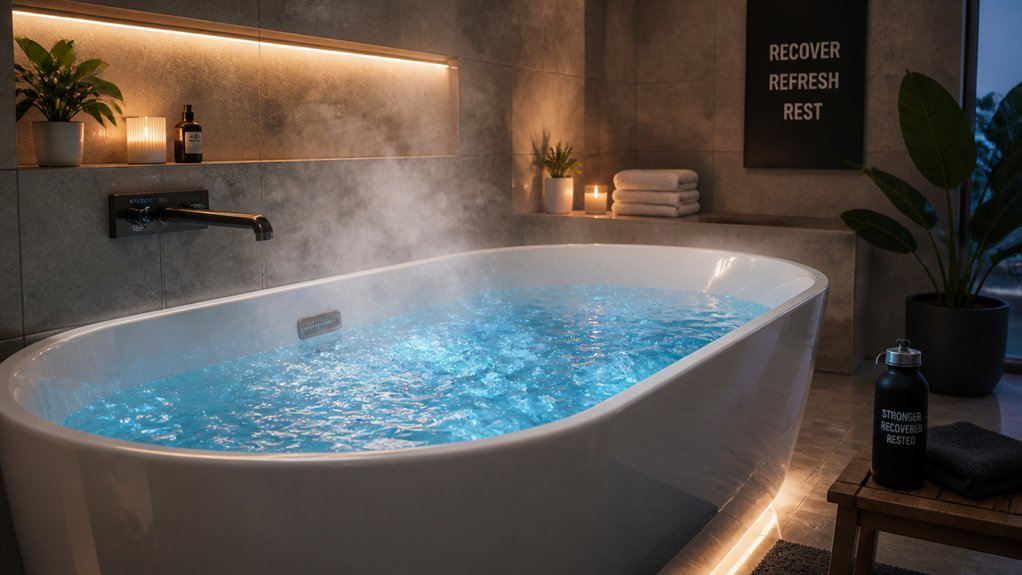
Have you ever wondered how cold water immersion can enhance your sleep after a tough workout? Cold water immersion involves submerging your body in water around 50-59°F (10-15°C) for about 10-15 minutes. This process quickly reduces your core body temperature and inflammation, helping your body recover faster.
Lowering your body temperature is key to achieving better sleep because it facilitates the natural nocturnal temperature drop necessary for restorative rest. Cold water immersion also decreases cortisol and norepinephrine levels, which can otherwise keep your nervous system active and delay sleep onset.
How Cold Exposure Helps You Relax and Prepare for Sleep
Cold exposure after a workout triggers a physiological shift that promotes relaxation and prepares your body for sleep. Cold immersion lowers your core body temperature, which naturally drops at night, signaling your body to initiate restorative sleep. It also reduces your elevated heart rate and nervous system activity, easing you into relaxation and making it easier to fall asleep. Incorporating temperature therapy features like rapid heat/cold adjustments can optimize these benefits further. Applying cold therapies like ice packs or cold showers after exercise helps minimize inflammation and muscle soreness, contributing to more comfortable sleep. Additionally, cold exposure helps normalize adrenaline and cortisol levels influenced by workout stress, supporting your circadian rhythm. When combined with a cool bedroom temperature of around 60-67°F, cold immersion enhances relaxation and overall sleep quality, setting the stage for deeper, more restorative sleep cycles.
The Science: How Cold Water Affects Melatonin and Sleep Cycles
After a workout, immersing yourself in cold water triggers specific physiological responses that influence your sleep-wake cycle. Cold water immersion lowers your core body temperature, which is essential for melatonin secretion and the onset of sleep.
It also reduces sympathetic nervous system activity, helping to lower cortisol and norepinephrine levels that can delay melatonin release and disrupt sleep patterns. Scientific studies indicate that cold immersion promotes parasympathetic activation, encouraging relaxation and strengthening melatonin peaks, leading to better sleep quality.
Additionally, cooling down after exercise accelerates recovery and reduces inflammation, creating a hormone environment favorable for stable circadian rhythms and deeper REM sleep. However, overly cold or ill-timed immersion might interfere with beneficial hormonal fluctuations that support sleep architecture.
Ice Baths vs. Cold Showers: Which Is Better for Sleep?
Deciding between ice baths and cold showers depends on your goals for sleep and recovery.
Choosing between ice baths and cold showers depends on whether your goal is optimal sleep or muscle recovery.
Ice baths, with water around 10-15°C, markedly lower your core body temperature, helping trigger the natural temperature drop needed for sleep onset. They may activate your parasympathetic nervous system more strongly, which can improve sleep quality by calming stress responses.
Cold showers, usually between 15-25°C, provide a gentler, gradual cooling effect that reduces muscle soreness and fosters relaxation—both supporting a relaxing bedtime. They’re easier to incorporate into your routine, avoiding the logistical challenges of an ice bath.
In both cases, timing matters—try to finish at least 1-2 hours before bed to prevent lingering nervous system arousal that might disrupt your sleep.
Additionally, using quiet ice bath chillers with low noise levels (30-40 dB) can help maintain a peaceful environment, promoting better sleep post-recovery.
When Is the Best Time to Do Cold Water Post-Workout?
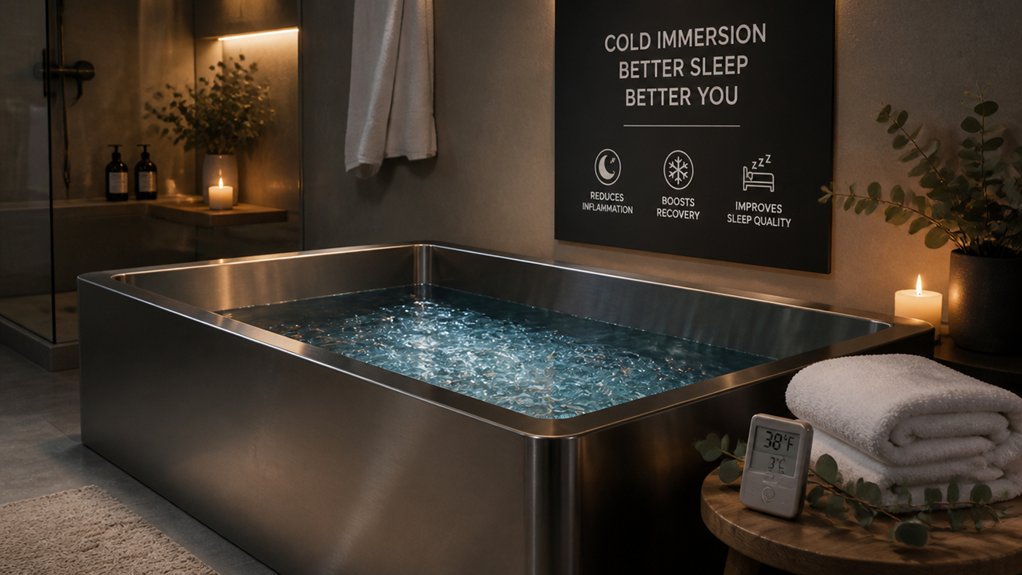
Timing your cold water immersion is essential to maximizing recovery and supporting restful sleep. The ideal window for post-workout cold water immersion is within 10-20 minutes after exercise. Doing so helps lower your core body temperature and reduce muscle inflammation, which accelerates recovery and helps you fall asleep faster. Properly designed cold plunge tubs feature insulation and temperature control options that enhance these recovery benefits. If you perform high-intensity or intense workouts, cold water immersion immediately afterward can ease elevated heart rate and body temperature, promoting relaxation. However, avoid immersing too close to bedtime, as it may interfere with your natural circadian temperature rhythm. For best results, do cold water immersion at least 1-2 hours before sleep to guarantee it supports the body’s shift into restful sleep. This timing effectively manages cortisol and nervous system activity, easing you into a deeper, more restorative sleep.
What Temperature Should Cold Water Be for Better Sleep?
To get the most sleep benefits, your cold water immersion should be between 50°F and 59°F, as this range helps lower your core temperature naturally. A properly high-powered chiller ensures precise cooling and maintains the ideal temperature range for optimal relaxation. Temperatures below that might cause discomfort or stress, interfering with relaxation, while warmer water won’t cool you enough for peak sleep. Consider your method of cooling, ensuring the water stays within that ideal temperature to support restful, restorative sleep.
Ideal Cold Water Temperature
What temperature should cold water be for better sleep after exercise? The ideal cold water immersion temperature ranges between 50°F to 59°F (10°C to 15°C). This range effectively helps lower your body temperature without causing stress.
When you immerse yourself in water at these temperatures for 10-15 minutes, it reduces heart rate and nervous system activity, making it easier to fall asleep. Cooling the body within this range supports the natural nocturnal drop in core body temperature, essential for restorative sleep.
Temperatures below 50°F can trigger shock responses that hinder relaxation and sleep quality. By maintaining a cold water temperature in this prime range, you can enhance the benefits of cold water immersion and improve sleep quality after your workout.
For optimal results, selecting a cold plunge pool with effective insulation can help maintain the desired temperature consistently, ensuring maximum comfort and benefits during your recovery routine.
Cooling Methods Impact Sleep
Choosing the right cold water temperature for immersion after exercise can greatly influence your sleep quality. Cold water immersion typically ranges between 50-59°F (10-15°C), which effectively lowers your core body temperature and enhances post-workout recovery.
When you immerse in water cooler than 60°F (15.5°C), it helps reduce your heart rate and nervous system activation, promoting relaxation. Lowering core temperature through cold water immersion facilitates the natural nocturnal drop in body temperature, which is essential for faster sleep onset and deeper rest.
Selecting the appropriate chiller model ensures consistent cooling performance, making it easier to achieve optimal temperatures for better sleep. To maximize benefits without causing stress, aim for immersion times of 10-15 minutes. This cooling method supports recovery by counteracting exercise-induced heat and adrenaline, leading to better sleep quality.
How Cold Water Reduces Inflammation and Relieves Muscle Tension
Immersing in cold water can quickly reduce inflammation by constricting your blood vessels, which helps lessen swelling and removes waste from your muscles.
It also decreases muscle tension and pain by lowering nerve activity and muscle temperature. This process speeds up recovery and may help you feel more relaxed after intense activity. Additionally, the use of long-lasting cold retention in ice packs enhances the effectiveness of cold therapy, ensuring sustained benefits during recovery.
Decreases Inflammation Quickly
Cold water immersion after workouts quickly constricts blood vessels, which helps reduce inflammation and swelling in your muscles. This rapid constriction limits blood flow, slowing cellular metabolism and minimizing tissue damage.
By decreasing inflammation, cold water immersion prevents prolonged soreness and speeds up recovery. Less inflammation means less muscle tension and discomfort, making it easier to rest comfortably.
Additionally, cold immersion decreases nerve activity in affected muscles, reducing pain perception. These effects combined promote a more relaxed state, supporting restful sleep.
Scientific studies confirm that just 10-15 minutes of cold water at 10-15°C after intense exercise effectively accelerates recovery by swiftly resolving inflammatory processes that can otherwise disrupt your sleep. In turn, this helps you wake up feeling more refreshed and ready. Temperature regulation plays a vital role in optimizing recovery and sleep quality.
Eases Muscle Tightness
When you subject your muscles to cold water immersion after exercise, it actively helps reduce muscle tightness by constricting blood vessels and lowering tissue temperature. This process decreases inflammation and metabolic activity in your body’s muscle tissues, easing soreness and stiffness.
The cold slows nerve conduction velocity, which further relieves tightness and promotes relaxation. Cryotherapy, such as ice baths at 10-15°C, shortens recovery time by minimizing delayed onset muscle soreness (DOMS).
With reduced muscle tension, your body experiences greater relaxation, making it easier to relax initially and fall asleep more comfortably. This soothing effect helps prevent discomfort-related sleep disruptions, ultimately supporting more restorative, post-exercise sleep.
Cold water immersion clearly benefits both your muscles and overall relaxation.
Enhances Recovery Rate
By actively narrowing blood vessels through cold water immersion, you can considerably speed up your recovery after intense exercise. Post-workout cold water immersion (10-15°C) limits inflammation by constricting blood flow, which reduces swelling and encourages faster muscle repair.
Cold water immersion decreases muscle soreness (DOMS) by lowering metabolic activity and nerve conduction, making pain and tension feel less intense. It also helps lower your core body temperature, supporting the natural drop needed for restful sleep.
Additionally, cold immersion diminishes the release of pro-inflammatory cytokines, reducing muscle damage and promoting tissue healing during sleep. Regular use of cold water immersion after workouts boosts parasympathetic nervous system activity, encouraging relaxation and enhancing your overall recovery rate.
Safety Tips: How to Use Cold Water Immersion Without Risks
To safely enjoy cold water immersion after your workout, it’s important to follow key guidelines that minimize health risks. Keep sessions between 10-15 minutes to prevent hypothermia and cardiovascular strain. Start with water temperatures around 50-59°F (10-15°C) and gradually adjust to avoid shock or discomfort. If you experience dizziness, numbness, or irregular heartbeat, avoid cold immersion immediately. People with cardiovascular issues, hypertension, or Raynaud’s disease should consult a healthcare provider before trying cold water immersion. Afterward, warm up gently with dry clothing and controlled movements to help restore your body temperature.
| Temperature Range | Duration | Precautions |
|---|---|---|
| 50-59°F (10-15°C) | 10-15 minutes | Consult healthcare provider if unsure |
| Above 59°F | Shorter sessions | Avoid if feeling unwell |
| During symptoms | Do not immerse | Maintain body temperature |
| Post-immersion | Warm gradually | Prevent hypothermia |
Common Mistakes to Avoid When Incorporating Cold Baths
You should avoid overdoing cold baths, as excessive exposure can disrupt your nervous system and sleep patterns.
Timing is also vital; taking baths too close to bedtime can interfere with your body’s natural temperature decline.
Additionally, maintaining proper temperature control guarantees you gain benefits without unsettling your hormonal balance or alertness.
Overdoing Cold Exposure
While cold baths can aid recovery, overdoing them can backfire and negatively impact your sleep. Excessive cold exposure, especially lasting longer than 10-15 minutes, can spike cortisol levels, increasing stress and disrupting your sleep quality.
Prolonged immersion may cause your body temperature to drop too much, interfering with the natural temperature decline needed for restful sleep. Additionally, intense cold baths can activate your nervous system, making it harder to fall asleep, even after physical fatigue.
Frequent or overly intense cold exposure without proper rewarming can impair muscle recovery and lead to lingering soreness, which interferes with sleep quality. Avoid taking cold baths too close to bedtime, as the shock and adrenaline response can delay sleep onset and reduce how well you sleep.
Timing of Baths
Ever wonder why timing matters when taking cold baths after exercise? The key is giving your body enough time to recover. Immersing in cold water too close to bedtime can raise norepinephrine and heart rate, disrupting your body’s natural cooldown and delaying sleep. It also hinders the critical body temperature drop needed for deep and REM sleep. To avoid these issues, schedule cold baths at least 1-2 hours before bed, letting your body temperature and adrenaline levels normalize. This way, you prevent sleep disturbances and enhance recovery. Remember, proper timing supports both relaxation and restorative sleep.
| Timing Tips | Effects on Sleep |
|---|---|
| 1-2 hours before bedtime | Normalizes body temperature |
| Immediately post-exercise | Raises adrenaline, delays sleep |
| Close to bedtime | Interferes with sleep stages |
| Prolonged cold baths | Activates sympathetic nervous system |
| Proper timing | Supports better sleep quality |
Improper Temperature Control
Improper temperature control during cold baths can undermine recovery and disrupt sleep patterns. If you immerse yourself in water that’s too cold or keep the bath for too long, your core body temperature and heart rate stay elevated, preventing the natural nocturnal temperature drop needed for restorative sleep.
Excessively cold water or prolonged immersion can overstimulate your nervous system, raising cortisol levels and delaying sleep onset. Failing to re-warm gradually may send conflicting signals to your circadian rhythm, disrupting its regulation.
Additionally, taking cold baths too close to bedtime interferes with this temperature decline, making it harder to fall asleep and decreasing sleep quality.
To optimize benefits, control the water temperature and duration carefully, ensuring your body can shift smoothly back to its natural sleep-ready state.
Combine Cold Therapy With Other Recovery Methods for Deep Rest
Combining cold therapy with other recovery methods can greatly enhance your post-workout rest. Cold therapy, like ice baths or cold showers, helps lower your core body temperature, which signals your body to prepare for sleep and promotes deeper rest.
When you add gentle stretching or light yoga, muscle relaxation improves, reducing tension that can disrupt sleep quality. Incorporating calming routines such as meditation or deep breathing alongside cold therapy can further lower cortisol levels and nervous system activity, making it easier to fall asleep.
Hydration with balanced electrolytes and active cooling methods also support thermal regulation, helping reduce heart rate and restlessness. When combined with good sleep hygiene—like a cool, dark bedroom—these recovery techniques considerably boost your chances of a restorative, restful sleep after intense workouts.
Real-Life Experiences and Scientific Insights on Cold Plunges and Sleep
Scientific research and real-life experiences demonstrate that cold plunges after workouts can greatly improve sleep quality. When you immerse in cold water, your core body temperature drops, helping facilitate the natural nocturnal temperature decline needed for faster sleep onset.
Cold plunges also activate the parasympathetic nervous system, promoting relaxation and counteracting post-exercise adrenaline and cortisol surges that can hinder sleep. Many athletes use cold water immersion to reduce muscle soreness and inflammation, which indirectly supports restorative sleep by minimizing discomfort-related awakenings.
However, timing matters: doing cold plunges 1-2 hours before bed helps avoid alertness or delayed sleep onset. Overall, these practices balance your nervous system and enhance sleep quality by encouraging your body’s recovery processes.
Your Ultimate Guide to Integrating Cold Water Immersion Into Your Night Routine
To effectively integrate cold water immersion into your night routine, timing and preparation are key.
After a workout, engage in post-workout cold water immersion at 50-59°F (10-15°C) for 10-15 minutes. This helps lower your core body temperature, quiets your nervous system, and reduces heart rate, all of which support faster sleep onset and better sleep quality.
Post-workout cold water immersion at 50-59°F for 10-15 minutes promotes faster sleep and improves sleep quality.
Make sure to do this at least 1-2 hours before bedtime, allowing your body to normalize its temperature and avoid disrupting natural patterns essential for deep and REM sleep. Cold water immersion also counters exercise-related hormones like cortisol, aiding your recovery.
Pair it with calming activities, such as gentle stretching or meditation, to enhance relaxation and set the stage for restful, restorative sleep.
Frequently Asked Questions
What Helps You Sleep After a Workout?
Cooling yourself down after a workout helps you sleep better. You can try taking a cold shower, immersing in cool water, or using ice packs. Keep your room temperature comfortable and practice relaxing routines for improved sleep quality.
What Is the 3 3 3 Rule for Sleep?
The 3 3 3 Rule for sleep is a relaxation technique where you focus on three things you see, hear, and feel. It helps calm your mind and body, making it easier to fall asleep after workouts.
Does Cold Water Immersion Help Sleep?
Yes, cold water immersion can help you sleep better by lowering your core temperature, reducing muscle soreness, calming your nervous system, and promoting relaxation, especially if done at a prime time before bed to avoid overstimulation.
Which Form of Exercise Improves Sleep the Most?
Regular moderate-intensity aerobic exercises, like brisk walking, cycling, or swimming, most effectively improve your sleep quality and cycle regulation. Incorporating these into your routine consistently, especially in the morning, can lead to better sleep and overall restfulness.