
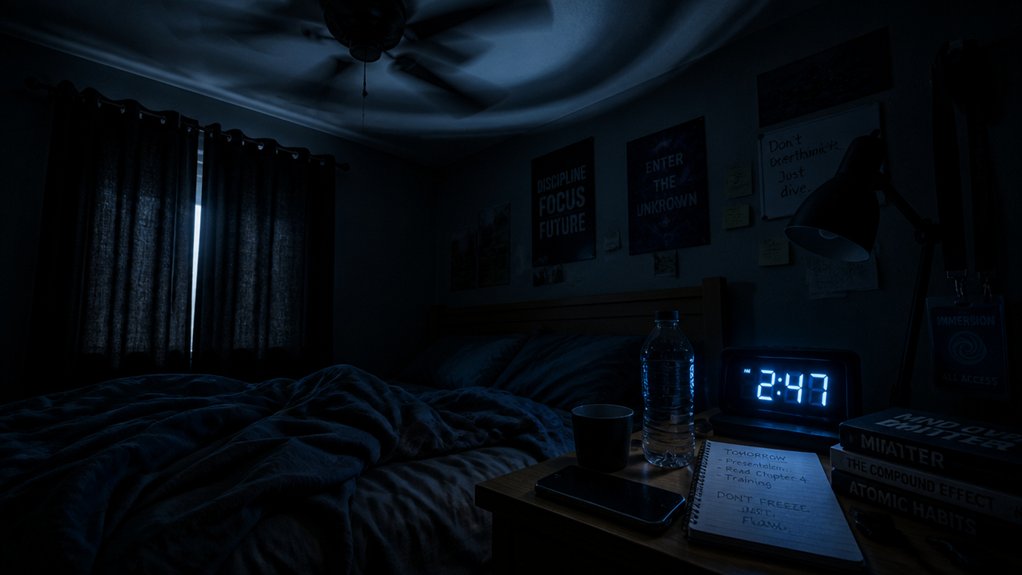
Pre-immersion anxiety is caused by worrying about unfamiliar situations, often triggering physical symptoms like rapid heartbeat, sweating, and restless thoughts that interfere with sleep. Stress from anticipation, negative expectations, and external factors like screen time or irregular routines heighten your alertness, making it harder to fall asleep. When you understand these causes, you can learn simple ways to calm your mind and improve your sleep. If you’re curious, there’s more to discover about managing this stress effectively.
What Is Pre-Immersion Anxiety and How Does It Feel?
Have you ever felt a sense of worry or nervousness before jumping into a new experience? That’s pre-immersion anxiety. You might notice feelings of anxiousness, irritability, or restlessness as the event approaches.
Physically, your heart may race, you might sweat or tremble, and digestive issues can also occur. This anxiety often causes sleep disruption, making it hard to fall asleep or stay asleep. Your mind might be racing, leading to mental hyperarousal and persistent rumination. Sometimes, these intense feelings trigger nocturnal panic attacks, waking you up in the middle of the night.
Pre-immersion anxiety creates a cycle of worry and physical discomfort, amplifying your nervousness and affecting both your emotional state and your sleep quality. Techniques like guided meditation devices with calming sounds, breathing cues, and gentle light guidance can help manage autonomic balance and reduce stress before immersion.
Common Stressors That Trigger Pre-Immersion Anxiety
Various stressors can trigger pre-immersion anxiety, intensifying your feelings of nervousness and worry as the event approaches. These stressors often stem from anticipatory stress about the upcoming immersive experience, such as fear of the unknown, lack of control, and concerns about safety or adequacy.
Anticipatory stress about immersion can heighten nervousness and worry as the event nears.
Performance pressure and expected social evaluation heighten anxiety. These feelings can cause cognitive hyperarousal, making it difficult to achieve pre-sleep relaxation. Rumination at bedtime often worsens, fueling ongoing worries about the event.
External factors like tight schedules or previous negative experiences also increase stress. Common triggers include:
- Fear of the unknown and uncertainty
- Performance pressure and fear of failure
- External constraints and negative past experiences
Additionally, a lack of adaptogen support to regulate stress hormones can make it harder to maintain calm during this period.
How Pre-Immersion Stress Disrupts Your Sleep
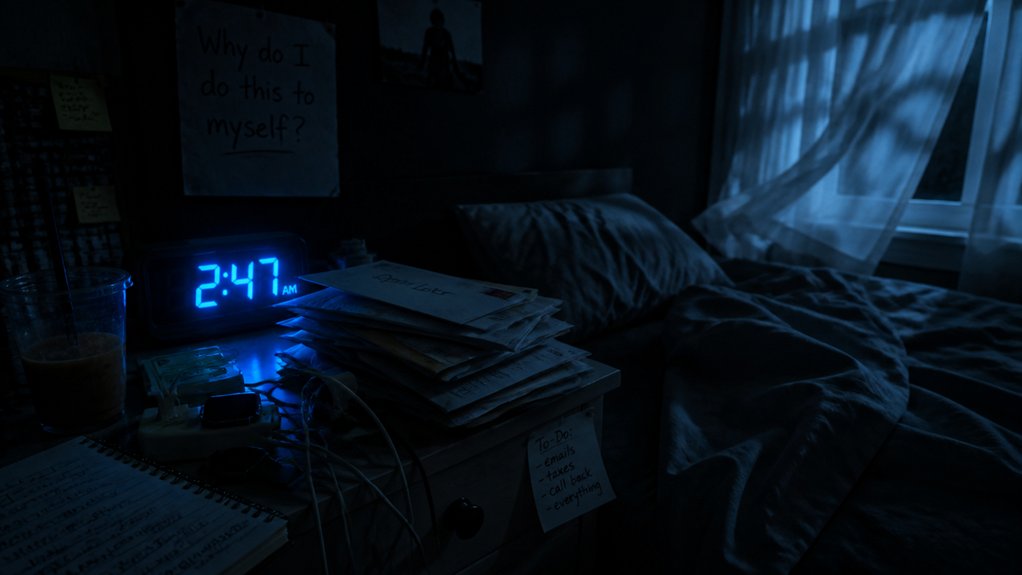
Pre-immersion stress directly disrupts your sleep by triggering the body’s fight-or-flight response, releasing hormones like cortisol and adrenaline that keep you alert and prevent relaxation. Elevated cortisol levels in the evening can flatten your natural circadian rhythm, delaying sleep onset and making it harder to fall asleep.
This stress-induced hyperarousal keeps your mind and body overly active, causing frequent nighttime awakenings and fragmenting your sleep cycle. As a result, you miss out on restorative deep and REM sleep, leaving you feeling less rested.
Over time, this cycle of pre-sleep arousal diminishes sleep quality and heightens emotional vulnerability, creating a vicious loop where stress worsens sleep, and poor sleep intensifies pre-immersion anxiety.
What Does Stress Do to Your Sleep Chemistry?
When you’re stressed, your body releases hormones like cortisol and adrenaline that keep you alert and make it hard to fall asleep. Persistent stress keeps these hormones elevated in the evening, messing with your natural sleep signals. This hormonal imbalance disrupts your sleep cycles, leading to frequent awakenings and less restorative rest. Additionally, chronic stress can impair your body’s ability to regulate neurotransmitter production, further affecting sleep quality.
Stress-Induced Hormonal Changes
Stress triggers the activation of your body’s hormonal response system, primarily the hypothalamic-pituitary-adrenal (HPA) axis, which releases cortisol and adrenaline. These hormones increase alertness and raise your heart rate, making sleep difficult.
Chronic stress leads to elevated evening cortisol levels, disrupting your circadian rhythm by flattening the cortisol curve. This delay hampers your body’s ability to wind down. As a result, hyperarousal occurs, causing fragmented sleep with frequent awakenings. The hormonal fight-or-flight response suppresses relaxation mechanisms, impairing sleep onset and reducing sleep quality.
To summarize:
- Elevated cortisol causes hyperarousal, disturbing sleep onset.
- Disrupted circadian rhythm delays natural sleep-wake cycles.
- Continuous stress hormones foster insomnia, decreasing restorative sleep stages.
This cycle sustains pre-sleep anxiety and ongoing sleep issues. Additionally, blood oxygen levels can influence sleep quality, as fluctuating oxygen saturation may contribute to disrupted rest and feelings of unrest.
Disruption of Sleep Cycles
Stress directly alters your sleep chemistry by activating the HPA axis, which releases cortisol and adrenaline that keep you alert and awake. Elevated evening cortisol from chronic stress disrupts the circadian sleep-wake cycle, making it harder to fall asleep.
As stress persists, it causes frequent awakenings, leading to sleep fragmentation that prevents you from reaching deep and REM sleep stages. This fragmentation reduces restorative sleep and impairs memory and emotional regulation.
Additionally, using gentle, pH-balanced cleansers designed for sensitive skin can help reduce post-stress skin irritation, supporting overall relaxation and improving sleep quality.
Over time, the disrupted sleep cycles can lead to insomnia, where your ability to stay asleep diminishes. The ongoing disturbance deepens stress since poor sleep lowers emotional resilience, creating a vicious cycle. By disrupting normal sleep patterns, stress hampers your body’s natural processes for rest and recovery.
The Impact of Expectations and Mindset on Pre-Immersion Anxiety

Your expectations and mindset before an immersive experience can greatly influence your pre-immersion anxiety, which in turn affects your sleep quality. If you harbor negative expectations or anticipatory worry, your cortisol levels rise, increasing physiological arousal, which makes falling asleep difficult.
Fears of failure or excessive self-monitoring amplify pre-immersion anxiety by fueling rumination and pre-sleep cognitive hyperarousal. To break this cycle, focus on cultivating a positive mindset and realistic expectations. Key points include:
- Recognizing how negative beliefs activate stress hormones.
- Understanding that anticipatory worry heightens physiological arousal.
- Reframing thoughts to reduce fear of failure and promote calmness.
- Incorporating controlled breathing exercises or mindfulness techniques can help manage respiratory muscle strength and lower anxiety levels.
These mental adjustments can lower pre-sleep cognitive hyperarousal, helping you relax and improve sleep quality.
Physical Symptoms of Anxiety That Interfere With Sleep
When anxiety strikes before sleep, physical symptoms such as a rapid heartbeat, sweating, trembling, and stomach discomfort often take center stage, making it hard to relax and drift off.
Anxiety before bed brings physical symptoms like racing heart and trembling, making relaxation and sleep difficult.
These physical symptoms of anxiety activate your body’s stress response, releasing cortisol and adrenaline, which heighten alertness and interfere with sleep onset. A rapid heart rate and sweating can cause discomfort, while stomach issues add to pre-sleep worry, creating a cycle that reduces sleep quality.
Nocturnal panic attacks, sudden bursts of intense physical fear during the night, further fragment sleep, causing frequent awakenings and difficulty returning to restful sleep.
These anxiety-driven physical symptoms not only disrupt your sleep but also reinforce feelings of pre-immersion worry, making it harder to achieve restorative rest. Additionally, sensor accuracy in cold conditions can amplify anxiety symptoms if not properly managed.
Environmental and Routine Factors That Disrupt Pre-Immersion Sleep
Your bedtime routine and environment play a vital role in how easily you fall asleep before immersion. Disruptive evening activities, exposure to bright screens, and noisy or uncomfortable surroundings can heighten anxiety and delay sleep.
Maintaining consistent routines and creating a calming sleep setting can help reduce pre-immersion sleep disturbances.
Disruptive Evening Activities
Evening activities that stimulate or disrupt your environment can greatly hinder your ability to fall asleep before immersion. Engaging in disruptive evening activities increases mental arousal, which heightens pre-immersion anxiety and makes falling asleep more difficult.
To reduce these effects, avoid:
- Using electronic devices or bright screens within 30 minutes of bedtime, since they suppress melatonin production.
- Consuming caffeine or alcohol late in the day, which can stimulate your nervous system or disturb sleep architecture.
- Participating in stressful or stimulating tasks like work or scrolling social media, which generate intrusive thoughts and interfere with your bedtime routine.
- Ignoring accurate thermometer readings or failing to monitor environmental factors that impact sleep quality, which can lead to unrecognized disruptions.
These habits disturb your sleep environment and promote mental arousal, leading to trouble winding down and increased pre-immersion sleep anxiety. Adjusting evening routines can improve sleep quality and ease passage into immersion.
Light and Noise Exposure
Environmental factors like light and noise play a significant role in disrupting pre-immersion sleep by influencing your body’s ability to relax. Exposure to blue light from electronic devices suppresses melatonin production, delaying sleep onset and intensifying pre-immersion anxiety.
Noise pollution—whether sudden or consistent—triggers heightened arousal and vigilance, making it harder to fall asleep. Irregular exposure to light and noise can flatten the circadian cortisol curve, keeping stress hormone levels elevated and prolonging pre-immersion anxiety.
When your sleep environment isn’t quiet, dark, or comfortable, sensory stimulation increases, weakening the association between bed and relaxation. This disruption heightens pre-immersion anxiety and further delays restful sleep, creating a cycle that’s tough to break without environmental adjustments.
Irregular Sleep Schedules
Irregular sleep schedules throw off your body’s internal clock, making it more difficult to fall asleep and increasing pre-immersion anxiety. Disrupting your circadian rhythm leads to inconsistent sleep cues, which can extend sleep latency and heighten nervousness.
Changing bedtimes and wake times frequently reduces sleep drive, making it even harder to settle into restful sleep. Environmental factors, like irregular light exposure and noise, interfere with melatonin production, further affecting sleep quality.
To maintain stability, focus on:
- Keeping a consistent bedtime and wake time
- Prioritizing a stable sleep-wake schedule
- Creating predictable pre-sleep routines
These habits help regulate the nervous system, improve sleep quality, and reduce pre-immersion anxiety caused by irregular sleep schedules.
Long-Term Sleep Consequences of Persistent Pre-Immersion Anxiety
Persistent pre-immersion anxiety can set off a cascade of long-term sleep disturbances by constantly activating stress hormones like cortisol, which disrupts your circadian rhythm and hampers your sleep-wake cycles.
Chronic pre-immersion anxiety triggers stress hormones that disrupt sleep patterns and circadian rhythms.
Over time, this leads to poor sleep quality, with less deep slow-wave and REM sleep, making rest unrefreshing. Chronic pre-sleep anxiety increases your risk of developing insomnia, further damaging your sleep patterns and heightening mood disorders like depression and generalized anxiety disorder.
Sleep fragmentation caused by ongoing anxiety impairs emotional regulation and cognitive function, resulting in more daytime fatigue, irritability, and concentration issues.
If untreated, this cycle deepens, intensifying both pre-immersion anxiety and chronic sleep disorders, with significant long-term health consequences that can be difficult to break.
Simple Strategies to Manage Anxiety Before Your Immersion
To manage anxiety effectively before your immersion, establishing a simple, consistent routine can make a significant difference. A well-structured pre-immersion routine helps calm your nervous system and improve sleep quality.
Use relaxation techniques such as deep breathing or mindfulness to lower physiological arousal. Incorporate calming activities like listening to soft music, reading, or gentle stretching. Additionally, consider cognitive behavioral strategies like setting aside a dedicated worry time earlier in the day—this prevents anxieties from interfering with bedtime.
Avoid caffeine, alcohol, and heavy meals several hours before sleep to prevent sleep disruption. Creating a comfortable, quiet environment during your pre-immersion routine further reduces sensory triggers that heighten anxiety.
These steps promote relaxation, helping you feel more prepared and less anxious as your immersion approaches.
Relaxation Techniques to Calm Your Mind and Body for Better Sleep
When you’re feeling anxious before bed, employing relaxation techniques can effectively calm your mind and body, making it easier to fall asleep. Techniques like deep breathing exercises, such as the 4-7-8 method, activate your parasympathetic nervous system, lowering heart rate and promoting relaxation. Progressive muscle relaxation systematically tenses and releases muscle groups, easing physical tension that fuels anxiety at night. Mindfulness meditation and guided imagery shift focus away from worries, reducing rumination that keeps you awake. Creating a consistent pre-sleep routine—like gentle stretching, reading, or soft music—signals your brain it’s time to wind down.
| Technique | Benefits |
|---|---|
| Deep breathing exercises | Reduce heart rate, induce calm |
| Progressive muscle relaxation | Lower physical tension and stress |
| Mindfulness meditation | Focus your mind, decrease pre-sleep rumination |
| Journaling worries | Clear your mind, prevent worry at bedtime |
| Gentle activities | Signal your brain to shift into sleep state |
When to Seek Professional Help for Sleep and Anxiety Issues
Even with effective relaxation techniques, some sleep and anxiety issues may persist or worsen over time.
If you experience sleep problems—like difficulty falling or maintaining sleep at least three times a week—that cause daytime fatigue, irritability, or concentration issues, it’s time to seek professional help.
Frequent sleep issues causing daytime tiredness or focus problems indicate it’s time to seek professional help.
Also, seek help if you notice:
- Excessive worry or panic attacks that are hard to control
- Reliance on substances or sleep aids to fall asleep
- Sleep issues that persist despite good sleep hygiene and relaxation efforts
Persistent sleep problems might indicate an underlying anxiety disorder or other mental health problems.
Consulting a sleep specialist or mental health professional can lead to accurate diagnosis and tailored treatment, improving your overall health and sleep quality.
Build a Sleep-Friendly Routine to Reduce Pre-Immersion Stress
Creating a sleep-friendly routine can greatly reduce pre-immersion stress and make falling asleep easier. A consistent sleep schedule with regular bedtimes and wake times helps regulate your circadian rhythm, easing pre-immersion anxiety. Engaging in relaxing activities like mindfulness, deep breathing, or soft music calms your nervous system and lowers stress hormones. Limiting screen exposure and bright lights at least 30 minutes before bed supports melatonin production, helping you shift smoothly into sleep. Avoiding caffeine, alcohol, and heavy meals also prevents disruptions that escalate pre-immersion stress. A quiet, dimly lit environment further enhances sleep hygiene by reducing external stressors.
| Tip | Benefit |
|---|---|
| Consistent sleep schedule | Regulates circadian rhythm, reduces anxiety |
| Relaxing bedtime routine | Lowers stress hormones, calms the nervous system |
| Limiting screen exposure | Supports melatonin production, improves sleep quality |
Frequently Asked Questions
How to Fix Anticipatory Anxiety in Sleep?
To fix anticipatory anxiety, practice CBT-I techniques, like challenging negative thoughts and establishing calming routines. Set a consistent sleep schedule, create a relaxing environment, and use worry time during the day to lessen nighttime rumination and ease your mind.
What Is the 3-3-3 Rule for Insomnia?
The 3-3-3 Rule for insomnia guides you to get out of bed after 3 minutes of difficulty, engage in relaxing activity for 3 minutes, then return to sleep, reducing anxiety and improving sleep patterns over time.
Why Does Anxiety Impact Sleep?
Anxiety impacts your sleep because it triggers hyperarousal, floods your body with stress hormones, and makes your mind race. This combined with worry and hormonal imbalance blocks relaxation, delays sleep onset, and causes fragmented, poor-quality sleep.
How to Get Rid of Pre-Sleep Anxiety?
To get rid of pre-sleep anxiety, practice relaxation techniques like deep breathing or meditation, establish a calming bedtime routine, limit screen time before bed, and create a quiet, dark environment. Reframe anxious thoughts with cognitive behavioral strategies.