If you have a chronic illness, cold immersion therapy may not be safe for you. Conditions like heart problems, high blood pressure, or pulmonary issues can trigger dangerous blood pressure spikes or lung complications. Neurological issues, seizure disorders, or sensory hypersensitivity increase the risk of seizures or injury. Raynaud’s phenomenon and cold injuries could worsen symptoms. Medications like sedatives, SSRIs, or opioids also interfere with safety. If you’re unwilling or unprepared, cold plunges could pose serious risks. Keep exploring to discover how to determine if it’s suitable for you.
Who Should Avoid Cold Plunge Therapy With Chronic Illnesses?

Are you living with a chronic illness? You should be careful with cold plunge therapy if you have certain chronic conditions.
People with uncontrolled hypertension or a history of hypertensive crises risk dangerous blood pressure spikes during cold immersion. Those with cold urticaria or cryoglobulinemia could face severe allergic reactions or coagulation issues if they immerse themselves in cold water.
Patients with poorly controlled epilepsy or polyneuropathy are at higher risk of seizures or numbness, which can increase drowning danger. If you have Raynaud’s phenomenon or non-frostbite cold injuries, cold plunge might worsen vasoconstriction and nerve damage.
Additionally, if you’re on muscle relaxants, sedatives, opioids, or SSRIs, your cold sensation could be altered, making cold plunge unsafe without medical clearance. When considering therapeutic water temperature and conditions that influence insulation or circulation, consult with a healthcare professional to determine safety.
Cardiovascular Risks and Heart Health Concerns in Cold Water Immersion
Cold water immersion can pose significant cardiovascular risks, especially if you have existing heart conditions. The sudden vasoconstriction increases blood pressure, which may trigger hypertensive crises, as seen with readings like 210/110 mm Hg post-swim. It also raises the risk of cardiac arrhythmias due to autonomic conflict from fight-or-flight activation and the dive reflex, especially during face immersion. To reduce these risks, entering cold water feet first can lower the gasp reflex and heart stress. Pulmonary edema, a severe lung fluid buildup, has been reported during intense cold exposure, causing difficulty breathing and uncontrollable coughing. If you have a heart condition, talking to a healthcare provider beforehand is essential for safety. Proper material quality and insulation are crucial for maintaining safe temperatures and preventing sudden shocks during therapy.
Neurological Conditions That Warrant Caution During Cold Exposure

Individuals with neurological conditions should exercise caution during cold exposure because their symptoms and vulnerabilities can be worsened by sudden temperature changes. Cold exposure increases the risk of adverse events in this group, especially if their condition is poorly controlled.
People with neurological conditions should be cautious of cold exposure to prevent worsening symptoms and health risks.
- People with epilepsy face increased seizure risk during cold water immersion, which can lead to drowning if seizures occur unexpectedly.
- Patients with polyneuropathy have sensory impairments, making it harder to detect cold injury or discomfort during cold plunges or swims.
- Cold immersion can trigger or worsen Raynaud’s phenomenon, causing extreme vasoconstriction, with fingers turning white or gray.
- For those with cold urticaria, cold exposure increases allergic reactions, leading to itchy rashes and requiring the discontinuation of immersion therapy.
Raynaud’s Phenomenon and Frostbite Risks in Cold Plunging
When engaging in cold plunging, it’s important to understand the risks related to Raynaud’s phenomenon and frostbite, especially since cold water immersion causes vasoconstriction and tissue injury risk. Raynaud’s triggers extreme vasoconstriction, making fingers turn white or gray, which increases complication risk during cold plunges. Some individuals experience improvement with gradual cold exposure, while others need careful assessment before immersion. Frostbite risk is usually low, but frostnip can occur, typically resolving within days. Protect extremities by keeping fingertips warm or avoiding full hand immersion to prevent frostbite. Properly managing your cold water immersion process, including stress and breathing techniques, can support Raynaud’s acclimation and minimize injury. Understanding how material durability and protection impact suit performance can help determine how well your gear shields you from extreme temperatures.
Medications That Interact With Cold Water Therapy (E.G., SSRIS, Sedatives, Opioids)
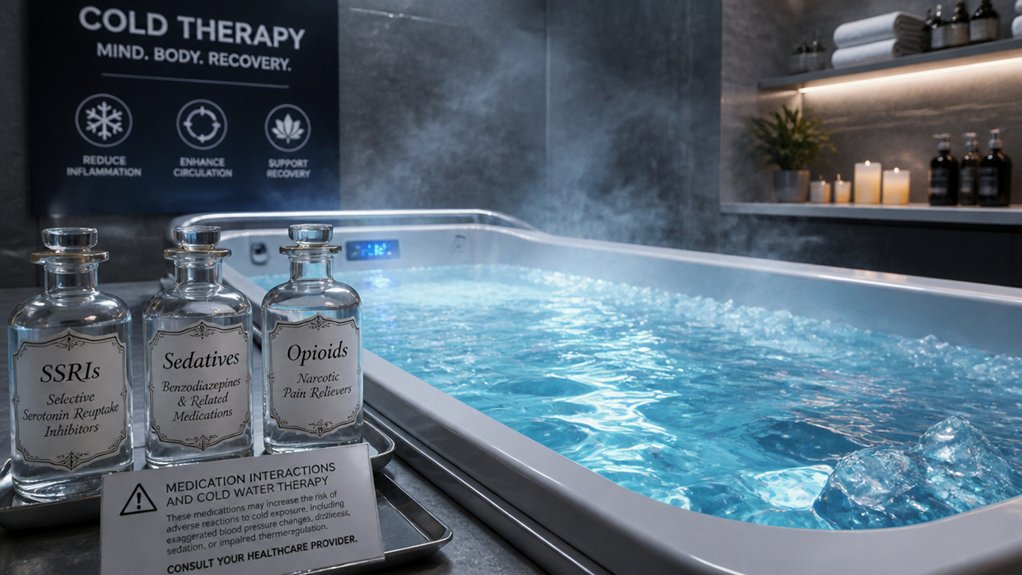
If you’re taking medications like SSRIs, sedatives, or opioids, cold water immersion can pose additional risks. These drugs can alter your body’s response to cold, increasing the chance of adverse effects or injury.
Always consult your healthcare provider before engaging in cold therapy while on these medications.
Medication Influence on Cold Response
Medications such as muscle relaxants, sedatives, and opioids can greatly impact your body’s response to cold water therapy, increasing potential risks during immersion.
Opioid pain medications, even hours after dosing, can heighten cold sensitivity the next day, making cold exposure more dangerous.
- Muscle relaxants and benzodiazepines elevate the risk of hypothermia by impairing your body’s ability to regulate temperature.
- Sedatives can dull cold sensation, masking early warning signs of cold injury.
- Opioids increase cold sensitivity, impacting your body’s natural response to cold environments.
- Combining these medications with cold water therapy can cause unexpected drops in core temperature, leading to serious health complications.
If you’re on any of these medications, consult your healthcare provider before attempting cold immersion to reduce safety risks. Additionally, understanding your measurement parameters and how they respond under cold stress can help monitor your safety during therapy.
Risks With Sedatives and Opioids
Sedatives and opioids can greatly increase the risks associated with cold water therapy, even if you’re no longer feeling their effects. These medications, especially opioid pain medications, alter cold sensation and nerve response well after their peak, making cold therapy dangerous. You might experience heightened cold sensitivity or unexpected reactions. To emphasize, consider this table:
| Medication Type | Effect on Cold Therapy |
|---|---|
| Sedatives (e.g., benzodiazepines) | Increased risk of impaired response and accidents |
| Opioid pain medications | Altered cold sensation and increased discomfort |
Engaging in cold therapy without medical advice can lead to adverse effects. Always consult your doctor before starting cold water immersion if you’re on SSRIs, sedatives, or opioids. Additionally, pH-balanced cleansers can help support skin barrier health during recovery.
Respiratory Disorders: Risks in Cold Water and Cold Air Immersion
Cold water and cold air immersion can pose significant respiratory risks, especially for individuals with pre-existing respiratory disorders. You’re at higher risk of pulmonary edema, a serious condition where fluid builds up in your lungs, causing uncontrollable coughing, mucus (sometimes bloody), and difficulty breathing.
To minimize risks, consider these precautions:
- Avoid strenuous exercise during cold exposure, as it can worsen pulmonary edema.
- Enter the water feet first to reduce autonomic conflict from the gasp and dive reflex.
- Limit cold air exposure combined with physical exertion, which can heighten respiratory distress.
- Always consult your healthcare provider before cold immersion therapy to avoid exacerbating breathing difficulties.
- Be aware that equipment features like ozone filtration or UV sanitation can impact water quality and your respiratory health.
Being aware of these risks helps guarantee your safety during cold water or air exposure.
Open Wounds and Skin Infections: When Is Cold Therapy Unsafe?
Wondering when cold therapy might be unsafe for your skin? If you have open wounds or active skin infections, cold water immersion can worsen your condition.
Immersing open wounds in cold water may impair your immune response, slow healing, and increase infection risk due to reduced blood flow from vasoconstriction. It can also introduce environmental pathogens, potentially causing systemic complications.
Conditions like cold urticaria or cryoglobulinemia make cold therapy unsafe in the presence of skin lesions, as hypersensitivity or clotting risks rise.
Before considering cold therapy, confirm all open wounds are fully healed and infections are resolved. Always seek medical approval to confirm it’s safe to include cold water immersion in your treatment plan, especially with skin vulnerabilities. Additionally, understanding water chemistry compatibility can help prevent adverse reactions when using cold plunges.
Seizure Disorders and Sensory Hypersensitivity Risks in Cold Exposure
Cold exposure can trigger seizures in individuals with epilepsy or sensory hypersensitivity, increasing the risk of injury or drowning. For these patients, even minor cold stimuli might cause uncomfortable or dangerous reactions. A temperature control system that maintains stable and appropriate water temperatures can help reduce these risks, but it must be carefully monitored. Consequently, careful assessment and supervised, gradual exposure are essential before considering immersion therapy.
Seizure Triggers in Cold
Individuals with seizure disorders must exercise caution when considering immersion therapies, as exposure to cold stimuli can directly trigger seizures.
Cold temperatures activate autonomic reflexes, increasing the risk of convulsions or neurological destabilization. To minimize danger, be aware of these seizure triggers:
- Rapid exposure to cold water, which can overwhelm the nervous system.
- Sudden drops in temperature that heighten sensory hypersensitivity.
- Prolonged immersion in cold environments, risking autonomic overstimulation.
- Uncontrolled cold reactions, especially in individuals with poorly managed epilepsy.
Understanding these risks emphasizes the importance of medical consultation before cold exposure. Cold stimuli can provoke unpredictable neurological responses, making it essential to handle cold exposure with caution or avoid it altogether if seizure triggers are present.
Sensory Overload Risks
Sensory overload during cold exposure can greatly increase seizure risks for those with seizure disorders or sensory hypersensitivity. Cold water immersion may trigger neurological distress through intense sensory stimulation. Your body’s response to cold, such as the dive reflex, can heighten autonomic conflict and strain neural pathways.
| Sensory Hypersensitivity | Cold Water Immersion |
|---|---|
| Increased seizure risk | Risk varies with exposure type |
| Triggers neurological distress | Lower risk in ice baths |
| Intense sensory overload | Avoid open water swimming |
| Causes adverse reactions | Medical consultation recommended |
| Gradual exposure essential | Monitor for symptoms |
Recognize your limits, and always consult a professional before engaging in cold water immersion if you have sensory hypersensitivity.
Precautions for Sensory Issues
To safely navigate cold exposure if you have seizure disorders or sensory hypersensitivity, taking proactive precautions is essential. Cold exposure therapy can trigger seizures or worsen sensory hypersensitivity symptoms.
To minimize risks:
- Always consult your healthcare provider before beginning cold exposure therapy.
- Prefer ice baths over open water swimming, as they’re generally less hazardous, but still require monitoring.
- Gradually acclimate your body to cold temperatures to reduce hypersensitivity reactions.
- Use breathing techniques during exposure to help manage sensory overload and prevent disorientation.
Pulmonary Edema and Hypertension: How They Affect Cold Therapy Safety
Cold therapy poses significant risks for people with pulmonary edema or hypertension because intense cold exposure can rapidly increase blood pressure and strain the lungs. Cold exposure causes vasoconstriction, leading to blood pressure spikes, which can trigger hypertensive crises—especially if your hypertension is untreated or poorly controlled.
Pulmonary edema, involving fluid buildup in the lungs, can worsen with cold exposure, particularly when combined with strenuous cold air activity, resulting in uncontrollable coughing, mucus production, and breathing difficulties. You should exercise extreme caution or avoid cold immersion therapy if you have hypertension or a history of pulmonary edema.
Entering water feet first can help reduce cardiac risks, but medical consultation and proper screening are essential to prevent life-threatening complications.
Psychological and Cognitive Conditions – Precautions and Risks
If you have seizure disorders or cognitive impairments, cold immersion can increase your risk of injury or adverse events if you’re unable to recognize or respond to distress.
For those with conditions like Raynaud’s phenomenon, cold exposure may trigger painful episodes or worsen symptoms, so gradual exposure and breathing control are essential.
Additionally, if you’re on sedatives or feel unwilling to participate, cold therapy could cause more harm than benefit, emphasizing the need for careful assessment before proceeding.
Seizure Risk Management
Individuals with a history of uncontrolled or poorly managed epilepsy face significant risks during immersion therapy, as cold exposure can trigger seizures or convulsive episodes.
Cold can activate the autonomic nervous system, heightening seizure risk in susceptible individuals.
To manage this risk, consider these precautions:
- Always seek medical advice before attempting cold immersion therapy.
- Closely supervise individuals with a seizure disorder during Cold exposure.
- Use milder cold conditions, such as ice baths, instead of open water swimming.
- Monitor for signs of seizure activity, halting therapy if any appear.
Avoid Cold immersion therapy entirely if seizures are frequent or uncontrolled, helping prevent life-threatening complications.
Proper management and supervision are essential to reduce seizure risk associated with cold exposure.
Raynaud’s Phenomenon Triggers
Participants with Raynaud’s phenomenon must approach immersion therapy with caution, especially given its potential to trigger severe vasoconstriction in the fingers. Cold immersion therapy can provoke Raynaud’s episodes, causing fingers to turn white or gray due to restricted blood flow.
While some individuals respond well to structured exposure therapy, others may not, risking tissue damage or pain. Anxiety often accompanies Raynaud’s, complicating cold exposure and demanding psychological support to manage stress.
A gradual acclimation protocol, starting from observation to partial neck immersion and then full body immersion, helps reduce symptoms safely. However, without medical guidance, cold plunge therapy remains risky. Understanding individual triggers and responses is essential for safe immersion therapy, especially for those with Raynaud’s phenomenon.
The Most Critical Contraindication: Unwillingness or Unreadiness to Cold Plunge
The most critical contraindication for immersion therapy is a person’s unwillingness or unreadiness to undergo cold plunge exposure. If you’re not willing, you risk psychological distress and adverse reactions that can outweigh benefits. Respecting your autonomy is essential for safety and effectiveness.
Guarantee you:
- Feel comfortable with cold exposure and aren’t pressured into participation.
- Address any anxiety, fear, or negative experiences beforehand.
- Understand that voluntary entry and exit are pivotal to avoid trauma.
- Seek medical and psychological assessments to confirm your readiness.
Forcing yourself into cold immersion can trigger stress responses and emotional distress. Your willingness and mental preparedness are key to experiencing therapy safely and positively, preventing the harmful effects of psychological distress and unwanted autonomic conflict.
Frequently Asked Questions
When Should Exposure Therapy Not Be Used?
You shouldn’t use exposure therapy when you’re unwilling, have uncontrolled epilepsy, cold urticaria, cryoglobulinemia, Raynaud’s phenomenon, or take sedatives or muscle relaxants. These conditions increase health risks and can make therapy unsafe or ineffective for you.
What Are the Contraindications for Aquatic Therapy?
You should avoid aquatic therapy if you have uncontrolled hypertension, cold urticaria, cryoglobulinemia, poorly controlled epilepsy, or polyneuropathy. Also, skip it if you take muscle relaxants, sedatives, opioids, or SSRIs, or if you have Raynaud’s or NFCI.
What Are the Three Psychosocial Needs of Clients With Chronic Illness?
You should focus on clients’ psychosocial needs: fostering a sense of agency and self-determination, providing emotional support and validation, and helping maintain social connections to address feelings of helplessness and promote resilience and belonging.
What Clinical Issues Are Contraindications for Trauma Processing?
You should avoid trauma processing if you have uncontrolled epilepsy, severe cardiovascular issues, or active cold urticaria. These conditions increase the risk of seizures, cardiovascular crises, or severe inflammatory reactions, making such therapy unsafe for you.